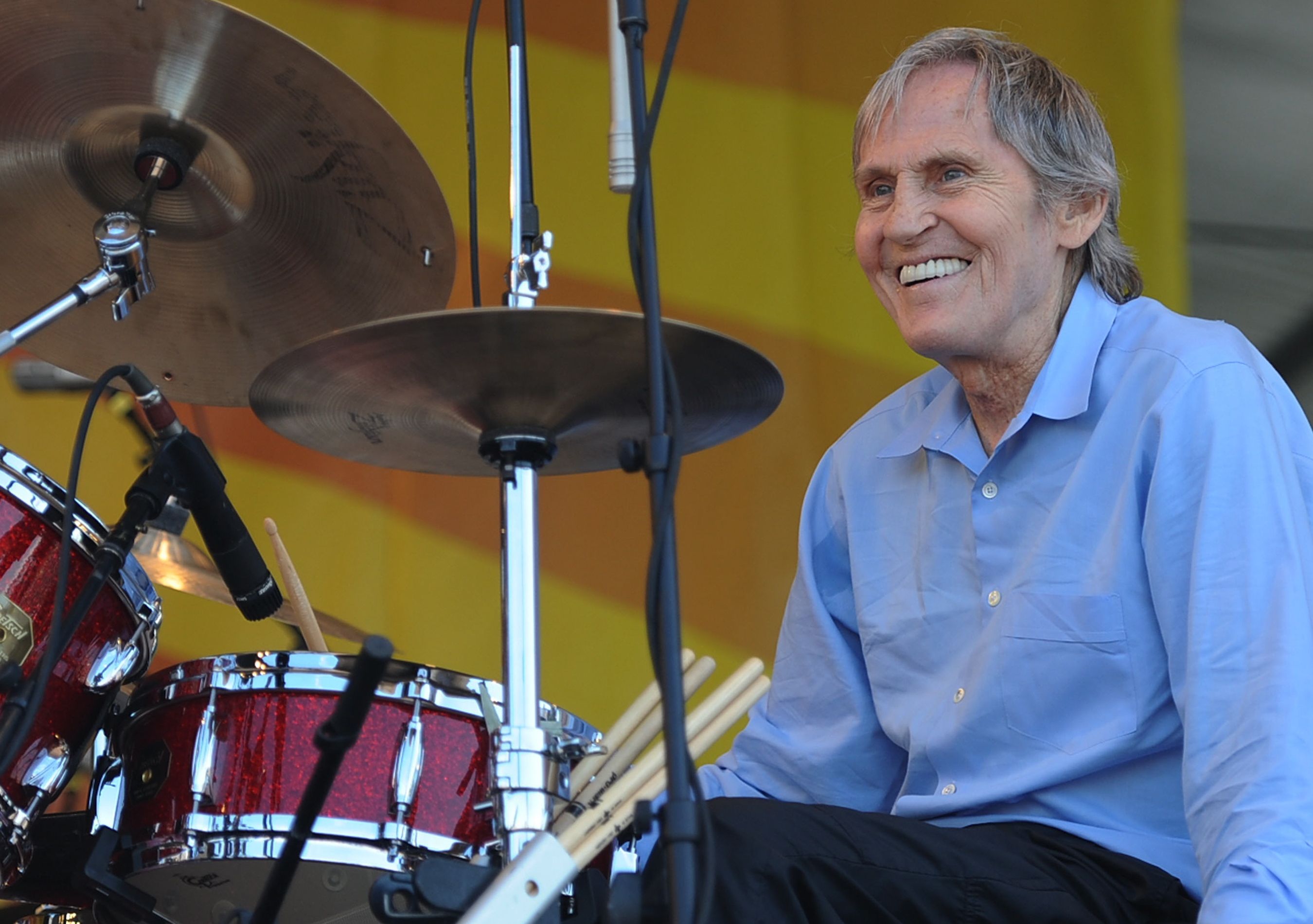
Leon Helm Net Worth Explained: Royalties, Estate Value, and Financial Legacy
Searches for "Leon Helm net worth" refer to the financial legacy of Levon Helm (born Mark Lavon Helm, May 26, 1940 – April 19, 2012), the legendary drummer and vocalist of The Band. At the time of his passing in 2012, Levon Helm held a...
Searches for "Leon Helm net worth" refer to the financial legacy of Levon Helm (born Mark Lavon Helm, May 26, 1940 – April 19, 2012), the legendary drummer and vocalist of The Band. At the time of his passing in 2012, Levon Helm held an estimated net worth between $2 million and $5 million. His financial journey was shaped by early record contracts, songwriting royalty disputes, devastating medical debt, and a late-life financial resurgence driven by his famous Midnight Ramble concerts in Woodstock, New York.
Contents
Disambiguation: Understanding the Search for "Leon Helm"
Online searches frequently misspell Levon Helm's first name as "Leon." However, historical records, discographies, and estate documentation confirm that the individual in question is Levon Helm.
Born in Elaine, Arkansas, Helm became one of the most influential figures in American roots rock and Americana. As the rhythmic backbone and primary southern voice of The Band, he provided lead vocals on iconic tracks such as "The Weight," "Up on Cripple Creek," and "The Night They Drove Old Dixie Down." Beyond his musical output, Helm was an acclaimed actor, appearing in films like Coal Miner's Daughter (1980) and The Right Stuff (1983).
Understanding Helm's net worth requires examining how the music industry compensated performing artists in the 1960s and 1970s, how publishing rights split band earnings, and how health crises impacted independent musicians before the digital era.
Early Career and Record Deals with The Band
Levon Helm began his professional music career in the late 1950s as a member of Ronnie Hawkins & The Hawks. After splitting from Hawkins, the group worked independently before being hired by Bob Dylan as his backing group during his controversial 1965–1966 electric world tours. This association elevated the group's profile and led to their signing with Capitol Records under the name The Band.
Between 1968 and 1976, The Band released a series of groundbreaking albums, including Music from Big Pink (1968), The Band (1969), and Stage Fright (1970). These albums generated substantial record sales and concert revenues. However, the financial returns to individual band members were highly uneven due to standard record contracts of that era and internal publishing arrangements.
- Performance & Tour Revenue: Shared Equally Among 5 Members
- Master Recording Royalties: Split via Capitol Records Contract
- Publishing & Songwriting: Predominantly Robbie Robertson
The Songwriting Royalty Dispute
The most significant factor limiting Levon Helm’s lifetime net worth was the division of songwriting credits within The Band. In music publishing, two primary revenue streams exist:
- Master Recording Royalties: Paid to performers who play on a recorded track.
- Publishing / Mechanical Royalties: Paid to the credited songwriters and publishers whenever a song is broadcast, covered, sold, or synced in film and television.
While Helm, Rick Danko, Richard Manuel, and Garth Hudson contributed heavily to arranging, vocalizing, and structuring The Band's music, guitarist Robbie Robertson was listed as the sole songwriter on the vast majority of their catalogue.
Helm maintained throughout his life—most prominently in his 1993 autobiography This Wheel's on Fire—that songs were crafted collaboratively in rehearsal spaces like "Big Pink" in West Saugerties, New York. Because Robertson retained sole or primary publishing rights, Robertson earned tens of millions of dollars over the decades from sync licensing, radio airplay, and covers of songs like "The Weight." In contrast, Helm and the other members received only performance royalties, which yielded considerably lower ongoing income.
Financial Hardships: Studio Fire, Bankruptcy, and Cancer
Following The Band’s famous farewell concert in 1976, documented in Martin Scorsese’s film The Last Waltz, Helm pursued solo projects, reformed variants of The Band without Robertson, and took on acting roles. However, the 1980s and 1990s brought severe financial strain.
The 1991 Woodstock Studio Fire
In 1975, Helm had constructed a custom home and recording facility in Woodstock, New York, known as Levon Helm Studios (or "The Barn"). In 1991, a catastrophic fire destroyed the original structure. Rebuilding the studio required extensive capital, saddling Helm with substantial debt and mortgages during a period when classic rock catalog streaming did not yet exist to generate reliable residual income.
Throat Cancer and Medical Expenses
In 1998, Helm was diagnosed with late-stage throat cancer. Treatment required 28 radiation therapy sessions and specialized medical care, which left him temporarily unable to sing and severely impaired his ability to tour.
Like many independent legacy musicians, Helm faced enormous out-of-pocket medical expenses. The lack of continuous, comprehensive health insurance combined with an inability to perform brought Helm close to financial ruin and foreclosure on his Woodstock property in the early 2000s.
The Turning Point: Midnight Rambles and Late-Career Resurgence
Faced with mounting medical bills and potential mortgage default, Helm devised a direct-to-fan business model that transformed his financial standing during the final decade of his life.
- Location: Rebuilt Levon Helm Studios (Woodstock, NY Barn)
- Format: Intimate performance for 200–250 ticketed guests
- Overhead: Low venue operational costs; direct merchandise sales
- Income Sources: Ticket sales + VIP passes + live album releases
Origin of the Midnight Ramble
In 2004, Helm launched the Midnight Ramble concerts inside his Woodstock barn studio. Inspired by the travelling medicine shows and minstrel performances of his youth in Arkansas, these intimate, 200-seat shows featured Helm on drums and vocals alongside his daughter Amy Helm, a house band, and notable guest artists including Elvis Costello, Emmylou Harris, Norah Jones, Hubert Sumlin, and Phil Lesh.
Business Economics of the Ramble
The Midnight Ramble proved to be a lucrative revenue model:
- High Ticket Margins: Tickets were priced between $150 and $200 per seat, frequently selling out within minutes.
- Low Overhead: By eliminating third-party promoter cuts, stadium rental fees, and extensive travel expenses, Helm retained a substantial portion of gross revenue.
- Direct Merchandise & Album Sales: Attendees purchased merchandise, archival recordings, and signed memorabilia directly at the studio.
The financial success of the Rambles allowed Helm to pay off his medical debt, clear his mortgage, and fund new studio recordings. His 2007 album Dirt Farmer and 2009 album Electric Dirt won Grammy Awards for Best Traditional Folk Album and Best Americana Album, respectively, solidifying a late-career financial and artistic resurgence.
Financial Summary and Estate Valuation
At the time of Levon Helm’s passing on April 19, 2012, his net worth was estimated between $2 million and $5 million. His financial footprint comprised real estate, physical master assets, film royalties, and legacy brand value.
| Financial Indicator | Details / Status |
|---|---|
| Estimated Net Worth at Passing (2012) | $2,000,000 – $5,000,000 |
| Primary Real Estate Asset | Levon Helm Studios & Barn Property (Woodstock, NY) |
| Primary Royalty Income | Master recording royalties (Capitol/Universal), film residuals |
| Publishing Rights Ownership | Limited (majority held by Robbie Robertson / publishing entities) |
| Post-2012 Major Revenue Driver | Venue rentals, educational workshops, ongoing Ramble concerts |
| Current Estate Management | Overseen by widow Sandra Helm and daughter Amy Helm |
Current Status of the Estate
Levon Helm’s estate remains an active operational business. Under the management of his widow, Sandra Helm, and his daughter, musician Amy Helm, Levon Helm Studios continues to function as a commercial recording studio and venue. The venue hosts ongoing concert series, rent-out studio dates, and legacy events, ensuring the property remains financially self-sustaining while preserving Helm's musical contribution.
Comparative Net Worth: The Band Members
To place Levon Helm’s net worth into perspective, it is useful to compare his financial trajectory with that of his bandmates in The Band.
| Member | Estimated Net Worth | Details |
|---|---|---|
| Robbie Robertson | $50M - $90M | Driven by publishing & film scores |
| Levon Helm | $2M - $5M | Performance, live shows, studio |
| Rick Danko | <$1M | Financial troubles, died 1999 |
| Richard Manuel | <$500K | Severe debt, died 1986 |
| Garth Hudson | Variable | Bankruptcy in 2000s, living legend |
- Robbie Robertson ($50 million – $90 million at passing in 2023): As the credited primary songwriter and later soundtrack producer for Martin Scorsese films, Robertson amassed significant wealth through music publishing rights, sync licensing, and catalog sales (such as his deal selling catalog rights to Iconoclast in 2022).
- Rick Danko (< $1 million at passing in 1999): Danko faced persistent debt, legal challenges, and medical costs throughout the 1980s and 1990s.
- Richard Manuel (< $500,000 at passing in 1986): Manuel struggled with severe financial instability and addiction prior to his death.
- Garth Hudson: The Band’s multi-instrumentalist virtuoso faced documented financial challenges, including filing for bankruptcy protection in the 2000s.
This disparity emphasizes the critical role that copyright ownership and publishing control play in long-term musician wealth, far exceeding revenue generated by touring or master performance royalties alone.
Lessons from Levon Helm’s Financial History
Levon Helm's career provides several clear lessons for independent musical artists and legacy performers:
- Clarify Songwriting Agreements Early: Co-creating music without explicit, written legal contracts detailing publishing splits can lead to tens of millions of dollars in lost revenue over a lifetime.
- Diversify Income Streams: Helm's work as a character actor provided crucial secondary income during periods when touring was impractical.
- Build Direct Fan Business Models: The success of the Midnight Ramble demonstrated that artists with loyal followings can bypass corporate intermediaries to generate high-margin revenue on their own real estate.
- Plan for Healthcare and Estate Contingency: Independent contractors in creative fields face distinct financial risks when health crises arise, underscoring the importance of estate planning, insurance, and emergency liquidity.
Frequently Asked Questions
What was Levon Helm's estimated net worth when he died?
At his death in April 2012, Levon Helm's net worth was estimated between $2 million and $5 million. His net worth was primarily tied to his Woodstock property, master recording royalties, acting residuals, and earnings from the Midnight Ramble concert series.
Did Levon Helm own the publishing rights to "The Weight"?
No. The primary publishing rights for "The Weight," "Up on Cripple Creek," and "The Night They Drove Old Dixie Down" were registered to guitarist Robbie Robertson and publisher Canaan Music/Band Music. Helm received master performance royalties when The Band's recordings were played or sold, but not the songwriter publishing royalties.
How did the Midnight Ramble concerts save Levon Helm financially?
Launched in 2004, the Midnight Ramble concerts allowed Helm to perform intimate, high-ticket-price shows directly in his Woodstock barn studio. By avoiding promoter fees, venue rentals, and extensive travel costs, Helm generated high-margin income that helped pay off substantial debt from throat cancer treatments and mortgage obligations.
Who controls Levon Helm's estate today?
Levon Helm’s estate and Levon Helm Studios are managed by his family, primarily his widow, Sandra Helm, and his daughter, Amy Helm. The Woodstock studio operates as a working recording facility and active performance venue.
How much did Levon Helm earn from acting?
While exact earnings per film are private, Helm earned substantial union-standard compensation and ongoing residual income for major film roles. His most prominent roles included playing Loretta Lynn's father in Coal Miner's Daughter (1980), Air Force engineer Jack Ridley in The Right Stuff (1983), and supporting roles in Fire Down Below (1997) and In the Electric Mist (2009).
Summary and Key Takeaway
Levon Helm’s financial legacy illustrates both the pitfalls of early music industry publishing structures and the power of creative independence. Though songwriting royalty arrangements limited his earnings from The Band's classic catalogue, Helm restructured his career in his final decade through the Midnight Ramble series. By monetizing his home studio and connecting directly with his fan base, Helm resolved major financial liabilities, preserved his iconic property, and secured a lasting artistic and estate legacy.
Image Gallery