Understanding the NML Whole Life Insurance Maturity Date
An NML whole life insurance maturity date is the specific point in time when the policy's cash value equals its death benefit, effectively ending the contract. For most Northwestern Mutual (NML) policies, this occurs when the insured r...
An NML whole life insurance maturity date is the specific point in time when the policy's cash value equals its death benefit, effectively ending the contract. For most Northwestern Mutual (NML) policies, this occurs when the insured reaches age 100 or 121, resulting in a final payout to the policy owner.
Contents
Whole life insurance is designed to provide "permanent" protection, but every contract has a defined expiration point known as the maturity date. When a Northwestern Mutual (NML) policy reaches this date, the insurance component terminates because the cash accumulation has reached the full face value of the policy. In the eyes of the insurer and the Internal Revenue Service (IRS), the policy has "endowed." For policyholders in 2026, understanding when this happens and what the tax implications are is vital for long-term estate and retirement planning.
What Does Maturity Mean for a Northwestern Mutual Policy?
In the context of NML whole life insurance, maturity is the contractual conclusion of the agreement between the policyholder and the Northwestern Mutual Life Insurance Company. Unlike the death benefit, which is paid to beneficiaries upon the death of the insured, the maturity benefit is paid to the policy owner if the insured is still living on the maturity date.
At this juncture, the policy is no longer an active insurance instrument. The "risk" the company was hedging—the premature death of the insured—is technically considered 100% realized from an actuarial standpoint. Consequently, the company liquidates the account and sends a check for the total face amount (plus any accumulated dividends or additions) to the owner.
It is important to distinguish between a policy being paid-up and a policy maturing. A NML policy is "paid-up" when no further premiums are required to keep the coverage in force. This can happen through a "10-Pay" or "65-Pay" structure, or by using dividends to buy up the remaining premium obligation. However, even a paid-up policy continues to exist and grow in cash value until it reaches the final maturity date or the insured passes away.
Determining Your Specific Maturity Age: 100 vs. 121
The maturity date of your NML policy is primarily determined by the mortality table in effect when the policy was issued. Historically, life insurance was designed to mature at age 100, as it was statistically rare for individuals to outlive that age. However, as medical advancements increased longevity, the industry shifted its standards.
Policies Issued Prior to 2004 (Age 100)
Most NML policies issued in the 20th century and up until approximately 2004 were based on the 1980 Commissioners Standard Ordinary (CSO) Mortality Table. These policies typically have a maturity date coinciding with the insured's 100th birthday. If you are reviewing an older family policy in 2026, there is a high probability that the maturity date is set at age 100.
Policies Issued After 2004 (Age 121)
Following the adoption of the 2001 CSO Mortality Table, the industry standard for maturity moved to age 121. This change was driven by the increasing number of centenarians and the need to prevent policies from maturing (and triggering tax events) while the insured was still alive. Most modern Northwestern Mutual whole life products sold today, and those sold over the last two decades, utilize this age 121 benchmark.
To find your exact date, you should refer to the Policy Specifications page (usually page 3 or 4) of your original NML contract. It will explicitly list the "Maturity Date" or "Endowment Date."
The Financial Impact of Reaching Maturity
When an NML policy matures in 2026, the financial transaction is straightforward but carries significant weight. Northwestern Mutual will calculate the total value of the policy, which includes:
- The Face Amount: The original death benefit guaranteed by the contract.
- Paid-Up Additions: Any additional insurance purchased over the years via policy dividends.
- Accumulated Dividends: Any cash dividends left on deposit with interest.
- Outstanding Loans: Any unpaid policy loans and accrued interest will be deducted from the final payout.
The resulting "Maturity Proceeds" are then issued to the owner. While receiving a large lump sum may seem like a windfall, it signals the end of the death benefit protection. For individuals using NML policies as a cornerstone of their estate plan to pay for estate taxes or provide for heirs, the sudden liquidation of the policy can create a gap in coverage at a time when the insured is no longer insurable.
Tax Considerations at Maturity (IRC Section 7702)
The most critical aspect of an NML maturity date is the tax treatment of the proceeds. Under Internal Revenue Code Section 7702, life insurance death benefits are generally received income tax-free. However, maturity proceeds are not death benefits.
When a policy matures while the insured is alive, the IRS treats the event as a "gain on a surrendered contract." The tax calculation is as follows:
- Total Payout - Cost Basis = Taxable Gain
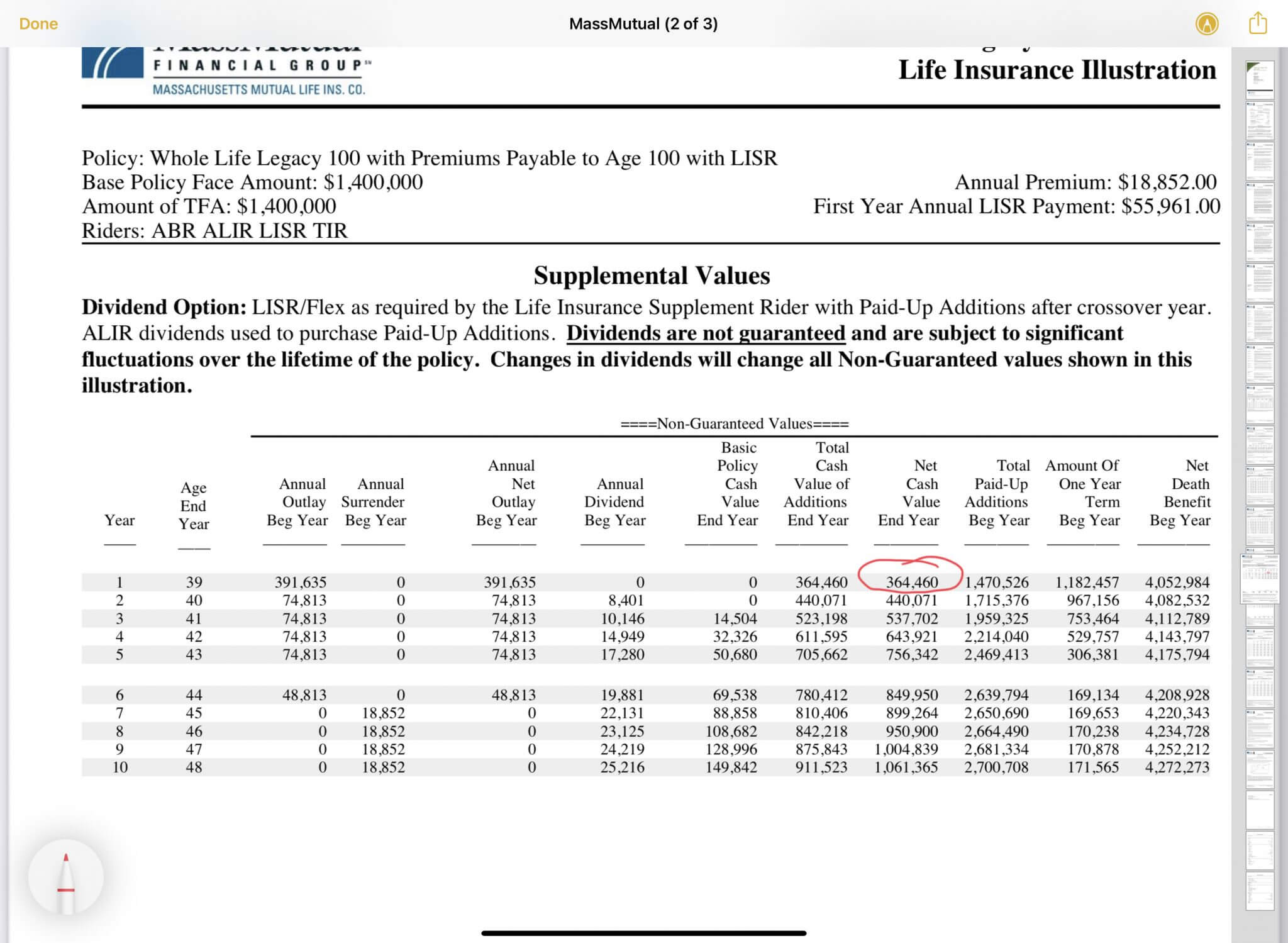
The "cost basis" is generally the total amount of premiums you paid into the policy over the years, minus any tax-free dividends you received in cash or used to reduce premiums. Any amount received above that basis is taxed as ordinary income, not capital gains. Depending on the age of the policy and the growth of dividends, the taxable gain can be substantial, potentially pushing the policyholder into a higher tax bracket in the year of maturity.
Strategic Alternatives Before the Policy Matures
If you are approaching the maturity date of an NML policy in 2026 and wish to avoid the immediate tax hit or maintain insurance coverage, you have several options to consider before the "Endowment Date" arrives.
1. The 1035 Exchange
Under Section 1035 of the Tax Code, you can perform a tax-free exchange of one life insurance policy for another. If your NML policy is maturing at age 100, you might be able to exchange it for a new policy (perhaps a Universal Life policy with a maturity age of 121) to defer the tax gain. However, this requires "insurability," meaning the insured must pass a medical underwriting process, which can be difficult at age 90 or 95.
2. Policy Extensions
Some NML contracts issued during the transition years may offer riders or administrative provisions that allow for the extension of the maturity date. Northwestern Mutual has, in some historical instances, allowed policyholders to extend the maturity to age 121 to avoid the forced liquidation at age 100. You must contact an NML representative to see if your specific policy series is eligible for such an amendment.
3. Accelerated Death Benefits
If the insured is terminally or chronically ill as they approach the maturity date, it may be possible to access the death benefit early through living benefits or accelerated death benefit riders. This can sometimes be more tax-efficient than waiting for the policy to mature.
Comparison of NML Maturity Features by Policy Generation
| Feature | Pre-2004 Policies (Typical) | Post-2004 Policies (Typical) |
|---|---|---|
| Primary Maturity Age | 100 | 121 |
| Mortality Table Base | 1980 CSO | 2001 CSO or 2017 CSO |
| Tax Trigger Event | Age 100 Endowment | Age 121 Endowment |
| Payout Recipient | Policy Owner | Policy Owner |
| Tax Treatment of Gain | Ordinary Income | Ordinary Income |
| Coverage Duration | To Age 100 | To Age 121 |
Administrative Steps for NML Policyholders in 2026
As you approach your maturity date, Northwestern Mutual typically initiates communication 6 to 12 months in advance. The process involves several administrative requirements:
- Verification of Identity: NML will require updated identification and potentially a W-9 form to certify your Taxpayer Identification Number for IRS reporting.
- Loan Settlement: If you have outstanding loans, you must decide whether to pay them off in cash before maturity or have them deducted from the proceeds. Deducting them from proceeds does not eliminate the tax liability on the gain.
- Settlement Options: You do not always have to take a lump sum. NML often provides "Settlement Options," which allow you to convert the maturity proceeds into an annuity stream, providing guaranteed income for life. While this spreads out the tax liability, it still terminates the life insurance coverage.
FAQs
Can I stop my NML policy from maturing at age 100?
Whether you can stop the maturity depends on the specific language of your contract. While you cannot unilaterally change the maturity date, you should ask Northwestern Mutual about a "Maturity Extension Rider" or administrative relief. Many companies now offer ways to extend the maturity to age 121 to help policyholders avoid the tax consequences of endowment at age 100.
What happens if the insured dies exactly on the maturity date?
If the insured passes away on the maturity date, the policy is generally processed as a death benefit claim rather than a maturity claim. This is a crucial distinction because the death benefit is usually tax-free to beneficiaries, whereas maturity proceeds are taxable as ordinary income to the owner. NML's claims department will determine the exact timing of death to apply the correct tax treatment.
Are dividends included in the maturity payout?
Yes. When an NML whole life policy matures, any "Paid-Up Additions" (insurance bought with dividends) and any dividends sitting in a cash-accumulation account are added to the face amount of the policy. This total sum forms the maturity proceeds. However, the presence of heavy dividend accumulation also increases the "gain" in the policy, which may increase your tax liability.
Is the maturity date the same as the "Expiry Date"?
In whole life insurance, the terms are often used interchangeably, but "maturity" is more accurate. An "expiry date" is more common in term life insurance, where the policy simply ends and has no value. In NML whole life insurance, the maturity date is the day the policy's value is maximized and paid out; it does not simply disappear without value.
Do I have to pay premiums until the maturity date?
Not necessarily. If your policy is "Paid-Up," you no longer owe premiums, but the policy will continue to grow until the maturity date. If your policy is not paid-up, you must continue paying premiums to keep it in force until it matures, or the policy will lapse or enter "Extended Term" status, which could change the maturity dynamics.
Final Recommendations for 2026
If you own a Northwestern Mutual whole life policy, your first step should be to locate your original policy document and confirm the maturity age. If you are within ten years of that date, schedule a meeting with a financial advisor or an NML representative to project your tax liability.
In 2026, with shifting tax brackets and estate laws, the "forced" liquidation of a life insurance policy can disrupt a well-crafted financial plan. Prioritize determining if your policy can be extended to age 121. If it cannot, and the tax burden is high, investigate whether a 1035 exchange into a newer product is feasible. Always ensure that any changes align with your broader goals for liquidity, legacy, and tax efficiency.
Image Gallery