The Prevalence and Market Share of Simplified Issue Life Insurance in 2026
As of 2026, simplified issue life insurance is held by approximately 12% to 15% of the total insured population in the United States. While traditional fully underwritten policies still dominate the total "in-force" market, simplified...
As of 2026, simplified issue life insurance is held by approximately 12% to 15% of the total insured population in the United States. While traditional fully underwritten policies still dominate the total "in-force" market, simplified issue products now account for nearly 35% of all new life insurance individual policy applications due to the demand for instant approval and medical-exam-free processing.
Contents
The landscape of life insurance has undergone a structural shift over the last decade. Historically, obtaining a life insurance policy required a "paramedical" exam, involving blood draws, urine samples, and a physical checkup. However, the rise of "simplified issue" (SI) products—which require only a health questionnaire and a digital background check—has democratized access to coverage for millions who either value speed or have minor health complications that make traditional underwriting cumbersome.
Defining Simplified Issue in the 2026 Insurance Market
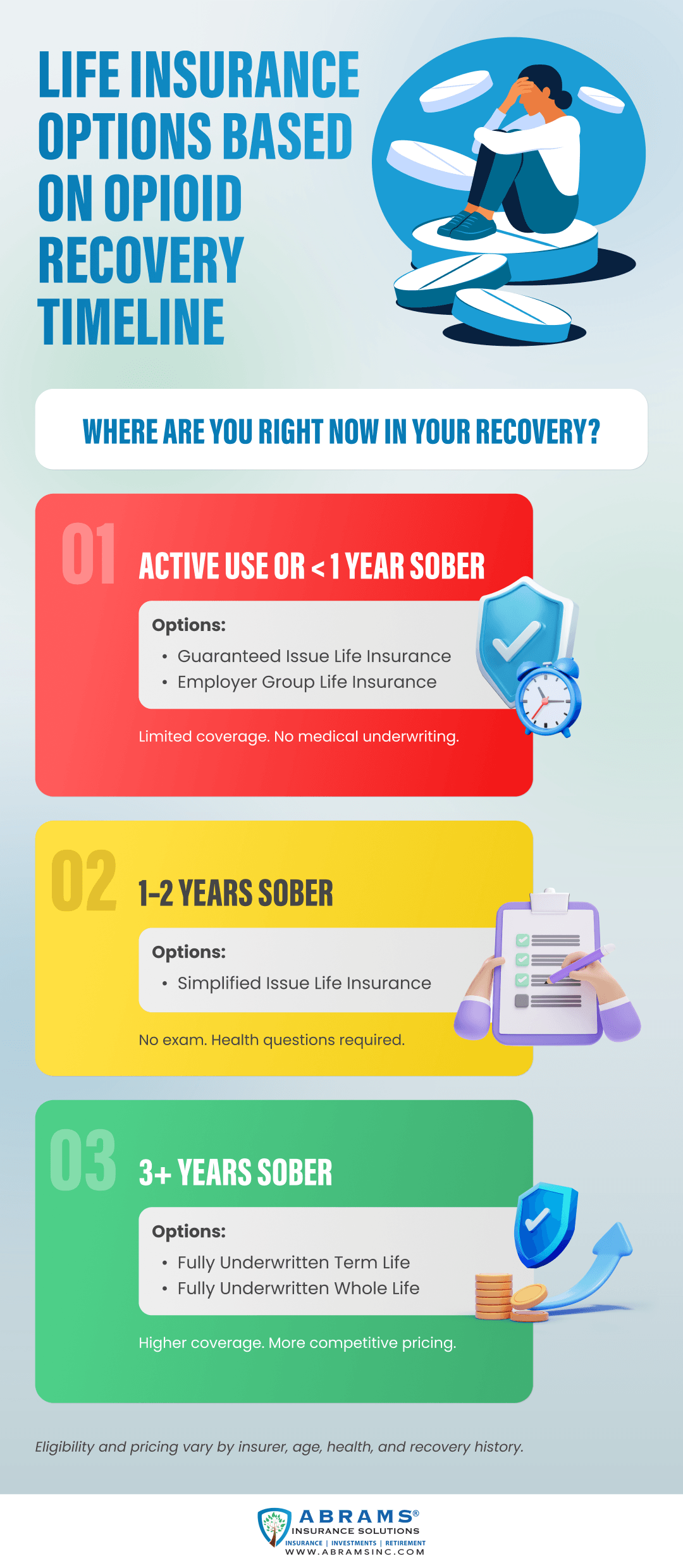
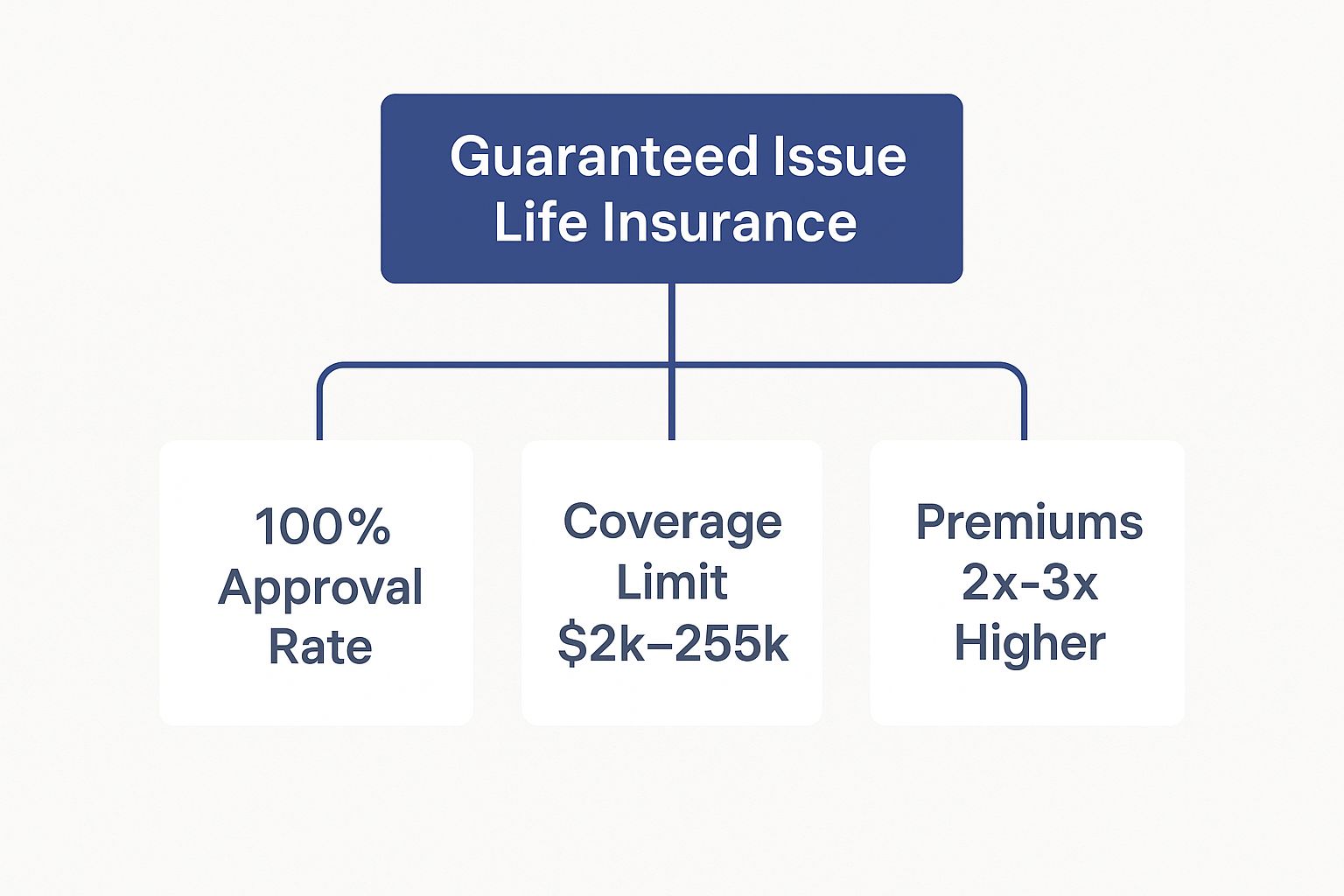
Simplified issue life insurance is a type of coverage designed to bridge the gap between "Fully Underwritten" policies (which require a medical exam) and "Guaranteed Issue" policies (which ask no health questions but have very high premiums and limited payouts).
In a simplified issue application, the insurer relies on algorithmic underwriting. Instead of a doctor's visit, the insurance company's software analyzes several third-party data points in real-time, including:
- Medical Information Bureau (MIB) Reports: A database of previous insurance applications and disclosed health conditions.
- Prescription History (Rx) Checks: A review of medications prescribed to the applicant over the last 5 to 10 years.
- Motor Vehicle Records (MVR): To assess risk based on driving history, such as DUIs or reckless driving.
- Credit-Based Insurance Scores: Assessing financial stability, which is statistically correlated with mortality risk.
Because these checks happen in seconds or minutes, the "simplified" nature refers to the applicant's experience, even though the backend data analysis is highly sophisticated.
Market Penetration and Population Statistics
To understand the percent of the population with simplified issue life insurance, we must distinguish between total life insurance ownership and the specific product sub-type.
According to 2025 and 2026 industry data from organizations like LIMRA (Life Insurance Marketing and Research Association), approximately 52% of the adult U.S. population owns some form of life insurance. When we isolate the simplified issue segment within that group, the numbers reveal a clear trend toward "non-medical" underwriting.
Distribution of Policy Types (2026 Estimates)
| Policy Type | Estimated % of Total Insured Population | Primary User Demographic |
|---|---|---|
| Fully Underwritten | 55% | High-coverage seekers, young/healthy adults |
| Group Life (Employer) | 25% | Full-time employees (Simplified/Guaranteed) |
| Simplified Issue (Individual) | 14% | Middle-market, seniors, "speed" seekers |
| Guaranteed Issue | 6% | Individuals with severe chronic illnesses |
While the total "in-force" percentage for simplified issue sits around 14%, its growth rate is significantly higher than that of traditional products. In the "Middle Market" (households earning between $50,000 and $125,000), simplified issue is often the preferred choice because it removes the "friction" of a medical exam, which was historically the number one reason consumers abandoned life insurance applications.
Drivers of Growth for Simplified Issue Products
The increase in the percent of the population holding these policies is not accidental. Several socio-economic and technological factors have converged to make SI products the new industry standard for individual term and whole life sales.
The "Amazon Effect" and Consumer Expectations
In 2026, consumers expect near-instant gratification. Waiting four to six weeks for a medical technician to visit a home and another two weeks for lab results is increasingly unacceptable to younger generations. Simplified issue policies can often be approved and active within 15 minutes to 24 hours. This speed has led to a surge in adoption among Millennials and Gen Z, who are beginning to start families and seek protection.
Advancements in Big Data and AI
The accuracy of algorithmic underwriting has improved to the point where insurers can offer simplified issue policies at prices that are competitive with traditional policies for healthy individuals. In 2016, a simplified issue policy might have cost 30% more than a fully underwritten one. By 2026, that "convenience tax" has dropped to roughly 5% to 10% for many carriers, making the trade-off forgoing a blood draw highly attractive.
The Expansion of "Final Expense" Insurance
A significant portion of the population with simplified issue insurance consists of seniors. "Final Expense" or "Burial Insurance" is almost exclusively sold as simplified issue. These policies generally provide $5,000 to $50,000 in coverage and are designed to cover funeral costs. As the Baby Boomer generation continues to age into their late 70s and 80s, the volume of these policies has reached record highs.
Comparing Simplified Issue vs. Other Underwriting Methods
Choosing a simplified issue policy involves balancing the need for speed against the total cost of the policy. Because the insurer is taking on slightly more "unknown" risk by not performing a physical exam, they must charge a premium to account for that uncertainty.
Technical Comparison Table
| Feature | Simplified Issue | Fully Underwritten | Guaranteed Issue |
|---|---|---|---|
| Medical Exam | No | Yes (Blood/Urine/Physical) | No |
| Health Questions | Yes (Detailed) | Yes (Extensive) | No |
| Approval Time | Minutes to Days | 4 to 8 Weeks | Instant |
| Max Coverage | Typically up to $1M - $2M | No set limit (Millions) | Usually capped at $25k |
| Cost | Moderate | Lowest (for healthy) | Highest |
| Waiting Period | Immediate Coverage | Immediate Coverage | Often 2-year graded death benefit |
Potential Drawbacks and Limitations
While the percent of the population using simplified issue is growing, these products are not suitable for everyone.
1. Higher Premiums for the Very Healthy: If an individual is a "preferred plus" risk—meaning they are in peak physical condition with perfect lab results—they will almost always pay less with a fully underwritten policy. By opting for simplified issue, they are effectively "subsidizing" the risk of people who are less healthy, as the insurer groups a wider range of health profiles together.
2. The Risk of Inadvertent Non-Disclosure: In a simplified issue application, the applicant must answer health questions themselves. If an applicant forgets a minor diagnosis or misinterprets a question about "chronic conditions," the insurer could potentially contest a claim later based on material misrepresentation. In a fully underwritten policy, the medical exam provides an objective record that protects both parties.
3. Coverage Caps: While coverage limits have increased, many simplified issue products still cap their "death benefit" at $1 million or $2 million. For high-net-worth individuals requiring large policies for estate planning or business "key person" insurance, traditional underwriting remains a necessity.
Demographic Trends: Who is Buying Simplified Issue?
The demographics of the "14% population share" are quite specific.
- The "Gig Economy" Worker: These individuals often lack employer-sponsored group life insurance. They tend to favor digital-first, simplified issue term policies that can be managed entirely via a smartphone.
- The "Slightly Unhealthy" Applicant: Individuals with controlled Type 2 diabetes, mild hypertension, or a BMI slightly above the "preferred" range often find simplified issue more forgiving. The algorithms used by many carriers in 2026 are designed to "filter out" major risks while accepting managed minor ones.
- The Time-Poor Professional: High-income earners who do not want the hassle of scheduling a paramedical exam often choose simplified issue for the convenience, despite the slightly higher premium.
Expert Guidance: Is a Simplified Issue Policy Right for You?
When determining if you should contribute to the growing percentage of simplified issue policyholders, consider the following steps:
- Assess Your Health: If you have zero health issues and a clean family history, a fully underwritten policy will save you significant money over 20-30 years.
- Evaluate Your Timeline: If you need life insurance to secure a mortgage or a business loan immediately, simplified issue is the only viable path.
- Check Your Records: Before applying for any simplified issue policy, request your own MIB report and prescription history. This ensures that the data the insurer sees is accurate and prevents unexpected denials.
- Compare the "Spread": In 2026, many brokers offer side-by-side quotes. If the price difference between a medical-exam policy and a simplified issue policy is less than $10 per month, the convenience of simplified issue usually outweighs the cost.
Frequently Asked Questions
Does a simplified issue policy cover suicide or accidental death? Yes. Simplified issue policies are full life insurance products. They cover death by any cause (including illness and accidents), subject to the standard two-year suicide clause and contestability period found in almost all life insurance contracts. They should not be confused with "Accidental Death and Dismemberment" (AD&D) policies, which only pay out if the death is a direct result of an accident.
Can I be denied for simplified issue insurance? Absolutely. While there is no medical exam, the health questionnaire and background checks are rigorous. If your prescription history shows treatment for a "knockout" condition—such as active cancer, congestive heart failure, or recent stroke—your application will likely be declined. In these cases, a "Guaranteed Issue" policy is the next alternative.
How long does a simplified issue policy last? Simplified issue refers to the underwriting method, not the policy duration. You can find simplified issue products in both "Term" (lasting 10, 20, or 30 years) and "Whole Life" (lasting your entire lifetime) formats.
Is simplified issue the same as "No-Exam" insurance? "No-exam" is a broad marketing term that includes both Simplified Issue and Accelerated Underwriting. Simplified issue always skips the exam and relies on a questionnaire. Accelerated Underwriting (AU) may skip the exam if your initial data looks perfect, but it reserves the right to order an exam if the data is ambiguous.
Why are simplified issue policies more popular in 2026 than in 2020? The primary reason is the refinement of artificial intelligence in risk assessment. In 2020, insurers still viewed "no-exam" as high-risk. By 2026, the data connectivity between hospitals, pharmacies, and insurers allows for a level of accuracy that was previously only possible through a physical exam.
Final Recommendation
For most middle-market consumers in 2026, simplified issue life insurance is the most practical choice. Unless you are seeking a policy larger than $2 million or are in exceptionally good health and want the absolute lowest possible price, the efficiency of simplified issue provides the best balance of speed and value. If you have been delaying life insurance because of the perceived "hassle" of the medical process, a simplified issue policy removes that barrier entirely, ensuring your family is protected without the wait.
Image Gallery