Why the 18 Million Floyd Mayweather Watch Is Mostly a Status Symbol
The 18-million-dollar timepiece famously owned by Floyd Mayweather, known as the Jacob & Co. Billionaire, represents the pinnacle of high-end horological excess. While it serves as a functional instrument for timekeeping, its valuation...
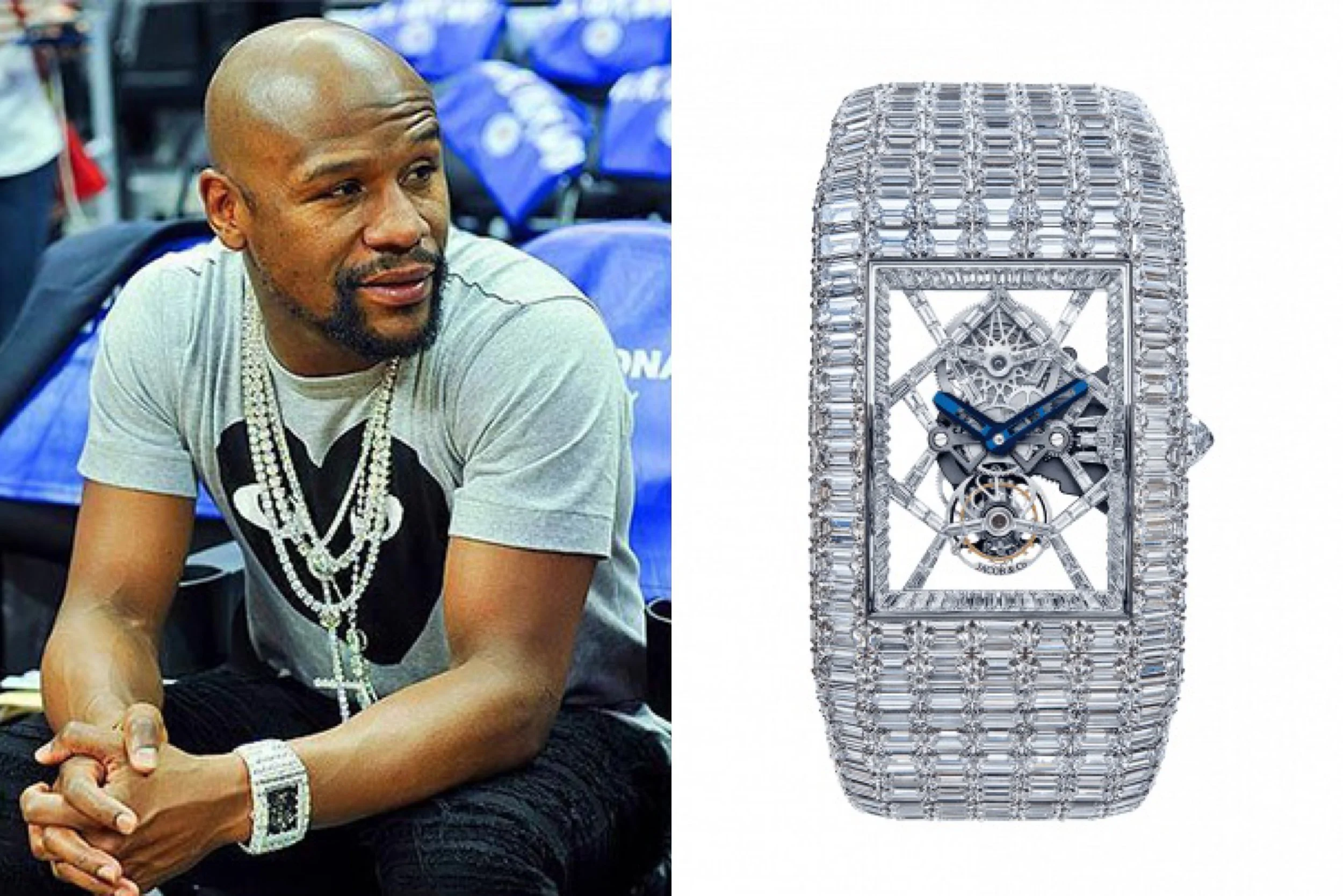
The 18-million-dollar timepiece famously owned by Floyd Mayweather, known as the Jacob & Co. Billionaire, represents the pinnacle of high-end horological excess. While it serves as a functional instrument for timekeeping, its valuation is derived almost entirely from its status as a superlative display of wealth, rarity, and extreme artisanal craftsmanship rather than traditional watchmaking utility.
Contents
The Mechanics of the Billionaire Watch
To understand why this watch is primarily a status symbol, one must first look at its architecture. The Jacob & Co. Billionaire is not a "complication-heavy" watch in the way a Patek Philippe grand complication is; it does not feature perpetual calendars, minute repeaters, or tourbillons that serve complex astronomical or sonic functions. Instead, it is an exercise in gem-setting and aesthetic dominance.
The watch is set with 260 carats of emerald-cut diamonds. Each individual diamond is meticulously placed on the 18-karat white gold case and bracelet. The skeletonized movement allows the wearer and onlookers to view the gear train, which is an aesthetic choice designed to expose the inner workings of a manual-wind caliber. However, the movement itself, while high-quality, is secondary to the sheer volume of diamonds covering every visible surface. In the world of high horology, a movement’s value is typically determined by its chronometric precision and the complexity of its micro-engineering. In the Billionaire, the movement is a platform for the stones, not the main attraction.
The Psychology of Wealth Signaling
Status symbols are assets that derive their primary value from their ability to communicate social standing, exclusivity, and financial power. For an item to function as a status symbol, it must be inherently difficult to acquire. The Billionaire succeeds here through extreme scarcity.
When a watch is priced at $18 million, it enters a realm where traditional cost-benefit analysis—which might consider resale value, movement rarity, or historical significance—no longer applies. The price is, in part, a signal of the owner’s liquidity. By wearing a watch that costs more than most people earn in several lifetimes, the owner eliminates any ambiguity regarding their wealth.
This signaling is further reinforced by the "Billionaire" moniker. The branding is deliberate; it is meant to evoke the lifestyle of the ultra-high-net-worth individual. When an object’s name and aesthetic are synonymous with the concept of immense wealth, its utility becomes irrelevant. Whether the watch keeps perfect time is inconsequential to the owner, because the object’s function has shifted from "telling time" to "telling the room who is in it."
Valuation: Materials vs. Horology
The price tag of $18 million is not purely about the labor involved in setting diamonds. It is about the "Veblen effect," an economic phenomenon where demand for an item increases as the price increases, specifically because of its high price point and exclusivity.
| Feature | Typical Luxury Watch | Jacob & Co. Billionaire |
|---|---|---|
| Primary Value Driver | Movement engineering, history | Gemstone weight, rarity, branding |
| Market Segment | Professional horology | Ultra-exclusive status symbol |
| Utility | Timekeeping and heritage | Signaling and high-net-worth asset |
| Accessibility | Limited supply | Bespoke, ultra-limited production |
Most high-end luxury watches gain value over time due to scarcity in the secondary market and the reputation of the watchmaker. The Billionaire, however, relies on the intrinsic value of its materials—the diamonds themselves—and the extreme overhead of the custom manufacturing process. Because the gem-setting process for such a watch requires hundreds of hours of precision labor from master artisans, the production is incredibly slow. This, in turn, keeps supply near zero, driving the price into the stratosphere.
The Problem of Liquidity and Utility
One of the defining traits of a "tool" watch—such as a Rolex Submariner or an Omega Speedmaster—is that it is designed to be worn in harsh environments or used for specific tasks (diving, timing events, etc.). The 18-million-dollar watch is the antithesis of this. It is a fragile, high-maintenance object.
The diamonds, while durable, make the watch susceptible to damage if bumped. Furthermore, the sheer size and weight of the timepiece make it impractical for daily wear. Most owners of such pieces view them as "alternative assets"—similar to high-end contemporary art. The goal is not to use the watch as a daily companion but to treat it as a store of value that can be displayed at high-profile events. This lack of daily utility cements its status as a luxury asset rather than a functional tool.
Rarity as a Defensive Moat
Why does a watch cost $18 million instead of $1 million? At a certain point, the price is no longer tied to the cost of raw materials or labor. It is tied to the brand’s ability to create a "defensive moat" around the product. By creating a watch that is so expensive that only a handful of people on the planet can afford it, the brand ensures that the watch never appears in the common secondary market.
This exclusivity creates a psychological barrier. For the elite, the watch is a club membership. It signals that the wearer is not just "rich," but part of a tier of wealth where $18 million is an acceptable amount to spend on a single piece of jewelry. The "status" is found in the ability to ignore the irrationality of the purchase.
Common Misconceptions About Horological Value
Observers often confuse "price" with "horological importance." They assume that because a watch is expensive, it must represent the absolute limit of mechanical engineering. This is a common fallacy.
- Complexity vs. Cost: Many of the most expensive watches in the world are less mechanically complex than watches costing a fraction of their price. A vintage Patek Philippe, for instance, may cost millions due to its history and scarcity, despite being a simple time-only watch.
- Branding and Marketing: The "Billionaire" name is a powerful marketing tool. By associating the product with a status (a billionaire) rather than a function (a chronometer), the brand successfully elevates the item into a social requirement for a specific demographic.
- The Role of Resale: Unlike a standard luxury watch, which might be bought with a hope of appreciation, a watch of this price point is often bought as a trophy. Its resale value is highly volatile and depends entirely on finding another buyer in the same microscopic demographic.
Next Steps for Collectors and Investors
If you are observing the market for high-value timepieces, it is essential to distinguish between a "collector’s watch" and a "status asset."
- For Collectors: Focus on mechanical heritage, the complexity of the movement, and the brand’s history. These watches tend to retain value based on their technical significance.
- For Wealth Management: If you are considering such an item as an asset, understand that you are essentially investing in a bespoke, high-carat jewelry item. Ensure that you have proper insurance coverage for the physical asset and consider the extreme lack of liquidity compared to traditional investment vehicles.
Owning a watch like the Billionaire is less about the time on the dial and everything to do with the environment the wearer inhabits. It is a pinnacle of the jewelry-watch hybrid, designed to do exactly what it has done for Floyd Mayweather: occupy a space that few others can reach.
Image Gallery