Why Everyone Thinks the Rapture Is Tomorrow: The Convergence of Prophecy and Modern Anxiety
The belief that the rapture is imminent usually stems from a convergence of specific biblical interpretations, heightened geopolitical tensions in the Middle East, and the observation of rare astronomical events. In 2026, many adherent...
The belief that the rapture is imminent usually stems from a convergence of specific biblical interpretations, heightened geopolitical tensions in the Middle East, and the observation of rare astronomical events. In 2026, many adherents point to the 6,000-year chronological theory and rapid technological shifts as definitive signs that the biblical "end times" are occurring.
Contents
The concept of the "Rapture"—the theological belief that Christian believers will be physically taken up to heaven before a period of global tribulation—has fascinated and polarized society for centuries. In the current landscape of 2026, the fervor surrounding an "immediate" rapture has reached a fever pitch. This phenomenon is rarely the result of a single event; rather, it is a "perfect storm" of eschatological (end-times) interpretation, digital echo chambers, and a world that feels increasingly volatile. To understand why so many people are convinced that the end of the age is "tomorrow," one must look at the specific theological, geopolitical, and psychological frameworks that support this worldview.
The Theological Framework of Imminence
At the heart of the "rapture tomorrow" sentiment is the doctrine of imminence. In Christian eschatology, particularly within dispensationalist circles, imminence suggests that the return of Christ for his church can happen at any moment, without any prior warning or necessary signs. This creates a perpetual state of spiritual readiness among believers.
However, many contemporary teachers move beyond simple imminence into date-suggestion, even if they stop short of explicit "date-setting." They rely on several key biblical passages to build their case:
- The Fig Tree Generation: Based on Matthew 24:32-34, many interpreters believe that the "generation" that saw the rebirth of Israel in 1948 will not pass away before all end-times prophecies are fulfilled. As we move deeper into the 2020s, the "80-year lifespan" mentioned in Psalm 90:10 is often used to calculate that the window for the rapture is closing rapidly.
- The 6,000-Year Theory: This theory posits that human history is modeled after the six days of creation followed by a day of rest (the Sabbath). According to this timeline, 6,000 years of human history are followed by a 1,000-year Millennial Kingdom. Using various biblical genealogies, many scholars suggest that the 6,000-year mark falls somewhere between 2026 and 2030.
- Feasts of Israel: Many "watchmen" focus on the Jewish High Holy Days, such as Rosh Hashanah (the Feast of Trumpets). Because the rapture is associated with the "sound of a trumpet" (1 Thessalonians 4:16), each autumn brings a renewed wave of expectation that "this is the year."
Geopolitical Triggers and the "Signs of the Times"
Theology does not exist in a vacuum. Current events in 2026 serve as the "evidence" that many use to validate their theological expectations. When people say the rapture is tomorrow, they are often looking at the news cycle through a prophetic lens.
The Centrality of Jerusalem
In eschatology, Israel is often referred to as "God's prophetic clock." Any escalation of conflict in the Middle East, particularly surrounding the Temple Mount in Jerusalem, triggers immediate rapture speculation. The ongoing discussions regarding the building of a Third Temple and the reported presence of "Red Heifers" (necessary for ritual purification according to Numbers 19) have led many to believe that the stage is set for the arrival of the Antichrist and the preceding rapture.
Global Governance and Digital Currency
The transition toward a cashless society and the integration of advanced AI-driven surveillance are frequently identified as precursors to the "Mark of the Beast" described in Revelation 13. As central banks in 2026 continue to pilot digital currencies (CBDCs), many Christians view this as the infrastructure for a one-world economic system. This technological shift creates a sense of urgency, as the rapture is expected to occur before this system becomes mandatory for believers.
Astronomical Signs and "Blood Moons"
The Bible mentions that there will be "signs in the sun, moon, and stars" (Luke 21:25). This has led to the rise of Christian Astronomy, where believers look for celestial alignments that match descriptions in the Book of Revelation.
The "Revelation 12 Sign," which occurred in September 2017, was a major catalyst for this movement. Even years later, in 2026, the occurrence of solar eclipses, planetary alignments, or "Blood Moons" (lunar eclipses) continues to be interpreted as "divine notifications." When a rare celestial event is scheduled for a specific date, social media platforms often explode with claims that the rapture will coincide with the event.
The Role of Social Media and the "Watchman" Community
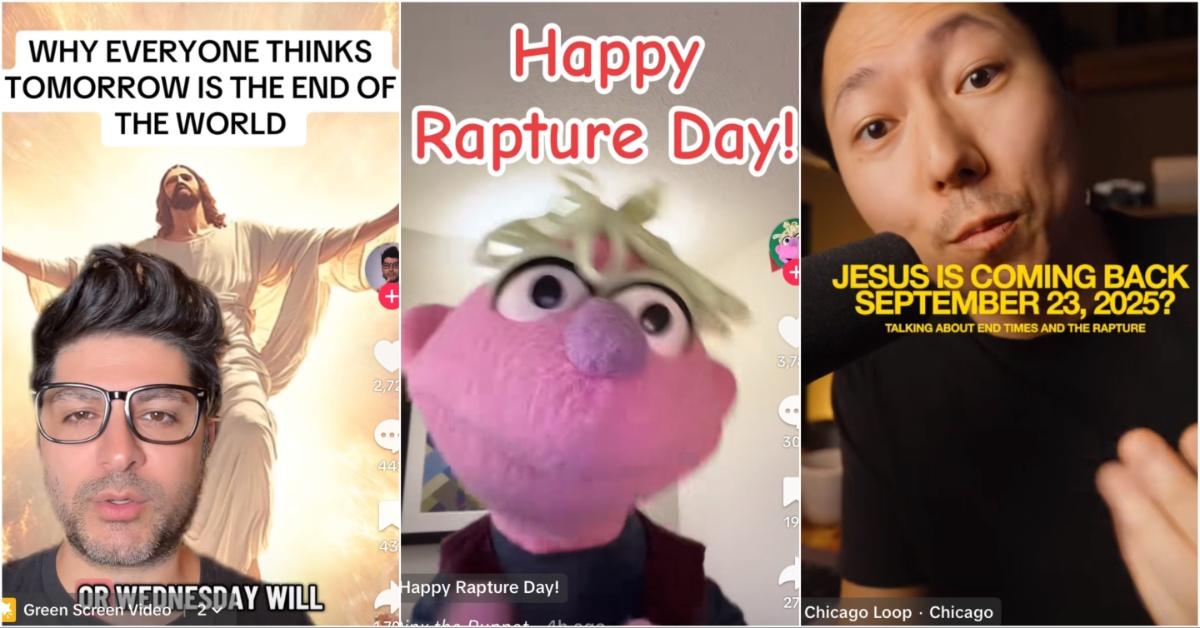
The internet has fundamentally changed how end-times prophecy is consumed. In previous decades, one might have to buy a book or attend a specific church to hear these theories. Today, the "Watchman" community on platforms like YouTube, TikTok, and X (formerly Twitter) provides 24/7 coverage of prophetic updates.
- Algorithmic Reinforcement: If a user clicks on one video about the rapture, the algorithm will continue to feed them similar content. This creates a "prophetic bubble" where it seems like everyone is talking about the rapture being tomorrow, even if it is only a small (but vocal) segment of the population.
- Citizen Eschatology: Anyone with a smartphone can now act as a "prophecy expert." This has led to a decentralization of authority, where complex theological concepts are often boiled down to 60-second clips, often lacking context but high in emotional urgency.
- Community Validation: The comments sections of these videos provide a sense of belonging for those who feel alienated by a secular world. This community reinforces the belief that "the end is near," making it difficult for individuals to maintain a skeptical or long-term perspective.
Comparing Prophetic Indicators and Secular Interpretations
To better understand why this belief is so pervasive, it is helpful to compare how "signs" are interpreted by the prophetic community versus how they are viewed through a secular or historical lens.
| Indicator | Prophetic Interpretation | Secular/Historical Interpretation |
|---|---|---|
| Middle East Conflict | Preparation for the Battle of Armageddon and the rise of the Antichrist. | Long-standing geopolitical, ethnic, and territorial disputes. |
| Natural Disasters | "Birth pains" signaling the imminent return of Christ (Matthew 24:8). | Statistical fluctuations or the result of observable climate change patterns. |
| Digital Currency | The infrastructure for the Mark of the Beast (Revelation 13). | Evolution of financial technology for efficiency and transparency. |
| Global Pandemics | One of the four horsemen (Pestilence) or a sign of the end. | Biological occurrences exacerbated by global travel and density. |
| Apostasy in Church | A sign that the world is ready for judgment (2 Thessalonians 2:3). | Sociological shifts in religious affiliation and secularization. |
The Psychology of "Rapture Anxiety"
The belief that the rapture is tomorrow is not just a theological stance; it is often a psychological response to a world that feels out of control. Scholars of sociology and psychology note several factors that contribute to this:
- Cognitive Dissonance: When the world becomes too chaotic to process, the idea of a "divine exit" provides a sense of relief. It simplifies complex global problems into a singular narrative of "good versus evil" with a guaranteed escape for the "good."
- Pattern Recognition: Humans are biologically wired to find patterns. In times of stress, people are more likely to see "signs" in random events (apophenia), connecting a storm in one country to a political speech in another as proof of a divine plan.
- The Desire for Justice: For many, the rapture represents the ultimate moment of vindication and justice. In a world where many feel marginalized or oppressed, the idea that God is about to "set things right" is deeply appealing.
Historical Precedents: The "Tomorrow" That Never Came
It is important to remember that the "rapture is tomorrow" sentiment is a recurring historical cycle. Every few years, a new date or window becomes the focus of global attention.
- 1988: Edgar Whisenant’s book 88 Reasons Why the Rapture Will Be in 1988 sold millions of copies.
- 1994/2011: Harold Camping used complex mathematical calculations to predict the end, leading to massive billboard campaigns.
- 2017: The Revelation 12 sign led many to believe September 23 would be the date.
In each of these cases, the failure of the event to occur led to what sociologists call "the persistence of belief." Instead of abandoning the idea, followers often "re-calculate" or claim that the "season" was correct but the specific day was a "warning" rather than the event itself. This historical context suggests that the current 2026 fervor will eventually morph into a new set of dates and signs in the 2030s if the expected event does not occur.
Frequently Asked Questions
What does the Bible say about knowing the date of the rapture?
The most cited verse regarding this is Matthew 24:36, which states, "But about that day or hour no one knows, not even the angels in heaven, nor the Son, but only the Father." Most theologians argue that any attempt to set a specific date is a direct contradiction of this scripture. However, proponents of date-setting often counter with 1 Thessalonians 5:4, which says believers should not be surprised by that day "like a thief."
Why is 2026 specifically mentioned in so many predictions?
The year 2026 is often cited because of its proximity to the 2,000-year anniversary of the beginning of Christ’s ministry (roughly AD 26-30) and its place within the 6,000-year timeline of human history. Additionally, certain geopolitical alignments and technological milestones scheduled for 2026 have made it a "high watch" year for eschatologists.
What is "Rapture Anxiety" and is it common?
Rapture anxiety refers to a psychological phenomenon where individuals experience intense fear, dread, or social withdrawal due to the belief that they might be "left behind" or that the world is about to end. It is particularly common among those raised in high-control religious environments or those who consume excessive amounts of end-times media.
Can a solar eclipse be a sign of the rapture?
While eclipses are natural astronomical events, many people interpret them as signs because of biblical references to the "sun being darkened" (Joel 2:31). However, since eclipses occur regularly and are predictable centuries in advance, mainstream science and many theologians view them as part of the natural order rather than specific prophetic triggers.
What happens to the "watchmen" when their dates pass?
Historically, most prophetic teachers move the goalposts. They may claim that they were "pointing to a window" rather than a specific day, or that God has granted a "delay" for more people to be saved. This process of re-interpretation allows the movement to maintain its momentum even after a failed prediction.
Recommendation for Navigating Prophetic Claims
If you find yourself overwhelmed by the "rapture is tomorrow" narrative, the most practical next step is to ground yourself in a "dual-perspective" approach. This involves maintaining your personal faith or interest in the subject while simultaneously planning for a long-term future.
Engage in "balanced consumption" by limiting time spent in prophetic echo chambers and seeking out historical or academic perspectives on eschatology. Remember that throughout history, the most resilient communities are those that work to improve their current world while remaining hopeful for the future, rather than those who abandon their responsibilities in anticipation of an immediate exit. Focus on "occupying until He comes" (Luke 19:13), which emphasizes productive living and community service regardless of the timeframe.
Image Gallery