How to Choose the Right Secure Cloud Alternative for Your Business in 2026
Choosing the right secure cloud alternative involves prioritizing zero-knowledge encryption, data sovereignty, and strict compliance with global regulations like GDPR or HIPAA. In 2026, businesses must transition toward providers that...
Choosing the right secure cloud alternative involves prioritizing zero-knowledge encryption, data sovereignty, and strict compliance with global regulations like GDPR or HIPAA. In 2026, businesses must transition toward providers that guarantee client-side encryption, ensuring that only the authorized user—not the service provider—holds the decryption keys to sensitive corporate assets.
Contents
The Evolution of Cloud Security Priorities in 2026
The landscape of enterprise data storage has shifted dramatically. While mainstream "Big Tech" providers dominated the early 2020s, the middle of this decade has seen a massive migration toward specialized secure cloud alternatives. This shift is driven primarily by the increasing sophistication of AI-powered cyberattacks and the tightening of international data residency laws.
Modern businesses no longer view security as a feature but as the foundation of their infrastructure. Choosing a "secure alternative" means looking beyond simple password protection. It requires an architectural commitment to privacy. Organizations now face the challenge of balancing the seamless collaboration found in traditional suites with the "trust-nothing" architecture of high-security platforms. The goal is to eliminate the provider as a point of failure; if the cloud host is breached, your data remains unreadable because the host never possessed the keys to unlock it.
Furthermore, the legal landscape has become more complex. With the full implementation of various regional Data Acts, the physical location of servers and the jurisdiction of the provider are paramount. A secure alternative must not only protect against hackers but also protect against legal overreach or unauthorized cross-border data transfers that could lead to massive regulatory fines.
Core Technical Requirements for Secure Cloud Alternatives
When evaluating a secure cloud provider, several technical non-negotiables must be met to ensure the integrity and confidentiality of business data. These specifications distinguish professional-grade secure clouds from consumer-level storage solutions.
Zero-Knowledge Architecture and Client-Side Encryption
The most critical feature of a secure cloud is zero-knowledge encryption. In this model, data is encrypted on the user's device before it is even uploaded to the cloud. The encryption process uses a key derived from the user’s password or a hardware token. Because this key is never transmitted to the provider’s servers, the provider has "zero knowledge" of the data content.
Technically, you should look for providers using AES-256-GCM or XChaCha20-Poly1305 for data at rest. These are industry-standard authenticated encryption algorithms that provide both confidentiality and data integrity. If a provider cannot guarantee that they are unable to reset your password or access your files via a "backdoor" for law enforcement, they do not offer true zero-knowledge security.
Identity and Access Management (IAM)
A secure cloud alternative is only as strong as its entry points. In 2026, standard passwords are insufficient. Evaluate providers based on their support for:
- FIDO2/WebAuthn: Support for physical security keys (like YubiKeys) is essential for preventing phishing attacks.
- Granular Permissions: The ability to set "read-only," "time-limited," or "password-protected" share links is vital for external collaboration.
- Single Sign-On (SSO) Integration: For enterprises, the secure cloud must integrate with existing identity providers like Okta or Azure AD (Entra ID) using SAML or OIDC protocols, while still maintaining encrypted silos.
Data Residency and Sovereignty
Data sovereignty refers to the concept that data is subject to the laws of the country in which it is physically located. For many businesses, especially those in the EU, healthcare, or legal sectors, storing data on servers subject to the US CLOUD Act is a compliance risk. A "secure alternative" often implies choosing a provider based in a privacy-friendly jurisdiction, such as Switzerland, Iceland, or Germany, where privacy laws are more robust and less prone to foreign intelligence mandates.
Comparing Leading Secure Cloud Alternatives for Business
The following table compares the most prominent secure cloud providers available in 2026, focusing on the metrics that matter most to enterprise decision-makers.
| Provider | Encryption Model | Primary Jurisdiction | Compliance Certifications | Best For |
|---|---|---|---|---|
| Tresorit | End-to-End (E2EE) | Switzerland / EU | ISO 27001, HIPAA, GDPR | Large scale enterprise collaboration |
| Proton Drive | Zero-Knowledge | Switzerland | GDPR, Swiss DPA | Privacy-first organizations and SMEs |
| Nextcloud (Self-hosted) | Configurable (E2EE available) | User-defined | Dependent on hosting | Total infrastructure control |
| NordLocker Business | Zero-Knowledge | Panama / International | SOC 2 (Infrastructure) | High-speed encrypted local-to-cloud sync |
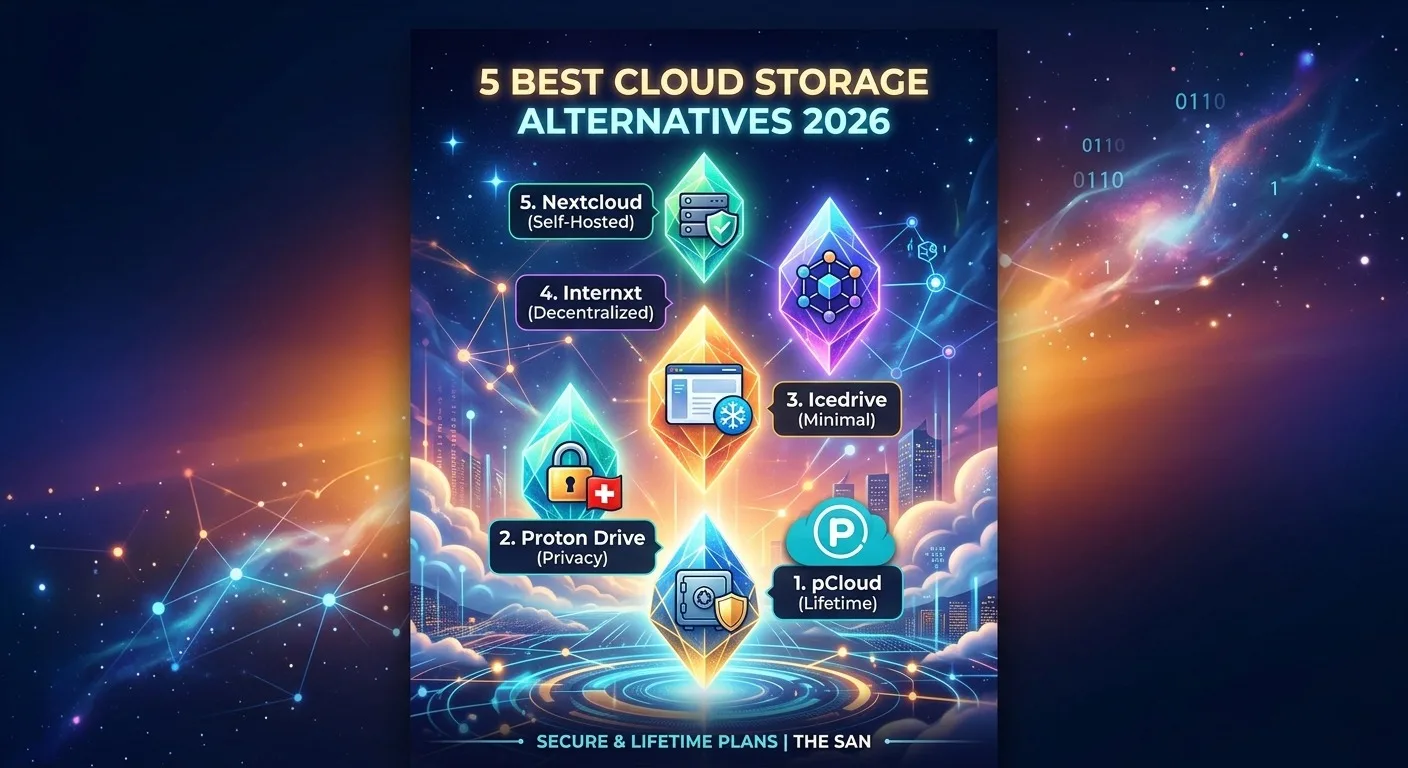
| Internxt | Decentralized / E2EE | EU (Spain) | GDPR | Distributed data and high-redundancy needs |
Assessing Compliance and Regulatory Alignment
A cloud alternative is not truly secure if it leaves your business vulnerable to legal penalties. Compliance is the bridge between technical security and business viability. In 2026, the regulatory environment requires active verification rather than passive trust.
GDPR and the "Schrems II" Legacy
For any business operating in or with the European Economic Area, the legacy of the "Schrems II" ruling continues to influence cloud choices. Standard contractual clauses (SCCs) are often not enough. You must ensure your chosen provider offers a Data Processing Agreement (DPA) that explicitly details how they handle data requests from foreign governments. Secure alternatives based in the EU or Switzerland are often preferred because they operate under a legal framework that is deemed "adequate" by the European Commission, reducing the administrative burden on your legal team.
Industry-Specific Standards
Different niches require specialized shields:
- Healthcare: Requires HIPAA (Health Insurance Portability and Accountability Act) compliance, which involves signing a Business Associate Agreement (BAA).
- Finance: Often requires SOC 2 Type II reports, which provide an independent audit of the provider's security, availability, and confidentiality controls over a period of time.
- Legal: Requires strict "privilege" protection, where even metadata (filenames, folder structures) must be shielded from the provider.
When vetting a provider, ask for their latest independent audit reports. A reputable secure cloud alternative will undergo annual third-party penetration testing and security audits to validate their claims of zero-knowledge architecture.
Operational Considerations: Performance vs. Security
There is a historical trade-off between extreme security and user convenience. When choosing a secure alternative, you must evaluate how these technical hurdles will impact your team's daily productivity.
The Impact of E2EE on Speed
Because end-to-end encryption (E2EE) requires the user's device to perform the heavy lifting of encrypting and decrypting files, it can be more CPU-intensive than traditional cloud storage. In 2026, most modern hardware handles this seamlessly, but large-scale file indexing and "global search" functions can be slower. Since the server cannot "see" the contents of your files, it cannot index them for you. Providers like Tresorit and Proton Drive have developed "blind indexing" technologies to mitigate this, but it is a factor to test during your pilot phase.
Collaboration and "Shadow IT"
If a secure cloud alternative is too difficult to use, employees will inevitably revert to unauthorized, non-secure tools (Shadow IT). Ensure the provider offers native applications for Windows, macOS, Linux, iOS, and Android. The user interface should feel familiar. Features like secure document previewing—where a file is decrypted in a secure browser sandbox—allow users to work efficiently without sacrificing the zero-knowledge principle.
Common Mistakes When Selecting a Secure Provider
Many organizations fail to realize that security is a process, not a product. Even the most secure cloud alternative can be undermined by poor implementation.
1. Ignoring Metadata Security While the file content might be encrypted, metadata—such as who you are sharing files with, how often you access them, and the approximate size of your data—can still reveal sensitive business patterns. Ensure your provider minimizes metadata logging.
2. Overlooking Recovery Procedures In a true zero-knowledge environment, the provider cannot reset your password. If your team loses the master recovery keys or the SSO integration fails without a backup, the data is lost forever. You must establish a robust internal key-management policy before deploying the solution.
3. Failing to Audit Third-Party Integrations If you connect your secure cloud to a third-party AI tool or an external project management suite, you may be creating a bridge that bypasses the encryption. Always verify if integrations maintain the zero-knowledge boundary or if they require data to be decrypted on an external server.
Frequently Asked Questions
Is zero-knowledge cloud storage slower than Google Drive or OneDrive?
Generally, there is a slight performance difference because your device must handle the encryption keys. However, in 2026, optimizations in protocols like TLS 1.3 and advanced hardware acceleration in modern processors make this difference negligible for standard office documents. The "bottleneck" is usually the initial upload speed rather than the encryption process itself.
Can I still collaborate on documents in real-time with an encrypted cloud?
Yes, but it depends on the provider. Some secure alternatives offer "encrypted collaborative editing" where the decryption happens in the browser's RAM, allowing multiple users to work on a file simultaneously without the server ever seeing the unencrypted content. This is a complex technical feat, so check if your chosen provider supports native co-authoring.
What happens if we lose our company’s master encryption key?
In a strictly secure zero-knowledge environment, if the master key and all recovery phrases are lost, the data is unrecoverable. This is the "cost" of high security. Most enterprise-grade alternatives provide "Admin Key Recovery" features where a designated security officer can regenerate access, but this must be set up and guarded with extreme care during the initial configuration.
Do secure cloud alternatives comply with the US CLOUD Act?
If a provider is based in the United States or is a subsidiary of a US company, they are subject to the CLOUD Act, which allows US law enforcement to request data regardless of where it is stored. To avoid this, many businesses choose "Sovereign Cloud" alternatives based in jurisdictions like Switzerland or the EU, which have different legal requirements for data disclosure.
How do I migrate my existing business data to a secure cloud alternative?
Most secure providers offer migration tools or support for protocols like SFTP and Rclone. However, because you are moving into an encrypted environment, you should plan for a "staged migration." This involves encrypting and moving data in batches to ensure that file permissions and folder hierarchies are preserved correctly within the new encrypted structure.
Final Recommendation for Businesses
When selecting a secure cloud alternative in 2026, the best approach is to conduct a 30-day pilot program with a small, data-sensitive department (such as Legal or HR). Prioritize providers that offer Swiss or EU data residency and documented zero-knowledge audits. For most small to medium enterprises, Proton Drive or Tresorit offers the best balance of user experience and "trust-nothing" security. Larger enterprises requiring total sovereignty should consider a managed Nextcloud instance hosted on European infrastructure like Hetzner or OVHcloud. Regardless of the choice, ensure your internal IT policy includes a strictly managed "Recovery Key" protocol to prevent permanent data loss.
Image Gallery