Master Guide to Product Management Requirements: Defining Success in 2026
Product management requirements are the documented specifications, user needs, and functional goals that guide the development of a product. They serve as the definitive blueprint for engineering, design, and stakeholders, ensuring tha...
Product management requirements are the documented specifications, user needs, and functional goals that guide the development of a product. They serve as the definitive blueprint for engineering, design, and stakeholders, ensuring that the final output aligns with the business strategy and solves specific customer problems. In modern product lifecycles, these requirements bridge the gap between high-level vision and technical execution.
Contents
The Evolution of Product Requirements in 2026
By 2026, the landscape of product management requirements has shifted from static, monolithic documents to dynamic, data-driven specifications. While the core objective—defining what needs to be built—remains the same, the methodology has integrated artificial intelligence for predictive scoping and real-time feedback loops. Requirements are no longer just "orders" given to engineering; they are hypotheses that must be validated through user data and technical feasibility.
Effective requirement management is the difference between a product that solves a market need and one that simply adds noise to the ecosystem. Without clear requirements, teams face scope creep, misaligned expectations, and wasted resources. Today, the focus is on "Outcome-Based Requirements," where the success of a requirement is measured by its impact on user behavior rather than just its deployment.
The Hierarchy of Product Management Requirements
Understanding requirements requires a tiered approach. Requirements are not all created equal; they exist at different levels of granularity and serve different audiences within an organization.
1. Business Requirements (The "Why")
These are high-level objectives that define what the organization hopes to achieve. Business requirements are typically driven by leadership and the product manager (PM). They focus on revenue goals, market share, competitive positioning, and ROI. In 2026, these are often expressed through Objective and Key Results (OKRs) or North Star Metrics.
2. User Requirements (The "Who")
User requirements describe the tasks or goals a user must be able to accomplish with the product. These are often captured through user personas, journey maps, and "Jobs-to-be-Done" (JTBD) frameworks. Instead of saying "The system must have a login," a user requirement states, "The user needs a secure way to access their private data across multiple devices."
3. Functional Requirements (The "What")
Functional requirements provide the technical detail of how the system should behave. They describe the specific functions, data processing, and logic the software must perform. These are the "nuts and bolts" that engineers use to build the features.
4. Non-Functional Requirements (The "How")
Often overlooked, non-functional requirements define the quality attributes of the system. This includes performance, scalability, security, usability, and reliability. In 2026, with the prevalence of global edge computing and strict data sovereignty laws, non-functional requirements regarding latency and regional compliance are more critical than ever.
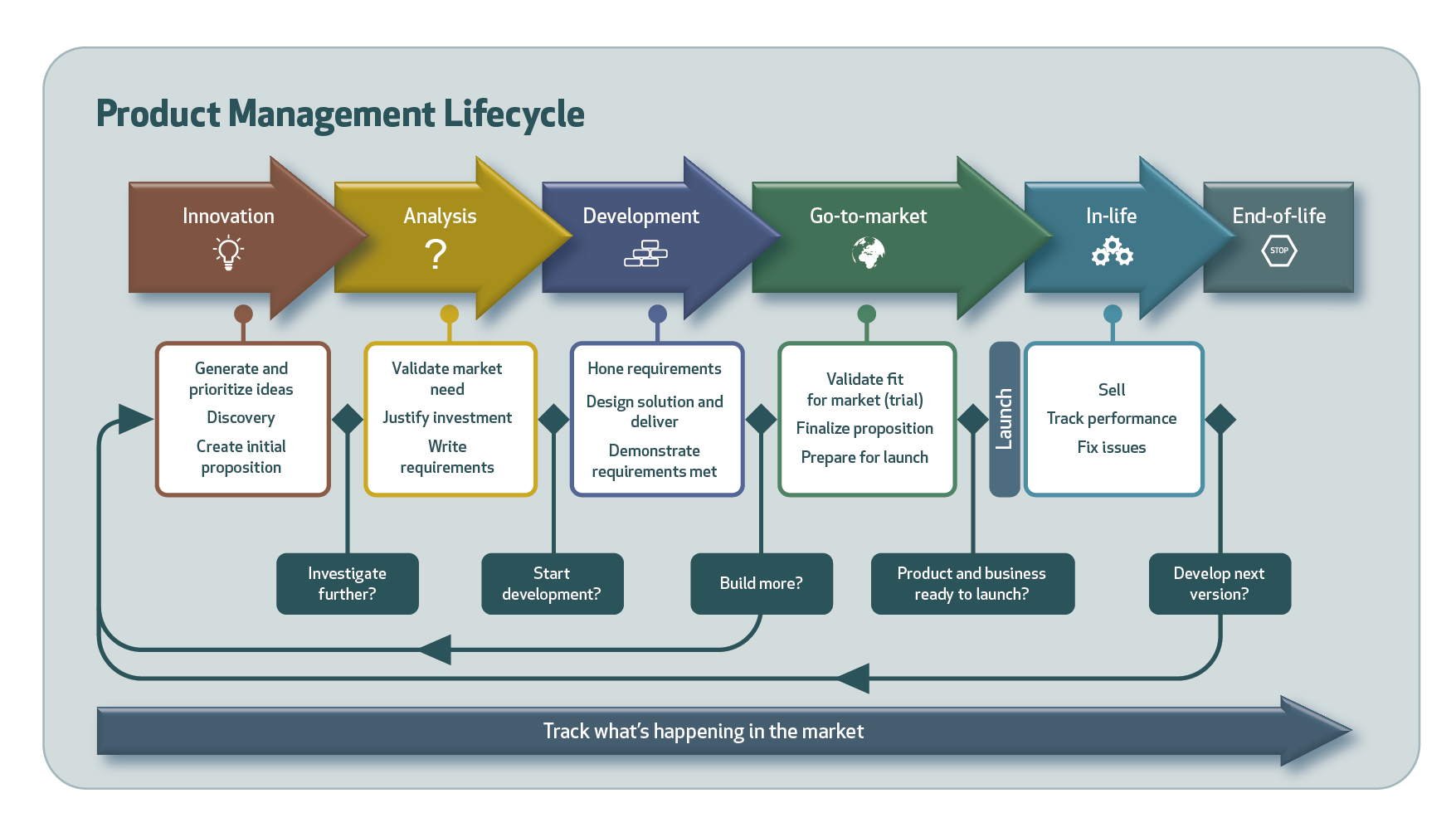
The Requirements Lifecycle: From Discovery to Delivery
The process of managing requirements is iterative. It involves several distinct phases that ensure the product remains relevant to the user while being technically viable.
Discovery and Elicitation
This is the research phase. Product managers gather requirements by conducting user interviews, analyzing market trends, and reviewing product analytics. In the current era, PMs use AI-driven sentiment analysis tools to aggregate feedback from thousands of touchpoints—social media, support tickets, and in-app behavior—to identify "hidden" requirements that users may not explicitly state.
Analysis and Prioritization
Not all requirements are worth pursuing. Product managers must weigh the cost of implementation against the potential value. Frameworks like RICE (Reach, Impact, Confidence, Effort) or the MoSCoW method (Must have, Should have, Could have, Won't have) are standard. In 2026, prioritization also includes "Sustainability Scoring," measuring the carbon footprint and long-term technical debt of a proposed requirement.
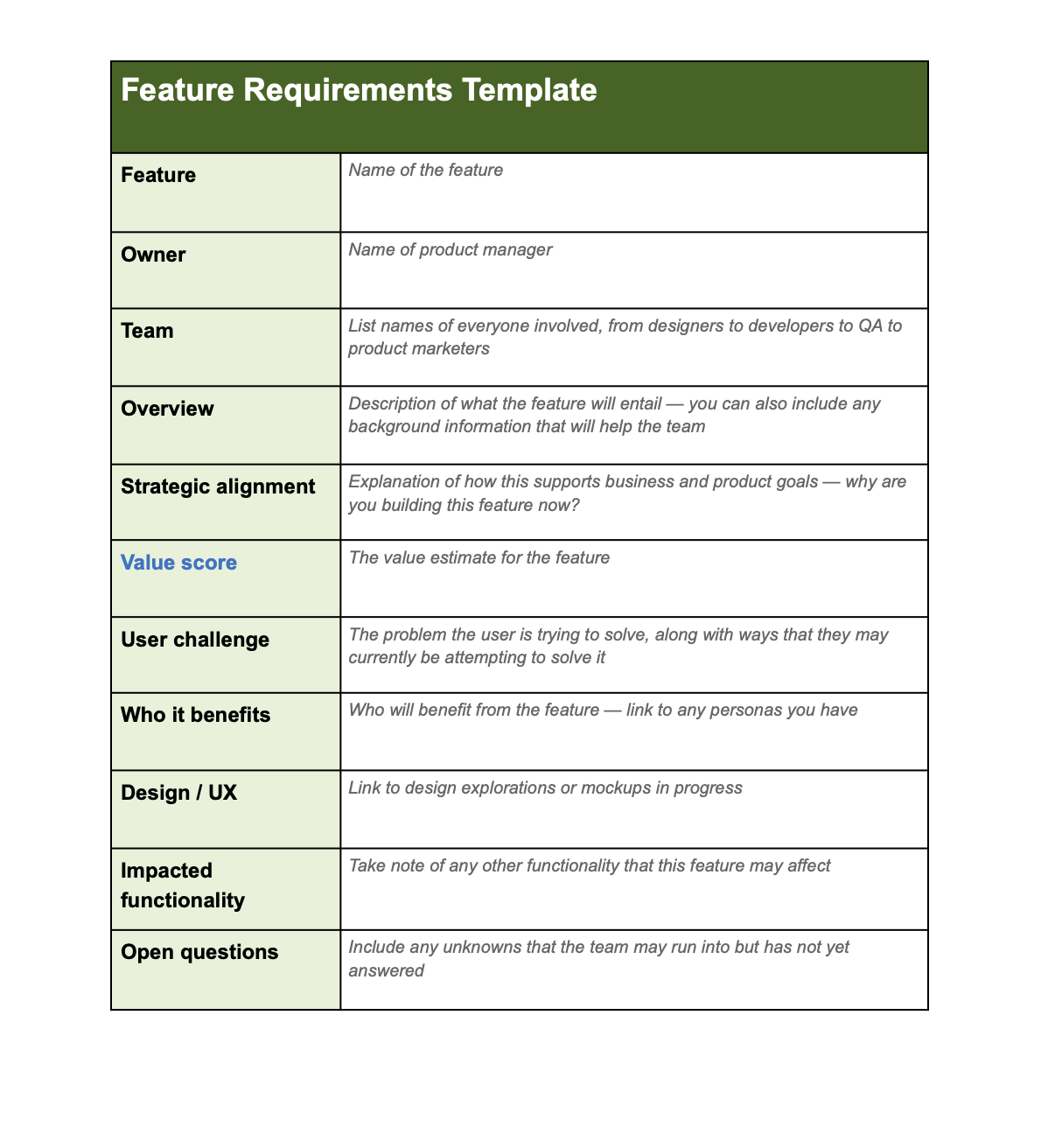
Documentation and Specification
Once prioritized, requirements must be documented. While the traditional Product Requirements Document (PRD) still exists, it is often more modular and collaborative. Requirements are broken down into Epics and User Stories. A user story follows the classic format: "As a [user type], I want to [action], so that [value]." This ensures that every technical task is rooted in user benefit.
Validation and Verification
Before development begins, requirements must be validated with stakeholders and, ideally, through low-fidelity prototypes with users. Verification occurs during and after development to ensure the built feature matches the original requirement. This is often managed through Acceptance Criteria (AC)—the specific conditions that a product must meet to be accepted by the product manager.
Comparing Requirement Documentation Methods
The way a team documents requirements depends on their methodology (Agile, Waterfall, or Hybrid) and the complexity of the product.
| Document Type | Primary Audience | Level of Detail | Best Use Case |
|---|---|---|---|
| Business Requirements Document (BRD) | Executives, Investors | High-level, strategic | Initial funding, major pivots, or new product launches. |
| Product Requirements Document (PRD) | Design, Engineering, QA | Comprehensive, functional | Defining a specific feature or a significant product update. |
| User Stories | Engineering, Scrum Teams | Granular, task-oriented | Daily Agile sprints and incremental development. |
| Functional Specification | Technical Architects | Highly technical, logic-based | Complex backend systems or API integrations. |
| System Requirements (SRS) | Compliance, Engineering | Performance, security, hardware | Regulatory industries (MedTech, FinTech) or hardware-software integration. |
Best Practices for Writing Effective Requirements
Writing requirements is an art that requires precision. Poorly written requirements lead to "Requirement Volatility," where the scope changes mid-sprint because the initial directive was unclear.
- Be Specific and Unambiguous: Avoid words like "fast," "user-friendly," or "optimized." Instead, use measurable metrics: "The page must load in under 200ms" or "The onboarding process must be completed in three clicks or fewer."
- Focus on the Problem, Not the Solution: A common mistake is telling engineers how to build something. A requirement should state the desired outcome. For example, instead of "Add a SQL database for user logs," say "The system must store user activity logs for at least 90 days for audit purposes."
- Ensure Traceability: Every functional requirement should be traceable back to a business goal or user need. If a requirement doesn't contribute to an OKR, it should be questioned.
- Define Acceptance Criteria Early: Clear AC prevents "Ready-to-Done" friction. Engineers should know exactly what tests the feature must pass before they start coding.
- Keep it Collaborative: Use "Three Amigos" sessions (PM, Design, and Engineering) to review requirements before they are finalized. This catches technical constraints and design impossibilities early in the process.
Common Pitfalls in Requirement Management
Even experienced product managers fall into traps that can derail a product roadmap. Identifying these early is key to maintaining velocity.
The "Kitchen Sink" Syndrome
This occurs when a PM tries to include every possible feature in a single requirement set to satisfy every stakeholder. The result is a bloated product that is difficult to use and maintain. In 2026, the best products are those that excel at a few core requirements rather than being mediocre at many.
Ignoring the "Ilities"
Product managers often focus on features (Functional) and forget the "Ilities": Scalability, Maintainability, and Reliability. If a product scales from 1,000 to 1,000,000 users, and the requirements didn't account for load balancing or database sharding, the product will fail despite having "good features."
Static Requirements in a Dynamic Market
A requirement written six months ago may no longer be relevant. Product managers must be willing to "kill" requirements if market conditions or user data suggest a change in direction. Sticking to an outdated PRD is a recipe for building a product that nobody wants.
The Role of AI in Requirement Engineering
In 2026, AI has become a co-pilot for the product manager. Large Language Models (LLMs) specialized in product management can now:
- Draft User Stories: Based on a high-level feature description, AI can generate a dozen user stories with suggested acceptance criteria.
- Detect Conflicts: AI can scan a backlog of thousands of requirements to find contradictions (e.g., one requirement demanding high security and another demanding frictionless access).
- Predict Effort: By analyzing historical velocity, AI can provide more accurate estimates of how much "effort" a specific requirement will take compared to human estimates.
Frequently Asked Questions
Who is ultimately responsible for product requirements?
The Product Manager is the primary owner of product requirements. While they collaborate with stakeholders, designers, and engineers, the PM is responsible for the "What" and "Why." They must ensure the requirements align with the product strategy and prioritize them based on business value.
How detailed should a Product Requirements Document (PRD) be?
The level of detail depends on the team's familiarity with the subject and the complexity of the feature. However, a PRD should always be detailed enough so that a designer can create wireframes and an engineer can begin architectural planning without needing a meeting to clarify the basic intent. If the team is constantly asking "What did you mean by this?", the PRD is too vague.
What is the difference between a requirement and a feature?
A requirement is a necessity or a condition that must be met to solve a problem (e.g., "The user needs to be able to recover their account"). A feature is the specific solution or implementation of that requirement (e.g., "An SMS-based two-factor authentication system"). Multiple features can sometimes satisfy a single requirement.
How do you handle changing requirements mid-development?
This is handled through a process called "Change Management." In Agile, if a requirement changes, it is re-evaluated during the next sprint planning. If the change is critical and must happen immediately, the team must agree on what other work will be removed to accommodate the change. Transparency with stakeholders about the impact on the timeline is essential.
Can requirements be automated?
While the intent cannot be automated, the documentation and validation can be. Automated testing suites (like BDD - Behavior Driven Development) can turn requirements written in natural language into executable tests, ensuring the code always matches the requirement.
How do non-functional requirements affect the budget?
Non-functional requirements often have a significant impact on the "hidden" costs of a product. For example, a requirement for "99.99% uptime" requires redundant servers, specialized DevOps engineering, and 24/7 monitoring, which is significantly more expensive than "99.0% uptime." PMs must balance these costs against business needs.
Final Recommendation for Product Leaders
To excel in product management requirements in 2026, shift your mindset from "writing specs" to "defining outcomes." Start by clearly identifying the user pain point and the business goal before writing a single functional line. Use modern collaboration tools to keep requirements "living," and leverage AI to handle the tedious aspects of documentation, allowing you to focus on the strategic "Why." Always validate your requirements with real data, and be prepared to pivot when that data tells you a requirement is no longer serving the user.
Image Gallery