Understanding Why These Practices Prevent Unauthorized Access and Strengthen Overall Security
Implementing rigorous security protocols is the foundational step in protecting sensitive data and maintaining the integrity of enterprise environments. These practices function by creating multiple, layered hurdles that unauthorized a...
Implementing rigorous security protocols is the foundational step in protecting sensitive data and maintaining the integrity of enterprise environments. These practices function by creating multiple, layered hurdles that unauthorized actors must overcome, effectively narrowing the attack surface and reducing the likelihood of a successful breach through systematic control, verification, and oversight.
Contents
The Mechanism of Layered Security Models
The fundamental premise of why security practices prevent unauthorized access lies in the concept of "Defense in Depth." Rather than relying on a single perimeter—such as a firewall or a password—a comprehensive security posture employs overlapping controls. When one mechanism fails, another is already in place to mitigate the risk.
Unauthorized access typically targets the weakest link in a system. By standardizing authentication, enforcing the principle of least privilege, and maintaining consistent patch cycles, organizations eliminate "low-hanging fruit." These practices serve to normalize the security baseline across an entire infrastructure. When a system is hardened, an attacker can no longer rely on default configurations or overlooked vulnerabilities; they are forced to expend significant resources to identify and exploit a unique gap, which increases the probability that security monitoring tools will detect the intrusion early in the process.
Identity and Access Management (IAM)
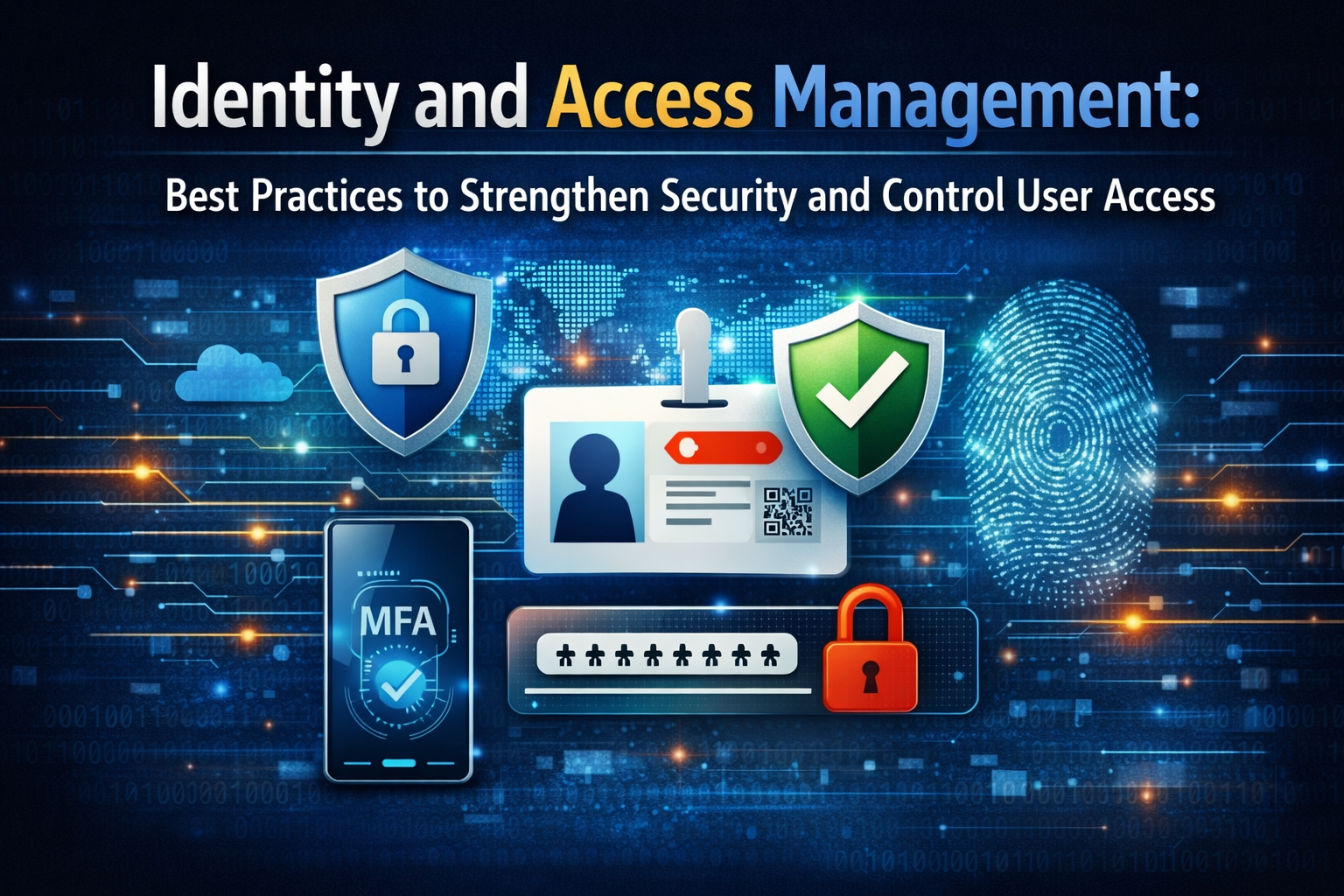
IAM practices are the front line of defense against unauthorized entry. Identity is the new perimeter in modern computing, especially with the proliferation of distributed and remote work environments.
- Multi-Factor Authentication (MFA): MFA prevents unauthorized access by requiring two or more independent proofs of identity. Even if an attacker obtains a user's password, they cannot proceed without the secondary factor, such as a biometric scan or a time-based one-time password (TOTP).
- Principle of Least Privilege (PoLP): This practice mandates that users and services are granted only the minimum level of access required to perform their specific tasks. If a single user account is compromised, the attacker’s ability to move laterally through the network is strictly contained, preventing a localized incident from escalating into a system-wide catastrophe.
- Regular Access Reviews: Periodic audits of user permissions ensure that "privilege creep" does not occur. As employees change roles, their old permissions are often inadvertently retained. Automating the revocation of access for offboarded or reassigned staff removes an easy entry point for malicious actors.
Technical Hardening and Vulnerability Management
Beyond identity, the technical state of the systems themselves determines their resistance to unauthorized access. Hardening refers to the process of securing a system by reducing its surfaces of vulnerability.
Standard practices include disabling unnecessary services, closing unused ports, and enforcing strict configuration policies. Every active service is a potential entry point; by shutting down those that are not mission-critical, an organization reduces the code footprint that an attacker can exploit. Furthermore, vulnerability management—the cycle of identifying, classifying, and remediating software flaws—is critical. When software is left unpatched, it often leaves known security holes exposed. Automated patch management ensures that the "time-to-remediate" is minimized, often outpacing the time it takes for attackers to weaponize a published vulnerability.
Comparison of Core Security Practices
| Practice | Target Threat | Impact on Security |
|---|---|---|
| MFA | Credential Theft | High: Blocks access despite password leakage. |
| PoLP | Insider Threats/Lateral Movement | High: Contains the blast radius of a breach. |
| Patch Management | Exploitation of Known Bugs | Critical: Prevents automated exploit attempts. |
| Network Segmentation | Network-wide Compromise | Medium/High: Isolates critical assets. |
| Audit Logging | Stealthy Intrusions | Medium: Provides detection and forensic data. |
Data Encryption and Integrity
Unauthorized access is not limited to gaining entry; it also includes the unauthorized acquisition of data. Encryption serves as the final barrier. Even if an attacker bypasses authentication and gains access to the underlying storage or the network traffic, the data remains unintelligible without the appropriate decryption keys.
Encryption at rest ensures that physical theft of servers or hard drives does not lead to a data breach. Encryption in transit protects data as it moves between client and server, preventing man-in-the-middle attacks where attackers intercept credentials or sensitive information mid-transmission. Strengthening security requires that these cryptographic practices are not just implemented, but managed via secure key lifecycle policies.
Monitoring, Logging, and Incident Response
A security strategy is incomplete without the ability to detect when a practice has been bypassed. Robust logging practices allow security teams to distinguish between normal user behavior and malicious activity.
When unauthorized access occurs, the speed of detection dictates the scope of the damage. By centralizing logs and employing Security Information and Event Management (SIEM) tools, organizations gain visibility into anomalous patterns, such as login attempts from unusual geographic locations or access at odd hours. This continuous visibility strengthens security by creating a feedback loop: every failed attempt at unauthorized access provides intelligence that can be used to refine existing policies and harden configurations further.
Common Misconceptions in Security Implementation
One common mistake is the belief that "set-and-forget" security measures are sufficient. Security is an operational process, not a static product. Organizations often struggle with:
- Complexity Overload: Implementing too many tools without integration can lead to "alert fatigue," where security teams become desensitized to warnings, potentially missing genuine threats.
- Neglecting Human Factors: Security practices often fail because they are too cumbersome for users, leading employees to find workarounds. Effective security must balance protection with usability.
- Shadow IT: Unauthorized software or hardware introduced by departments outside of the IT function often bypasses established security protocols, creating "blind spots" that are highly vulnerable to attack.
Frequently Asked Questions
Why is multi-factor authentication considered more effective than strong passwords alone? MFA adds a layer of "what you have" or "who you are" to the "what you know" (password) category. Passwords can be phished, guessed, or stolen via data breaches, but possessing a physical token or a biometric key is significantly harder for an attacker to replicate.
Does network segmentation actually prevent unauthorized access? Yes. By dividing a network into smaller, isolated subnets, segmentation ensures that even if an attacker gains access to one segment, they cannot easily move to sensitive areas containing database or financial information, effectively neutralizing the "flat network" risk.
What is the role of the principle of least privilege in mitigating insider threats? PoLP restricts the damage a malicious or compromised insider can do. If an employee only has access to the folders needed for their specific job, they cannot access or delete data from unrelated departments, thereby limiting the scope of any potential security incident.
How often should access reviews be conducted? Access reviews should follow a risk-based approach. High-privileged accounts should be audited quarterly or even monthly, while standard user access can be reviewed biannually. Automated triggers for staff turnover or role changes should also initiate immediate reviews.
What happens if an organization ignores vulnerability management? Ignoring vulnerability management leaves systems open to automated exploit kits that scan the internet for known weaknesses. This often leads to automated ransomware attacks, which exploit older vulnerabilities that have had official patches available for months or years.
Conclusion and Next Actions
Securing an environment is an iterative process of identifying risks and applying controls. To strengthen your current security posture, start by auditing your existing access logs to identify any unauthorized or unusual activity. Prioritize the implementation of MFA across all administrative accounts, as this provides the highest return on investment for threat mitigation. Once access is secured, conduct a review of your current patch status to ensure all critical systems are up to date. Security is not a state of perfection, but a commitment to maintaining rigorous standards that force attackers to move elsewhere.
Image Gallery