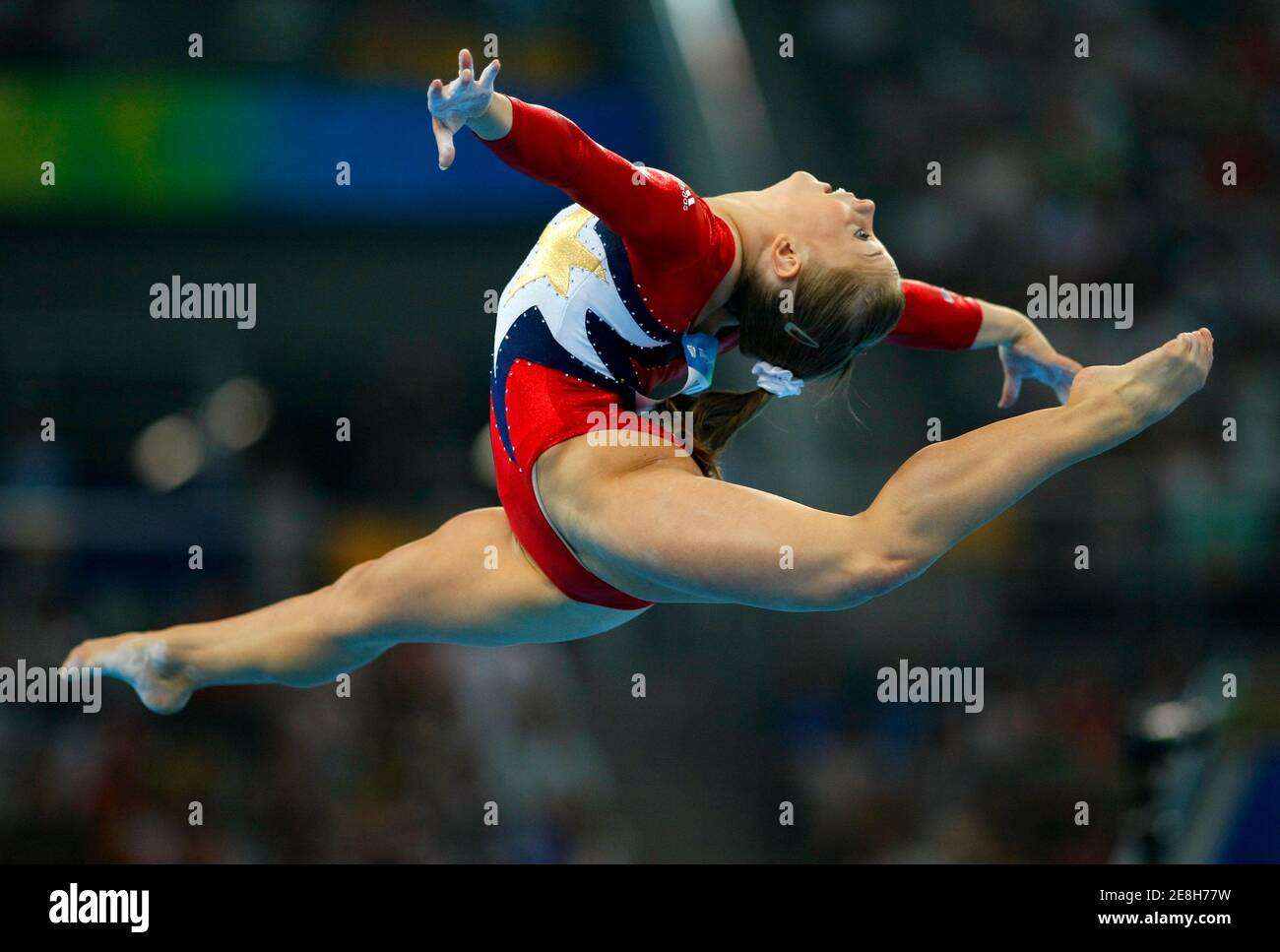
Shawn Johnson’s Olympic Journey: From Iowa Phenom to Beijing Gold
Shawn Johnson’s Olympic journey stands as one of the most compelling chapters in modern American gymnastics history. Rising from a local gym in West Des Moines, Iowa, she achieved elite status by winning the 2007 World All-Around title...
Shawn Johnson’s Olympic journey stands as one of the most compelling chapters in modern American gymnastics history. Rising from a local gym in West Des Moines, Iowa, she achieved elite status by winning the 2007 World All-Around title before capturing four medals—including Gold on the balance beam—at the 2008 Beijing Olympic Games.
Contents
Early Roots and Training Under Liang Chow
Shawn Johnson’s path to the Olympic stage was unconventional compared to many of her elite peers. Born in Des Moines, Iowa, in 1992, Johnson began gymnastics at age three. Her athletic trajectory changed permanently when her parents enrolled her at Chow’s Gymnastics and Dance Institute in West Des Moines, run by former Chinese national champion Liang Chow.
Unlike many elite training programs that required 35 to 40 hours of grueling weekly gym time, Chow designed a balanced regimen for Johnson. She trained approximately 20 to 25 hours per week while attending public school. Chow focused on technique, power, and psychological consistency rather than high-volume repetition. This approach allowed Johnson to build exceptional dynamic power without incurring the early overuse injuries common in elite artistic gymnastics.
Johnson’s technical foundation was built around her powerful physical structure. Standing 4 feet 11 inches tall, her low center of gravity and high proportion of fast-twitch muscle fibers enabled her to generate massive height on tumbling passes and vault entries. Chow recognized these traits early, choreographing routines that maximized her execution scores under the newly reformed gymnastics scoring framework.
The 2006 Code of Points and Elite Breakthrough
To understand Johnson’s rapid rise between 2006 and 2008, one must understand the shift in gymnastics scoring. In 2006, the International Gymnastics Federation (FIG) abolished the traditional "Perfect 10" system, replacing it with an open-ended Code of Points. The new system combined two separate metrics:
- D-Score (Difficulty Score): Evaluates the structural complexity, skill values, connection bonuses, and mandatory element requirements of a routine.
- E-Score (Execution Score): Starts at a perfect 10.0 and applies strict deductions for form flaws, bent knees, flexed feet, balance steps, and posture errors.
Johnson thrived under this open-ended system. Her technical precision yielded exceptionally high E-Scores, while her natural power allowed Chow to stack her routines with high-difficulty D-Score skills.
In 2007, her first year as a senior elite competitor, Johnson swept the major competitions. She won the Individual All-Around titles at the Tyson American Cup, the Visa Championships (U.S. Nationals), and the Pan American Games. Her international statement came at the 2007 World Artistic Gymnastics Championships in Stuttgart, Germany. There, she led the United States team to Gold and won individual Gold medals in both the Individual All-Around and the Floor Exercise. Entering 2008, Johnson was established as the primary contender for Olympic All-Around Gold.
The Road to Beijing: National Dominance and Olympic Trials
The 2008 competitive season saw an intense domestic rivalry between Shawn Johnson and teammate Nastia Liukin. While Johnson embodied power, speed, and rock-solid consistency, Liukin offered unmatched artistic flexibility and high-difficulty bar routines.
At the 2008 Visa Championships in Boston, Johnson defended her National All-Around title, narrowly beating Liukin. Weeks later at the U.S. Olympic Team Trials in Philadelphia, Johnson again finished first in the All-Around standings. Her performances earned her an automatic selection to the six-woman U.S. Olympic squad, alongside Liukin, Alicia Sacramone, Chellsie Memmel, Samantha Peszek, and Bridget Sloan.
Johnson was named team captain for Beijing. Despite the mounting media scrutiny and high expectations, her signature calm composure earned her the reputation of a consistent "anchor" for the U.S. team across all four apparatuses: Vault, Uneven Bars, Balance Beam, and Floor Exercise.
The 2008 Beijing Olympic Games: Event Breakdown and Performance Analysis
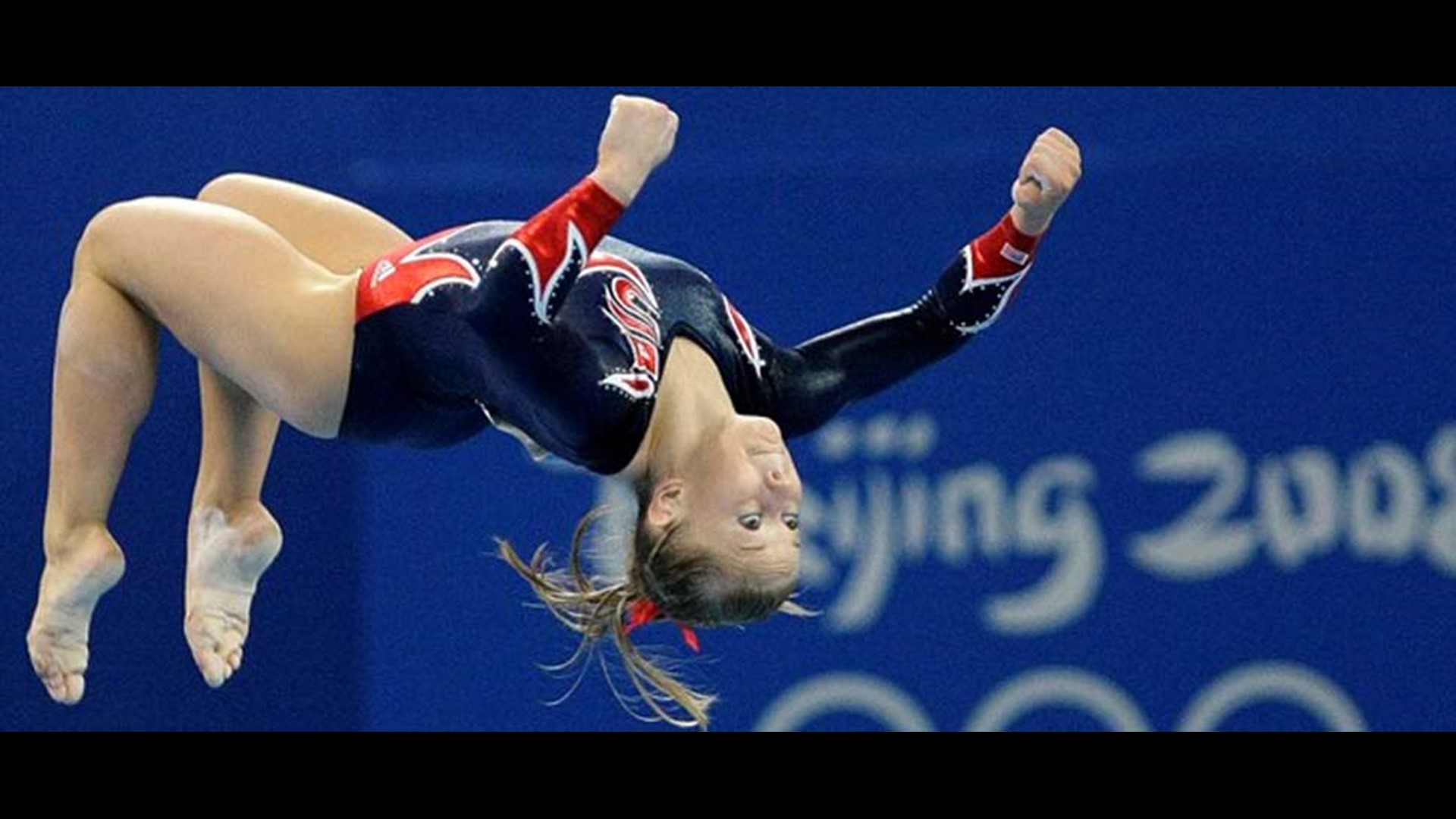
At the National Indoor Stadium in Beijing, Johnson competed in all four apparatus events during qualifications, securing spots in the Team Final, the Individual All-Around Final, and three individual Apparatus Finals (Floor Exercise, Balance Beam, and Vault).
Beijing 2008 Performance Breakdown
- Team Event (Silver)
- Individual All-Around (Silver)
- Floor Exercise (Silver)
- Balance Beam (GOLD - 16.225)
The Team Event
During the Team Final, the U.S. women faced significant adversity, including minor injuries to teammates Chellsie Memmel and Samantha Peszek. Under the 3-3-5 format—where three athletes compete on each event and all three scores count—there was zero margin for error. Johnson hit all four of her routines cleanly. However, minor errors elsewhere on floor and beam left the U.S. team with the Silver medal behind host nation China, who won Gold.
The Individual All-Around Final
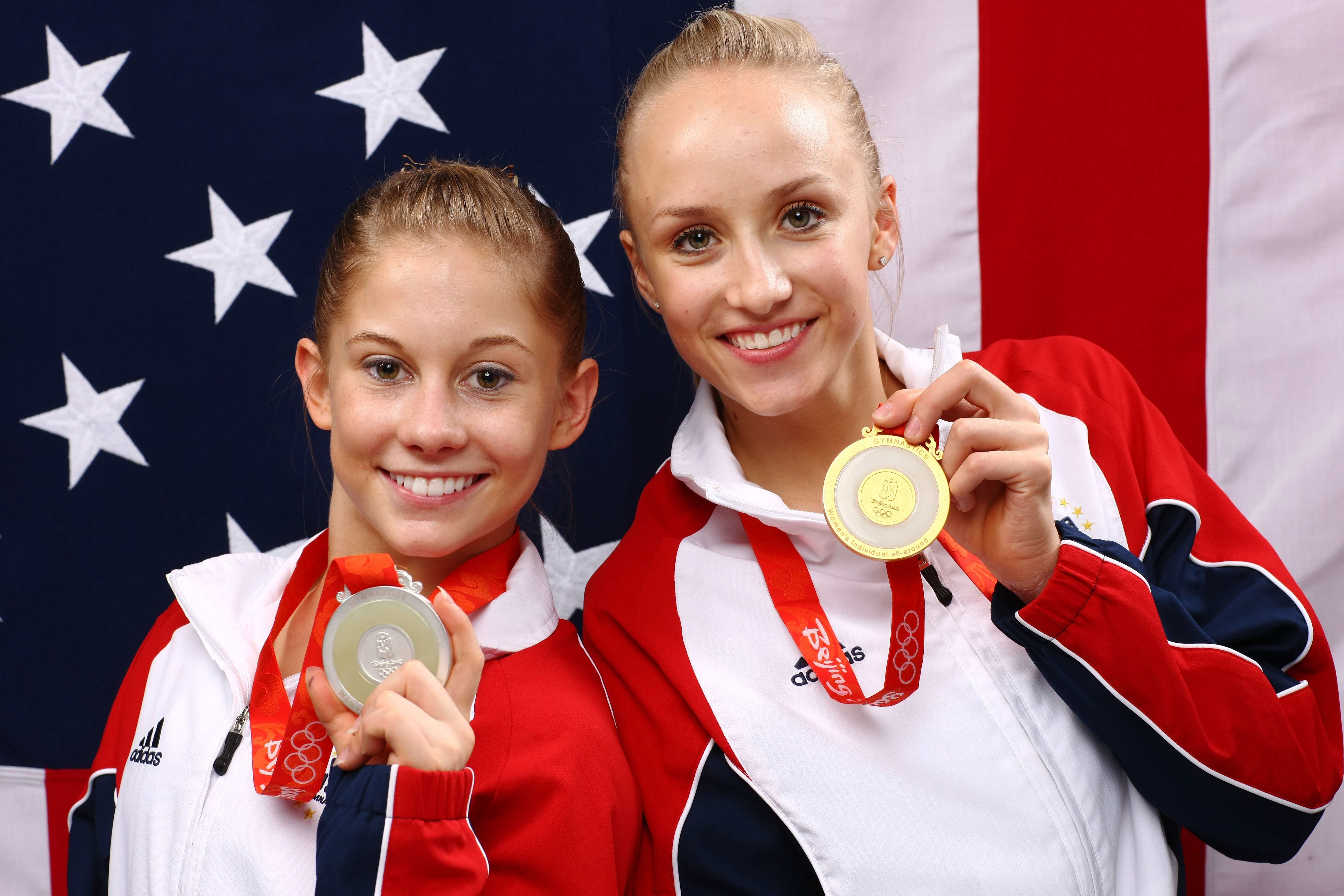
The All-Around battle on August 15, 2008, became one of the most celebrated dual performances in gymnastics history. Johnson performed four hit routines, earning a total score of 62.725. However, Liukin delivered an exceptional performance, particularly on the uneven bars and balance beam, scoring 63.325 to claim the Gold. Johnson captured the Silver medal, giving the United States a historic 1-2 finish on the Olympic podium.
Apparatus Finals: Floor Exercise and Vault
In the individual event finals, Johnson continued to accumulate hardware. On the Floor Exercise, she executed a routine featuring a full-in back pike and a double layout dismount, earning a score of 15.500 to take the Silver medal behind Romania's Sandra Izbașa. On Vault, Johnson completed a clean Amanar (a 2.5-twisting Yurchenko), finishing fourth overall just outside the medals.
The Balance Beam Gold Medal Routine
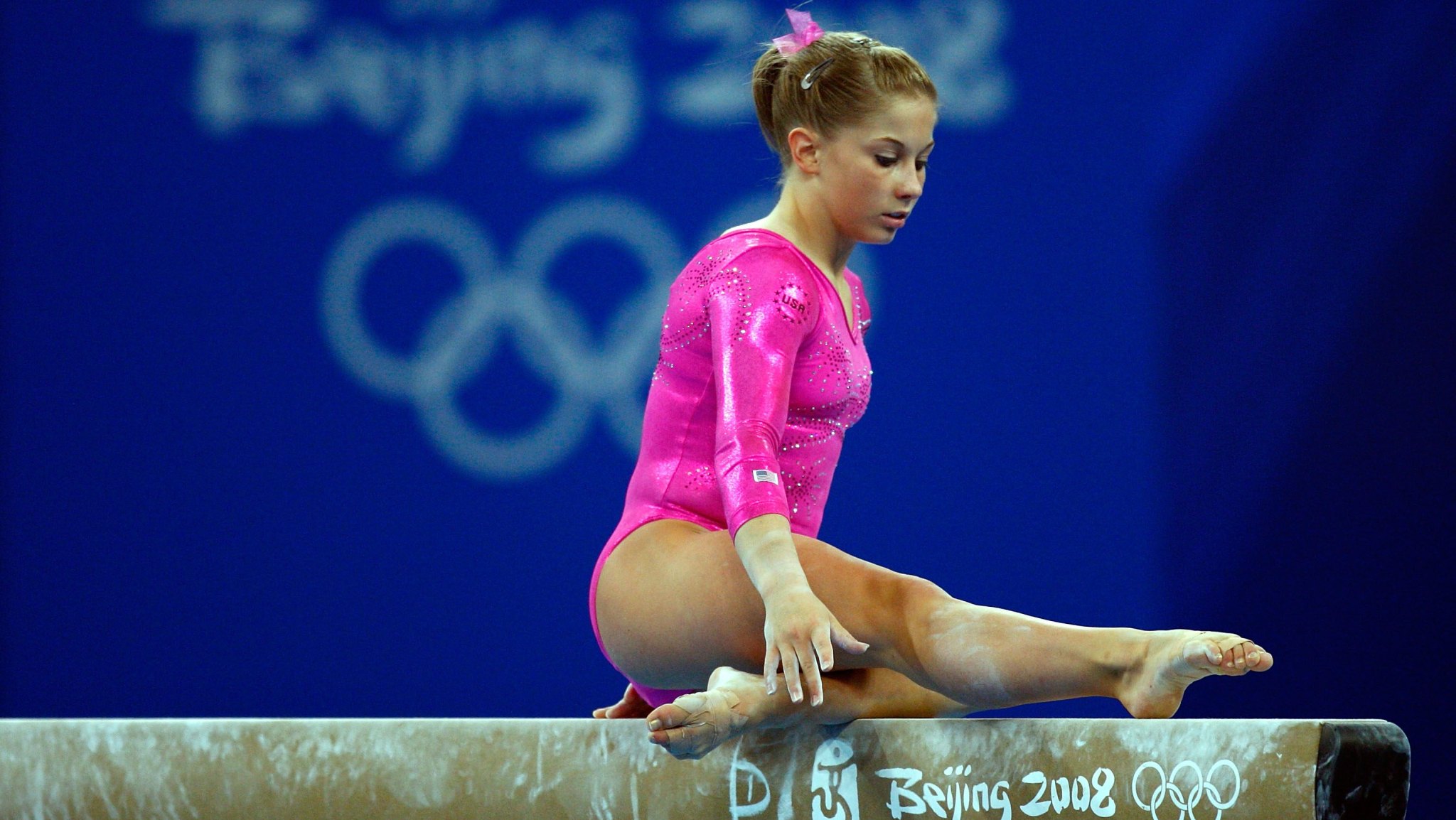
Johnson’s signature moment arrived during the Balance Beam Final on August 19, 2008. The balance beam is widely considered the most volatile event in gymnastics due to the apparatus measuring just 10 centimeters (4 inches) wide.
Drawn to compete late in the rotation, Johnson mounted the beam with absolute precision. Her routine included a standing full-twisting back handspring—one of the hardest acrobatic elements performed on beam—followed by a seamless layout step-out series, a switch leap to back tuck, and a double pike dismount with a stuck landing.
The judges awarded her a score of 16.225 (6.900 D-Score, 9.325 E-Score). This score held off teammate Nastia Liukin (Silver) and China's Cheng Fei (Bronze), securing Johnson her sole Olympic Gold Medal and sealing her place among gymnastics royalty.
Summary of Shawn Johnson’s 2008 Olympic Results
| Event | Finish / Medal | Total Score | Key Competitors / Podium Rivals |
|---|---|---|---|
| Balance Beam | Gold Medal | 16.225 | Nastia Liukin (Silver), Cheng Fei (Bronze) |
| Individual All-Around | Silver Medal | 62.725 | Nastia Liukin (Gold), Yang Yilin (Bronze) |
| Floor Exercise | Silver Medal | 15.500 | Sandra Izbașa (Gold), Nastia Liukin (Bronze) |
| Team Event | Silver Medal | 186.525 (Team Total) | China (Gold), Romania (Bronze) |
| Vault Final | 4th Place | 15.487 (Avg) | Hong Un-jong (Gold), Oksana Chusovitina (Silver) |
The Post-Olympic Era: Injury, Comeback, and Retirement
Following her success in Beijing, Johnson stepped away from elite competition to pursue media opportunities, winning Season 8 of ABC's Dancing with the Stars in 2009. However, the urge to compete on the international stage led her back to Chow’s gym in late 2009 to initiate a comeback for the 2012 London Olympics.
The Skiing Injury
In January 2010, Johnson suffered a major setback when she tore the anterior cruciate ligament (ACL), medial collateral ligament (MCL), and meniscus in her left knee during a recreational skiing trip. Knee reconstruction surgery forced her to undergo extensive rehabilitation before she could resume gymnastics training.
The 2011 Comeback Attempt
Despite the injury, Johnson made a successful return to the U.S. National Team in 2011. Demonstrating remarkable resilience, she was named to the U.S. team for the 2011 Pan American Games in Guadalajara, Mexico. There, she contributed to team Gold and won an individual Silver medal on the uneven bars, proving she could still execute world-class routines.
Official Retirement in 2012
As the 2012 U.S. Olympic Trials approached, Johnson’s left knee continued to suffer from chronic instability and pain under the force of high-impact landings. Recognizing that pushing her body further risked permanent joint damage, Johnson announced her official retirement from competitive gymnastics on June 3, 2012, at age 20.
In her official retirement statement through USA Gymnastics, she expressed gratitude for her career and noted that her body could no longer withstand the physical load required to compete safely at the Olympic level.
Technical Legacy and Impact on Gymnastics
Shawn Johnson’s career left a lasting mark on artistic gymnastics in several key ways:
- Efficiency over Exhaustion: Her training protocol under Liang Chow proved that athletes could reach peak physical conditioning without subjecting their bodies to 40-hour weekly workloads. This balanced model became a reference point for modern safety and athlete-wellness discussions in gymnastics.
- Mastery of the Open Code: Johnson showcased how high execution scores (E-Scores) combined with powerful difficulty (D-Scores) could produce consistent results under the post-2006 scoring rules.
- Balance Beam Precision: Her 2008 gold-medal beam routine remains a benchmark standard for acrobatic difficulty, landing control, and rhythm on the 10-centimeter apparatus.
In 2014, Johnson was inducted into the USA Gymnastics Hall of Fame, confirming her standing as one of America's iconic gymnasts. Following her athletic career, she transitioned into sports commentary, authoring books, supporting youth fitness initiatives, and running digital media projects alongside her family.
Frequently Asked Questions
How many Olympic medals did Shawn Johnson win?
Shawn Johnson won a total of four Olympic medals at the 2008 Beijing Games: one Gold (Balance Beam) and three Silver medals (Individual All-Around, Team Event, and Floor Exercise).
Did Shawn Johnson win the Olympic Individual All-Around title?
No. Shawn Johnson won the Silver medal in the Individual All-Around at the 2008 Beijing Olympics. Her U.S. teammate Nastia Liukin won the Gold medal, making them the first American duo to finish 1-2 in the Olympic All-Around competition.
Who was Shawn Johnson’s gymnastics coach?
Shawn Johnson was coached by Liang Chow, a former Chinese national team champion who operated Chow’s Gymnastics and Dance Institute in West Des Moines, Iowa. Chow was widely praised for designing a balanced training routine that kept Johnson healthy throughout her junior and elite senior career.
Why did Shawn Johnson retire before the 2012 London Olympics?
Johnson retired on June 3, 2012, due to persistent knee pain and instability resulting from a severe ACL tear she suffered during a 2010 skiing accident. Despite recovering sufficiently to win medals at the 2011 Pan American Games, her knee could no longer absorb the landing impacts required for Olympic competition.
What routine earned Shawn Johnson her Olympic Gold Medal?
Shawn Johnson won her Olympic Gold Medal on the Balance Beam in Beijing. Her routine scored a 16.225, highlighted by a standing full-twisting back handspring, a layout step-out acrobatics series, and a double pike dismount with a stuck landing.
Recommended Next Steps for Gymnastics Researchers
For those looking to study Shawn Johnson’s career and technical mechanics further:
- Review Historic Scoring Sheets: Examine official judge scoring breakdowns from the International Gymnastics Federation (FIG) covering the 2007 Stuttgart World Championships and 2008 Beijing Games to analyze D-Score and E-Score components.
- Study Coaching Methodology: Explore coaching resources from USA Gymnastics detailing Liang Chow's progressive skill acquisition and periodization strategies.
- Compare Code of Points Evolution: Track how balance beam connection bonuses and acrobatic dismount rules have changed between the 2008 FIG Code of Points and the current quadrennial scoring rules.
Image Gallery