Time Warner VoIP Overview: Legacy Architecture, Business Features, and Spectrum Migration
Time Warner VoIP refers to the Voice over Internet Protocol services originally deployed by Time Warner Cable (TWC) for residential and commercial subscribers. Following Charter Communications' acquisition of TWC, these voice services...
Time Warner VoIP refers to the Voice over Internet Protocol services originally deployed by Time Warner Cable (TWC) for residential and commercial subscribers. Following Charter Communications' acquisition of TWC, these voice services operate under the Spectrum brand. The service delivers high-definition digital voice through private, managed coaxial-fiber networks utilizing Embedded Multimedia Terminal Adapters (eMTAs) rather than open internet connections.
Contents
Evolution of Time Warner Cable VoIP
To evaluate Time Warner VoIP accurately, it is essential to distinguish between the residential and small-business services formerly branded under Time Warner Cable Digital Phone (later TWC Business Class Voice) and the enterprise-level telecommunications provider formerly known as tw telecom.
Time Warner Cable introduced digital phone service in the mid-2000s as a core component of its "Triple Play" bundled offerings (combining cable television, high-speed broadband, and landline telephone service). Unlike early over-the-top (OTT) VoIP providers such as Vonage or Skype, TWC built its voice product as a facilities-based service. Voice traffic was prioritized directly over the company’s hybrid fiber-coaxial (HFC) cable infrastructure.
- Time Warner VoIP Infrastructure
- Customer Premises
- Analog Telephone (connected via RJ-11)
- eMTA (Modem/VoIP) (connected via Coaxial DOCSIS)
- Managed HFC Network
- Priority Voice Packets (PacketCable QoS)
- Core
- Managed Voice Switch / Softswitch
- PSTN / E911
- Customer Premises
In 2016, Charter Communications completed its purchase of Time Warner Cable and Bright House Networks for approximately $55 billion. Following this acquisition, all residential Time Warner Cable VoIP services were rebranded as Spectrum Voice, while commercial accounts shifted to Spectrum Business Voice. Enterprise voice infrastructure previously handled by tw telecom underwent a separate corporate history, merging with Level 3 Communications in 2014 before becoming part of CenturyLink (now Lumen Technologies).
Today, legacy TWC VoIP accounts operate under Charter's Spectrum network standards. Subscribers maintaining original TWC equipment or line configurations utilize Charter's updated provisioning platforms, which retain the original facilities-based call transport mechanisms.
Technical Architecture: How Facilities-Based VoIP Operates
The primary distinction between legacy Time Warner VoIP and generic internet-based phone systems is network prioritization. Standard cloud VoIP routes audio packets over the public internet, leaving call quality vulnerable to public network congestion, packet loss, and latency fluctuations. Time Warner VoIP avoids the public internet entirely for local call transport.
The PacketCable and DOCSIS Standard
Time Warner Cable implemented the PacketCable standard, developed by CableLabs. PacketCable defines protocols for delivering real-time multimedia services over Data Over Cable Service Interface Specification (DOCSIS) networks.
When a call is placed on a TWC VoIP line, the network architecture executes several technical steps:
- Analog-to-Digital Conversion: The user's traditional telephone handset inputs analog audio into an Embedded Multimedia Terminal Adapter (eMTA). The eMTA converts analog signals into digital IP packets using voice codecs such as G.711 (uncompressed toll-quality audio) or G.729 (compressed audio for constrained bandwidth environments).
- Dynamic Bandwidth Reservation: The eMTA communicates with the Cable Modem Termination System (CMTS) at the local TWC headend. Using DOCSIS Quality of Service (QoS) parameters, the CMTS reserves dedicated upstream and downstream bandwidth exclusively for the duration of the call.
- Private Transport: Voice packets travel from the CMTS through a private IP Backbone Network to softswitches or Media Gateway Controllers (MGC). Because these packets run on dedicated virtual local area networks (VLANs), they bypass public internet routing nodes.
- PSTN Interconnection: Calls terminating at traditional landline or mobile destinations transition from TWC’s IP softswitch to the Public Switched Telephone Network (PSTN) via Session Border Controllers (SBCs) and SS7 signaling gateways.
This closed-loop system ensures lower latency (typically below 50 milliseconds) and eliminates jitter, delivering call reliability equivalent to traditional Plain Old Telephone Service (POTS) lines.
Core Features: Residential vs. Commercial Capabilities
Time Warner VoIP was designed to match and expand upon traditional copper-wire telephone features. Over time, features evolved to support both basic home communication needs and multi-line business private branch exchange (PBX) integrations.
| Residential Features | Commercial Features |
|---|---|
| Unlimited Local & Long Distance | Hosted Voice PBX & Extensions |
| Enhanced 911 (E911) Mapping | SIP Trunking (Pri/IP PBX) |
| Call Waiting, Forwarding, ID | Multi-line Hunt Groups |
| Online Call Logs & Voicemail | Auto-Attendant Routing |
| Anonymous Call Rejection | Toll-Free Number Management |
Residential Voice Features
Residential Time Warner VoIP plans emphasized unlimited domestic calling within the United States, Canada, and Puerto Rico. Core calling features include:
- Enhanced 911 (E911): Automatically transmits the physical address registered to the eMTA device directly to Public Safety Answering Points (PSAPs) when emergency services are dialed.
- Selective Call Forwarding and Blocking: Allows users to route specific incoming numbers to mobile devices or automatically reject anonymous callers.
- Readable Voicemail: Converts audio voicemail messages into digital text files accessible via email or online user management portals.
- Three-Way Calling and Call Waiting: Standard telephone calling capabilities integrated at the network level.
Business Class Voice Capabilities
For enterprise and small-to-medium enterprise (SME) clients, Time Warner Cable Business Class supplied scalable VoIP solutions engineered to replace expensive T1 voice lines:
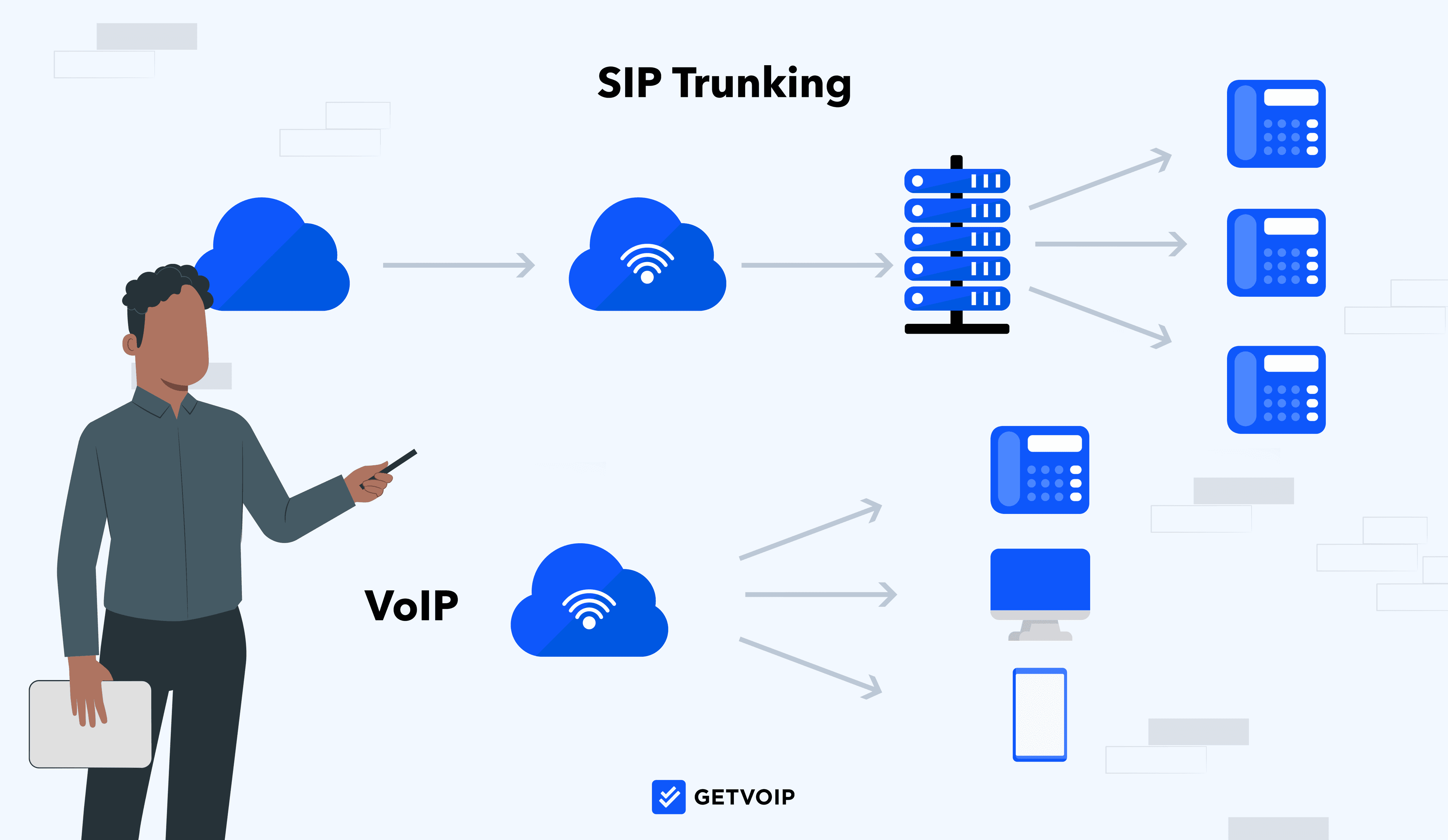
- SIP Trunking: Allowed businesses with existing on-premises PBX hardware (such as Cisco, Avaya, or Asterisk units) to connect directly to TWC's IP network using Session Initiation Protocol (SIP). This eliminated the need for analog gateway converters.
- PRI Integration: Provided Primary Rate Interface (PRI) digital trunks delivered over fiber or coaxial lines using an Integrated Access Device (IAD), offering 23 voice channels plus a data channel for call signaling.
- Hosted Voice (Cloud PBX): Replaced physical office PBX systems entirely. TWC managed extension routing, auto-attendants, interactive voice response (IVR) systems, and multi-line hunt groups off-site at the central office level.
Customer Equipment and On-Premises Wiring Requirements
Deploying Time Warner VoIP requires specific hardware configurations at the subscriber location. Unlike software-only softphones, physical wiring and dedicated hardware components ensure service stability.
- On-Premises eMTA Hardware Setup
- Coaxial Outlet
- Connected via RG-6 Coaxial Cable to eMTA Telephony Modem
- eMTA Telephony Modem
- Integrated DOCSIS Broadband Engine
- Internal Battery Backup Slot (12V DC)
- Tel 1 / Tel 2 RJ-11 Analog Voice Ports
- Connected via RJ-11 Telephone Wire to Base Telephone Unit
- Connected via RJ-45 Ethernet to Wireless Router
- Coaxial Outlet
The Embedded Multimedia Terminal Adapter (eMTA)
The core piece of equipment for Time Warner VoIP is the eMTA modem. Commonly manufactured by vendors such as Arris, Technicolor, or Motorola, this device combines a standard DOCSIS cable modem with an internal Analog Telephone Adapter (ATA).
- RF Coaxial Interface: Connects to the interior RG-6 coaxial network to communicate with the service provider's headend.
- RJ-11 Telephony Ports: Typically labeled "Tel 1" and "Tel 2," these ports output standard dial-tone voltages to connected telephones.
- RJ-45 Ethernet Ports: Supply standard local area network (LAN) data access for internet routing.
Interior Telephone Backfeeding
To enable multiple phone jacks throughout a home or office without running new wires, technicians historically performed a procedure known as backfeeding.
The technician disconnects the external copper landline wire from the legacy telephone company’s Network Interface Device (NID) box outside the building. This step is critical: failing to isolate the home from the legacy telephone network can feed voltage back into the eMTA and permanently destroy its voice circuits.
Once isolated, an RJ-11 patch cable connects the eMTA's "Tel 1" port directly into any standard interior wall jack. This distributes dial tone to every active wall outlet connected to that internal wiring ring.
Power Outage Backup Requirements
Traditional copper landlines receive power directly from the central telephone exchange (typically -48V DC), allowing them to function during power outages. Facilities-based VoIP modems require local electrical power to convert IP signals.
To satisfy Federal Communications Commission (FCC) emergency access mandates under 47 CFR § 9.20, eMTA modems designed for Time Warner VoIP include internal battery bays. A standard 8-hour lithium-ion backup battery maintains basic dial-tone and E911 capabilities during local power loss. Extended 24-hour external battery enclosures are used in commercial and enterprise installations.
Comparison: Time Warner VoIP (Spectrum) vs. Modern Cloud VoIP
Understanding how facilities-based cable VoIP compares to modern cloud-based Over-The-Top (OTT) VoIP solutions helps businesses and residential users evaluate service upgrades or migrations.
| Feature / Dimension | Time Warner VoIP / Spectrum Voice | Cloud OTT VoIP (e.g., RingCentral, 8x8) |
|---|---|---|
| Network Delivery | Facilities-Based Managed Cable Network (Private QoS VLAN) | Public Internet Access (Over-The-Top) |
| Call Quality / Latency | High consistency; low latency (<50ms); protected from web traffic | Depends on public internet health; vulnerable to jitter |
| Hardware Requirement | Provider-issued eMTA Modem / ATA / Dedicated Router | Any IP Phone, Softphone App, Mobile Device, or PC |
| Geographic Mobility | Tied to registered service address (E911 hardware locked) | Fully portable globally; works on any internet connection |
| Emergency Services (E911) | Automatically mapped to physical street address via CPE | Requires manual address updating in software portals |
| Power Fault Resilience | Local battery backup inside eMTA provides 8–24 hrs dial tone | Requires uninterruptible power supply (UPS) for local router |
| System Scalability | Limited by physical eMTA ports or physical SIP trunks | Virtual; add lines or extensions instantly via admin console |
Porting, Migration, and Account Management
As legacy Time Warner Cable accounts fully transition into modern Charter Spectrum billing and network environments, customers often need to port numbers or reconfigure line services.
Local Number Portability (LNP) Rules
Subscribers seeking to port existing Time Warner VoIP telephone numbers to another provider—or port external numbers into Spectrum—are protected under Federal Communications Commission (FCC) rules governing Local Number Portability.
To execute a smooth phone line transfer without service interruptions, follow these mandatory steps:
- Keep Service Active: Do not cancel the legacy Time Warner/Spectrum account prior to initiating the port request. Canceling prematurely releases the assigned number back to the carrier's geographic number pool, making recovery difficult.
- Obtain Accurate Account Details: Request an official copy of the Customer Service Record (CSR) from Spectrum. The billing name, service street address, Account Number, and Porting PIN must match the winning carrier's Letter of Authorization (LOA) exactly.
- Submit Port Request: The new service provider submits a Local Service Request (LSR) to Charter's porting department.
- Firm Order Commitment (FOC): Once approved, a FOC date is assigned. On the FOC date, call routing tables update across national telecom databases (NPAC), transferring traffic to the new carrier.
- Account Closure: Contact Spectrum only after verifying that incoming and outgoing calls route correctly over the new provider's system to close out residual TWC billing accounts.
Troubleshooting Common Performance and Infrastructure Issues
Although managed cable networks offer high call reliability, physical line degradation or configuration mismatches can cause voice degradation.
TWC/Spectrum Voice Diagnostic Steps (Issue: No Dial Tone / Static / One-Way Audio)
- Inspect Cable Signal Levels via eMTA Diagnostic Page
- Downstream Power: -7 dBmV to +7 dBmV
- Downstream SNR: > 33 dB
- Upstream Power: +35 dBmV to +49 dBmV
- Verify Physical Wiring Isolation
- Confirm NID disconnect at exterior boundary
- Inspect RJ-11 cables for pin damage or corrosion
- Perform Cold Power Cycle
- Disconnect AC power & remove internal backup battery
- Wait 60 seconds -> Reinsert battery -> Reconnect AC power
Diagnostic Parameters for eMTA Signal Lines
Subscribers experiencing voice dropouts, static, or missing dial tones can access the internal diagnostic page of most eMTA modems (typically reachable by navigating to 192.168.100.1 in a standard web browser). Key RF signal levels required for stable PacketCable voice operation include:
- Downstream Power Level: Should remain between -7 dBmV and +7 dBmV. Signal levels dropping below -10 dBmV induce packet loss, causing choppy speech.
- Downstream Signal-to-Noise Ratio (SNR): Must be greater than 33 dB. Low SNR introduces line hiss, buzzing, or static into analog phone conversions.
- Upstream Power Level: Optimal ranges sit between +35 dBmV and +49 dBmV. If the upstream power exceeds +51 dBmV, the modem is pushing max amplification to reach the CMTS, leading to clipped audio or dropped calls.
Addressing One-Way Audio Issues
One-way audio—where one caller can hear speech but the other party receives silence—typically occurs due to Session Initiation Protocol (SIP) routing failures or network address translation (NAT) misconfigurations.
In facilities-based Time Warner VoIP setups using standard eMTAs, one-way audio usually indicates an improper internal backfeeding configuration. If an external landline wire remains connected to the legacy telecom provider's outside block, foreign voltage interferes with the eMTA's speech-path relays. Ensure the legacy NID is physically unplugged from local telco connections.
Frequently Asked Questions
Is Time Warner VoIP still operational under that brand name?
No. Following the 2016 corporate acquisition by Charter Communications, Time Warner Cable services were rebranded under the Spectrum name. Legacy TWC residential voice lines now operate as Spectrum Voice, while enterprise services operate as Spectrum Business Voice.
Does Time Warner / Spectrum VoIP require an active internet subscription?
Facilities-based cable voice utilizes the same physical coaxial cable and DOCSIS network technology as broadband internet, but it does not require a paid public internet plan. The service operates on its own dedicated virtual channel directly to the provider's central switch.
Can I use my own retail cable modem for Time Warner VoIP service?
Generally, no. Standard retail modems purchased online lack the specialized Embedded Multimedia Terminal Adapter (eMTA) hardware, RJ-11 analog voice ports, and specialized PacketCable firmware required to provision provider-level voice lines. Charter/Spectrum supplies compatible eMTA voice modems to phone subscribers.
What happens to emergency E911 calling during a home power outage?
If your eMTA modem contains an active operational backup battery, your phone line will continue to supply dial tone and E911 services during a blackout. However, cordless telephones that require external wall power for their base stations will not function; a basic corded phone must be plugged directly into the eMTA or wall jack.
Can I move my Time Warner VoIP modem to a different house or city?
No. Unlike cloud-based VoIP softphones, facilities-based cable modems are hardcoded to specific network nodes and physical service locations. Moving an eMTA modem to a new address without notifying the provider will cause phone service to fail and will misroute E911 emergency services to the wrong physical location.
Summary and Recommended Actions
Time Warner VoIP laid the groundwork for modern managed voice-over-cable infrastructure. By leveraging dedicated DOCSIS channels and PacketCable QoS standards, TWC successfully transitioned millions of subscribers from traditional copper landlines to digital IP telephony.
If you are currently managing legacy Time Warner VoIP equipment or planning an infrastructure update, consider these next steps:
- Audit On-Premises Hardware: Check your cable modem label. If you are operating an older legacy TWC eMTA modem (such as an old Arris TM602 or Cisco DPC3208), contact Spectrum support to request a modern DOCSIS 3.1 MTA gateway to ensure compliance with updated network security protocols.
- Evaluate Battery Backups: Open the battery compartment on your eMTA modem. Lithium batteries degrade over time; if the battery unit is older than three years, replace it to preserve E911 emergency phone connectivity during localized power outages.
- Assess Business Upgrade Paths: For commercial environments still utilizing legacy TWC analog lines or basic PRI interfaces, evaluate upgrading to modern SIP Trunking or Cloud Hosted PBX platforms to scale voice management across mobile and remote workforces.
Image Gallery