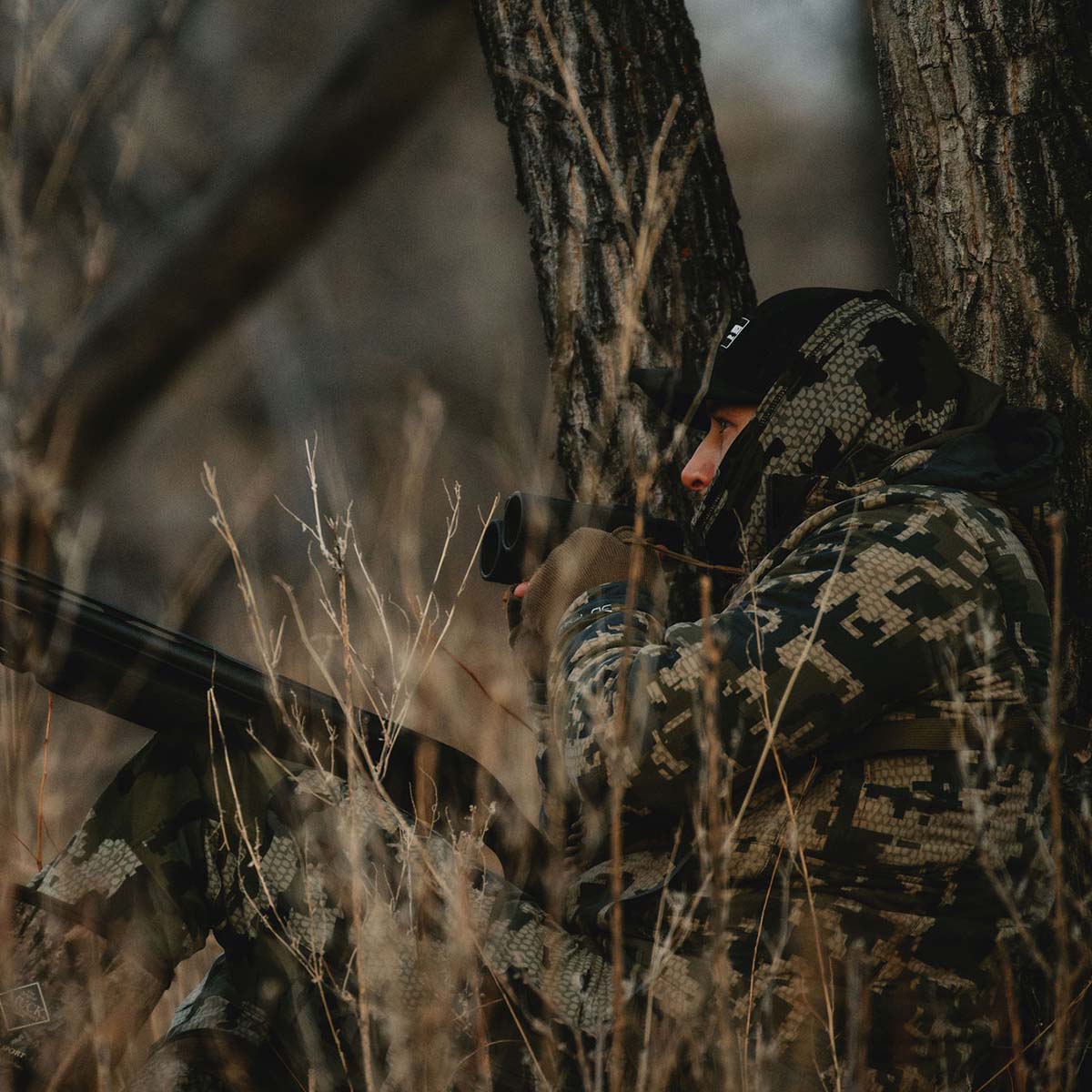
Why the Right Gun Matters for Nevada Turkey Hunting
Selecting the proper shotgun setup is critical for Nevada turkey hunting because the state’s high-desert geography, sparse vegetation, elevation variations, and strict wildlife regulations present conditions radically different from fo...
Selecting the proper shotgun setup is critical for Nevada turkey hunting because the state’s high-desert geography, sparse vegetation, elevation variations, and strict wildlife regulations present conditions radically different from forested eastern turkey habitats. A firearm optimized for Nevada must deliver tight, consistent shot patterns at extended ranges while remaining light enough to carry across miles of rugged public land.
Contents
Nevada’s High-Desert Terrain and Its Impact on Shotgun Ballistics
Turkey hunting in Nevada demands a clear understanding of how unique environmental conditions affect shot delivery and turkey behavior. Unlike the dense hardwood canopies of the American South or the Midwest, Nevada’s turkey habitats span vast sagebrush basins, high-altitude mountain drainages, river bottoms, and agricultural fringe areas. These landscapes directly influence how close a hunter can get to a bird and how a shotgun load performs in mid-air.
Open Horizons and Sparse Cover: The Challenge of Distance
In Nevada, wild turkeys—primarily Rio Grande and Merriam’s subspecies—possess extraordinary eyesight paired with long sightlines. Vegetation such as big sagebrush, bitterbrush, and low-standing willow offers minimal concealment compared to timbered forests. Because gobblers can spot movement from hundreds of yards away, luring a tom into traditional close ranges (under 30 yards) is frequently difficult.
Hunters often find themselves faced with ethical shooting opportunities right at the 40- to 50-yard mark. At these extended distances, standard field shotguns with modified chokes lose pattern density rapidly, leaving large gaps in the shot column where a turkey's vital neck and head area can easily escape lethal pellet impact. Consequently, a dedicated turkey setup capable of maintaining a dense pattern at range is essential.
- TURKEY VITAL TARGET ZONE
- [ Brain / Spine ]
- [ Vertebrae Column ]
- Aiming Area: Mid-neck / Base of Wattle
- Goal: Deliver 10 to 15+ lethal pellets into spine & skull
Elevation, Humidity, and Pattern Behavior in Dry Air
Atmospheric conditions across Nevada significantly impact external ballistics. Much of Nevada’s turkey hunting takes place at elevations ranging from 4,000 to over 7,000 feet above sea level.
- Air Density: At higher elevations, air density decreases, resulting in reduced aerodynamic drag on shot pellets. This allows shot columns to retain velocity longer than they would at sea level.
- Low Relative Humidity: High-desert air is exceptionally dry. Low humidity can affect how wad columns separate from the shot string upon exiting the muzzle.
- Desert Winds: Sustained thermal winds across open basins can push light lead pellets off target at longer distances.
Understanding these atmospheric factors reinforces the need to pattern your specific firearm and load combination on-site at the elevations you plan to hunt.
Nevada Department of Wildlife (NDOW) Legal and Equipment Requirements
Before carrying a shotgun into Nevada's turkey units, hunters must comply with specific statutory regulations set by the Nevada Department of Wildlife (NDOW). Failing to conform to legal weapon and ammunition criteria can result in citations and forfeited hunting privileges.
Gauge Restrictions and Allowed Shot Sizes
Nevada hunting regulations establish clear legal limits regarding shotguns used for wild turkey management:
- Gauge Requirements: Shotguns must typically be 10-gauge, 12-gauge, 16-gauge, 20-gauge, 28-gauge, or .410 bore (where authorized under current regulations for specific game types).
- Shot Size Specifications: Legal shot sizes for wild turkey generally range from shot size #2 down to #8. Shot sizes larger than #2 (such as BB, BBB, or buckshot) are strictly prohibited for wild turkey hunting in Nevada to ensure hunter safety and prevent excessive game spoilage.
Non-Toxic Shot Mandates on Nevada Wildlife Management Areas
One of the most crucial regulations for Nevada turkey hunters involves ammunition composition on state-managed lands. On designated Nevada Wildlife Management Areas (WMAs)—including popular turkey hunting locations such as Mason Valley WMA and Overton WMA—the use and possession of lead shot are strictly prohibited.
Hunters targeting wild turkeys on these WMAs must use approved non-toxic shot materials, such as:
- Tungsten Super Shot (TSS)
- Bismuth
- Steel (or approved non-toxic alloy blends)
Carrying lead shells into a designated non-toxic WMA zone constitutes a regulatory violation regardless of whether a shot is fired. Always verify the specific rules for your assigned draw unit and land management type (BLM, USFS, or NDOW WMA) prior to entering the field.
Capacity Limits and Plug Requirements
When hunting wild turkey in Nevada, shotguns must be legally plugged to limit total shell capacity. The firearm cannot hold more than three shells total—one in the chamber and two in the magazine tube. If using a semi-automatic or pump-action shotgun designed to hold four or more shells, a one-piece plastic or wooden magazine plug must be installed to render the extra capacity unusable.
Selecting the Optimal Gauge: 12-Gauge vs. 20-Gauge vs. Sub-Gauges
The choice of shotgun gauge directly affects recoil, carrying comfort, and pattern density. Advancements in heavy-density tungsten alloys have shifted the traditional debate, allowing smaller gauges to rival historical magnum performance.
- [12-GAUGE MAGNUM]: Maximum Payload Capacity / Higher Recoil
- [20-GAUGE COMPACT]: Balanced Weight & Lethality (TSS Optimized)
- [28-GAUGE / .410]: Ultra-Lightweight / Demands Heavy TSS Loads
The 12-Gauge: Maximum Energy and Payload
The 12-gauge remains the traditional benchmark for wild turkey hunting. Firing 3-inch or 3.5-inch magnum shells, the 12-gauge pushes high pellet counts downbore, providing maximum margin for error on pattern coverage.
- Pros: Readily available ammunition, maximum payload weight (up to 2 ounces of lead or TSS), extensive selection of aftermarket turkey chokes.
- Cons: Heavier firearm weight (typically 7.5 to 8.5 lbs), substantial felt recoil, larger profile when maneuvering through tight brush.
For Nevada hunters who expect long shots on wind-swept flats and do not mind carrying extra weight, a 12-gauge loaded with high-density shot provides maximum knock-down pattern density.
The 20-Gauge Revolution: Balanced Portability and Lethality
In recent years, the 20-gauge has emerged as a favored choice for western turkey hunters. Carrying a 20-gauge shotgun saves 1.5 to 2.5 pounds compared to a standard 12-gauge—a noticeable difference when trekking several miles across steep Nevada ridges or walking high-desert washes.
When paired with modern 3-inch Tungsten Super Shot (TSS) loads, a 20-gauge delivers pattern density that equals or exceeds a traditional 12-gauge lead load.
Sub-Gauges (28-Gauge and .410 Bore) with TSS
Sub-gauge turkey hunting has evolved from a novelty to a highly effective method due to the physics of TSS. Because tungsten has a density of roughly 18 g/cm³ (compared to lead’s 11.34 g/cm³ and steel’s 7.8 g/cm³), #9 TSS pellets carry the same downrange kinetic energy and penetration power as #5 lead pellets, but with more than double the number of pellets per ounce.
- .410 Bore & 28-Gauge: Lightweight firearms (under 6 lbs) with minimal felt recoil.
- Requirements: Demands specialized, tight chokes (.555 or .520 constrictions depending on model) and premium TSS loads to ensure lethal target patterns out to 40 yards.
Matching Chokes and Ammunition for Nevada Turkeys
A shotgun is only as good as its choke and cartridge pairing. Achieving a lethal turkey pattern—defined as putting at least 100 to 150 pellets inside a 10-inch circle at 40 yards—requires careful component matching.
CHOKE CONSTRICTION PROFILE (12-Gauge Example)
| Standard Modified | Full Choke | Extra-Full Turkey |
|---|---|---|
| Constriction: ~.020" | Constriction: ~.030" | Constriction: .065"+ |
| Open Field / Waterfowl | Upland Game | Tight Turkey Core |
Choke Constrictions: Finding the Sweet Spot
Turkey chokes are designed with extreme constriction to hold the shot column together as long as possible. However, over-constricting can deform lead pellets or cause tungsten shot columns to blown out, resulting in patchy patterns.
- For Lead Ammunition: Extra-Full chokes with exit diameters between .660" and .670" (for 12-gauge) typically yield dense, uniform central patterns.
- For Tungsten Super Shot (TSS): TSS does not compress or deform like lead. Therefore, chokes specifically engineered for TSS often utilize slightly different exit constrictions (e.g., .665" to .675" in 12-gauge, or .562" to .570" in 20-gauge) with specialized parallel expansion zones to prevent blown patterns.
Payload Material Comparison: Lead vs. Bismuth vs. TSS
Selecting the right pellet material affects effective range, legal compliance, and overall pattern efficiency.
| Ammunition Type | Material Density | Relative Cost | Legal on NDOW WMAs? | Effective Lethal Range | Key Characteristics |
|---|---|---|---|---|---|
| Traditional Lead | ~11.34 g/cm³ | Low to Moderate | No (Prohibited on WMAs) | 35 – 45 Yards | Standard choice on private/BLM lands; vulnerable to deformation and wind drift. |
| Bismuth | ~9.6 g/cm³ | Moderate | Yes (Non-toxic approved) | 30 – 40 Yards | Softer non-toxic option; safe for vintage shotguns; lighter than lead so requires larger shot sizes (#4 or #5). |
| Tungsten (TSS) | ~18.0 g/cm³ | High | Yes (Non-toxic approved) | 40 – 60+ Yards | Extremely high density; enables small shot sizes (#7, #8, #9); exceptional long-range pattern retention. |
| Steel | ~7.8 g/cm³ | Low | Yes (Non-toxic approved) | 25 – 35 Yards | Very light; loses velocity quickly; lower pellet count per payload; generally less ideal for turkey. |
Practical Gun Configuration: Portability, Sighting, and Ergonomics
Nevada turkey hunts often require long stalks across open terrain or static setups in sparse cover. How you fit and configure your shotgun directly affects your shooting performance under pressure.
Barrel Length and Carrying Ergonomics
- Short Barrels (21 to 24 inches): Highly maneuverable. They allow quick tracking when sitting low against a sagebrush bush or hunting from inside a ground blind. They are also easier to carry on a backpack sling without catching on low brush.
- Long Barrels (26 to 28 inches): Offer a slightly smoother swing plane and longer sighting radius when using bead sights, but add front-end weight during long walks.
For western public land hunts, shorter-barrel shotguns paired with a high-quality, padded sling reduce physical fatigue across multi-mile glassing trips.
Sighting Options: Beads, Fiber Optics, and Red Dot Sights
Because a turkey gun fires a tight pattern that acts almost like a single projectile at close-to-medium ranges, precise aiming is critical. A misaligned bead at 40 yards can cause a pattern to miss a turkey's narrow head and neck entirely.
- [Standard Bead]: Relies heavily on consistent cheek weld.
- [Fiber Optics]: High visibility in low morning light.
- [Reflex / Red Dot]: Fast acquisition; eliminates cheek-alignment error.
- Reflex / Red Dot Sights: Compact electronic red dot sights are ideal for Nevada turkey hunting. They remove parallax issues and allow you to keep your head slightly upright to maintain a wide field of view in bright desert sunlight.
- Adjustable Fiber Optic Sights: Dual-color fiber optic sights mount directly onto the ventilated rib, offering bright contrast against dark brush without needing batteries.
Nevada Turkey Hunting Shotgun Setup Comparison Matrix
Use this matrix to compare standard firearm setups tailored to specific Nevada terrain types and land management designations:
| Setup Configuration | Recommended Gauge | Choke Spec | Ammunition Choice | Primary Nevada Environment | Key Advantage |
|---|---|---|---|---|---|
| WMA Non-Toxic Specialist | 20-Gauge or 12-Gauge | TSS Specific (.565" / .665") | 3" #9 TSS (18 g/cm³) | Mason Valley WMA, Overton WMA, River Basins | Fully compliant with NDOW non-toxic regulations; maximum pattern density. |
| High-Desert Long-Range | 12-Gauge (3.5" Magnum) | Extra-Full Turkey (.660") | 3.5" #5 Lead or #7 TSS | Open BLM sagebrush flats, agricultural boundaries | Heavy knockdown power and high pellet counts across wide open spaces. |
| Mountain Ridge Mobile | 28-Gauge or .410 Bore | Custom Sub-Gauge Extra-Full | 3" #9 TSS | High-elevation USFS mountain units, steep drainages | Ultra-light carrying weight; minimizes hunter fatigue during miles of climbing. |
| Budget All-Rounder | 12-Gauge | Standard Factory Extra-Full | 3" #5 Lead (where legal) | Private land, mixed BLM desert draw units | Cost-effective entry point using widely available field shotguns and lead loads. |
Frequently Asked Questions
What gauge is best for turkey hunting in Nevada?
A 12-gauge or 20-gauge shotgun is generally best for Nevada turkey hunting. A 12-gauge provides maximum payload capacity for long shots across open terrain. However, a 20-gauge loaded with modern Tungsten Super Shot (TSS) offers comparable pattern density with significantly less weight, making it easier to carry during long walks on public land.
Can I legally use lead shot for turkey hunting in Nevada?
Lead shot is legal for turkey hunting on general public lands (such as BLM or USFS lands) and private property in Nevada, provided shot sizes larger than #2 are not used. However, lead shot is strictly prohibited on designated Nevada Wildlife Management Areas (WMAs). On WMAs like Mason Valley and Overton, hunters must use approved non-toxic shot such as TSS, bismuth, or steel.
Why is TSS (Tungsten Super Shot) recommended for high-desert turkey hunting?
TSS has a high density of 18 g/cm³, making it significantly denser than lead (11.34 g/cm³). This allows hunters to use smaller pellet sizes (such as #8 or #9 shot) while retaining the penetration energy of larger lead pellets. The result is a much higher pellet count per shell, which creates denser patterns at extended ranges (40 to 50+ yards) and helps resist wind drift in open desert environments.
Do I need a plug in my shotgun for Nevada turkey hunting?
Yes. Nevada wildlife regulations require shotguns used for turkey hunting to be plugged so that they cannot hold more than three shells total (two in the magazine, one in the chamber). If your shotgun's magazine tube holds more than two shells, you must install a plug to comply with state law.
How far away can I ethically shoot a turkey in Nevada?
Ethical range depends on your firearm, choke, and load combination. With traditional lead loads and standard turkey chokes, the maximum effective range is generally 35 to 40 yards. With high-density TSS loads and custom turkey chokes, consistent pattern density can extend effective ethical ranges to 50 yards or slightly beyond. You should always pattern your gun on paper at measured distances to confirm you are placing at least 100 to 150 pellets inside a 10-inch circle before shooting in the field.
Should I install a red dot sight on my Nevada turkey gun?
Yes, installing a compact red dot sight is highly recommended. Because turkey chokes create tight, rifle-like patterns at close-to-medium ranges, a red dot sight helps prevent misses caused by poor cheek alignment. Red dots also allow for faster target acquisition when a tom approaches from an unexpected angle in sparse cover.
Practical Next Steps for Preparing Your Nevada Turkey Shotgun
To ensure your firearm is ready for the hunt, follow this preparation checklist before heading into the field:
- Verify Land Ownership & Ammunition Rules: Check your hunt unit map to determine whether you will be on BLM, USFS, private land, or an NDOW Wildlife Management Area. If hunting a WMA, purchase approved non-toxic shot (such as TSS or bismuth) well in advance.
- Install a Magazine Plug: Inspect your shotgun to ensure a magazine plug is securely installed, limiting the total gun capacity to three shells.
- Pattern Your Shotgun on Paper: Set up turkey target sheets at measured distances of 20, 30, 40, and 50 yards. Count the pellet strikes within a 10-inch circle centered on the turkey’s neck and head to confirm your setup's effective lethal range.
- Zero Your Optics: If using a red dot or fiber-optic sight system, zero the point of impact at 35 yards using your intended hunting load.
- Check Firearm Sling and Weight: Confirm that your sling mounts are secure and comfortable for long-distance carrying across high-desert terrain.
Image Gallery