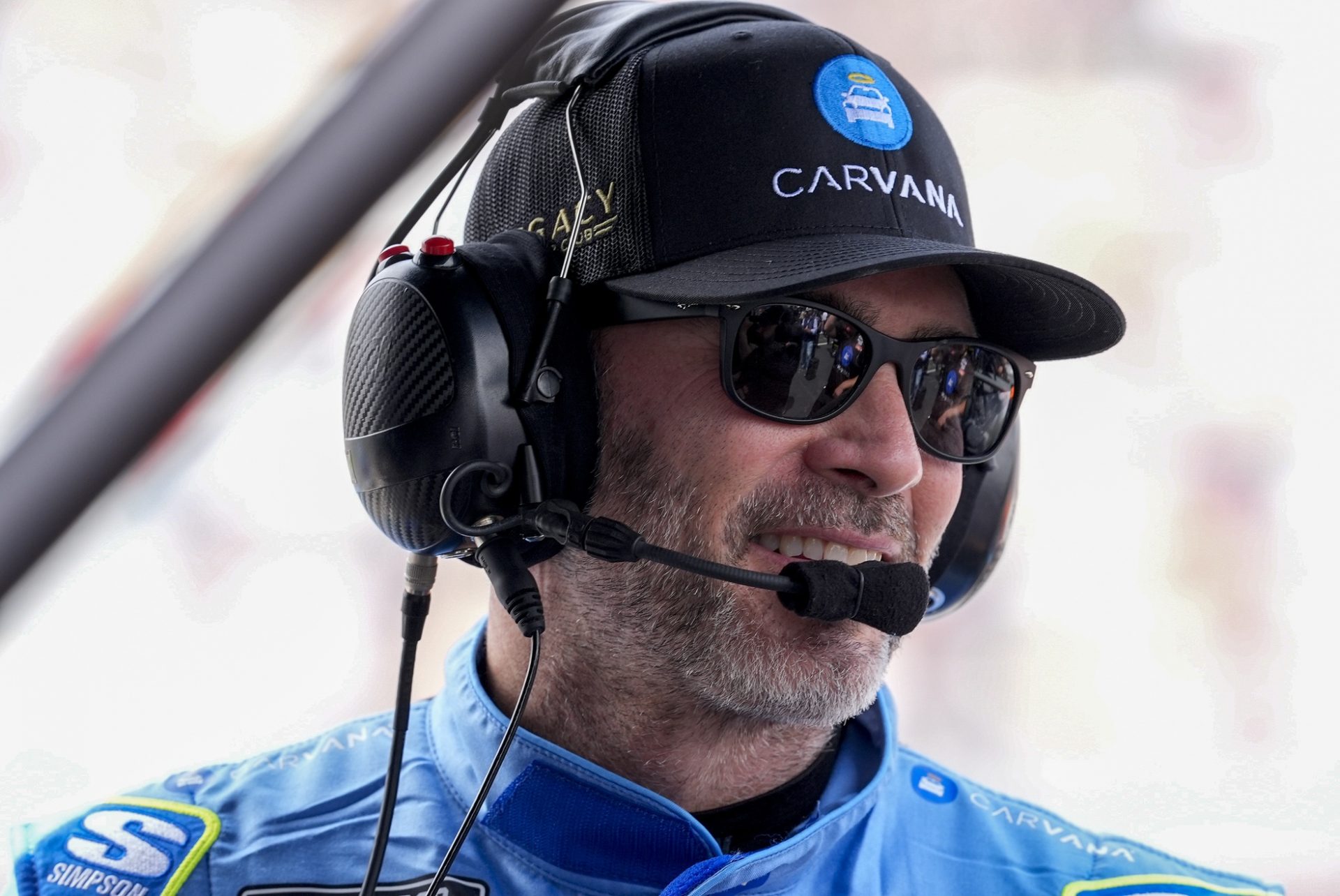
The Story of Jimmie Johnson: The Journey of NASCAR's Seven-Time Champion Driver
The story of Jimmie Johnson is the narrative of one of the most dominant drivers in modern motorsport history. Emerging from off-road racing in Southern California, Johnson climbed to the pinnacle of stock car racing, winning seven NAS...
The story of Jimmie Johnson is the narrative of one of the most dominant drivers in modern motorsport history. Emerging from off-road racing in Southern California, Johnson climbed to the pinnacle of stock car racing, winning seven NASCAR Cup Series championships—including an unprecedented five consecutive titles from 2006 to 2010—and cementing his legacy alongside Richard Petty and Dale Earnhardt.
Contents
Early Years: From Off-Road Roots to Stock Car Racing
Jimmie Kenneth Johnson was born on September 17, 1975, in El Cajon, California. Unlike many traditional NASCAR drivers who developed their skills on short oval dirt tracks across the American Southeast, Johnson began his racing journey on two wheels. By age four, he was competing in motorcycle races, demonstrating an innate balance and speed that quickly transitioned to four-wheeled off-road vehicles.
During his teenage years, Johnson competed in the Mickey Thompson Entertainment Group (MTEG) stadium truck series and SCORE International off-road races. Driving high-horsepower trucks across grueling desert terrain taught him vehicle control, throttle discipline, and adaptability under chaotic conditions. A pivotal moment occurred during the 1995 Baja 1000, when Johnson suffered a major crash after driving for over 20 consecutive hours. He survived in the desert for over a day before being rescued—an experience he later credited with forging his mental toughness and patience behind the wheel.
By the late 1990s, Johnson made the strategic decision to transition from off-road truck racing to asphalt oval racing. He joined the American Speed Association (ASA) series in 1998, earning Rookie of the Year honors while learning the nuances of stock car dynamics. His steady performance in the ASA caught the attention of stock car veteran Herzog Motorsports, which stepped up Johnson to the NASCAR Busch Series (now the Xfinity Series) for full-time competition in 2000.
The Hendrick Breakthrough and the Chad Knaus Partnership
While competing in the Busch Series, Johnson achieved modest success, including a notable victory at Chicagoland Speedway in 2001. However, his big career breakthrough came through a chance conversation with four-time NASCAR Cup Series champion Jeff Gordon. Gordon recognized Johnson’s smooth driving technique and composed demeanor, recommending him to team owner Rick Hendrick.
Hendrick Motorsports created a brand-new fourth team—the No. 48 Lowe's Chevrolet—for Johnson’s Cup Series debut in 2002. To guide the fledgling operation, Hendrick paired Johnson with a young, hyper-focused crew chief named Chad Knaus. This pairing would become one of the most formidable driver-crew chief duos in professional sports history.
THE JOHNSON-KNAUS DYNAMIC
| Jimmie Johnson (Driver) | Chad Knaus (Crew Chief) |
|---|---|
| Smooth throttle control | Obsessive setup preparation |
| Tire preservation | Aerodynamic optimization |
| Calm under pressure | Strategic pit calls |
From their very first full season together in 2002, the No. 48 team was an immediate contender. Johnson scored three points-paying victories in his rookie season, earned four pole positions, and finished fifth in the overall championship standings. Knaus brought an obsessive, data-driven approach to engineering the cars, while Johnson provided precise, actionable feedback about tire wear, chassis balance, and track surface changes.
The Five-in-a-Row Reign: An Unprecedented Championship Streak (2006–2010)
After finishing as the championship runner-up in both 2003 and 2004, Johnson and Knaus unlocked a level of consistency and clutch performance never before seen in NASCAR’s modern era.
2006: Breaking Through
Johnson won his first NASCAR Cup Series championship in 2006, a season that opened with a victory in the prestigious Daytona 500. He followed up with a crown-jewel win at the Brickyard 400 at Indianapolis Motor Speedway before executing a cool-headed run through the Chase for the NASCAR NEXTEL Cup.
2007–2008: Mastering the System
In 2007, Johnson engaged in a classic duel with teammate Jeff Gordon. Despite Gordon accumulating a record number of top-10 finishes, Johnson won 10 races—including four consecutive wins during the playoff stretch—to secure his second consecutive title. In 2008, he proved equally adaptable, handling aerodynamic changes and tire compounds to secure a third straight championship, matching Cale Yarborough’s historical record (1976–1978).
2009–2010: Rewriting History
Johnson broke Yarborough's record in 2009 by winning his fourth consecutive title with a dominant four-victory playoff run. He extended this landmark achievement to five straight titles in 2010, overcoming a points deficit in the season finale at Homestead-Miami Speedway through strategic pit stops and defensive driving against competitors Denny Hamlin and Kevin Harvick.
| Championship Year | Key Crown Jewel Wins | Season Wins | Final Championship Margin |
|---|---|---|---|
| 2006 | Daytona 500, Brickyard 400 | 5 | 56 points over Matt Kenseth |
| 2007 | Coca-Cola 600, SubWay 500 | 10 | 77 points over Jeff Gordon |
| 2008 | Brickyard 400, Southern 500 | 7 | 69 points over Carl Edwards |
| 2009 | Brickyard 400 | 7 | 141 points over Mark Martin |
| 2010 | Bristol Spring, Sonoma | 6 | 39 points over Denny Hamlin |
| 2013 | Daytona 500 | 6 | 19 points over Matt Kenseth |
| 2016 | Bank of America 500 (Charlotte) | 5 | Won season finale race (Homestead) |
This five-year reign was characterized by the team's ability to peak during the 10-race playoff structure. While rival teams often faltered under the high-pressure environment of elimination-style racing, the No. 48 team minimized mechanical failures, executed flawless pit stops, and maximized points output on bad days.
Joining the Elite "Seven-Time" Club: 2013 and 2016 Titles
Following a two-year drought where Tony Stewart and Brad Keselowski captured titles, Johnson returned to the top of the standings in 2013. He opened the year with his second Daytona 500 victory and controlled the points standings for much of the season, capturing his sixth Cup championship.
His seventh title in 2016 tied him with NASCAR Hall of Famers Richard Petty and Dale Earnhardt for the most championships in Cup Series history. The achievement was earned under NASCAR's elimination-style playoff format, where four drivers entered the Homestead-Miami season finale with an equal shot at the title.
NASCAR Seven-Time Cup Series Champions:
- Richard Petty (1964, 1967, 1971, 1972, 1974, 1975, 1979)
- Dale Earnhardt (1980, 1986, 1987, 1990, 1991, 1993, 1994)
- Jimmie Johnson (2006, 2007, 2008, 2009, 2010, 2013, 2016)
During the 2016 finale, Johnson started from the rear of the field due to a pre-race penalty. He methodically worked his way through traffic, avoided a major multi-car crash late in the race, and executed a decisive restart in overtime to win the race and lock up his seventh crown.
Post-NASCAR Pursuits: IndyCar, Endurance Racing, and Team Ownership
Following the 2020 NASCAR Cup Series season, Johnson stepped away from full-time stock car competition with 83 career Cup victories—tying him with Cale Yarborough for sixth on the all-time wins list. Rather than retiring from competition, he pursued new challenges across open-wheel and sports car disciplines.
NTT IndyCar Series
In 2021 and 2022, Johnson joined Chip Ganassi Racing to compete in the NTT IndyCar Series. Initially running only road and street courses, he expanded to oval tracks in 2022. He achieved a career-best IndyCar finish of fifth at Iowa Speedway and qualified for his first Indianapolis 500, fulfilling a childhood dream of competing at the famed Brickyard in an open-wheel car.
Endurance Racing and Garage 56
Johnson also embraced sports car endurance racing, competing in the Rolex 24 at Daytona multiple times. In 2023, he joined former Formula One champion Jenson Button and Le Mans winner Mike Rockenfeller in driving the NASCAR/Hendrick Motorsports "Garage 56" entry at the 24 Hours of Le Mans. The modified Next Gen Chevrolet Camaro ZL1 successfully completed the 24-hour endurance test, capturing global attention for stock car racing.
Legacy Motor Club
In late 2022, Johnson announced his return to NASCAR not just as a part-time driver, but as a co-owner of Petty GMS, which was subsequently rebranded as Legacy Motor Club. Partnering with businessman Maurice J. Gallagher, Johnson assumed an active executive role in driver development, sponsor relations, and technical assembly, bridging the operational lineage of Richard Petty and himself under one banner.
Driving Style, Athleticism, and Hall of Fame Legacy
Jimmie Johnson’s success redefined how stock car drivers prepared both mentally and physically. Early in his Cup career, Johnson recognized that stock car racing was shifting from an era of mechanical endurance to an era of high-g-force physical exertion.
- Physical Fitness: Johnson was a pioneer in treating race car drivers as elite endurance athletes. He engaged in intense triathlon training, long-distance cycling, and marathon running, maintaining low body fat and exceptional cardiovascular stamina. This conditioning allowed him to maintain mental clarity during hot, 500-mile races when rivals experienced physical fatigue.
- Smooth Throttle Application: Drawing from his off-road truck experience, Johnson excelled at modulating the throttle on low-grip surfaces. He was uniquely capable of driving a "loose" car (oversteer setup)—which is faster but harder to control—without spinning out or abusing his rear tires.
- Analytical Communication: Johnson worked with Chad Knaus to develop a precise vocabulary for feedback. Rather than reporting generic handling issues, Johnson gave detailed metrics regarding corner entry, apex rotation, and exit drive, allowing engineers to make micro-adjustments during pit stops.
In January 2024, Jimmie Johnson was inducted into the NASCAR Hall of Fame in his first year of eligibility, formalizing his place among the greatest figures in motorsport history.
Frequently Asked Questions
How many NASCAR Cup Series championships did Jimmie Johnson win?
Jimmie Johnson won seven NASCAR Cup Series championships (2006, 2007, 2008, 2009, 2010, 2013, and 2016). This ties him with Richard Petty and Dale Earnhardt for the most titles in series history.
Who was Jimmie Johnson's main crew chief during his championship years?
Chad Knaus served as Johnson's crew chief for all seven of his Cup Series championships. The duo worked together on the No. 48 Hendrick Motorsports team from 2002 through 2018, forming one of the most successful pairings in motorsports history.
How many race wins did Jimmie Johnson achieve in the NASCAR Cup Series?
Johnson earned 83 points-paying NASCAR Cup Series victories, placing him tied for sixth on the all-time NASCAR Cup Series wins list alongside Cale Yarborough.
What is Jimmie Johnson's involvement with Legacy Motor Club?
Jimmie Johnson is a co-owner of Legacy Motor Club (formerly Petty GMS). In addition to his executive and operational leadership roles, he drives part-time in select NASCAR Cup Series races for the team in the No. 84 car.
Did Jimmie Johnson ever win the Daytona 500?
Yes, Johnson won the Daytona 500 twice. His first victory came in 2006, the same year he won his first Cup Series championship, and his second victory came in 2013.
Actionable Summary for Motorsport Enthusiasts
To understand how Jimmie Johnson built a seven-time championship career, examine these three core principles of his approach:
- Prioritize Physical and Mental Endurance: Model his commitment to physical fitness to maintain peak decision-making performance under high-stress conditions.
- Build Data-Driven Technical Partnerships: Match your technical capabilities with a strong, detail-oriented leader—just as Johnson did with Chad Knaus—to systematically analyze performance feedback.
- Adaptability Across Formats: Study how Johnson tailored his driving strategy to different rule packages, playoff structures, and racing disciplines ranging from off-road trucks to open-wheel IndyCars.
Image Gallery