Mastering Resume Screening in the Hiring Process: Methods, Tools, and Best Practices
Resume screening in the hiring process is the initial evaluation phase where recruiters and hiring managers systematically review job applications to determine which candidates possess the required qualifications for an open position....
Resume screening in the hiring process is the initial evaluation phase where recruiters and hiring managers systematically review job applications to determine which candidates possess the required qualifications for an open position. By filtering out underqualified applicants using manual reviews, Applicant Tracking Systems (ATS), or AI-driven evaluation tools, effective resume screening establishes an efficient candidate shortlist for interviews.
Contents
The Role of Resume Screening in Modern Talent Acquisition
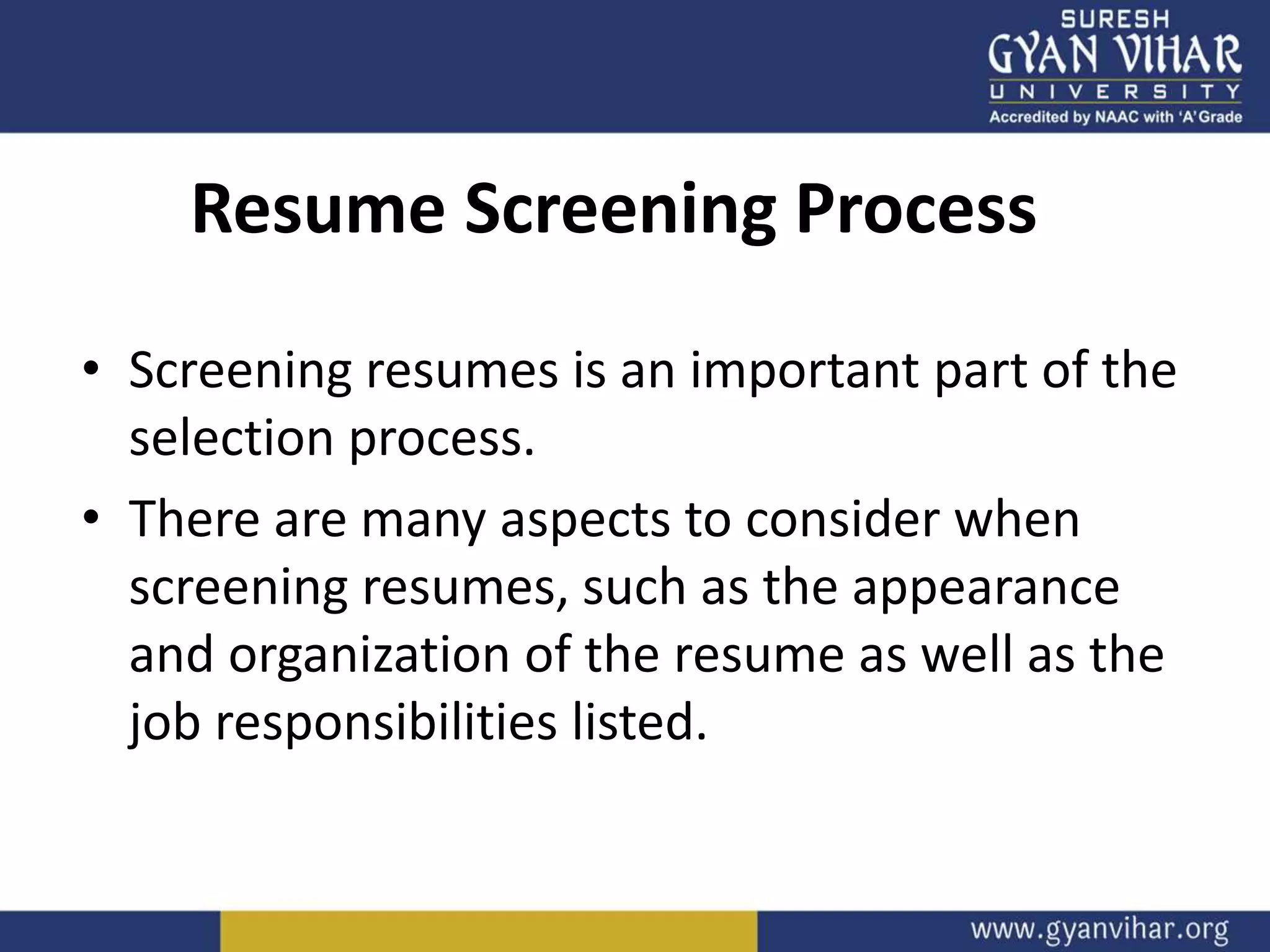
Resume screening serves as the critical bridge between candidate sourcing and candidate evaluation. When an organization posts a job opening, talent acquisition teams frequently receive hundreds—sometimes thousands—of applications. Reviewing every candidate through full interviews is operationally impossible and economically unfeasible. Resume screening acts as the first line of defense, ensuring that interview bandwidth is reserved exclusively for applicants who satisfy essential criteria.
The efficiency and accuracy of resume screening directly impact core recruitment metrics, including time-to-hire, cost-per-hire, and quality-of-hire. An inefficient screening process creates bottlenecks, delaying interview scheduling and increasing the risk of losing top talent to competitors. Conversely, an overly rigid or poorly calibrated screening methodology may mistakenly disqualify highly qualified candidates due to formatting issues or superficial keyword mismatches.
Beyond speed and efficiency, resume screening establishes baseline fairness in hiring. When talent acquisition teams apply structured, objective criteria across all incoming applications, they reduce subjective impulse decisions and build a defensible, compliant candidate selection process.
Primary Methods of Resume Screening
Organizations employ distinct methodologies to evaluate resumes based on application volume, recruiting budgets, role complexity, and available technology.
- Incoming Applications
- Initial Triage & Parsing
- Automated Screening
- Manual Screening
- Structured Evaluation
- Candidates Shortlisted
1. Manual Resume Screening
Manual screening involves a recruiter or hiring manager reading each resume line by line to evaluate qualifications. While this approach allows human reviewers to assess nuanced work histories, creative portfolios, and career progression, it faces severe scalability limitations.
- Advantages: High context awareness, capability to spot transferable skills, and adaptability for highly specialized executive or artistic roles.
- Disadvantages: Vulnerable to cognitive fatigue, operational slowness, and high exposure to implicit bias regarding applicant names, locations, or educational institutions.
2. ATS Keyword and Rule-Based Screening
Applicant Tracking Systems (ATS) use rule-based logic and keyword matching to process incoming resumes automatically. Employers set baseline parameters—such as required certifications, years of experience, software competencies, or specific academic credentials. The software parses the document, matches text string patterns, and ranks or filters applicants.
- Advantages: Rapid processing of massive application volumes, consistent enforcement of minimum requirements, and immediate administrative time savings.
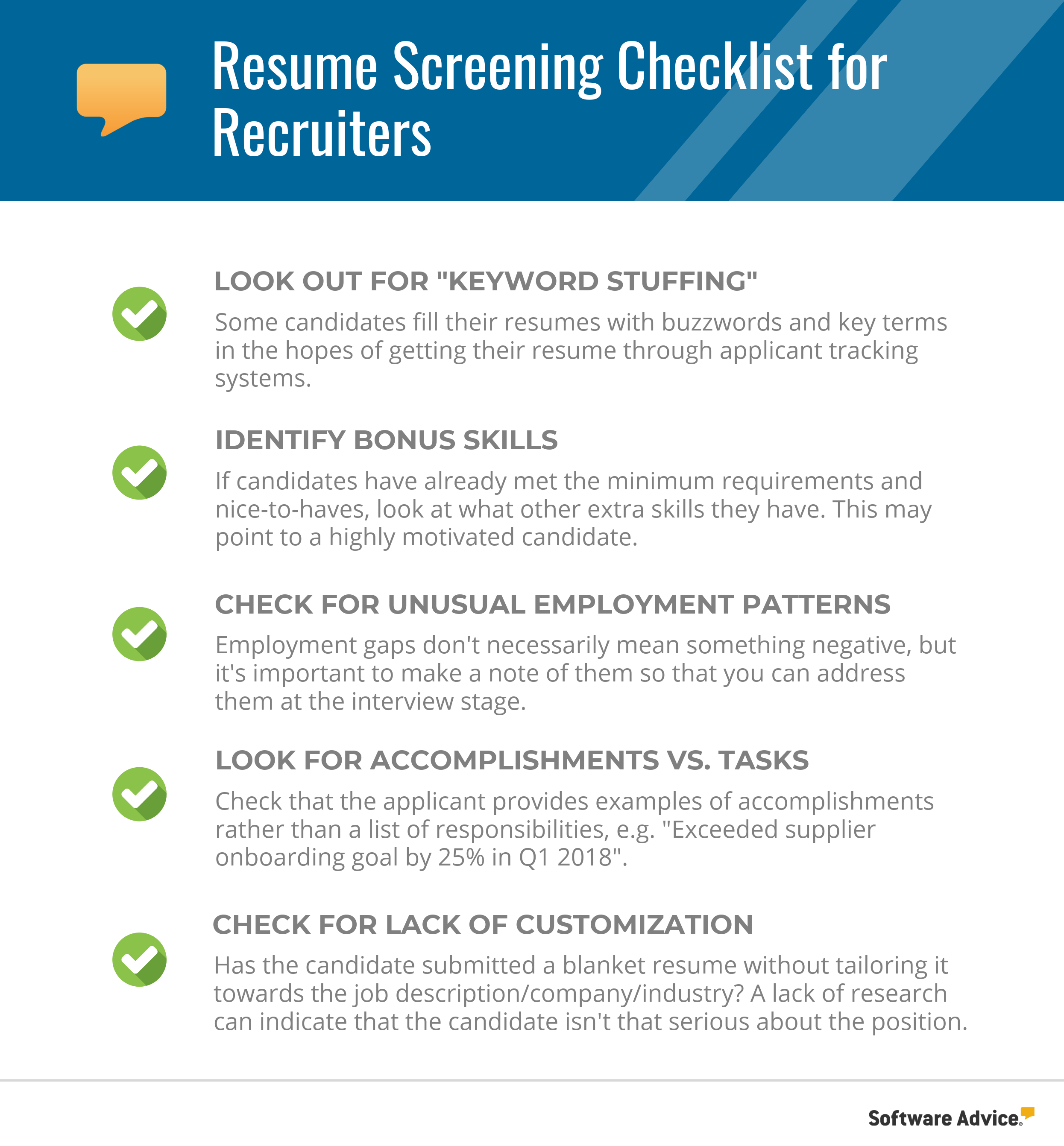
- Disadvantages: Failure to recognize context (e.g., penalizing valid synonyms for skills), vulnerability to "keyword stuffing" by applicants, and rejection of well-qualified candidates who use non-standard formatting.
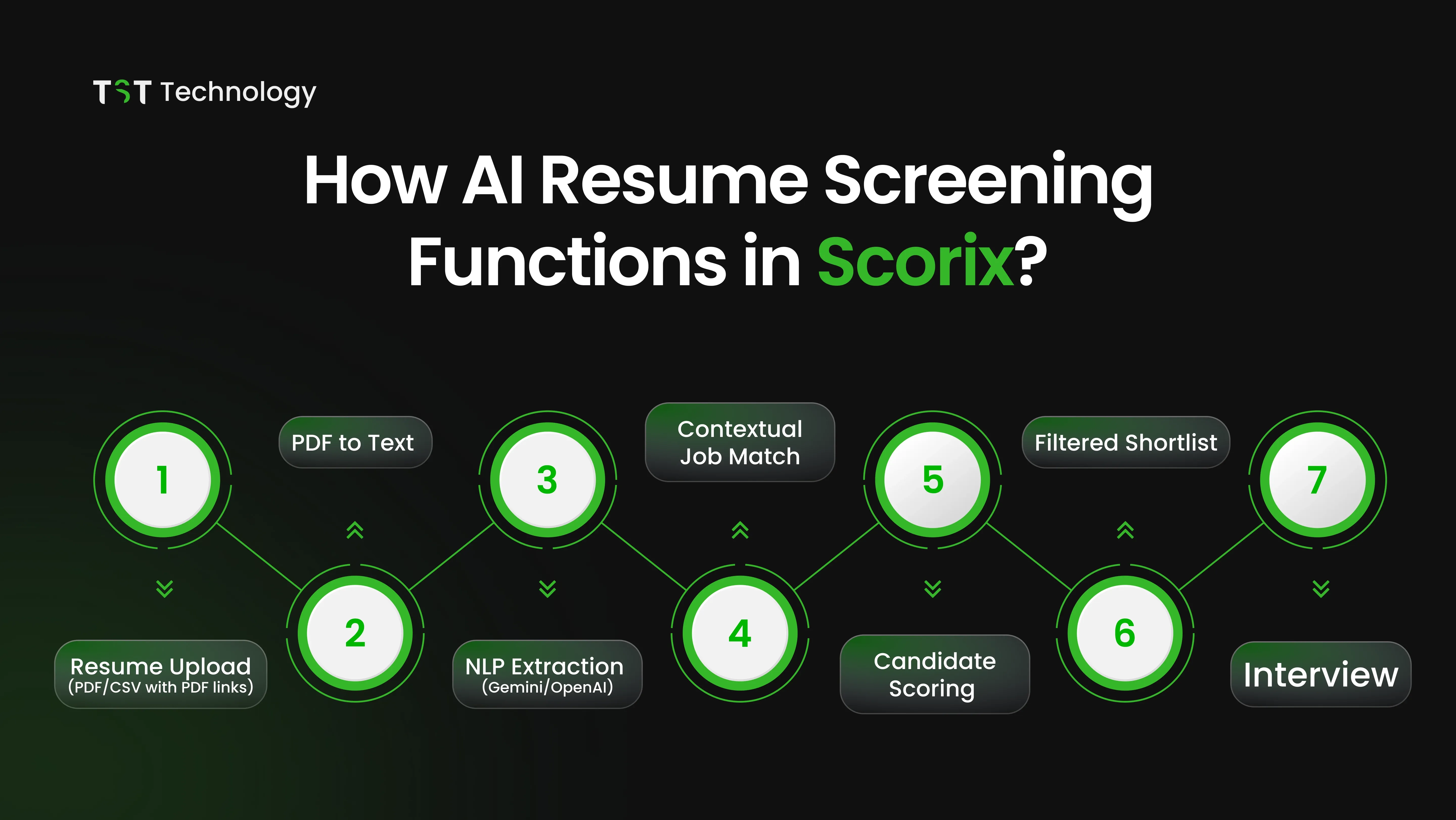
3. AI-Driven and Semantic Screening
Modern talent platforms utilize natural language processing (NLP) and machine learning algorithms to move beyond exact keyword matching. Semantic screening software evaluates the context of a candidate's career trajectory, mapping related skill sets and industry competencies even when specific job titles or terms do not match the job description exactly.
- Advantages: High conceptual understanding of skills, dynamic candidate scoring, and capability to process unstructured resume data efficiently.
- Disadvantages: Potential algorithmic bias if trained on historically biased hiring datasets, elevated software costs, and emerging regulatory compliance requirements.
Step-by-Step Guide to Executing a Structured Resume Screening Process
Establishing a repeatable, objective workflow ensures that resume screening remains fast, accurate, and fair.
- Formulate Screening Rubric & Job Criteria
- Define Must-Have vs. Nice-to-Have Requirements
- Deploy Automated Knockout Questions
- Filter by Work Eligibility, Licenses, Mandatory Shift Rules
- Execute First-Pass Data Parsing
- Extract Core Data: Employment History, Skills, Education
- Perform Structured Qualitative Review
- Score Candidates against Objective Rubric Categories
- Finalize Shortlist & Document Screening Rationale
- Log Evaluation Notes to Maintain Compliance Audit Trail
Step 1: Formulate Screening Rubrics and Criteria
Before opening a position, talent acquisition managers and hiring leaders must agree on clear evaluation criteria. Requirements should be split into two strict categories:
- Must-Have Criteria: Non-negotiable qualifications required to perform the job on day one (e.g., active professional licensure, legal authorization to work, proficiency in specific technical languages).
- Nice-to-Have Criteria: Desirable skills or experiences that enhance a candidate's profile but can be developed on the job (e.g., secondary language skills, experience with specific internal tooling).
Developing a score-based rubric (e.g., rating candidates from 1 to 5 across core competencies) prevents individual evaluators from altering standards mid-process.
Step 2: Deploy Automated Knockout Questions
To minimize unnecessary manual reviews, implement screening questions within the job application portal. Knockout questions automatically disqualify applicants who do not meet foundational job constraints before their resumes enter the review pool.
- Example parameters: "Do you hold a valid PMP certification?" or "Are you available to work on-site at our Chicago facility?"
Step 3: Conduct First-Pass Data Parsing
Utilize resume parsing software or ATS indexers to convert incoming document formats (PDF, DOCX) into standardized text profiles. First-pass parsing structures candidate data—extracting employment dates, job titles, educational attainment, and technical skills—so evaluators can compare profiles side-by-side without document design distractions.
Step 4: Perform Deep Qualitative Evaluation
Reviewers evaluate shortlisted profiles against the established scoring rubric. During this qualitative pass, talent professionals assess:
- Career Progression: Demonstrable growth in responsibility, expanded scope of duties, and logical career transitions.
- Impact and Quantifiable Results: Resume entries that emphasize verifiable outcomes (e.g., "Increased sales revenue by 24%") over passive duty descriptions (e.g., "Responsible for sales calls").
- Relevance of Experience: Direct alignment between candidate achievements and key accountability areas outlined in the job description.
Step 5: Shortlist and Document Decisions
Log candidate scores and rationale systematically within the hiring system. Standardizing status updates (e.g., Shortlisted, Hold, Rejected - Missing Core Skill) maintains clear records necessary for talent pipeline management and audit defense.
Comparing Resume Screening Methodologies
Selecting the right balance of manual human review, automated ATS logic, and artificial intelligence depends on organizational scale and hiring complexity.
| Evaluation Parameter | Manual Human Review | ATS Keyword Matching | AI Semantic Screening |
|---|---|---|---|
| Primary Mechanism | Human visual inspection | Exact keyword & string rules | NLP & contextual machine learning |
| Processing Speed | Low (3–5 minutes per resume) | High (Instantaneous) | High (Real-time processing) |
| Scalability | Poor (Requires more staff as volume grows) | Excellent (Handles infinite volume) | Excellent (Handles infinite volume) |
| Contextual Accuracy | High (Understands unique career arcs) | Low (Rejects missing exact phrases) | Medium-High (Understands skill synonyms) |
| Bias Vulnerability | High (Subjective human biases) | Low (Rules-based neutrality) | Moderate (Vulnerable to dataset bias) |
| Best Used For | Executive & highly specialized roles | High-volume hourly & entry-level roles | Mid-to-high volume professional roles |
Legal, Regulatory, and Compliance Considerations
Resume screening processes must strictly comply with employment law to ensure equal opportunity and prevent discriminatory practices.
Equal Employment Opportunity Compliance
In the United States, resume screening practices must adhere to federal non-discrimination laws enforced by the U.S. Equal Employment Opportunity Commission (EEOC). Screening criteria cannot intentionally or unintentionally exclude candidates based on protected characteristics, including race, color, religion, sex, national origin, age, disability, or genetic information.
Under the EEOC's Uniform Guidelines on Employee Selection Procedures, any pre-employment selection procedure—including automated resume screening software—that results in an adverse impact on a protected class must be validated as job-related and consistent with business necessity.
AI and Automated Screening Regulation
As organizations integrate artificial intelligence into screening workflows, legislation specifically governs automated employment decision tools (AEDTs):
- New York City Local Law 144: Mandates that employers using automated employment decision tools perform independent annual bias audits to evaluate potential disparate impact based on sex, race, and ethnicity. Employers must also notify candidates that automated tools are being used.
- European Union AI Act: Classifies AI systems used in recruitment, resume screening, and candidate evaluation as "high-risk." Such systems are subject to strict data governance, transparency, human oversight, and continuous accuracy monitoring across EU member states.
Mitigating Bias Through Blind Resume Screening
To comply with regulatory standards and reduce unconscious bias, many organizations adopt blind resume screening. This technique redacts personally identifiable information (PII) from resumes before human evaluation, including:
- Candidate names and contact details
- Physical street addresses (protecting against geographic bias)
- Graduation dates (protecting against age-based discrimination)
- Names of academic institutions (protecting against prestige bias)
Optimizing Resume Screening: Best Practices for Employers
To maintain high screening standards while keeping recruitment workflows agile, hiring teams should incorporate the following operational practices:
1. Calibrate Screening Software Regularly
Avoid relying on out-of-the-box ATS keyword lists. Periodically audit screening filters by running control samples of known high-performing internal employees' resumes through the software to verify if the system scores them appropriately.
2. Implement Dual Review for Borderline Candidates
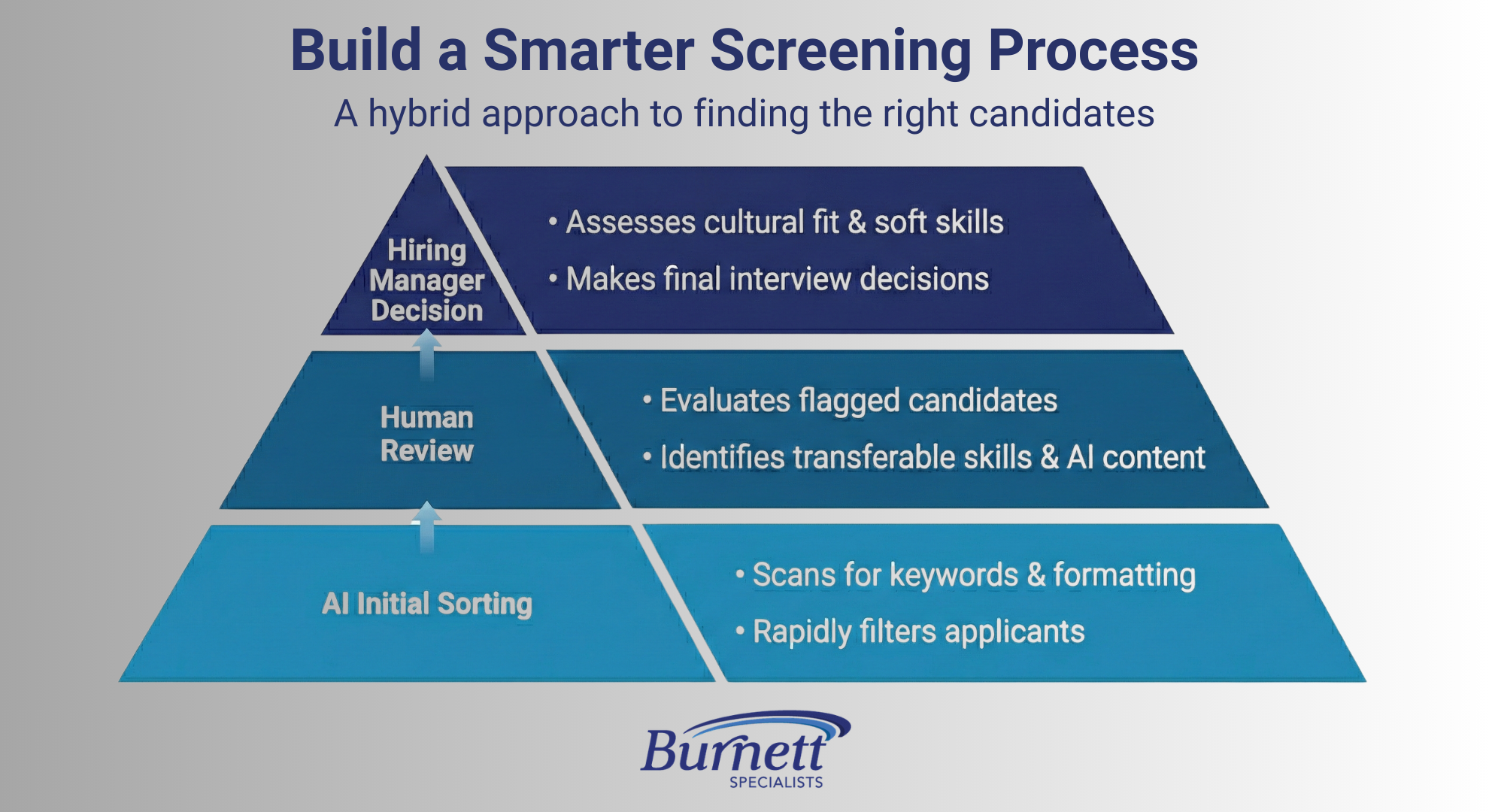
To reduce false negatives (wrongfully rejecting qualified candidates), establish a secondary review protocol for candidates who fall slightly below automated threshold cutoffs. A brief human review can catch unique experience combinations that automated algorithms miss.
3. Maintain Continuous Audit Trails
Document why every candidate is advanced or rejected. Structured recordkeeping protects organizations during regulatory reviews and provides valuable operational data for refining future job postings and screening criteria.
How Job Seekers Can Optimize Resumes for Screening Systems
For candidates navigating modern selection processes, understanding how resume screening technology operates is essential for advancing to the interview stage.
| Recommended Format (ATS-Friendly) | Avoid (Parse Errors) |
|---|---|
| Clean single/double column | Complex multi-column layouts |
| Standard fonts (Arial, Helvetica) | Graphic text boxes & tables |
| Standard headings (Experience) | Icons, images, rating bars |
| Parseable text (PDF or DOCX) | Non-standard headers (My Life) |
- Use Standard Document Formatting: Choose clean layout structures over intricate visual designs. Avoid text boxes, tables, embedded graphics, and non-standard fonts, which often cause ATS parsers to misread data.
- Align Terminology with Job Postings: Incorporate technical skills, software names, and core industry terminology matching the job advertisement naturally into context.
- Focus on Achievement Metrics: Frame past work using the action-verb + contextual metric format (e.g., * "Managed a $1.2M budget while reducing vendor operating costs by 18%"*).
- Save in Parsable Formats: Unless a job portal explicitly requests an alternative format, submit resumes as clean PDF or DOCX files to preserve text layer access for software parsers.
Frequently Asked Questions
What is the primary objective of resume screening?
The main goal of resume screening is to efficiently filter a broad pool of job applicants down to a shortlist of qualified candidates who possess the mandatory skills, experience, and credentials required for a role, preserving interview resources for viable applicants.
How do Applicant Tracking Systems (ATS) screen resumes?
An ATS screens resumes by converting uploaded files into standard plain text, parsing the data into structured fields (skills, work history, education), and comparing the candidate profile against job-specific keywords, experience rules, and knockout criteria defined by recruiters.
What is blind resume screening?
Blind resume screening is the practice of redacting personal identification information—such as the applicant's name, address, age, graduation dates, and school names—from resumes prior to evaluation. This approach helps minimize human unconscious bias during candidate selection.
Are employers legally allowed to use AI to screen resumes?
Yes, employers may use AI to screen resumes, provided the technology complies with relevant non-discrimination laws like EEOC regulations. In jurisdictions such as New York City and the European Union, employers must also comply with specific statutes mandating bias audits, transparency notices, and human oversight.
What causes an ATS to reject a qualified candidate's resume?
An ATS may fail to advance a qualified applicant due to unparseable document formatting (such as text embedded inside images or tables), non-standard section headers, missing key job terminology, or automated knockout questions configured with rigid parameters.
Practical Action Plan for Talent Acquisition Teams
To enhance resume screening performance across your hiring pipeline:
- Audit Current Screening Criteria: Review active job descriptions alongside hiring managers to clearly separate Must-Have qualifications from Nice-to-Have preferences before publishing roles.
- Review ATS Configuration: Ensure keyword filters use open semantic logic rather than overly narrow text strings to prevent qualified candidates from being filtered out.
- Train Evaluation Teams: Conduct regular refresher training for hiring managers on objective scoring rubrics, standardized evaluation frameworks, and techniques to minimize unconscious bias.
- Schedule Legal Compliance Reviews: Audit automated screening tools annually to ensure alignment with local, federal, and international regulations governing algorithmic evaluation in hiring.
Image Gallery