What the Fish Rainforest Debate Reveals About Tropical Ecohydrology and Conservation
The fish rainforest debate highlights the profound ecological interdependence between flooded tropical forests and freshwater fish communities. It reveals that terrestrial deforestation directly destroys aquatic biodiversity and fisher...
The fish rainforest debate highlights the profound ecological interdependence between flooded tropical forests and freshwater fish communities. It reveals that terrestrial deforestation directly destroys aquatic biodiversity and fishery yields through lost food sources like fruits and seeds, proving that effective conservation requires managing land and water as a unified ecohydrological system rather than isolated environments.
Contents
The Origin and Core Concepts of the Fish-Rainforest Interdependence
For decades, ecological research treated river ecosystems and terrestrial forests as adjacent but largely distinct environments. Stream ecology relied heavily on models developed in temperate zones, where aquatic food webs are primarily driven by instream algae (autochthonous production) or leaf litter decomposition. However, the study of tropical floodplains—most notably pioneered by biologist Michael Goulding in his seminal 1980 work The Fishes and the Forest—shattered this paradigm by documenting how Amazonian fish depend directly on living forest canopy products.
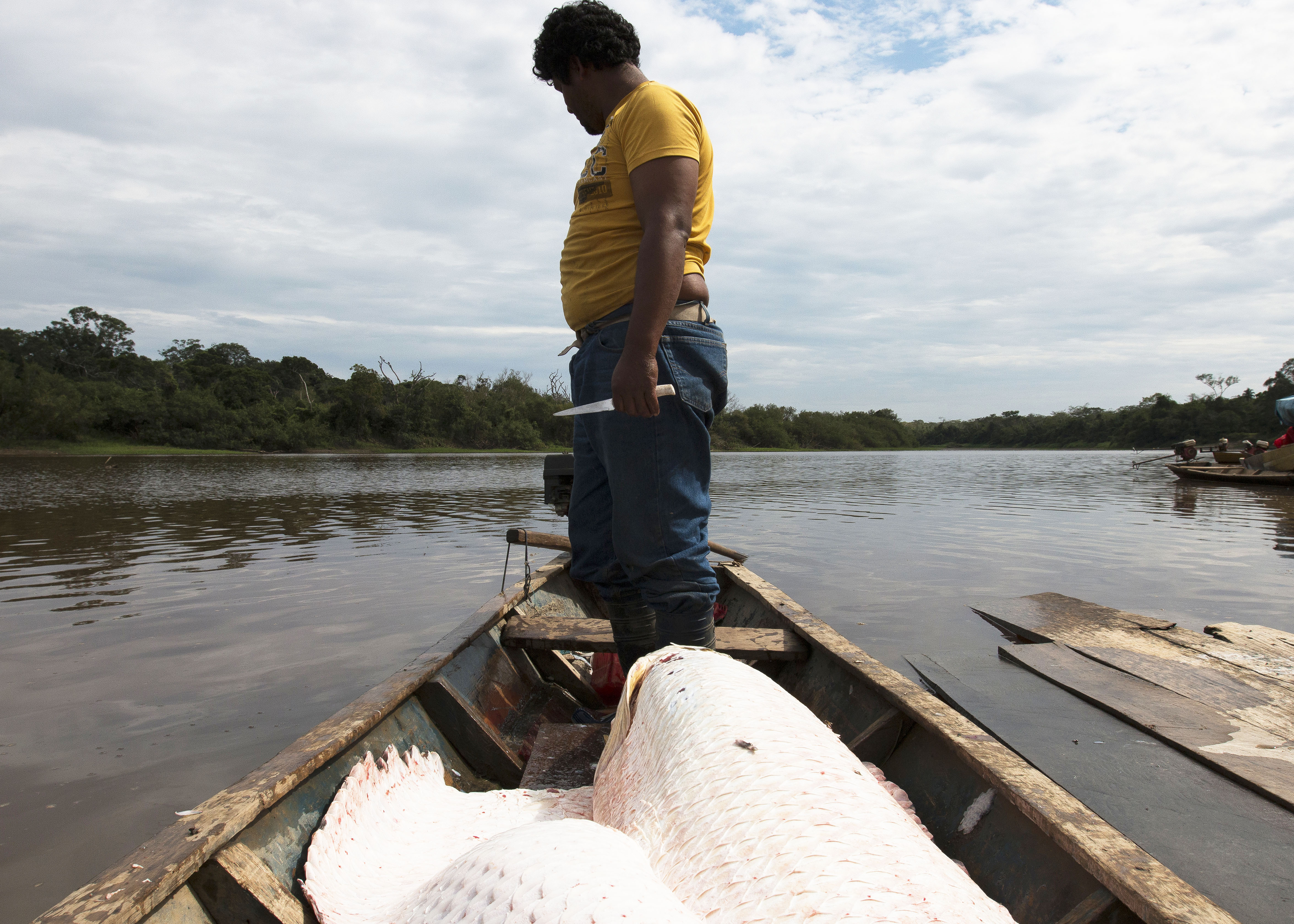
During the annual high-water season in major tropical river basins like the Amazon, Orinoco, and Mekong, rivers overflow their banks and inundate millions of hectares of adjacent forest. In the Amazon, these flooded forests are divided into two main types: várzea (nutrient-rich, white-water flooded forests) and igapó (nutrient-poor, black-water flooded forests). For up to six months each year, fish swim among the tree trunks, feeding heavily on falling fruits, seeds, flowers, and terrestrial invertebrates.
This interaction is not a minor dietary supplement; it is a primary engine of tropical river productivity. The ongoing scientific debate around this relationship—often termed the "fish-rainforest debate"—revolves around the extent to which aquatic food webs rely on terrestrial inputs, the specific role fish play in forest regeneration through seed dispersal (ichthyochory), and the management failures that occur when governance institutions separate forestry from fisheries management.
Key Revelations from the Scientific Debate
1. The Extent of Allochthonous Energy Reliance
One of the central disagreements among tropical ecologists has been quantifying how much fish biomass is constructed from forest-derived (allochthonous) organic matter versus aquatic (autochthonous) production such as phytoplankton and periphyton. Early naturalists argued that frugivorous (fruit-eating) and granivorous (seed-eating) fish were ecological anomalies restricted to a few specialized species.
Subsequent stable isotope analysis and gut-content studies have revealed a more complex reality:
- Trophic Anchoring: Large commercial species, such as the tambaqui (Colossoma macropomum) and pirapitinga (Piaractus brachypomus), derive up to 80% of their annual energy reserves from forest fruits and seeds consumed during the flood season.
- Fat Accumulation: Fish store enormous quantities of visceral fat while feeding in the flooded forest. This stored energy sustains them during the low-water dry season, when they return to main river channels where food is scarce.
- Nutrient Redistribution: By consuming forest fruits and migrating upstream or into main river channels to spawn, fish transport terrestrial nutrients across vast hydrological distances, enriching downstream aquatic habitats.
While some contemporary researchers emphasize that algae remain important for juvenile fish and smaller species, the consensus acknowledges that the high carrying capacity of tropical river fisheries cannot exist without intact floodplain forests.
ANNUAL FLOOD PULSE CYCLE
- HIGH WATER (Inundation)
- Fish enter flooded forest
- Intensive feeding on fruit/seeds
- High seed dispersal (ichthyochory)
- LOW WATER (Recession)
- Fish retreat to main river channels
- Fasting / consuming fat reserves
- Spawning migrations
2. Ichthyochory as a Primary Driver of Forest Structure
The debate has also reframed our understanding of plant reproduction in wetland forests. For over a century, terrestrial mammals and birds were assumed to be the sole long-distance seed dispersers in tropical biomes. However, research into ichthyochory demonstrates that fish are vital for the survival and distribution of dozens of floodplain tree species.
When fish consume fruits, they ingest seeds. While some specialized seed predators crush seeds with powerful pharyngeal teeth, many species swallow seeds whole and pass them intact through their digestive tracts. Because fish swim long distances across flooded landscapes before defecating, they deposit seeds in ideal germination microhabitats along floodplain margins.
Studies show that seeds passed through fish digestive systems often exhibit higher germination rates than unconsumed seeds, as gut enzymes break down thick seed coats. Consequently, destroying fish populations directly threatens the long-term regeneration and structural diversity of flooded forests.
3. The Structural Vulnerability of Siloed Conservation Models
Perhaps the most critical policy revelation from the fish-rainforest debate is the fundamental failure of traditional, compartmentalized resource management. Natural resource governance historically operates in silos:
- Forestry Departments manage timber cutting, agricultural clearing, and terrestrial reserves, often ignoring riparian buffer health and seasonal aquatic access.
- Fisheries Agencies regulate net sizes, catch quotas, and breeding season closures, frequently treating fish stocks as isolated oceanic-style populations disconnected from land use.
The debate exposes that cutting down floodplain forests directly collapses nearby fish catches, even if fishing pressure remains unchanged. Conversely, overfishing key frugivorous species leads to recruitment failure in tree species that depend on those fish for seed dispersal. Land and water cannot be protected independently in tropical floodplains; they constitute a single ecohydrological unit.
Ecosystem Dynamics: Várzea vs. Igapó Floodplain Forests
To understand how the fish-rainforest dynamic varies across tropical landscapes, it is essential to compare the two distinct types of Amazonian flooded forests.
| Feature / Metric | Várzea (White-water Forests) | Igapó (Black-water Forests) |
|---|---|---|
| Water Chemistry | Sediment-rich, neutral pH, high nutrient load | Acidic (pH 4.0–5.0), tannin-rich, low sediment |
| Primary River Basins | Amazon mainstem, Madeira, Solimões | Rio Negro, upper Orinoco tributaries |
| Nutrient & Biomass Availability | High soil fertility; abundant fruit and seed production | Extremely nutrient-poor; low terrestrial primary production |
| Dominant Fish Interactions | High density of large frugivores (Colossoma, Brycon) | Specialized detritivores and small fruit-eating characins |
| Primary Environmental Threats | Agricultural conversion (cattle ranches, soy), timber extraction | Hydroelectric dam construction, gold mining, selective logging |
| Conservation Priority | Integrated land-use zoning & sustainable fisheries management | Strict preservation of contiguous riparian corridors |
Systemic Threats Disruption of the Flood Pulse
The ecological balance highlighted by the fish-rainforest debate is currently threatened by three major anthropogenic drivers:
Deforestation of Riparian and Floodplain Corridors
When floodplain forests are cleared for cattle pasture or agriculture, the physical input of fruit, seeds, and insects drops to near zero. Fish species adapted to frugivory are replaced by smaller, generalist species with lower economic value, impoverishing local human communities that rely on commercial and subsistence fisheries.
Hydrological Fragmentation by Hydroelectric Dams
The Flood Pulse Concept—developed by Wolfgang Junk and colleagues—explains that the predictable annual rise and fall of water levels is the driving force in river-floodplain systems. Hydroelectric dams disrupt this cycle by dampening flood peaks and altering downstream water temperatures and sediment transport. When dams block access to flooded forests or shorten the duration of seasonal flooding, fish are unable to reach their primary feeding grounds, causing widespread reproductive failure.
Climate-Induced Droughts and Overheating
Extreme climate events, such as severe droughts in tropical river basins, shrink flooded forest habitat and raise water temperatures to lethal thresholds. Reduced water volume concentrates fish in shallow pools, increasing mortality from hypoxia (lack of oxygen) and thermal stress while preventing natural feeding behaviors.
Practical Applications for Environmental Policy and Resource Management
The lessons derived from the fish-rainforest debate provide a clear roadmap for modern conservation strategies in tropical river systems:
- Adopt Integrated Ecohydrological Management: Regional planning must evaluate land-use changes (such as agricultural expansion or forestry permits) based on their direct impacts on downstream and regional aquatic biomass.
- Establish Protected Areas Based on Watershed Basins: Protected area boundaries should follow natural hydrologic catchments rather than arbitrary geometric lines or riverbank margins, ensuring that both river channels and seasonally flooded forests receive contiguous protection.
- Implement Community-Based Co-Management: Local fishing communities often possess detailed traditional ecological knowledge regarding seasonal fish feeding sites. Empowering these communities to enforce local agreements—such as prohibiting forest clearing along key feeding bays—has proven far more effective than top-down legal mandates.
- Require Aquatic Impact Assessments for Infrastructure: Environmental impact assessments for dams, highways, and shipping channels must explicitly model the lost economic value of fisheries resulting from floodplain habitat fragmentation.
Frequently Asked Questions
What is the primary focus of the fish rainforest debate?
The debate focuses on the degree of interdependence between tropical freshwater fish and flooded rainforests. It examines how much fish rely on forest fruits and seeds for survival, how fish contribute to forest regeneration through seed dispersal, and how terrestrial land use impacts aquatic fisheries.
How do fish disperse tree seeds in tropical forests?
Frugivorous fish eat fruits that drop into flooded forests during the high-water season. Many seeds pass through the fish's digestive tract undamaged and are excreted miles away in flooded soils. This process, known as ichthyochory, aids seed germination and helps maintain forest biodiversity.
Why is traditional fisheries management insufficient for flooded tropical rivers?
Traditional fisheries management focuses primarily on catch limits, net sizes, and fishing seasons. It fails to protect the terrestrial habitat—the flooded forest—that provides the primary food source for commercial fish species. Without protecting floodplain trees, fish stocks collapse regardless of fishing regulations.
What are the main differences between Várzea and Igapó flooded forests?
Várzea forests are flooded by sediment-rich, neutral-pH white-water rivers, resulting in highly fertile soils and dense fish populations. Igapó forests are flooded by acidic, nutrient-poor black-water rivers, leading to lower overall biological productivity but highly specialized ecological adaptations.
How do hydroelectric dams affect fish-rainforest interactions?
Hydroelectric dams disrupt the natural annual flood pulse by altering water flows, trapping sediment, and physical barriers. This prevents fish from reaching flooded forests during high-water seasons, eliminating their access to vital food sources and disrupting natural seed dispersal.
Actionable Recommendations for Practitioners
For conservation organizations, wildlife biologists, and natural resource managers working in tropical river systems, the following steps are essential to translate this ecological insight into practical management:
- Conduct Ecohydrological Audits: Prior to approving infrastructure or land conversion projects, map seasonal aquatic connectivity to identify high-value feeding corridors used by frugivorous fish.
- Enforce Riparian Buffer Protection: Establish mandatory zero-deforestation zones along all seasonally flooded river margins, extending at least to the maximum historical high-water mark.
- Incorporate Ichthyochory into Forest Reforestation: When designing habitat restoration programs along degraded floodplains, plant native fruit-bearing tree species known to attract seed-dispersing fish to accelerate natural ecological recovery.
- Harmonize Inter-Agency Governance: Establish cross-sectoral management boards that unite forestry, agricultural, and fisheries departments under a single regional watershed strategy.
Image Gallery