Why Does an AC Freeze Up? Causes, Fixes, and Prevention
An air conditioner freezes up when its evaporator coil drops below 32°F (0°C), causing moisture in the surrounding air to freeze into ice on the coil fins. This temperature drop is primarily triggered by restricted airflow across the c...
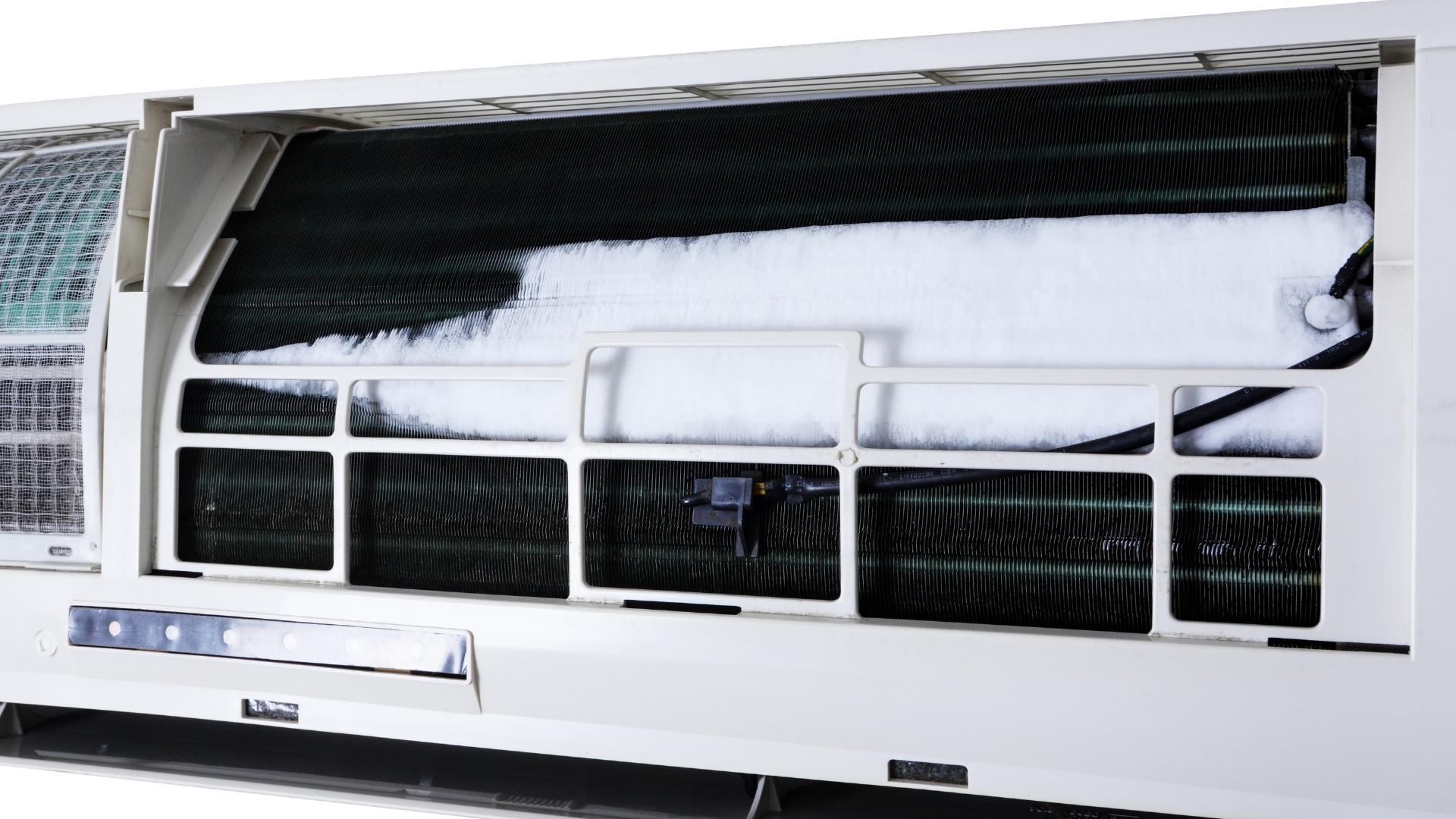
An air conditioner freezes up when its evaporator coil drops below 32°F (0°C), causing moisture in the surrounding air to freeze into ice on the coil fins. This temperature drop is primarily triggered by restricted airflow across the coil or low refrigerant levels, both of which disrupt the heat transfer process necessary for normal operation.
Contents
The Thermodynamics of AC Freezing: How Ice Forms on Your Coils
To understand why an air conditioning unit converts humidity into solid ice, it helps to examine the basic refrigeration cycle. An air conditioner does not generate cold air; instead, it extracts heat and humidity from indoor air and transfers that thermal energy outdoors.
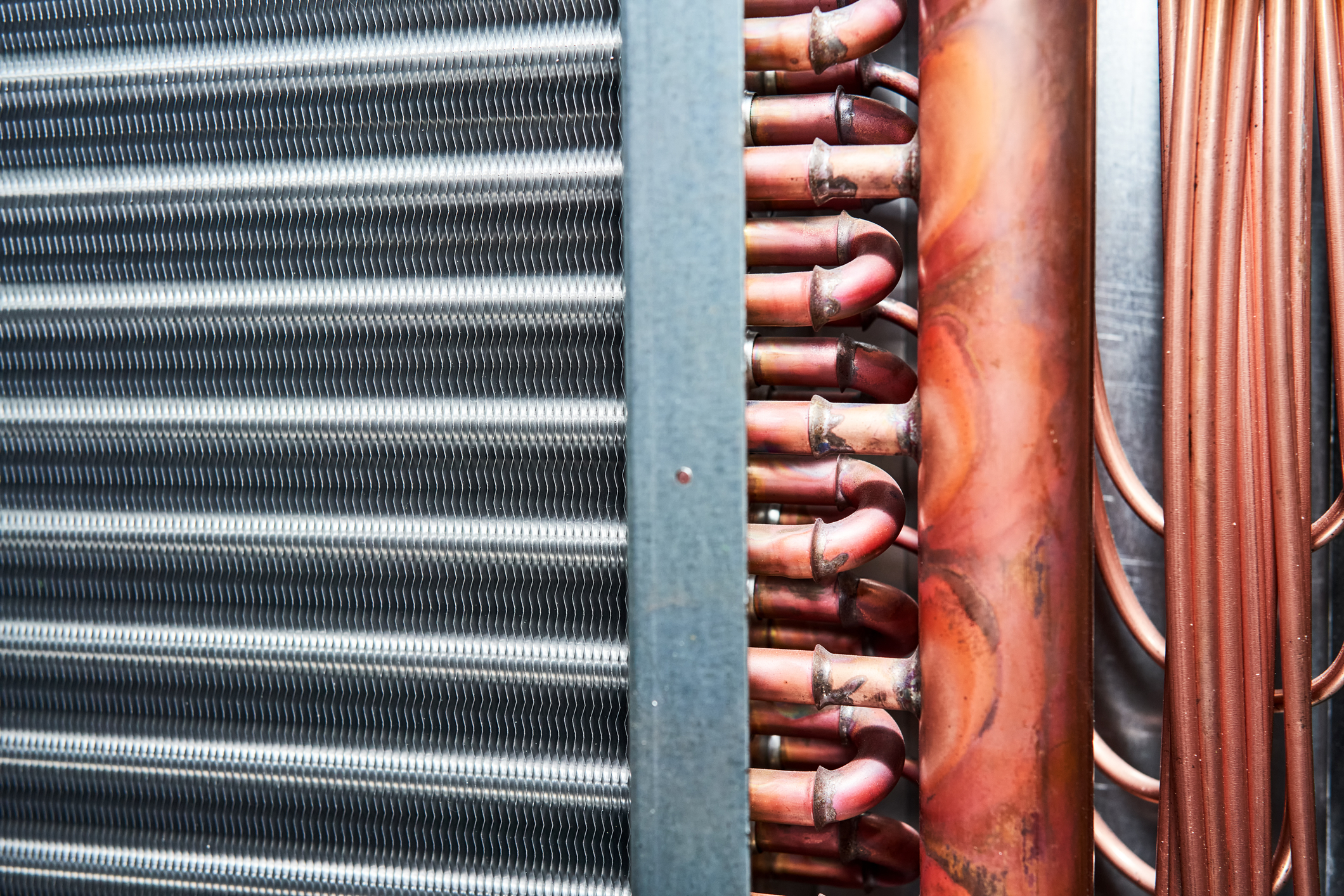
This thermal transfer relies on liquid refrigerant passing through an expansion valve into the indoor evaporator coil. Inside this coil, the refrigerant expands into a low-pressure gas, rapidly cooling the copper tubing. Under normal operating conditions, warm indoor air is pulled across the evaporator coil by the blower fan. The heat in the air transfers to the cool refrigerant, warming the gas inside the coil while cooling the air that blows back into your living space. Moisture in the warm air condenses on the cold coil surfaces and drips safely into the condensate drain pan.
- Warm indoor air blows across evaporator coil, returning cool air to home
- Heat transferred to coil
- Coil drops below 32°F (no heat absorption)
- Condensation freezes into solid ice
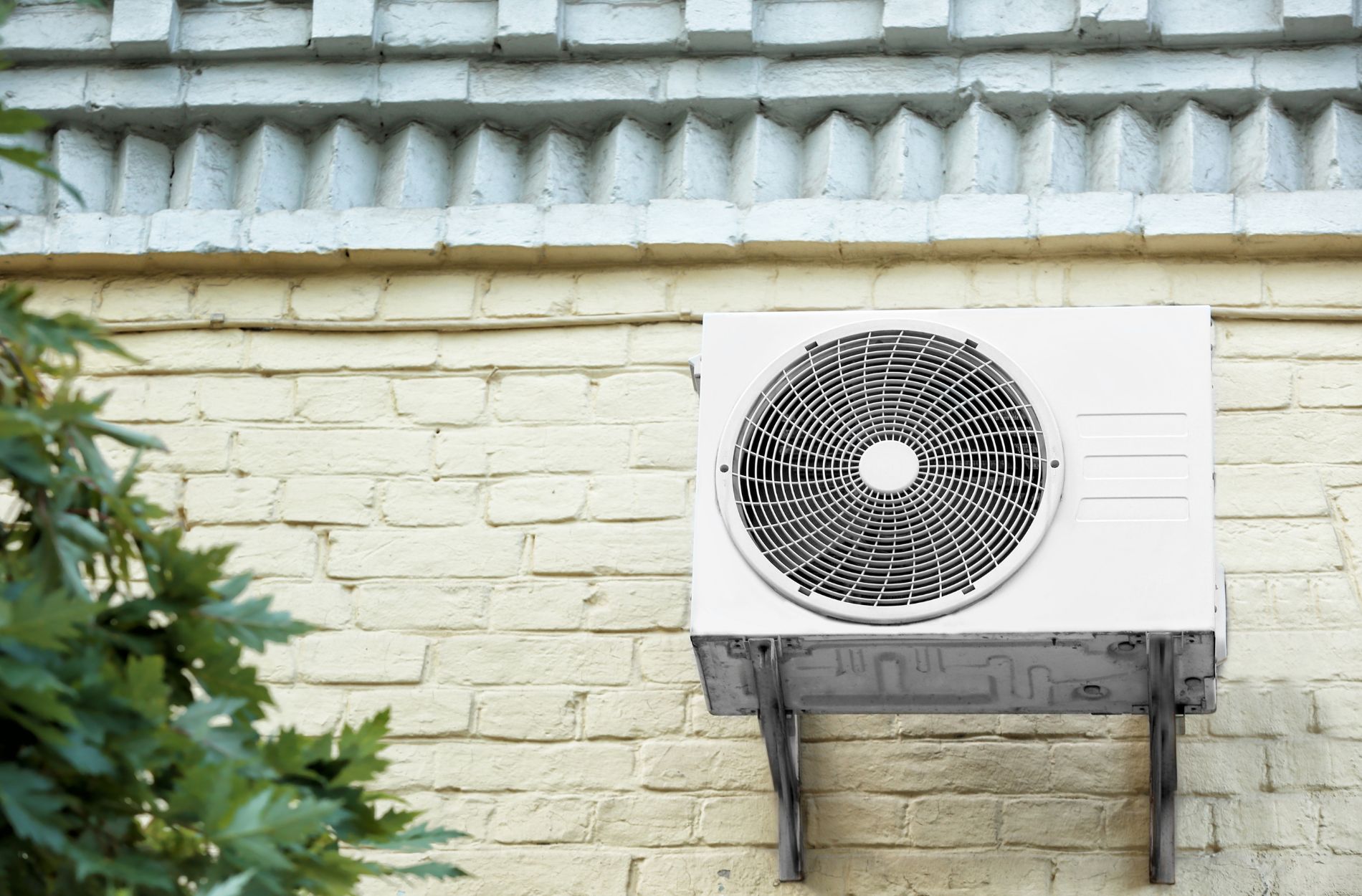
When something interrupts this heat transfer—such as insufficient airflow or improper refrigerant pressure—the heat from the indoor air fails to reach the refrigerant inside the coil. Without adequate thermal energy to absorb, the refrigerant inside the coil stays extremely cold, dropping the surface temperature of the copper tubing below the freezing point of water. As condensation forms on the fins, it immediately turns into ice. This ice acts as an insulating barrier, further restricting airflow and accelerating ice accumulation until the entire indoor coil, suction line, and outdoor unit become encased in frost.
Top Causes of a Frozen Air Conditioner
While ice accumulation is the visible symptom, the underlying mechanical or operational failures fall into five primary categories. Identifying the exact root cause prevents costly component damages, such as a burned-out compressor.
1. Restricted Airflow
Airflow restriction is the most frequent cause of frozen evaporator coils. When insufficient air passes over the evaporator coil, there is not enough thermal mass to warm the refrigerant inside the system.
- Dirty or Clogged Air Filters: As air filters accumulate dust, pet dander, and debris, static pressure increases inside the return ductwork. This starves the blower fan of incoming air, drastically reducing the volume of air passing across the coil.
- Blocked or Closed Air Registers: Closing internal doors, covering supply vents with furniture, or shutting off air registers in unused rooms reduces system airflow. Central HVAC systems are balanced for specific duct pressures; altering this balance starves the unit of air.
- Dirty Evaporator Coil: Dust and grime that bypass a poor-quality filter settle on the wet fins of the evaporator coil. This layer of dirt acts as an insulator and physically blocks air channels between the aluminum fins.
- Collapsed or Damaged Ductwork: Flex ducting that has kinked, collapsed, or disconnected in an attic or crawlspace restricts return or supply airflow, driving down evaporator pressure.
2. Low Refrigerant Levels
Refrigerant operates inside a sealed loop. It is not consumed during normal operation like gasoline in a car. If refrigerant levels are low, it indicates a physical leak in the copper tubing, coil joints, or service valves.
According to fundamental gas laws, pressure and temperature are directly proportional. When a leak causes system pressure to drop, the saturation temperature of the refrigerant inside the evaporator coil drops along with it. A low refrigerant charge causes the remaining refrigerant to boil off at a significantly lower temperature—well below 32°F (0°C). As a result, the moisture on the coil freezes instantly upon contact.
3. Blower Motor and Fan Failures
Even if air pathways and refrigerant charges are optimal, a mechanical failure in the blower assembly will stop airflow instantly.
- Failed Blower Motor Capacitor: A failing run capacitor prevents the blower motor from reaching its designed revolutions per minute (RPM) or stops it from starting altogether.
- Worn Motor Bearings: Over time, lack of lubrication or shaft wear causes internal resistance, slowing down the blower fan speed and generating motor overheating.
- Damaged Blower Belt or Wheel: In older systems or commercial air handlers with belt-driven blowers, a snapped or slipped belt stops the fan entirely. Clogged blower fan wheels full of caked-on dust also fail to move the required cubic feet per minute (CFM) of air.
4. Malfunctioning Metering Device (TXV or Piston)
The metering device—typically a Thermostatic Expansion Valve (TXV) or a fixed orifice piston—regulates the flow rate of liquid refrigerant entering the evaporator coil.
If a TXV sticks closed or becomes partially restricted by internal sludge or debris, it starves the evaporator coil of refrigerant. This sudden drop in pressure downstream of the valve causes the small amount of entering refrigerant to flash into a super-chilled gas, rapidly freezing the inlet side of the coil. Conversely, a sensing bulb that has detached from the suction line can feed incorrect temperature feedback to the valve, destabilizing coil pressures.
5. Low Ambient Outdoor Temperatures and Thermostat Issues
Air conditioners are engineered to operate within specific outdoor ambient temperature thresholds.
- Running the AC Below 60°F (15°C): Operating a standard residential air conditioner when outdoor temperatures drop below 60°F disrupts system pressures. The head pressure drops excessively, which reduces suction pressure at the indoor coil and causes freeze-ups.
- Thermostat Calibration Failures: A malfunctioning thermostat or a poorly placed temperature sensor might fail to signal the system to turn off when the room reaches target temperatures. Continuous cooling without cycle breaks allows minimal ice spots to grow into massive ice blocks.
Immediate Action Plan: What to Do When Your AC Freezes
If you notice ice on your indoor unit, refrigerant lines, or outdoor cabinet, take immediate action to prevent severe compressor damage. Liquid refrigerant entering a compressor designed only for vapor can cause mechanical failure.
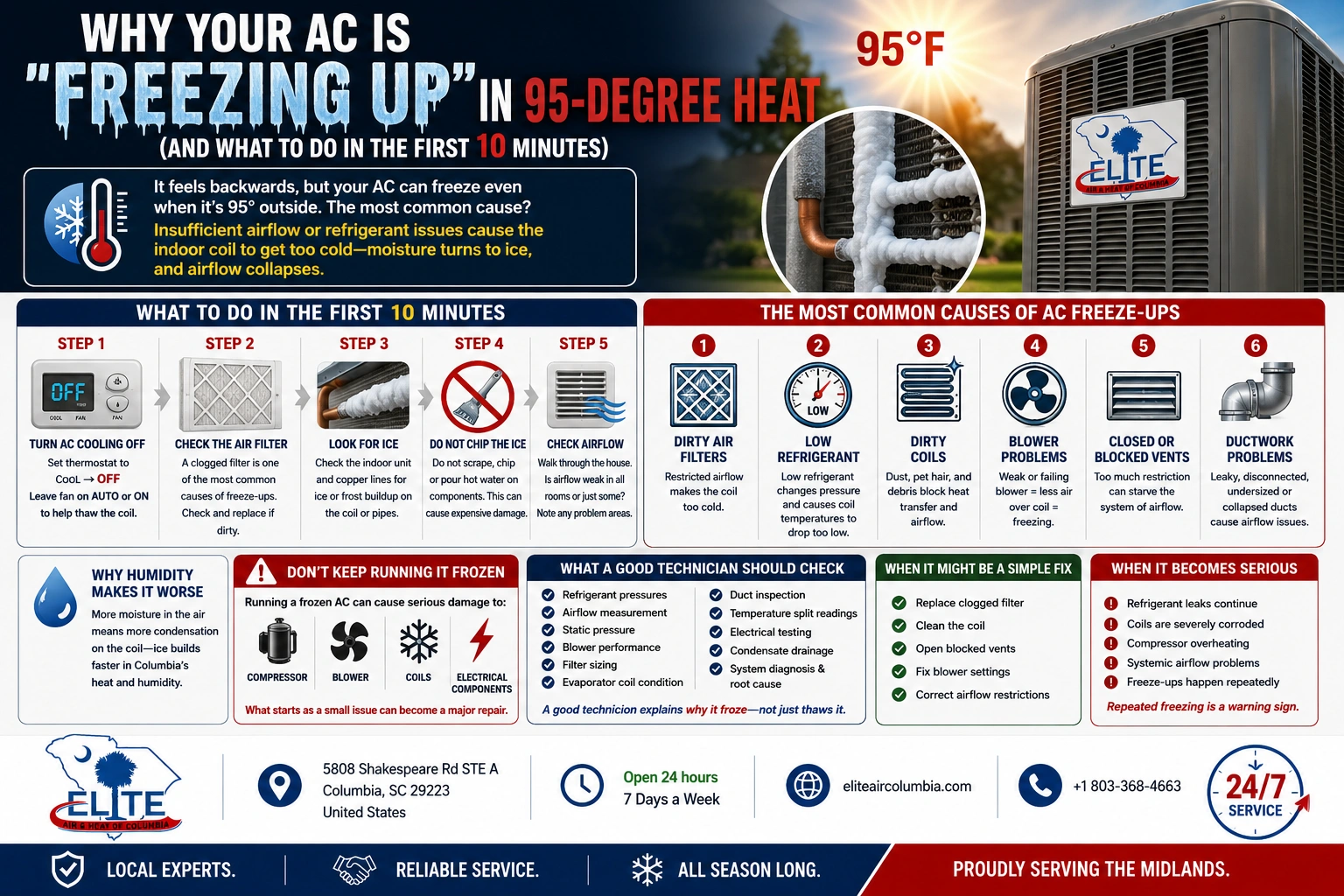
- Step 1: Turn Off AC Cool Mode
- Step 2: Set Fan to 'ON' Position
- Step 3: Monitor & Contain Meltoff Water
- Step 4: Inspect Filter & Return Vents
- Step 5: Test Operation or Call HVAC Tech
Step 1: Switch Off Cooling Mode Immediately
Turn your thermostat from "COOL" to "OFF." Continuing to run the system in cooling mode while frozen will freeze the entire line set solid and cause liquid refrigerant to flood back into the compressor, which can permanently ruin the motor pump assembly.
Step 2: Switch the Fan to the "ON" Position
Change the thermostat fan setting from "AUTO" to "ON." This keeps the indoor blower fan running while the compressor remains off. Warm indoor air blowing over the frozen coil speeds up the thawing process naturally.
Step 3: Monitor and Contain Condensation Water
As hundreds of cubic inches of ice thaw, the meltwater will quickly exceed the capacity of your standard condensate drain pan.
- Place towels, buckets, or plastic sheeting around the indoor air handler.
- Check the condensate drain line to ensure it is clear of algae and debris so water can flow outside rather than overflowing into your ceiling or floors.
Caution: Never use ice picks, knives, screwdrivers, or heat guns to chip away ice from the evaporator coil. The aluminum fins and copper tubing are soft and easily punctured, turning a simple maintenance issue into an expensive replacement job.
Step 4: Inspect the Filter and Air Paths
While waiting for the ice to melt (which can take anywhere from 2 to 24 hours depending on the thickness of the ice), remove your furnace/air handler filter. If it is coated in gray dust, dispose of it and prepare a fresh, clean filter for installation once the system is dry. Ensure all room supply vents and return grills across the property are open and unobstructed.
Diagnostic Matrix: Identifying the Root Cause
Use this practical matrix to diagnose symptoms before deciding whether to perform a DIY fix or contact a certified professional.
| Symptom / Observation | Likely Root Cause | Complexity Level | Recommended Action |
|---|---|---|---|
| Filter is heavily caked with dirt; low airflow at vents | Restricted return airflow | DIY | Replace air filter immediately; re-test system airflow after thawing. |
| Supply vents closed in multiple rooms; air feels weak | System static pressure imbalance | DIY | Open all supply registers; ensure at least 80% of vents remain open. |
| Coils frozen, filter is clean, blower is running fine | Refrigerant leak or low charge | Professional Required | Contact a licensed technician to leak-test and recharge system. |
| Hissing or bubbling sound near copper lines | Active refrigerant leak | Professional Required | Turn off system; schedule EPA-certified refrigerant leak repair. |
| Blower fan does not turn on; hum coming from air handler | Failed blower motor or capacitor | Professional Required | Replace capacitor or blower motor; check electrical connections. |
| Ice forms primarily at the top entry of the coil | Sticking expansion valve (TXV) | Professional Required | Inspect and replace expansion valve or clear line restriction. |
| Unit running continuously during cold spring nights | Low ambient outdoor operation | DIY / Professional | Turn off AC when outside drops below 60°F; install low-ambient kit if needed. |
DIY Troubleshooting vs. Professional Repair Boundaries
While homeowners can handle basic airflow maintenance, complex mechanical and chemical issues require professional expertise and specialized equipment.
Safe DIY Steps
- Air Filter Maintenance: Replace standard 1-inch to 4-inch pleated filters every 30 to 90 days. For households with pets, inspect filters monthly.
- Clearing Return Grills and Registers: Keep a minimum 2-foot clearance around all indoor supply and return vents. Ensure drapes, rugs, or furniture do not block air flow.
- Flushing the Condensate Line: Pour a cup of distilled white vinegar down the condensate T-pipe access cap twice a year to clear algae buildup and prevent drain line clogs.
- Cleaning Outdoor Condenser Surroundings: Maintain a 24-inch clear radius around the outdoor condenser cabinet by clearing away tall weeds, leaves, and trash.
When to Call a Certified HVAC Technician
Federal environmental protection standards and mechanical codes govern modern HVAC systems. Homeowners should avoid attempting the following tasks:
Is the issue electrical or refrigerant-based?
- YES: PROFESSIONAL REQUIRED
- EPA Section 608 Certified Tech
- Refrigerant Leak Detection
- High-Voltage Electrical Tests
- TXV / Metering Valve Repairs
- NO: DIY TROUBLESHOOTING
- Replace air filter
- Open supply registers
- Clear condensate line access
- Clear debris around condenser
- YES: PROFESSIONAL REQUIRED
Refrigerant Recovery and Recharging: Under federal regulations such as Section 608 of the Clean Air Act, handling chemical refrigerants (such as R-410A or R-32) requires EPA certification. Refrigerant leaks must be isolated, brazed, pressure-tested with dry nitrogen, evacuated with a vacuum pump, and recharged by weight.
Electrical Diagnostics: Testing run capacitors, contactors, and high-voltage blower motor windings carries significant risks of electrical shock.
Internal Coil Cleaning: Deep cleaning a heavily fouled indoor evaporator coil often requires pumping down the refrigerant, cutting copper lines, pulling the coil out, and spraying it with specialized chemical cleaners.
Long-Term Prevention and Maintenance Guidelines
Preventing air conditioner freeze-ups requires maintaining proper air volume and system pressures throughout the cooling season. Implementing a consistent maintenance schedule minimizes system stress and lowers energy costs.
1. Optimize Airflow and Filter Selection
Choose air filters that match your system's fan static pressure capacity. High-MERV filters (MERV 13 and above) capture finer particles, but they also restrict airflow significantly. If your HVAC system is not designed for high static pressure, using a dense filter can reduce airflow across the evaporator coil, causing it to freeze. Consult your air handler manual or an HVAC professional to select an appropriate filter MERV rating (typically MERV 8 to 11 for standard residential systems).
2. Schedule Annual Professional Maintenance
Schedule an annual spring tune-up with an HVAC contractor. Complete system maintenance should include:
- Measuring blower motor amperage draw and capacitor microfarads.
- Inspecting coil surfaces for biological growth and dirt accumulation.
- Checking superheat and subcooling levels to verify correct refrigerant charges.
- Inspecting electrical wiring connections and safety switches.
- Inspecting ductwork for leaks, disconnections, or internal collapse.
Guidance from the U.S. Department of Energy on maintaining air conditioners highlights that replacing a dirty, clogged filter with a clean one can lower your air conditioner's energy consumption by 5% to 15% while protecting system components against freeze events.
Frequently Asked Questions
How long does it take for a frozen AC to thaw completely?
Thawing time depends on the volume of ice on the evaporator coil and suction lines. Minor frost can thaw in 2 to 4 hours if the fan is set to "ON." Large blocks of ice enclosing the entire air handler cabinet can take 12 to 24 hours. Keep the system cooling mode off during this entire period.
Can a frozen AC fix itself if I just turn it off for a while?
No. Turning off the unit allows the ice to melt, which temporarily restores airflow. However, unless the root cause—such as a dirty filter, low refrigerant, or a failing blower motor—is addressed, the coil will freeze again shortly after cooling resumes.
Can running a frozen air conditioner burn out the compressor?
Yes. When the evaporator coil freezes, refrigerant cannot absorb heat and remains liquid instead of evaporating into gas. If this liquid refrigerant travels down the suction line into the compressor, it causes liquid slugging. Because liquids cannot be compressed, slugging damages internal valves, breaks connecting rods, and destroys the compressor motor.
Is low refrigerant the only reason an AC freezes?
No. Restricted airflow is just as common as low refrigerant levels. A completely clean evaporator coil with correct refrigerant levels will still freeze solid if a dirty air filter, closed vents, or a failing fan motor stops air from moving across the coil fins.
Why is my AC freezing up even after installing a new filter?
If the unit freezes with a fresh filter installed, the issue is likely caused by a refrigerant leak, a failing blower motor, a dirty evaporator coil surface, or an overly restrictive filter MERV rating. Turn off the cooling mode and contact a technician to evaluate system operating pressures.
Summary Action Plan
If your air conditioner freezes, take these immediate steps:
- Switch your thermostat to OFF for cooling and ON for the fan.
- Clear the drain pan path and lay down towels to handle meltwater.
- Inspect and replace your air filter.
- Let the evaporator coil thaw completely before turning cooling back on.
If the system freezes again after restoring airflow, keep the unit off and schedule an inspection with a licensed technician. Running a frozen system risks permanently damaging your compressor.
EDITORIAL CATEGORY METADATA:
Image Gallery