Understanding the Silhouette Trend: Fashion Outlines, Proportions, and Visual Media Styling
The silhouette trend refers to the intentional focus on the exterior outline and structural shape of an outfit or visual subject, prioritizing form and volume over surface detail or busy patterns. In contemporary fashion, this trend ma...
The silhouette trend refers to the intentional focus on the exterior outline and structural shape of an outfit or visual subject, prioritizing form and volume over surface detail or busy patterns. In contemporary fashion, this trend manifests through distinct structural cuts—such as exaggerated broad shoulders, low-slung drop waists, and dramatic hourglass cinching. In digital content creation and photography, the term describes backlighting techniques that reduce subjects to bold, high-contrast outlines against illuminated backgrounds.
Contents
What Is the Silhouette Trend?
At its core, a silhouette is the overall two-dimensional shape an object projects against its background. When applied to aesthetics and garment design, the silhouette trend represents a shift away from micro-prints, heavy surface embellishments, and intricate logos in favor of striking architectural shapes. The outline of an ensemble communicates style, mood, and era faster than color or pattern can.
Historically, fashion trends evolve through dramatic silhouette shifts. The Victorian era relied on rigid crinolines and bustles, while the 1920s introduced straight, drop-waist columns that minimized natural curves. Christian Dior’s 1920s-countering 1947 "New Look" re-established hyper-defined hourglass forms, followed by the boxy, broad-shouldered cuts of the 1980s. Modern garment trends revisit these historical outlines, blending oversized relaxed tailored forms with structured archival shaping.
- Historical Silhouette Cycles:
- 1920s: Straight Drop-Waist
- 1947: Dior "New Look" Hourglass
- 1980s: Power Shoulder Box
- 2020s-2026: Oversized & Structural
- 1920s: Straight Drop-Waist
In visual digital media, the term describes content centered on light-and-shadow contrast. Creators utilize high-intensity background lighting—often modified with colored gels or red ambient lighting—to obscure facial details and emphasize body contour, movement, and posture. Whether analyzing garment design or media production, the trend hinges entirely on controlling form and light to create immediately recognizable outlines.
Dominant Fashion Silhouette Trends
Modern garment design utilizes specific architectural shapes to transform body proportions and create striking visual statements. Understanding these dominant outlines helps stylists and wearers make deliberate sartorial choices.
1. The Sculptural Oversized Silhouette
Characterized by broad shoulder padding, boxy chest construction, and wide-leg trousers, the oversized silhouette dominated streetwear before evolving into formal tailoring. Rather than simply wearing clothes that are several sizes too large, modern sculptural oversized pieces maintain sharp structural points—such as firm shoulder seams and crisp collar lines—that prevent the fabric from drooping unnaturally.
- Key Items: Double-breasted padded blazers, puddle-hem trousers, exaggerated trench coats.
- Visual Effect: Conveys authority, ease, and a relaxed yet deliberate posture.
2. The Elongated Drop-Waist Silhouette
The drop-waist trend lowers the narrowest visual point of a garment from the natural waistline down to the mid-or-lower hips. Derived from 1920s flapper dresses and 1980s drop-waist silhouettes, this look creates a longer torso outline.
- Key Items: Torso-skimming bodice dresses, low-rise tailored trousers paired with longline vests, dropped-seam midi skirts.
- Visual Effect: Elongates the upper body, producing a sleek, vertical appearance that works well with flowing fabrics.
3. The Cinched Hourglass & Archival Corsetry
Standing in direct contrast to oversized tailoring, the cinched hourglass relies on internal boning, strategic seam placement, and thick belting to emphasize an extreme hip-to-waist ratio. Modern iterations often pair structured corset tops with oversized bottoms to contrast sharp compression against voluminous drape.
- Key Items: Basque-waist tops, boned bustiers, belted structured blazers, body-con dress designs with sculpted hip padding.
- Visual Effect: Draws immediate visual focus inward to the natural waist, highlighting curves through geometric lines.
4. The Column and Liquid-Drape Silhouette
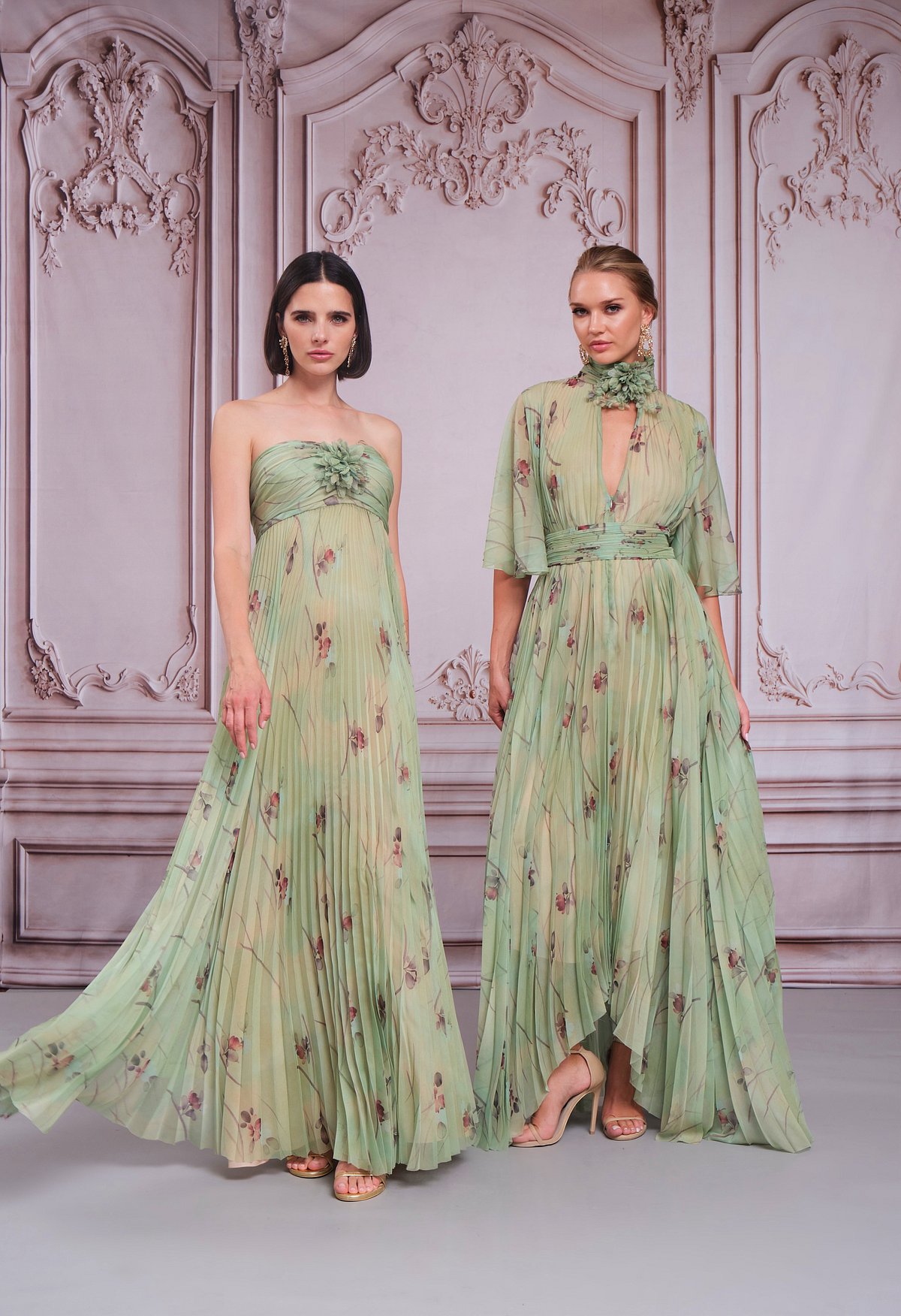
The column silhouette minimizes broad horizontal lines, using fluid fabrics that drop vertically from shoulder to floor. Utilizing bias-cut silk, jersey knit, or heavy crepe, this shape moves dynamically with the wearer while maintaining a continuous, lean profile.
- Key Items: Floor-length bias-cut slip dresses, monochromatic knit column skirts, unstructured floor-sweeping duster coats.
- Visual Effect: Enhances vertical height and creates a continuous, unbroken visual line.
The Mechanics of Silhouette Styling: Proportions and Balance
Mastering the silhouette trend requires an understanding of visual proportions, weight distribution, and garment mechanics. Wearing extreme shapes without balancing form often results in an unbalanced aesthetic.
- Proportion Balancing Formula:
- Voluminous Upper Garment (Oversized Blazer/Knit)
- Fitted Lower Garment (Tailored Slim Trouser)
- Balanced Visual Contrast
The Rule of Thirds in Form
Standard visual composition relies on the Golden Ratio or the Rule of Thirds. Dividing the body visually into a 1:2 ratio (one-third top, two-thirds bottom) creates a more harmonious silhouette than a 1:1 split (half top, half bottom).
- 1:2 Ratio Example: High-waisted pants paired with a cropped structured jacket lengthen the leg line dramatically.
- 2:1 Ratio Example: A longline tunic or drop-waist dress extending to the lower thigh, paired with visible ankle-length boots.
- Avoid 1:1 Splits: A hip-length shirt worn untucked over straight jeans cuts the body evenly in half, which dampens the dynamic impact of a silhouette.
Fabric Weight and Structural Integrity
A silhouette’s effectiveness depends on the structural density of the fabric used:
- Rigid Fabrics (Wool Crepe, Heavy Denim, Canvas, Leather): Hold fixed shapes away from the body. Essential for boxy shoulders, sharp A-line skirts, and architectural folds.
- Fluid Fabrics (Silk Satin, Rayon Jersey, Chiffon): Hug body contours and dynamic curves. Best used for column silhouettes, bias draping, and soft layering.
- Elastic Fabrics (Spandex Blends, Ribbed Knits): Provide compression to sculpt the body’s silhouette directly, forming the foundational base for layered outfits.
Technical Comparison of Key Fashion Silhouettes
Selecting the right shape depends on the desired visual outcome, body proportions, and fabric structure. The table below outlines the primary fashion silhouettes, their defining characteristics, and structural requirements.
| Silhouette Type | Primary Visual Characteristics | Target Styling Effect | Recommended Fabric Types | Key Accessories to Pair |
|---|---|---|---|---|
| Sculptural Oversized | Broad shoulders, loose torso, exaggerated width | Creates an effortless, powerful, and contemporary profile | Heavy wool, rigid denim, structured gabardine | Sleek pointed-toe boots, slim clutch bags |
| Drop-Waist / Elongated | Waistline resting at lower hip, long torso cut | Elongates the upper body; creates a low-slung retro feel | Light crepe, bias-cut satin, cotton poplin | Low-slung chain belts, ballet flats, slingbacks |
| Cinched Hourglass | Compressed waistline, flared hip and shoulder focus | Accentuates curves and creates sharp geometric contrast | Boned satin, structured twill, heavy elastane | Wide leather belts, statement waist cinchers |
| Fluid Column | Narrow vertical profile, minimal horizontal expansion | Maximizes height and creates a continuous, elegant line | Silk slip fabrics, rib knits, soft matte jersey | Long drop earrings, structured box clutches |
| Cocoon / Balloon | Rounded volume through midsection or sleeves, tapered hem | Adds artistic volume while maintaining clean extremities | Puffer nylon, heavy double-faced wool, taffeta | Fitted legwear, slim ankle boots |
The Digital Visual Media Silhouette Trend: Photography and Video
Beyond fashion, the "silhouette trend" represents a major aesthetic style in photography, filmmaking, and short-form video creation. Achieving a clean visual silhouette requires controlling lighting setups, exposure ratios, and background contrast.
- Silhouette Photography Lighting Setup:
- Camera / Lens
- Subject (No Front Light)
- High Contrast Gap
- Bright Light Source
- Background / Wall
Essential Studio Lighting Setup
To capture a crisp digital silhouette video or photo, creators isolate the subject from any frontal light while illuminating the background wall or backdrop.
- Backlight Positioning: Place a strong light source (such as an LED panel, COB light, or studio strobe) directly behind the subject, aiming toward a matte background or diffuser screen.
- Eliminating Key Lights: Turn off all frontal (key) and fill lights illuminating the subject's face and body.
- Color Gels: Apply warm red, deep blue, or saturated magenta lighting gels to the background light source to yield strong contrast against the subject’s black outline.
Camera Exposure and ISO Settings
Manual camera control is critical when capturing backlighting; auto-exposure modes will attempt to brighten the dark subject, ruining the silhouette effect.
- Exposure Metering: Set camera metering to Spot Metering and meter directly off the bright background wall, not the subject.
- Aperture & ISO: Use a mid-range aperture ($f/4$ to $f/8$) to ensure sharp edge definition along the subject's outline. Keep ISO low (100–400) to prevent digital shadow noise in the dark outline of the subject.
- Smartphone Camera Lock: On mobile devices, tap and hold on the bright background portion of the preview screen to lock AF/AE (Auto Focus/Auto Exposure), then slide the exposure sun icon down to eliminate shadow details on the foreground subject.
Step-by-Step Styling Guide: Building a Balanced Outfit
Applying silhouette trends effectively requires building outfits from the inside out to ensure comfort, structural stability, and balanced proportions.
Step 1: Establish the Anchor Point
Decide which single portion of the outfit will hold the primary visual volume or structure.
- Option A: Exaggerated top (broad blazer or puff sleeve knit).
- Option B: Exaggerated bottom (wide-leg palazzo pants or full A-line skirt).
- Option C: Torso compression (cinched corset waist).
Step 2: Apply Counter-Balance Elements
Pair high-volume anchor points with streamlining contrast items to prevent the outfit from looking unshaped.
- If choosing an oversized blazer (Option A), pair it with a streamlined column skirt or stirrup leggings.
- If choosing wide-leg trousers (Option B), pair them with a body-skimming turtleneck or fitted tank top.
Step 3: Frame the Extremities
Focus on the wrists, ankles, neck, and waist. Exposing or defining these points keeps the wearer from being overwhelmed by fabric.
- Push up broad sleeves to reveal slender wrists.
- Pair pooling trousers with pointed-toe shoes to extend the leg line.
- Use contrast belts to establish visual breakpoints.
Common Silhouette Styling Mistakes to Avoid
Even high-end garments can appear unflattering if structural proportions are misaligned. Avoid these frequent execution errors:
- Drowning in Unstructured Volume: Combining oversized tops with oversized bottoms made from soft, unstructured fabrics hides body frame entirely. If wearing double volume, ensure at least one piece uses heavy, structured fabric with clean lines.
- Neglecting Footwear Scale: Minimalist, thin-soled shoes often look visually inadequate when paired with massive, boxy coats. Pair voluminous coats with substantial shoes—such as chunky loafers, thick boots, or pointed heels—to ground the look.
- Ignoring Natural Rise Ratios: High-waisted pants paired with cropped tops can make short-waisted individuals appear torso-less. Adjust trouser rise (mid-rise vs. high-rise) based on torso length rather than relying solely on trend tags.
Frequently Asked Questions
What does "silhouette" mean in fashion design?
In fashion design, silhouette refers to the overall outline, shape, and shadow cast by an outfit when viewed from a distance. It ignores internal details like seams, print patterns, buttons, or texture, focusing entirely on the outer perimeter created by the garments on the body.
How do I choose the best silhouette trend for my body type?
Focus on balance and personal proportion goals rather than rigid body-type rules. To create height, opt for vertical column silhouettes. To emphasize curves, select cinched hourglass shapes or basque waists. To create a contemporary, relaxed look, choose structured oversized tailoring while keeping ankles and wrists defined.
What is the silhouette trend on social media platforms like TikTok?
On social media platforms, the silhouette trend refers to short-form video creation utilizing dynamic backlighting. Creators stand in doorways or against bright, light-filled backgrounds (often illuminated with red or colored LEDs) with front lights off, transforming their body movements into bold black shapes set against bright colors.
Can oversized silhouettes look professional in office environments?
Yes, provided the oversized pieces feature sharp structural tailoring. A structured oversized blazer with firm shoulder pads, clean lapels, and tailored trousers looks deliberate and professional. Avoid limp or worn fabrics that lack shoulder support or shape retention.
What is the difference between drop-waist and low-rise silhouettes?
A low-rise silhouette refers specifically to where the waistband of a pair of pants or a skirt sits on the hips. A drop-waist silhouette refers to a single garment (like a dress or long tunic) whose waist seam is constructed below the natural waist, extending the bodice line downward toward the mid-hip.
Next Steps for Styling and Media Creation
To execute the silhouette trend effectively, evaluate your objective:
- For Personal Styling: Audit your wardrobe to identify whether your dominant pieces are structured or fluid. Experiment with pairing contrasting volumes—combining structured oversized blazers with body-con basics—using the 1:2 proportion rule.
- For Digital Media Creators: Test backlighting setups in a dark room using a single bright COB LED light directed at a light wall behind you. Lock exposure settings manually to eliminate shadow detail and sharpen your subject's outline.
Image Gallery