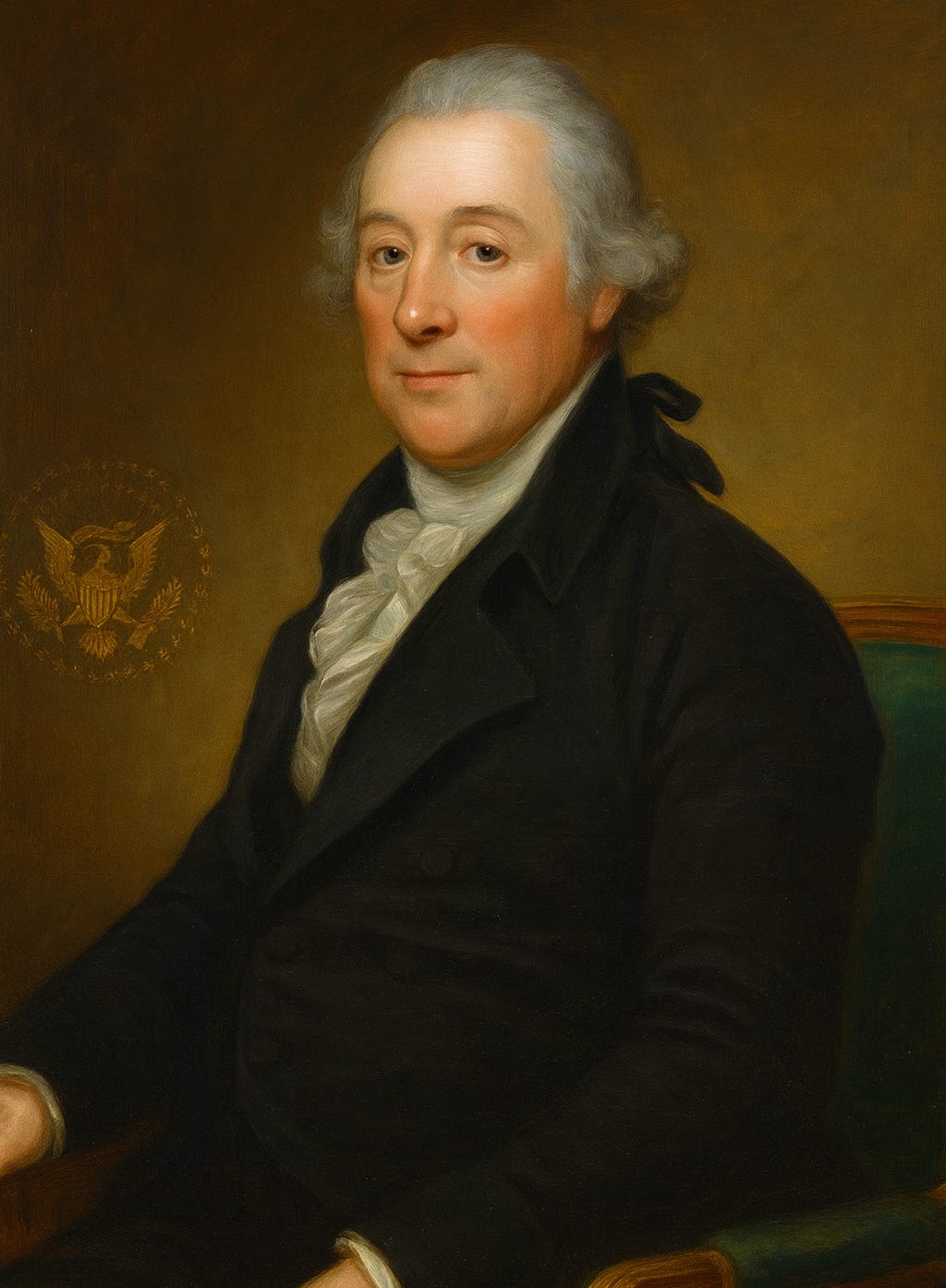
William Bard and the Founding of the New York Life Insurance and Trust Company
In 1830, financier William Bard established the New York Life Insurance and Trust Company, creating the first financial institution in the United States designed primarily to offer corporate trust administration alongside commercial li...
In 1830, financier William Bard established the New York Life Insurance and Trust Company, creating the first financial institution in the United States designed primarily to offer corporate trust administration alongside commercial life insurance. Serving as its inaugural president, Bard pioneered scientific underwriting, medical screening, and conservative asset management in American life insurance.
Contents
Historical Context: Early 19th-Century American Finance
During the early decades of the 19th century, the United States financial system was rapidly expanding but remained volatile. Economic activity relied heavily on agriculture, maritime trade, and speculative land development. While marine and fire insurance were well established in major port cities like New York, Philadelphia, and Boston, life insurance remained a rare and misunderstood financial instrument.
Most early American life insurance policies were written on an ad hoc basis by merchant syndicates or short-lived corporations. Policies were typically short-term guarantees designed for sea captains or travelers embarking on hazardous journeys, rather than long-term financial security for families. The general public viewed life insurance with skepticism, often equating it with gambling on human longevity.
Furthermore, the lack of dependable domestic mortality data presented a significant technical barrier. Insurers lacked standardized actuarial methods to price long-term policies accurately, while courts and legislatures had not yet established clear legal frameworks for corporate trusts and fiduciary asset management. As New York City emerged as the financial capital of the nation following the opening of the Erie Canal in 1825, the need for stable, institutional capital management became urgent. William Bard recognized that combining trust administration with life insurance could solve two problems at once: providing secure wealth preservation for estates while generating a stable pool of capital to back long-term life insurance liabilities.
The Vision and Background of William Bard
William Bard (1778–1853) possessed a unique combination of social standing, intellectual training, and financial acumen. He was the son of Dr. Samuel Bard, a prominent physician who served as George Washington’s personal doctor during Washington's presidency in New York and helped found the Columbia University Vagelos College of Physicians and Surgeons.
Raised in an environment that valued scientific inquiry and public service, William Bard graduated from Columbia College and initially studied law. However, his interests soon shifted toward agriculture, land management, and high finance. Living on his family estate in Hyde Park, New York, Bard observed firsthand how family fortunes could be dissipated by poor estate management, sudden economic panics, or the premature death of a breadwinner.
- Estate & Trust Capital
- Life Insurance Premiums
- Institutional Stability (1830 Charter)
Bard's key insight was that life insurance could not succeed as a standalone speculative enterprise; it required the solid backing of a corporate trust institution. By establishing an enterprise chartered to manage trust funds, manage court deposits, and issue life annuities, the organization could maintain the deep reserve liquidity needed to guarantee life insurance payouts across decades.
Chartering the New York Life Insurance and Trust Company (1830)
On March 9, 1830, the New York State Legislature granted a charter to the New York Life Insurance and Trust Company (NYL&TC). William Bard organized an influential group of New York merchants, lawyers, and civic leaders to back the venture, securing an initial capital stock of $1 million—a substantial sum for the period.
The charter was a landmark legal document in American corporate history. It explicitly authorized the company to:
- Execute Trusts: Receive and hold real and personal property in trust from individuals, courts, and corporations.
- Issue Life Insurance: Grant annuities and issue policies covering individual lives.
- Accept Deposits: Receive money on deposit and pay interest, effectively acting as an early investment bank and trust company.
- Invest Capital: Lend funds on real estate mortgages within New York State and invest in government and municipal bonds.
Under Bard’s leadership as president, the company opened its offices at 48 Wall Street. Bard instituted a conservative operational policy: trust funds were kept strictly separate from general insurance assets, and loan collateral was required to exceed the loan value by at least 50 percent. This conservative policy protected the firm during subsequent financial crises, including the Panic of 1837.
Technical Innovations: Actuarial Science and Underwriting Standards
Prior to William Bard’s work at the New York Life Insurance and Trust Company, American life underwriting was informal. Bard transformed the industry by adopting rigorous mathematical and medical standards.
Actuarial Foundations
Bard corresponded extensively with European mathematicians and actuaries. Because American mortality tables were virtually non-existent, Bard initially adapted the English Northampton Mortality Tables and later the more accurate Carlisle Tables to calculate policy premiums and annuity rates. He factored in domestic variables such as occupation, residence, and climate hazards, creating one of the first systematically priced policy registers in the United States.
Medical Examinations and Risk Selection
Bard was among the first corporate leaders to mandate physical medical examinations for life insurance applicants. Borrowing from his family’s medical background, he established a board of examining physicians. Applicants were evaluated for:
- Family Medical History: Predisposition to respiratory diseases like tuberculosis.
- Personal Habits: Temperance and lifestyle risk factors.
- Geographic Travel: Restrictions were placed on travel to tropical zones or regions prone to yellow fever during summer months.
Applicants who engaged in high-risk occupations, such as gunpowder manufacturing or deep-sea whaling, were either declined or charged explicit risk premiums. This systematic approach to underwriting reduced policy defaults and enabled the company to build reliable actuarial reserves.
Disambiguation: Corporate Lineage and History
A common source of confusion in American business history is the distinction between William Bard’s New York Life Insurance and Trust Company and the present-day New York Life Insurance Company. While both played central roles in the development of Wall Street and American life insurance, they were established as separate corporate entities with distinct histories.
| Feature / Detail | New York Life Insurance and Trust Company (NYL&TC) | New York Life Insurance Company |
|---|---|---|
| Founding Year | 1830 | 1845 (Chartered 1841 as Nautilus Insurance Co.) |
| Key Founder / Early Leader | William Bard (Founder & First President) | Morris Franklin, James De Peyster Ogden |
| Original Corporate Structure | Joint-stock trust and insurance company | Mutual life insurance company |
| Primary Early Focus | Corporate trusts, estate management, life annuities | Pure life insurance policies owned by policyholders |
| Modern Institutional Status | Merged into Bank of New York (1922); lineage lives on within BNY (BNY Mellon) | Operates today as New York Life Insurance Company |
William Bard’s company demonstrated that life insurance was viable in New York. When the mutual insurance wave swept the United States in the 1840s, new ventures—including the Nautilus Insurance Company, which renamed itself New York Life Insurance Company in 1849—adopted many of the underwriting standards, policy structures, and medical screening protocols that Bard had established a decade earlier.
Financial Management and the Panic of 1837
The financial crisis known as the Panic of 1837 severely tested early American financial institutions. Speculative land buying, erratic federal banking policies, and international capital flight forced hundreds of American banks and insurance companies into insolvency.
The New York Life Insurance and Trust Company survived the panic intact due to William Bard's conservative risk management guidelines:
- Mortgage Collateral Requirements: Bard restricted real estate loans to first mortgages on unencumbered New York farm properties and real estate, capped at 50 percent of conservative appraised values.
- High Liquidity Reserves: The firm maintained high levels of liquid reserves in state bonds and top-tier commercial paper.
- Avoidance of Speculative Stocks: Bard refused to invest company reserves in high-risk canal or early railway stock schemes that lacked established earnings records.
When depositors demanded cash and policyholders sought loans during the crisis, Bard’s company satisfied every legal obligation without suspending operations. This stability solidified public confidence in corporate trusts and proved that long-term life insurance reserves could withstand severe economic downturns.
Institutional Legacy and Impact on Modern Finance
William Bard retired from the presidency of the New York Life Insurance and Trust Company in 1842, leaving behind an established financial institution and an industry framework that persisted long after his death in 1853.
Contributions to Corporate Fiduciary Duty
Bard helped define the legal obligations of corporate trustees in the United States. His court filings, annual reporting practices to the New York State Comptroller, and transparent accounting standards laid the groundwork for modern state insurance commission oversight. The reporting formats Bard designed served as prototypes for regulatory frameworks later adopted by state insurance departments across the country.
Structural Evolution into Modern Banking
The New York Life Insurance and Trust Company continued to operate successfully throughout the 19th and early 20th centuries. As specialized mutual insurance companies came to dominate the dedicated life insurance market, NYL&TC shifted its primary focus toward commercial banking and trust administration.
In 1922, the company merged with the Bank of New York (founded by Alexander Hamilton in 1784) to form the Bank of New York and Trust Company. This consolidated institution underwent further modern evolution, eventually forming The Bank of New York Mellon (BNY).
- 1830: New York Life Insurance & Trust Co. (Founded by William Bard)
- 1922: Merged with Bank of New York (Est. 1784)
- Present Day: BNY (The Bank of New York Mellon)
Through this corporate lineage, William Bard’s 1830 venture remains a foundational pillar of American fiduciary banking, while his pioneering work in risk selection and actuarial modeling permanently transformed the governance of modern life insurance.
Frequently Asked Questions
Who was William Bard?
William Bard (1778–1853) was an American financier, lawyer, and pioneer in the insurance industry. He founded the New York Life Insurance and Trust Company in 1830 and served as its first president, establishing standard underwriting, medical examination, and reserve management practices for American life insurance.
Did William Bard found the modern New York Life Insurance Company?
No. William Bard founded the New York Life Insurance and Trust Company in 1830. The modern New York Life Insurance Company was chartered in 1841 (opening in 1845) as the Nautilus Insurance Company before changing its name in 1849. However, the modern mutual insurer adopted many of Bard's early underwriting, mortality table, and risk management practices.
What was unique about the 1830 charter of the New York Life Insurance and Trust Company?
The 1830 charter granted by the New York State Legislature was one of the first in the United States to explicitly combine corporate trust powers—such as managing estate trusts and court deposits—with the authority to issue life insurance policies and annuities.
How did William Bard influence life insurance underwriting?
Bard introduced structured medical examinations for policy applicants, hired examining physicians, and applied European actuarial tables (such as the Northampton and Carlisle mortality tables) to price policy premiums based on empirical risk factors like age, health history, and occupation.
What happened to the New York Life Insurance and Trust Company?
Over time, the company shifted its core focus from issuing direct life insurance to private banking and corporate trust administration. In 1922, it merged with the Bank of New York to become the Bank of New York and Trust Company, an institution that forms part of modern BNY (The Bank of New York Mellon).
Key Historical Takeaways
- Pioneering Role: William Bard established the New York Life Insurance and Trust Company in 1830, introducing corporate trust administration combined with life underwriting to North America.
- Actuarial Innovation: Bard moved American insurance away from informal speculation by integrating systematic medical screening, mortality tables, and risk premiums.
- Financial Prudence: His strict investment standards and conservative mortgage lending allowed the institution to navigate major crises like the Panic of 1837.
- Enduring Lineage: While distinct from today’s New York Life Insurance Company, Bard’s firm directly influenced modern corporate trust law, insurance regulation, and the history of institutional banking through its evolution into BNY.
Image Gallery