What a Federation Actually Means in Law: A Constitutional and International Perspective
In law, a federation is a sovereign state characterized by a constitutionally entrenched division of power between a central (federal) government and constituent regional units, such as states or provinces. Unlike administrative subdiv...
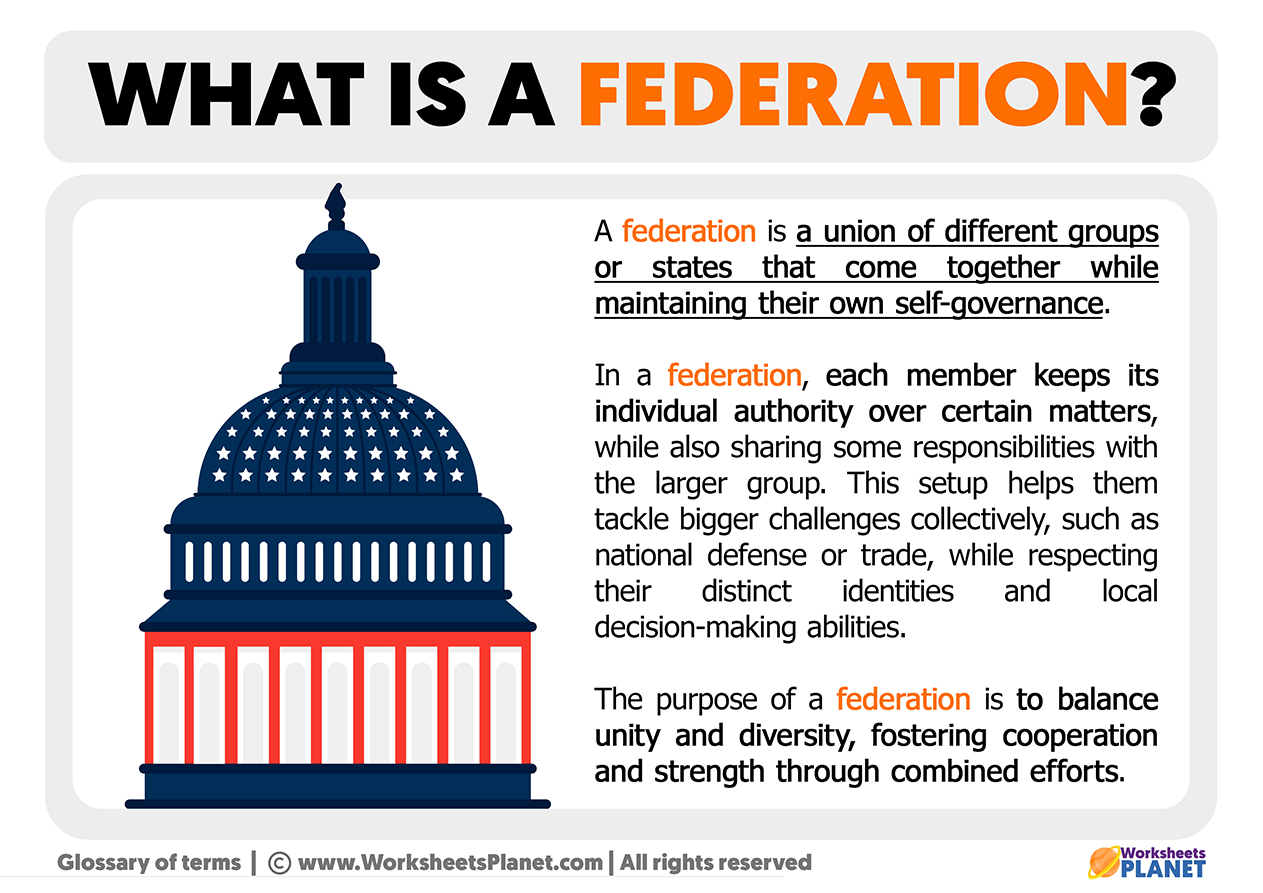
In law, a federation is a sovereign state characterized by a constitutionally entrenched division of power between a central (federal) government and constituent regional units, such as states or provinces. Unlike administrative subdivisions, neither level of government can unilaterally alter the division of authority or abolish the legal existence of the other.
Contents
Legal Notice
This article provides general legal analysis and educational information regarding public law and international legal concepts. It does not constitute formal legal counsel. For jurisdiction-specific legal matters or litigation involving constitutional authority, consult a qualified attorney or legal specialist.
The Legal Definition of a Federation: Entrenched Division of Sovereignty
From a strict constitutional law perspective, a federation is defined by the allocation of legal sovereignty across multiple levels of government. In a federated system, the sovereign state's legal order is unified at the international level while remaining legally divided internally.
The cornerstone of any federal system is constitutional entrenchment. The powers granted to both the federal central body and the sub-national polities (states, cantons, or provinces) are codified in a supreme legal instrument—the constitution. Crucially, this constitutional allocation of power cannot be modified by ordinary legislative acts of either the central parliament or the individual state legislatures acting alone.
Amending the jurisdictional boundaries of a federation requires a specialized constitutional amendment process. This process almost universally mandates the dual consent of both the central authority and a supermajority or specific consensus of the constituent units (for example, Article V of the U.S. Constitution or Section 38 of the Canadian Constitution Act, 1982). This constitutional protection guarantees that the sub-national units possess autonomous legal authority that is derived from the constitution itself, rather than delegated from the central government.
Core Structural Principles of Federal Systems
To determine whether a political entity qualifies legally as a true federation, public law scholars and constitutional courts evaluate several key structural criteria.
- Supreme Constitution (Entrenched Power Allocation Engine)
- Federal Sovereign (Foreign Affairs, Defense, Interstate Commerce)
- Constituent Entities (Property, Civil Rights, Police Power, Health)
- Judicial Umpire (Supreme Court / Constitutional Court)
1. Dual Sovereignty and Direct Legal Authority over Citizens
In a federation, citizens are simultaneously subject to two distinct legal jurisdictions. Both the federal government and the state governments possess direct legal authority over individuals within their respective spheres of competence. This includes the power to enact legislation, levy taxes, execute administrative regulations, and enforce criminal and civil laws directly through their own legal apparatus and court systems.
2. Constitutional Supremacy and the Hierarchy of Norms
A federation requires a supreme law clause to govern instances where federal law and state law collide within shared or overlapping spheres of authority. Under the principle of legal supremacy—such as the Supremacy Clause in Article VI, Clause 2 of the U.S. Constitution or Article 31 of Germany’s Basic Law (Bundesrecht bricht Landesrecht)—validly enacted federal legislation within the central government's constitutional authority overrides conflicting state laws.
3. An Independent Judicial Umpire
Because power is divided, jurisdictional friction between the central authority and the constituent units is inevitable. A mandatory structural component of a federation is an independent judiciary empowered with constitutional review. Sovereign tribunals, such as the Supreme Court of the United States, the Constitutional Court of South Africa, or the German Federal Constitutional Court (Bundesverfassungsgericht), act as legal arbiters to resolve disputes concerning constitutional boundaries and prevent jurisdictional overreach by either tier.
4. Institutional Representation (Bicameralism)
Federal legal structures routinely embed the legal identity of constituent states into the national legislative process. This is most frequently achieved through a bicameral legislature. The lower house represents the national populace by population (e.g., the U.S. House of Representatives or the German Bundestag), while the upper house specifically represents the interests of the constituent political units, often on an equal basis regardless of population (e.g., the U.S. Senate) or through institutional state delegation (e.g., the German Bundesrat).
Comparative Legal Taxonomy: Federation vs. Confederation vs. Unitary State
To understand what a federation means in law, it must be contrasted with alternative arrangements of sovereign authority: unitary states, devolved systems, and confederations.
| Legal Dimension | Unitary State | Devolved System | Federation | Confederation |
|---|---|---|---|---|
| Source of Authority | Central government holds all legal sovereignty. | Central parliament delegates limited powers. | Constitution divides sovereignty between levels. | Sovereign states delegate limited functions by treaty. |
| Legal Personality | Single legal entity internationally and internally. | Single legal entity; regional acts subject to central repeal. | Single legal entity internationally; divided internally. | Multiple distinct legal entities under public international law. |
| Constitutional Entrenchment | Regional boundaries can be altered by ordinary law. | Regional assemblies can be altered or dissolved by central law. | State existence and powers constitutionally protected. | Member state sovereignty remains fully intact. |
| Unilateral Secession | Prohibited. | Prohibited. | Generally prohibited absent constitutional amendment. | Permitted under international law/treaty terms. |
| Direct Enforcement | Central laws apply uniformly across all regions. | Central laws apply, subject to regional legislative variations. | Federal and state laws apply directly to citizens within spheres. | Union decisions usually require state implementation. |
Federation vs. Unitary State and Devolution
In a unitary state (such as France or Japan), sovereignty is indivisible and resides exclusively in the national government. Regional administrative bodies exist purely at the convenience of the central authority.
Even under devolution (such as the system operating within the United Kingdom), where sub-national parliaments in Scotland, Wales, and Northern Ireland exercise broad legislative authority, the arrangement is legally distinct from a federation. Under the doctrine of parliamentary sovereignty, the central parliament retains the legal right to unilaterally amend, restrict, or dissolve devolved institutions. In a federation, such unilateral dissolution by the central government is constitutionally illegal.
Federation vs. Confederation
A confederation is an association of independent, sovereign states created by international treaty rather than a domestic constitution. In a confederation:
- The member states retain their full sovereign status under public international law.
- The central body acts as a coordinating council with limited authority, lacking direct jurisdiction over individual citizens.
- Member states generally preserve the legal right of unilateral withdrawal (secession).
In contrast, a federation creates a single sovereign entity under public international law. The constituent units relinquish their individual international legal personalities upon entering the union, and their relationship is governed by internal constitutional law rather than external public international law.
Distribution of Competences: Legal Techniques of Division
The law of federations relies on specific drafting techniques within constitutions to distribute legislative, executive, and judicial powers. These techniques generally follow one of two legal models:
1. The Enumerated Model (US and Australia)
Under the enumerated powers model, the federal constitution explicitly lists (enumerates) the specific matters over which the central government has legislative authority. Examples of typical enumerated powers include national defense, currency, immigration, foreign affairs, and interstate commerce.
Any power not explicitly granted to the federal government is legally retained by the constituent states or the people. This principle is codified in the Residual Powers Doctrine, epitomized by the Tenth Amendment to the U.S. Constitution or Section 107 of the Australian Constitution.
2. The Reserved/Enumerated Dual Model (Canada)
Some federal systems reverse or customize this structure. In Canada, Sections 91 and 92 of the Constitution Act, 1867, enumerate powers for both the federal Parliament and the provincial legislatures. Furthermore, the residual power—specifically the general authority to make laws for the "Peace, Order, and good Government" (POGG) of Canada—is explicitly assigned to the federal government rather than the provinces.
Concurrent Powers and the Doctrine of Preemption
In addition to exclusive federal or state powers, federations frequently establish concurrent powers—fields where both levels of government may enact legislation simultaneously (e.g., taxation, environmental regulation, or transportation infrastructure).
- Concurrent Sphere (e.g., Taxation, Environmental Law)
- State Law Enacted
- Federal Law Enacted
- Are Laws Incompatible?
- YES: Doctrine of Preemption (Federal Law Prevails; State Law Rendered Void or Inoperative)
- NO: Both Statutes Remain Valid and Enforceable
When concurrent regulations conflict, courts apply the Doctrine of Preemption (or the doctrine of paramountcy in Commonwealth jurisdictions). If a validly enacted federal law conflicts directly with a state law, or occupies an entire regulatory field, the federal law prevails, and the state law is rendered void or inoperative to the extent of the inconsistency.
International Law Status: The Federation as a Single Sovereign Subject
In public international law, a federation is recognized as a single subject of international law. Under the standards codified in international treaties such as the 1933 Montevideo Convention on the Rights and Duties of States, international capacity is held exclusively by the central federal entity.
Key legal consequences include:
- Treaty-Making Capacity: The federal government typically possesses sole jurisdiction to negotiate, ratify, and execute treaties with foreign nations. Constituent states lack independent legal standing to conclude international treaties under public international law, unless the federal constitution specifically delegates a limited treaty-making power (such as the regulated Länder treaty rights under Article 32(3) of Germany's Basic Law).
- State Responsibility: If a constituent state breaches an international legal duty (such as expropriating foreign assets without compensation), international law holds the federal entity responsible for the legal violation and damages, regardless of internal legal divisions.
- Diplomatic Recognition: Foreign states maintain diplomatic relations, establish embassies, and declare war with the federation as a unified entity, ignoring the internal political boundaries of its constituent parts.
Key Jurisprudence and Legal Challenges in Federal Systems
Federalism generates unique, complex legal disputes that require continuous judicial resolution.
Federal Preemption and Anti-Commandeering
A central issue in federal jurisprudence is the extent to which the central government can compel state institutions to implement federal policy. In the United States, the Supreme Court developed the Anti-Commandeering Doctrine (Printz v. United States, 521 U.S. 898 (1997); Murphy v. National Collegiate Athletic Association, 584 U.S. ___ (2018)). Under this legal rule, the federal government cannot constitutionally issue direct orders to state legislatures or executive officers to enforce federal regulatory schemes, preserving state institutional independence.
Fiscal Federalism and Conditional Grants
Because federal governments usually hold broader taxing powers while constituent states bear significant operational expenses (such as healthcare, local infrastructure, and public education), federations rely heavily on fiscal transfers.
This dynamic leads to legal disputes over conditional spending. Central governments frequently attach legislative mandates to federal funds, forcing states to comply with federal regulatory priorities to receive funding. Courts must determine when such grants cross the line from permissible financial incentives to impermissible economic coercion.
Judicial Tests: Pith and Substance vs. Direct Effects
When examining whether a federal or state law violates the constitutional division of powers (ultra vires), constitutional courts employ specific analytical tests:
- Pith and Substance Doctrine: Used predominantly in Canadian, Indian, and Commonwealth public law, courts look beyond the superficial language of a statute to identify its core legal purpose and legal effect. If its "pith and substance" falls within the enacting legislature's competence, the law is valid, even if it incidentally touches upon an area reserved for the other level of government.
- Commerce Clause Analysis: In the U.S., federal regulatory authority heavily relies on Article I, Section 8, Clause 3 (the Commerce Clause). Legal disputes focus on whether an intra-state activity substantially affects interstate commerce, establishing the legal boundary for federal statutory power.
Frequently Asked Questions
Can a constituent state legally secede from a federation?
In almost all federations, constituent states have no unilateral legal right to secede. From a legal standpoint, a federation creates an "indissoluble union." For example, the U.S. Supreme Court ruled in Texas v. White, 74 U.S. 700 (1869), that the entry of a state into the union created an perpetual bond with no constitutional pathway for unilateral secession. Any legitimate separation requires a mutual, high-threshold constitutional amendment or bilateral negotiation approved by the federal authority.
What happens when federal law and state law directly conflict?
Under the principle of constitutional supremacy, validly enacted federal law overrides state law. However, this rule applies only if the federal law was enacted within the central government's constitutional powers. If a court finds that the federal government exceeded its delegated constitutional authority, the federal law is declared ultra vires (beyond authority) and struck down, allowing the state law to stand.
Does an individual state within a federation have international legal personality?
Generally, no. Sub-national entities within a federation do not possess independent legal personality under public international law. They cannot declare war, join international bodies like the United Nations, or enter into sovereign treaties with foreign powers unless explicitly authorized by the national federal constitution under strict conditions.
What is the legal difference between symmetric and asymmetric federalism?
In a symmetric federation, all constituent units possess identical constitutional status, powers, and legislative responsibilities (e.g., the United States or Australia). In an asymmetric federation, specific constituent states or regions hold distinct constitutional powers, language rights, or autonomous legislative responsibilities tailored to their specific historical or cultural status (e.g., Quebec within Canada, or Catalonia and the Basque Country within Spain's highly regionalized/quasi-federal framework).
Practical Recommendations for Legal Analysis
When analyzing whether a specific law, regulation, or administrative action is constitutionally valid within a federal framework, legal practitioners and researchers should follow a structured evaluation framework:
- Identify the Source of Authority: Determine whether the enacting legislature derives its jurisdiction from explicit enumerated powers, residual powers, or concurrent legislative authority.
- Review Constitutional Supremacy Clauses: Evaluate whether a central statute already occupies the legal field or conflicts directly with the sub-national act, triggering preemption or paramountcy doctrines.
- Examine Relevant Judicial Precedents: Trace constitutional court rulings regarding the specific legislative subject matter. Distinguish between permissible indirect impacts and unconstitutional encroachments (ultra vires actions).
- Assess Institutional Rights: Verify whether procedural requirements—such as state legislative consent, bicameral approval, or constitutional supermajorities—were satisfied during enactment.
Image Gallery