Understanding V-Nose Cargo Trailer Cabinets: Maximizing Space and Utility
V-nose cargo trailer cabinets provide specialized storage solutions designed to fit the unique angular dimensions of a trailer’s tapered front. By utilizing the often-wasted space at the apex of the V-nose, these cabinets allow owners...
V-nose cargo trailer cabinets provide specialized storage solutions designed to fit the unique angular dimensions of a trailer’s tapered front. By utilizing the often-wasted space at the apex of the V-nose, these cabinets allow owners to optimize interior cargo capacity, secure loose gear during transit, and maintain professional-grade organization in mobile environments.
Contents
The Anatomy of V-Nose Trailer Storage
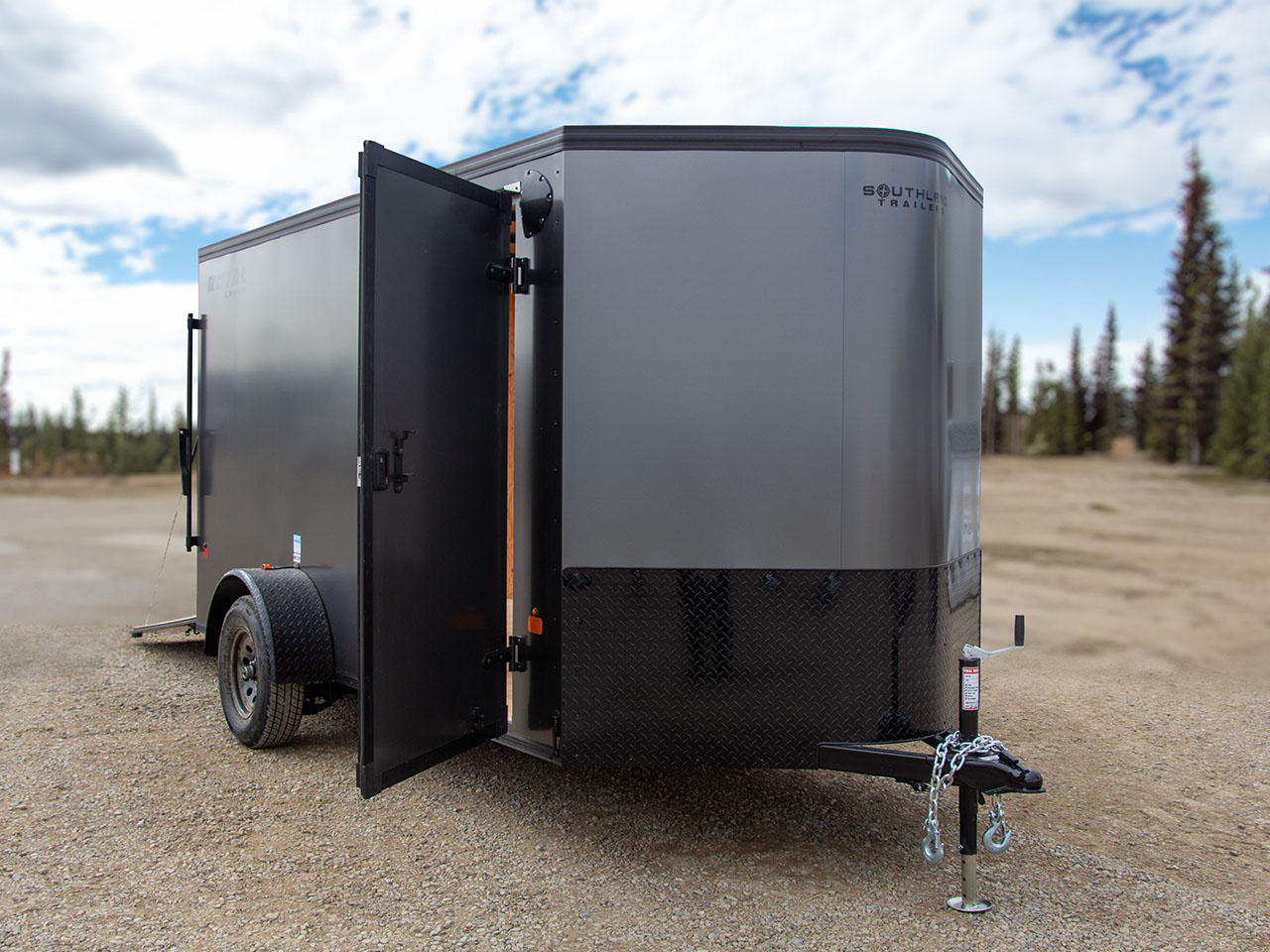
A V-nose trailer is defined by its aerodynamic front end, which comes to a point rather than a flat wall. While this design improves fuel efficiency and towing stability, it creates a challenging geometric interior. Standard square or rectangular cabinets often fail to fit this space, leading to "dead zones" where no storage can be installed.
V-nose cabinets are specifically engineered to accommodate this acute angle. They typically feature a wedge-shaped back or a truncated side profile that allows the cabinet to sit flush against the internal walls of the nose. Understanding these cabinets requires recognizing the difference between fixed, pre-manufactured units and custom-fabricated storage solutions. The primary goal of installing these units is to leverage the verticality of the V-nose, providing heavy-duty storage for items like lubricants, tools, spare parts, or camping equipment without sacrificing the main floor space required for larger cargo.
Types of Cabinets for V-Nose Trailers
Choosing the right cabinet depends on the specific use case, whether you are managing a mobile workshop, a race team, or a recreational hauler.
1. Overhead Wall-Mounted Cabinets
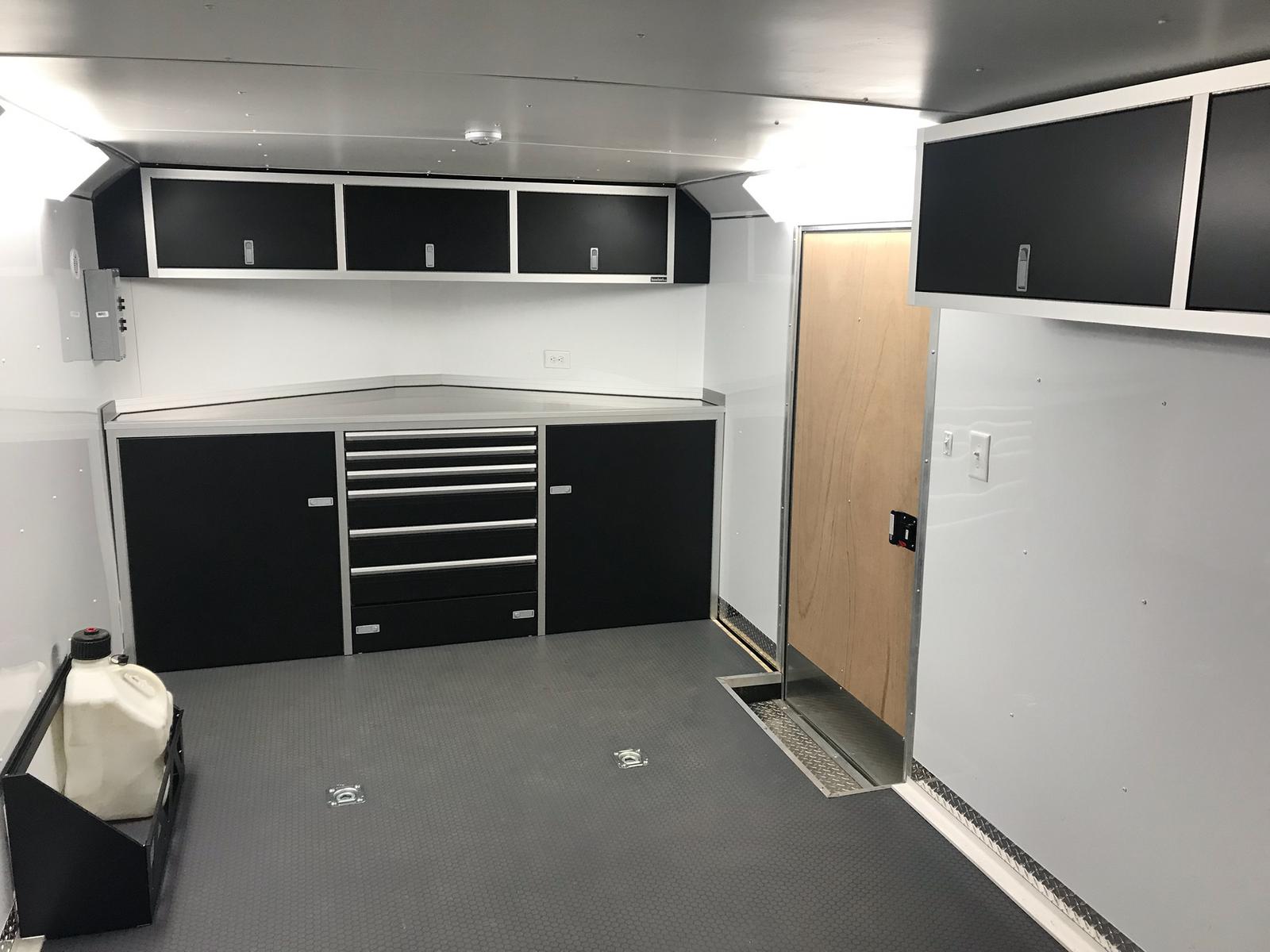
These are the most common additions to V-nose trailers. By mounting these units high on the front bulkhead, you preserve floor space while keeping essential items within reach. Because the ceiling height in a V-nose can be lower than in the center of the trailer, these cabinets are often shallower than standard wall-mounted units.
2. Floor-Standing Base Cabinets
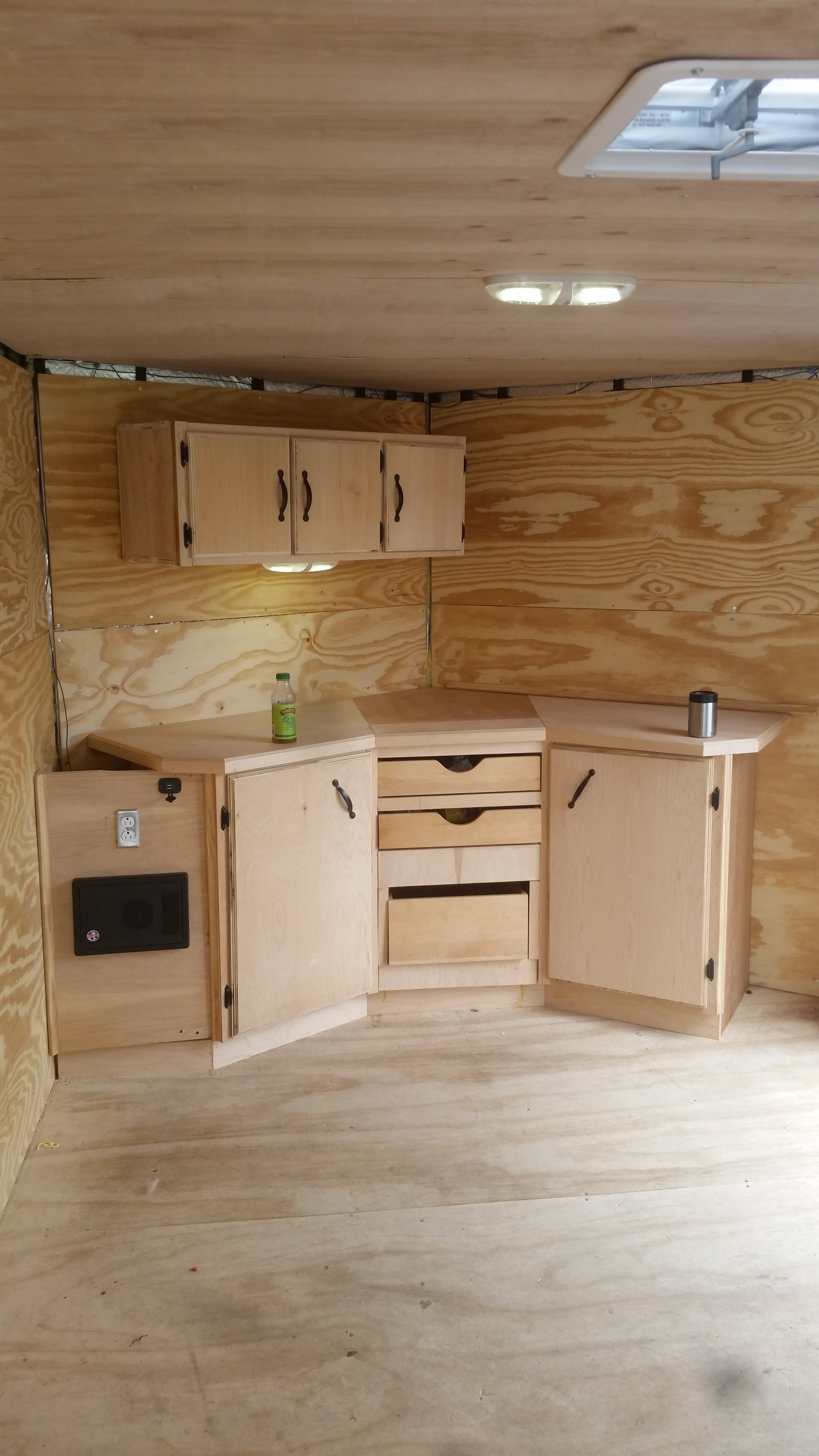
These cabinets are designed to sit directly on the trailer floor. They often feature a countertop workspace, making them ideal for mechanics or tradespeople. In a V-nose configuration, these base cabinets are usually mitered at the corners to fit the wall intersection perfectly.
3. Corner-Specific Shelving Units
If a full enclosed cabinet is too heavy or bulky, corner shelves offer a lightweight alternative. These shelves are triangular by design and bolt directly to the wall studs, providing a simple way to store items that might otherwise shift around during transit.
Structural Considerations and Installation
Installing cabinets in a trailer is fundamentally different from residential cabinetry. A trailer is a dynamic environment subjected to constant vibration, road shock, and fluctuating temperatures.
- Weight Distribution: Because the V-nose is located forward of the trailer’s axles, placing heavy cabinets and equipment here directly impacts your tongue weight. Excessive weight in the nose can lead to instability, sway, and potential tow vehicle overload. Always calculate the weight of the cabinets plus the cargo to ensure you remain within the Gross Vehicle Weight Rating (GVWR) of your trailer.
- Wall Reinforcement: Trailer walls are typically constructed of aluminum skin over thin metal or wood studs. Cabinets should never be mounted to the skin alone. You must identify the structural studs (often located 16 or 24 inches on center) to ensure the fasteners have sufficient "meat" to hold under the stresses of highway travel.
- Material Selection: Aluminum is the industry standard for trailer cabinets due to its lightweight properties and resistance to rust. Steel cabinets are sturdier but add significant weight, which can negatively impact towing efficiency. Plastic or composite cabinets are growing in popularity for recreational users, offering a balance between weight and durability.
Comparison of Cabinet Materials
| Material | Weight | Durability | Best Use Case |
|---|---|---|---|
| Aluminum | Lightweight | Moderate/High | Mobile workshops, race trailers |
| Steel | Heavy | Very High | Heavy-duty industrial storage |
| Composite | Light | Moderate | Recreational, light-duty, aesthetic |
| Plywood/Wood | Moderate | Moderate | Custom DIY builds, budget setups |
Addressing Challenges: The "Dead Space" Problem
The most common issue owners face is the "apex" of the V-nose. When two cabinet units meet at the center of the V, they often create an awkward gap if they are not perfectly mitered. Professional installers suggest using a "corner filler" or a custom-built triangular cabinet piece to bridge this gap. This not only creates a cleaner look but provides an excellent spot for storing long, vertical items like levels, extension poles, or specialized tools.
If you are a DIY enthusiast, ensure that your cuts for the V-angle are precise. Using a digital angle finder is essential, as the internal angle of a V-nose trailer is rarely exactly 90 or 45 degrees. It is common for these angles to be slightly off-square due to manufacturing tolerances in the trailer chassis.
Safety and Regulatory Considerations
Safety in trailer storage is non-negotiable. Cabinets must be secured with more than just standard wood screws. Use through-bolts with washers and nuts or heavy-duty self-tapping structural screws that are specifically designed for vibration resistance.
Furthermore, all cabinet doors must have reliable latching mechanisms. Friction-fit doors or standard house-grade magnetic latches are insufficient. Vibration will cause these to open during transit, dumping your equipment onto the trailer floor. Use locking T-handles or high-tension spring-loaded latches that lock in the "closed" position to prevent accidental opening.
Maintenance and Troubleshooting
Over time, the motion of the trailer will stress the mounting points of your cabinets. Perform a seasonal inspection of the following:
- Fastener Tightness: Check all mounting bolts for signs of loosening. If a bolt has created a larger hole in the stud, it may be necessary to move the cabinet slightly or use a larger diameter fastener.
- Latch Integrity: If doors begin to rattle, it is a sign that the latches are wearing down. Replace internal latch components immediately to prevent the doors from flying open during a turn.
- Stress Cracking: Inspect the area of the trailer wall surrounding the mounting points. If you see "spiderweb" cracks or bulging in the aluminum skin, the cabinet may be putting too much pressure on a single point. You may need to add a backing plate behind the wall to distribute the load across a larger surface area.
Frequently Asked Questions
Can I install home cabinets in a V-nose cargo trailer? It is generally discouraged. Home cabinets are designed for static floors and walls. The vibration of a trailer will quickly cause the joints of standard particle-board home cabinets to fail. Use units specifically rated for trailers or transport vehicles.
How do I determine the right size for a V-nose cabinet? Measure the distance from the floor to the ceiling at the point where the nose tapers. Remember to subtract at least 2–3 inches for clearance if you have roof vents or lights in the ceiling area. Always account for the "taper" of the V, which reduces the cabinet depth as you move toward the front corner.
Do V-nose cabinets affect the trailer's aerodynamics? No. Because these cabinets are installed inside the trailer, they do not interfere with the external aerodynamics. They do, however, affect the center of gravity and tongue weight if loaded heavily.
What is the best way to secure contents inside these cabinets? Use modular organizers, foam inserts, or non-slip matting. Even if the cabinet door is locked, contents inside can bounce and break against each other. Keeping items snug within the cabinet prevents internal damage to your equipment.
Can I use a V-nose trailer cabinet for a generator? Only if the cabinet is properly vented. Storing gasoline-powered equipment in an unvented, sealed cabinet is a fire and health hazard due to fuel vapors. If you must store a generator, the cabinet needs an external exhaust vent and a fuel-safe interior lining.
Recommendation for Next Steps
If you are planning to add cabinets to your V-nose trailer, begin by creating a cardboard template of the space. Tape the template to the trailer wall to visualize the ergonomics and floor space impact before purchasing or commissioning custom units. For long-term reliability, prioritize aluminum-constructed cabinets with heavy-duty locking latches, and always mount them using through-bolts to the structural frame of the trailer. If your trailer is used for professional work, consult with a local upfitter to ensure your setup meets your specific load requirements and weight distribution goals.
Image Gallery