Implementing Turn Key Processing in Modern Manufacturing
Turn key processing in modern manufacturing is a comprehensive delivery model where a single contractor or equipment provider assumes total responsibility for designing, engineering, installing, and commissioning a production system. B...
Turn key processing in modern manufacturing is a comprehensive delivery model where a single contractor or equipment provider assumes total responsibility for designing, engineering, installing, and commissioning a production system. By providing a ready-to-operate solution, this approach minimizes the operational risks, integration hurdles, and logistical complexities typically associated with sourcing multi-vendor manufacturing equipment.
Contents
The Core Concept of Turn Key Delivery
In the context of modern industrial production, the term "turn key" implies that the client receives a system where they can effectively "turn the key" and begin production immediately. Unlike traditional procurement, where a company might purchase individual robotic arms, conveyors, and programmable logic controllers (PLCs) from disparate vendors, turn key processing centralizes the entire project lifecycle.
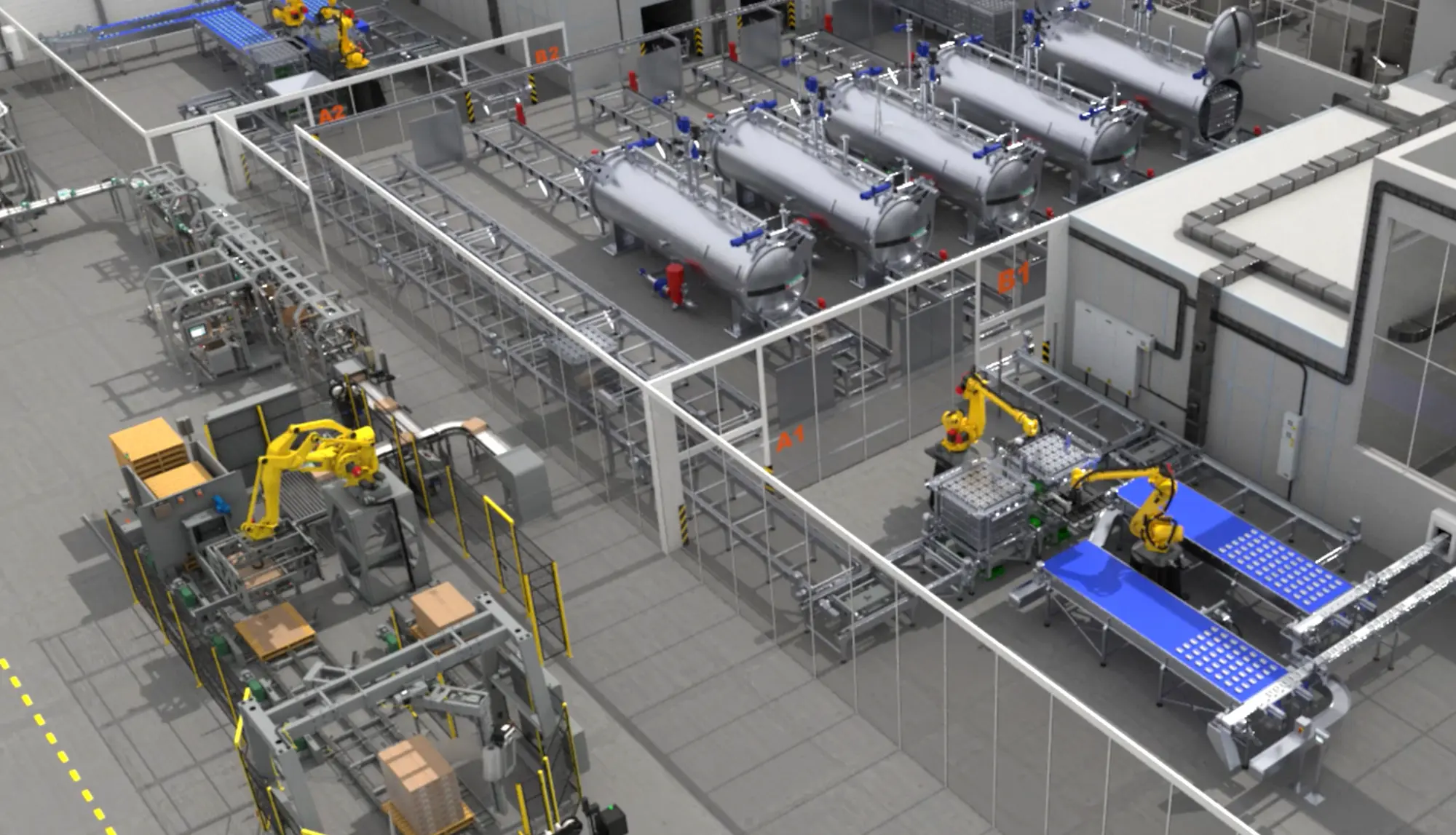
This model is prevalent in high-stakes environments such as automated assembly lines, food and beverage packaging, pharmaceutical filling, and semiconductor manufacturing. The primary value proposition is the reduction of the "integration gap"—the period during which equipment from different manufacturers fails to communicate or synchronize correctly. By using a single integrator, the manufacturer ensures that hardware, control software, and safety systems are validated as a unified whole before arriving on the factory floor.
Operational Prerequisites and Project Scoping
Before engaging in a turn key project, a manufacturer must possess a clearly defined set of specifications. Because the integrator takes full responsibility, their quote and success depend entirely on the precision of the initial requirements.
- Defining Output Metrics: You must specify the required throughput (units per hour), precision tolerances, and quality control standards. If these metrics are not defined early, the final cost will likely balloon due to change orders.
- Facility Integration Requirements: The integrator must know the physical constraints of the facility, including floor load capacity, utility availability (compressed air, high-voltage electricity, cooling water), and ingress/egress limitations.
- Software Interoperability: Modern manufacturing relies on Industrial Internet of Things (IIoT) connectivity. You must decide if the system needs to integrate with your existing Enterprise Resource Planning (ERP) or Manufacturing Execution System (MES). Defining data communication protocols, such as OPC-UA or MQTT, at the scoping stage is essential.
The Lifecycle of a Turn Key Project
A successful implementation follows a rigorous, multi-stage lifecycle that minimizes downtime and operational risk.
- Engineering and Simulation: Before any steel is cut, the provider typically creates a digital twin of the process. Simulation software allows engineers to test cycle times and identify bottlenecks. This stage is critical for verifying that the proposed system will meet the performance guarantees stipulated in the contract.
- Fabrication and Factory Acceptance Testing (FAT): Once the design is approved, components are fabricated and assembled at the integrator’s site. The FAT is a vital milestone where the client visits the facility to witness the system operating in a controlled environment. Payment milestones are frequently tied to the successful completion of these tests.
- Installation and Site Acceptance Testing (SAT): The system is dismantled, shipped, and reassembled at the target facility. The SAT occurs on-site and involves verifying that the equipment performs to specifications under actual production conditions.
- Commissioning and Training: The final phase involves fine-tuning the system, verifying safety interlocks, and training the client’s staff. Modern turn key contracts often include a "burn-in" period where the integrator remains on-site to resolve teething issues during the first weeks of full-capacity operation.
Comparative Analysis: Turn Key vs. Multi-Vendor Integration
Selecting between a turn key provider and a multi-vendor strategy depends on your organization’s internal engineering capability and risk tolerance.
| Feature | Turn Key Processing | Multi-Vendor Integration |
|---|---|---|
| Responsibility | Single point of accountability | Divided across multiple vendors |
| Project Management | Handled by the integrator | Internal team management required |
| Cost Transparency | Often higher upfront cost | Lower individual component costs |
| Integration Risk | Low (managed by provider) | High (requires internal coordination) |
| Deployment Speed | Optimized by single-source focus | Prone to logistical delays |
Financial Considerations and Cost Drivers
Cost in a turn key project is rarely limited to the purchase price of the machinery. To maintain financial accuracy, businesses must account for total cost of ownership (TCO) factors.
- Design and Engineering Fees: You are paying for the integrator's expertise in solving complex problems, not just the hardware. This includes the cost of custom programming and specialized mechanical design.
- Documentation and Certification: Ensuring compliance with local building codes, electrical standards (such as NFPA 79 or IEC 60204-1), and safety regulations (OSHA requirements) is part of the cost. A turn key provider assumes the burden of ensuring the entire line complies with these certifications, which significantly reduces the internal legal and regulatory burden.
- Spare Parts and Maintenance: A critical, often overlooked cost, is the "critical spares" package. Because turn key systems often utilize custom parts or specific proprietary controls, you must budget for an initial inventory of components to prevent long lead times during a future failure.
Troubleshooting and Operational Limitations
Even with a high-quality turn key implementation, challenges can arise. The most common pitfall is "scope creep," where the manufacturer adds features mid-project that disrupt the initial integration plan.
Another limitation is "vendor lock-in." If the turn key provider uses proprietary software or black-box control systems, you may be unable to perform your own maintenance or modifications in the future. To mitigate this, ensure your contract specifies that you retain full access to source code, PLC logic, and non-proprietary documentation. Before finalizing a contract, establish a clear Service Level Agreement (SLA) regarding technical support response times and remote diagnostics capabilities.
Frequently Asked Questions
1. Who holds the liability if the system does not hit performance targets? In a standard turn key contract, the liability rests with the integrator. The contract should feature clear "performance guarantees" where payment installments are contingent upon hitting specific throughput and quality benchmarks during the testing phases.
2. Does turn key mean I do not need an internal engineering team? No. While the provider handles the build, you still need internal stakeholders who understand the process requirements, safety protocols, and long-term maintenance needs. Your team acts as the primary liaison during the design and testing phases.
3. What is the difference between an OEM and a turn key provider? An Original Equipment Manufacturer (OEM) builds specific machines. A turn key provider may be an OEM, but they act as a system integrator, taking the OEM's machine and adding the necessary software, robotics, and peripheral infrastructure to create a complete, functioning production cell.
4. Can turn key solutions be scaled later? Yes, if planned correctly. During the scoping phase, inform your provider of your long-term growth projections. They can design the modularity and footprint of the system to allow for future additions, such as extra conveyors or additional packaging stations, without replacing the core equipment.
5. How long is a typical commissioning phase? The duration depends on the complexity of the project. A simple assembly machine might be commissioned in a few days, whereas a fully integrated, multi-process production line could take several weeks of testing, calibration, and training to reach full production capacity.
Moving Forward
When evaluating turn key processing for your manufacturing facility, begin by performing a rigorous internal audit of your process needs and limitations. Do not prioritize the lowest initial quote; instead, focus on the provider’s track record in similar applications, their ability to provide local technical support, and the transparency of their integration documentation.
Request a reference check from a client who has operated the provider’s system for at least 24 months. This will provide the most accurate insight into the system’s longevity, the ease of routine maintenance, and the integrator’s willingness to provide support once the initial warranty period has expired. Selecting the right partner at the outset is the most effective way to ensure the long-term success of your manufacturing investment.
Image Gallery