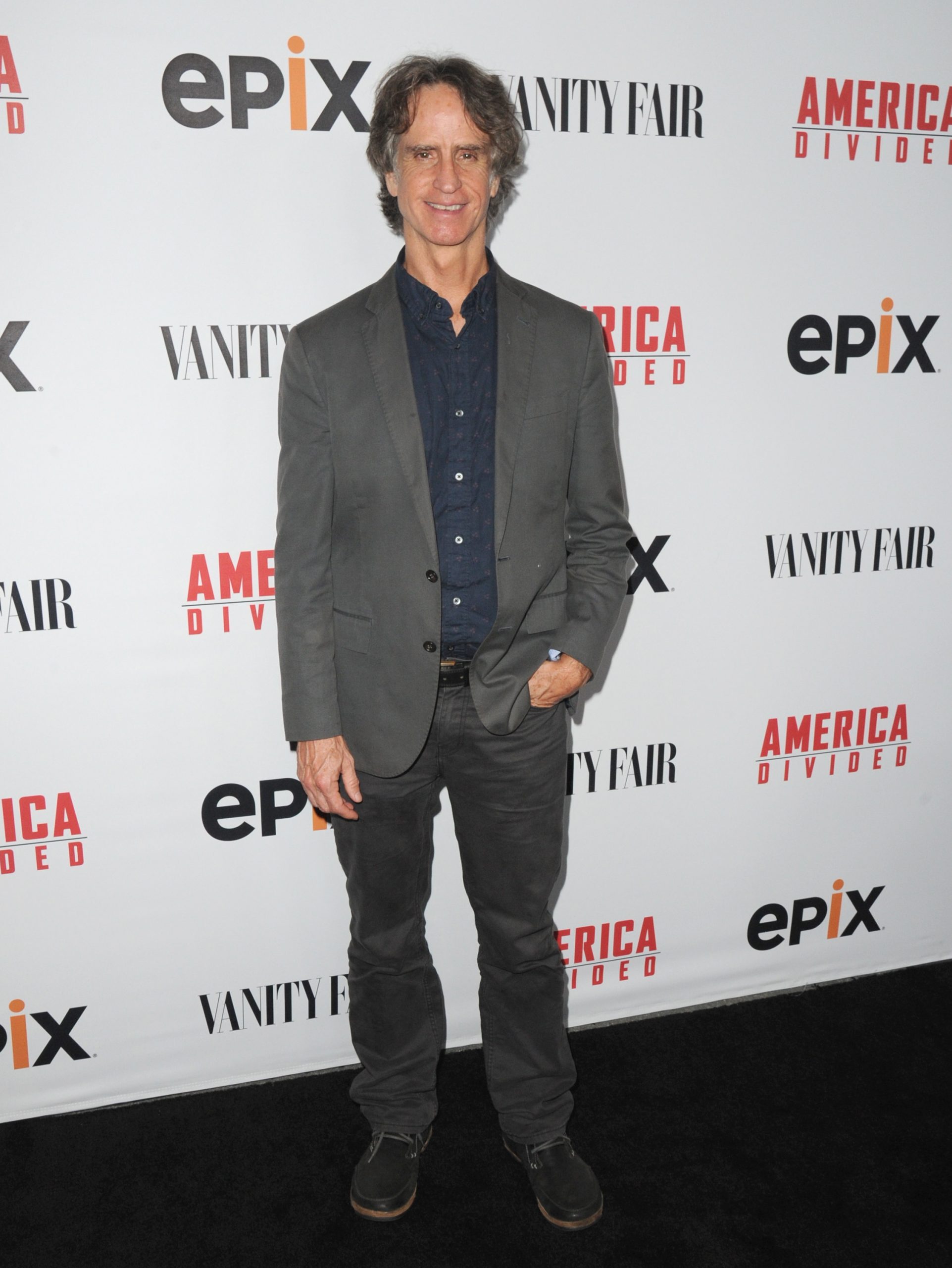
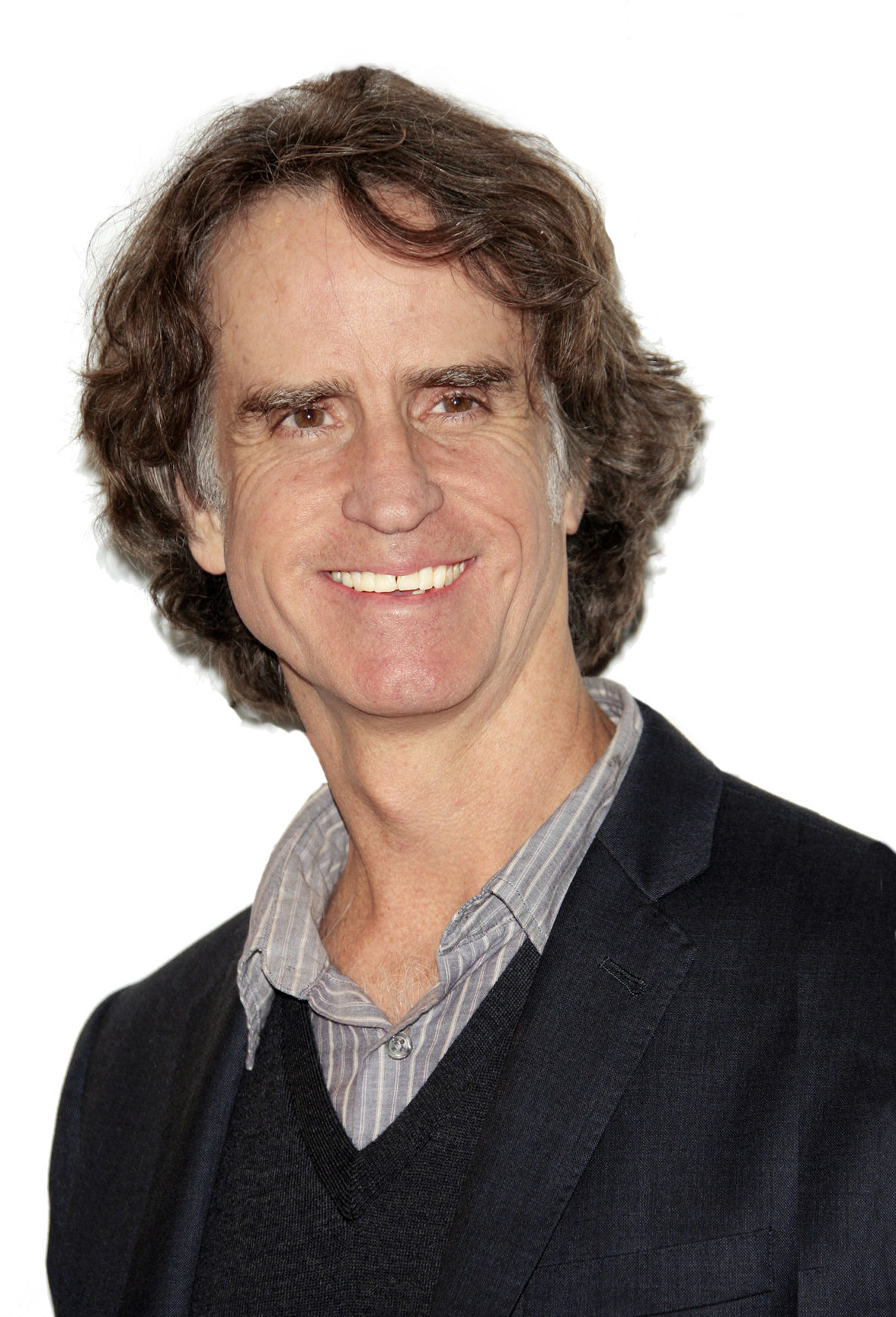
Jay Roach: The Directorial Evolution from Blockbuster Comedy to Political Drama
Jay Roach is an acclaimed American film director, producer, and screenwriter who built a distinct Hollywood career by mastering two drastically different genres: iconic blockbuster comedies and sharp, real-world political dramas. Best...
Jay Roach is an acclaimed American film director, producer, and screenwriter who built a distinct Hollywood career by mastering two drastically different genres: iconic blockbuster comedies and sharp, real-world political dramas. Best known for directing the Austin Powers trilogy and Meet the Parents, Roach later transitioned into critically praised docudramas, winning multiple Primetime Emmy Awards for HBO projects such as Recount and Game Change, as well as theatrical features like Trumbo and Bombshell.
Contents
Early Life, Education, and Cinematic Foundations
Matthew Jay Roach was born on June 14, 1957, in Albuquerque, New Mexico. Raised in the Southwest, he developed a keen interest in storytelling, visual arts, and communication, which shaped his academic and early professional trajectory.
Roach attended Stanford University, where he earned a Bachelor of Arts in Communication in 1980. Seeking to translate his interest in media into hands-on film craft, he enrolled at the USC School of Cinematic Arts, graduating with a Master of Fine Arts in Film Production in 1986. During his time at USC, Roach honed his technical skills in camera work, editing, and narrative construction, laying the ground for a versatile career behind the camera.
In the late 1980s and early 1990s, Roach navigated the entry-level realities of the entertainment industry. He worked in various crew roles, including cinematographer, editor, and assistant director on low-budget independent projects. He co-wrote the 1990 sci-fi comedy Zoo Radio and co-produced the made-for-television drama Empty Cradle (1993). These early experiences gave Roach an understanding of both the physical mechanics of film sets and the logistical pressures of physical production—skills that would later define his reputation as a reliable, actor-friendly director capable of managing complex studio projects.
Redefining Pop Culture Comedy in the 1990s and 2000s
Jay Roach’s major directorial breakthrough arrived when he partnered with comedian and writer Mike Myers to bring a 1960s spy spoof to the big screen. The resulting film, Austin Powers: International Man of Mystery (1997), became a global cultural movement.
The Austin Powers Franchise
Produced on a modest budget of under $17 million, the first Austin Powers film achieved modest theatrical success before exploding into a pop-culture phenomenon on home video. Roach’s direction was instrumental in converting Myers' surreal, improvisational character work into a coherent visual narrative. Rather than framing the film as a low-budget sketch show, Roach staged it with vibrant production design, retro color palettes, and deliberate cinematic nods to 1960s Euro-spy films, Technicolor musicals, and James Bond classics.
| THE ROACH COMEDY FORMULA |
|---|
| 1. Visual Homage: High-production lighting and period-accurate sets |
| 2. Grounded Stakes: Emotional anxiety amidst absurd situations |
| 3. Improvisational Space: Allowing top comedic actors room to riff |
| 4. Tonal Modulation: Balancing physical slapstick with dry satire |
The success of the original led to two massive sequels:
- Austin Powers: The Spy Who Shagged Me (1999): Multiplied the scale, visual effects, and slapstick elements, grossing over $310 million worldwide.
- Austin Powers in Goldmember (2002): Solidified the franchise as one of the defining comedy series of the era, introducing complex dual-role performances and high-profile celebrity cameos.
Roach’s work on the trilogy established his reputation for pacing comedy through precise visual framing rather than relying solely on verbal punchlines.
Meet the Parents and the Awkward Comedy Era
In 2000, Roach directed Meet the Parents, starring Ben Stiller and Robert De Niro. The film marked a subtle shift from the absurd cartoonishness of Austin Powers toward character-driven awkward comedy.
Roach demonstrated a skill for mounting relational tension. By casting De Niro—an iconic dramatic actor—opposite Stiller's manic everyday protagonist, Roach grounded the absurd misunderstandings in realistic paranoia. The film grossed over $330 million worldwide and spawned a lucrative franchise. Roach returned to direct the 2004 sequel, Meet the Fockers, which added Dustin Hoffman and Barbra Streisand to the ensemble, cementing his status as one of Hollywood's most commercially dependable comedy directors of the 2000s.
The Pivot to Political Realism and Docudrama
By the late 2000s, Roach executed one of the most successful genre shifts in modern American cinema. Moving away from broad studio comedies, he turned his attention to high-stakes political history, launching a series of acclaimed television and feature-length docudramas.
- Broad Studio Comedy
- Austin Powers
- Meet the Parents
- HBO Political Docudramas
- Recount (2008)
- Game Change (2012)
- Theatrical Biopics
- Trumbo (2015)
- Bombshell (2019)
Recount (2008)
Roach’s dramatic turn began with the HBO film Recount, written by Danny Strong. The film dramatized the legal battle surrounding the 2000 U.S. presidential election recount in Florida. Starring Kevin Spacey, Tom Wilkinson, Laura Dern, and Bob Balaban, the film presented a procedural look at the political maneuvering, legal strategy, and administrative chaos that preceded the Supreme Court's Bush v. Gore decision.
Roach adopted a kinetic, quasi-documentary visual style, using handheld cameras, fast cuts, and real archive television footage. The film was praised by critics for its non-partisan focus on operational details and institutional mechanics. Recount earned Roach two Primetime Emmy Awards: one for Outstanding Directing for a Miniseries, Movie or Dramatic Special, and another for Outstanding Made for Television Movie.
Game Change (2012)
Reuniting with writer Danny Strong for HBO, Roach directed Game Change, an adaptation of John Heilemann and Mark Halperin's book documenting John McCain’s 2008 presidential campaign. The narrative centered on the vetting, selection, and media handling of Alaska Governor Sarah Palin, played by Julianne Moore alongside Ed Harris (McCain) and Woody Harrelson (Steve Schmidt).
Roach avoided flat satire, opting instead to portray the personal strain and political machinery operating behind campaign soundbites. The film was a critical success and swept the major awards circuits. Roach earned his second Primetime Emmy for Directing, while the project won the Emmy, Golden Globe, and Critics' Choice Award for Best Miniseries or Made for Television Movie. Detailed records of these accolades are cataloged in the Television Academy Archive.
Feature Biopics and Modern Social Critique
Following his success on cable television, Roach brought his political directorship back to feature film releases, targeting historical moments that reflected contemporary institutional crises.
Trumbo (2015)
In Trumbo, Roach chronicled the life of Dalton Trumbo, the top-tier Hollywood screenwriter blacklisted during the Cold War Red Scare for his refusal to testify before the House Un-American Activities Committee (HUAC). Starring Bryan Cranston in the title role, the film details how blacklisted writers used pseudonyms and front writers to continue producing Oscar-winning screenplays like Roman Holiday and The Brave One.
Roach framed the period piece as both a character character study and a defense of free speech, highlighting the moral compromises made by studio executives and creative guilds under government pressure. The film earned Bryan Cranston an Academy Award nomination for Best Actor.
Bombshell (2019)
In 2019, Roach directed Bombshell, a dramatization of the real-life sexual harassment allegations against Fox News CEO Roger Ailes that led to his resignation. Written by Charles Randolph, the film featured a cast including Charlize Theron (as Megyn Kelly), Nicole Kidman (as Gretchen Carlson), and Margot Robbie (playing a composite character representing junior staff).
| KEY PRODUCTION ASPECTS OF BOMBSHELL |
|---|
| • Narrative Framing: Multi-perspective, breaking the fourth wall |
| • Visual Realism: Oscar-winning prosthetic makeup by Kazu Hiro |
| • Cinematic Style: Fast-paced corporate thriller aesthetic |
| • Core Focus: Systemic complicity in corporate power structures |
Roach structured the film as a fast-paced corporate thriller, using multi-perspective narrative arcs and fourth-wall breaks to convey the internal culture of a modern media network. The film received three Academy Award nominations, winning the Oscar for Best Makeup and Hairstyling due to the transformational prosthetics developed by Kazu Hiro.
Directorial Style, Creative Philosophy, and Producing Work
Jay Roach’s directorial portfolio reflects a consistent creative philosophy: whether handling absurd comedy or heavy political history, the narrative relies on the psychology of the characters under pressure.
Key Directorial Characteristics
- Ensemble Direction: Roach is known for managing ensemble casts, drawing grounded performances out of diverse talent pools (e.g., matching dramatic actors like Robert De Niro or Ed Harris with comedic performers like Ben Stiller or Woody Harrelson).
- Tonal Modulation: A signature trait of Roach's filmography is his ability to blend comedic timing with serious thematic stakes. In Game Change and Bombshell, humor is used not to undercut dramatic tension, but to illustrate how people cope with intense professional stress.
- Adaptive Camera Mechanics: While his early comedies utilized static frames to highlight performance and art direction, his dramatic work relies on roaming cameras, quick zooms, and tight close-ups to mimic journalistic coverage.
Work as a Producer
Beyond his directorship, Roach has maintained a footprint as a Hollywood producer through his production company, Delirious Media (and previously Everyman Pictures). He has produced or executive produced numerous films directed by others, including:
- Borat: Cultural Learnings of America for Make Benefit Glorious Nation of Kazakhstan (2006): Roach served as a producer, leveraging his expertise in comedic editing to help shape Larry Charles’s unscripted mockumentary into a coherent narrative.
- The Hitchhiker's Guide to the Galaxy (2005): Served as a producer on the adaptation of Douglas Adams' sci-fi classic.
- Sisters (2015): Produced the comedy starring Tina Fey and Amy Poehler.
Directorial Filmography and Key Achievements
The following table outlines Jay Roach’s feature films and major television projects as a director, detailing their release year, primary genre, key cast members, and notable industry recognitions.
| Year | Project Title | Primary Genre | Key Cast | Notable Accolades & Impact |
|---|---|---|---|---|
| 1997 | Austin Powers: International Man of Mystery | Comedy / Parody | Mike Myers, Elizabeth Hurley, Seth Green | Cultural landmark; launched a multi-film franchise. |
| 1999 | Austin Powers: The Spy Who Shagged Me | Comedy / Parody | Mike Myers, Heather Graham, Vern Troyer | Grossed over $310M worldwide; Grammy winner for soundtrack. |
| 2000 | Meet the Parents | Relational Comedy | Ben Stiller, Robert De Niro, Teri Polo | Grossed over $330M worldwide; established new style of awkward comedy. |
| 2002 | Austin Powers in Goldmember | Comedy / Parody | Mike Myers, Beyoncé Knowles, Michael Caine | Highest-grossing entry in the trilogy ($296M worldwide). |
| 2004 | Meet the Fockers | Relational Comedy | Ben Stiller, Robert De Niro, Dustin Hoffman | Worldwide box office exceeded $522M. |
| 2008 | Recount | Political Docudrama | Kevin Spacey, Tom Wilkinson, Laura Dern | Won 3 Primetime Emmys, including Directing for Roach. |
| 2010 | Dinner for Schmucks | Comedy | Steve Carell, Paul Rudd, Zach Galifianakis | American adaptation of the French comedy Le Dîner de Cons. |
| 2012 | Game Change | Political Docudrama | Julianne Moore, Ed Harris, Woody Harrelson | Won 5 Primetime Emmys, including Directing for Roach; Golden Globe winner. |
| 2012 | The Campaign | Political Satire | Will Ferrell, Zach Galifianakis, Jason Sudeikis | Combined his comedy background with political campaign themes. |
| 2015 | Trumbo | Biographical Drama | Bryan Cranston, Diane Lane, Helen Mirren | Oscar nomination for Best Actor (Bryan Cranston). |
| 2016 | All the Way | Historical Drama | Bryan Cranston, Anthony Mackie, Melissa Leo | Nominated for 8 Primetime Emmys; adapted from the Tony-winning play. |
| 2019 | Bombshell | Docudrama / Thriller | Charlize Theron, Nicole Kidman, Margot Robbie | Nominated for 3 Academy Awards (Won Best Makeup and Hairstyling). |
Frequently Asked Questions
What was Jay Roach's breakthrough film as a director?
Jay Roach’s major directorial breakthrough was the 1997 spy comedy Austin Powers: International Man of Mystery. Although it was a modest success at the box office, it became an immense international hit on home video and spawned two successful sequels, establishing Roach as a top-tier comedy director in Hollywood.
How many Emmy Awards has Jay Roach won?
Jay Roach has won multiple Primetime Emmy Awards, primarily for his work as a director and producer on HBO political docudramas. He won Emmys for Directing for a Miniseries, Movie or Dramatic Special for both Recount (2008) and Game Change (2012), along with additional awards as an executive producer when those films won Best Made for Television Movie/Miniseries.
What inspired Jay Roach to transition from studio comedies to political dramas?
Roach’s pivot was largely driven by a personal interest in institutional politics, media influence, and historical events. Working with scripts by writers like Danny Strong (Recount, Game Change), Roach realized he could apply his understanding of human absurdity and pacing to real-world political crises without sensationalizing the facts.
Was Jay Roach involved in the production of Borat?
Yes, Jay Roach served as a producer on the 2006 film Borat: Cultural Learnings of America for Make Benefit Glorious Nation of Kazakhstan, directed by Larry Charles and starring Sacha Baron Cohen. Roach worked closely behind the scenes to help structure the narrative cut out of hundreds of hours of unscripted real-world footage.
Where did Jay Roach study filmmaking?
Jay Roach earned his Bachelor of Arts in Communication from Stanford University in 1980 and later earned his Master of Fine Arts (MFA) in Film Production from the USC School of Cinematic Arts in 1986.
Directorial Takeaways and Practical Lessons
For film historians, student filmmakers, and industry analysts, Jay Roach’s filmography offers several key insights into visual storytelling and career management:
- Genre Flexibility Requires Fundamentals: Roach’s successful transition from slapstick comedy to serious docudrama demonstrates that foundational filmmaking skills—pacing, blocking, actor communication, and narrative clarity—translate across genres.
- Trusting the Ensemble: Whether working with comedy stars like Mike Myers and Ben Stiller or dramatic icons like Robert De Niro, Bryan Cranston, and Charlize Theron, Roach's strength lies in giving actors space to explore character nuances while keeping the overall scene focused on the core narrative goal.
- Using Humor to Enhance Drama: Roach’s docudrama work illustrates that serious historical subjects benefit from realistic moments of absurdity. Real-life political crises often feature human error and awkwardness, elements Roach integrates to make historical figures feel relatable rather than monolithic.
By balancing commercial entertainment with historical dramatizations, Jay Roach remains one of modern Hollywood's versatile directors, proving that an auteur's vision is defined not by sticking to a single genre, but by how effectively they reveal human nature on screen.
Image Gallery