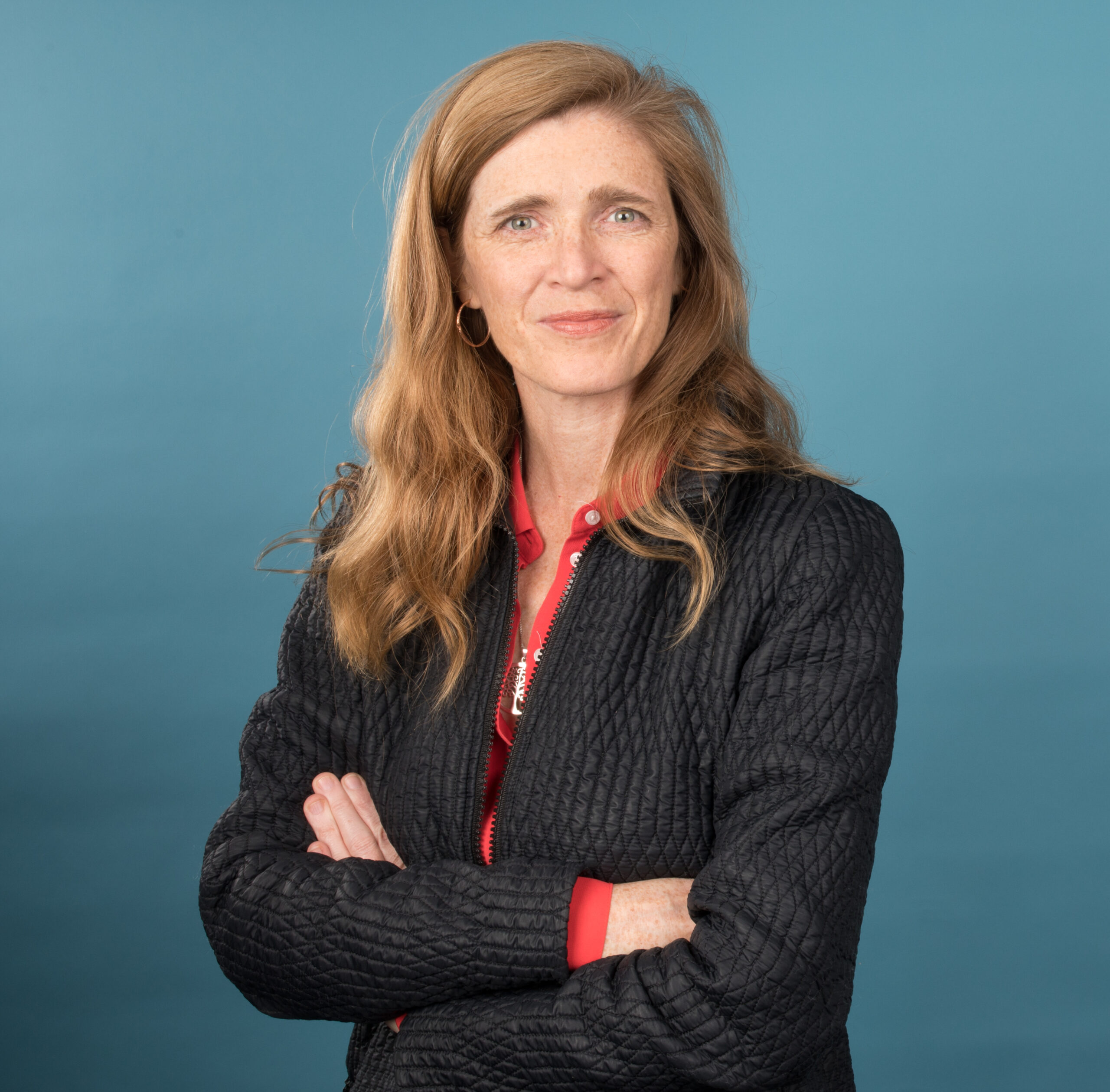
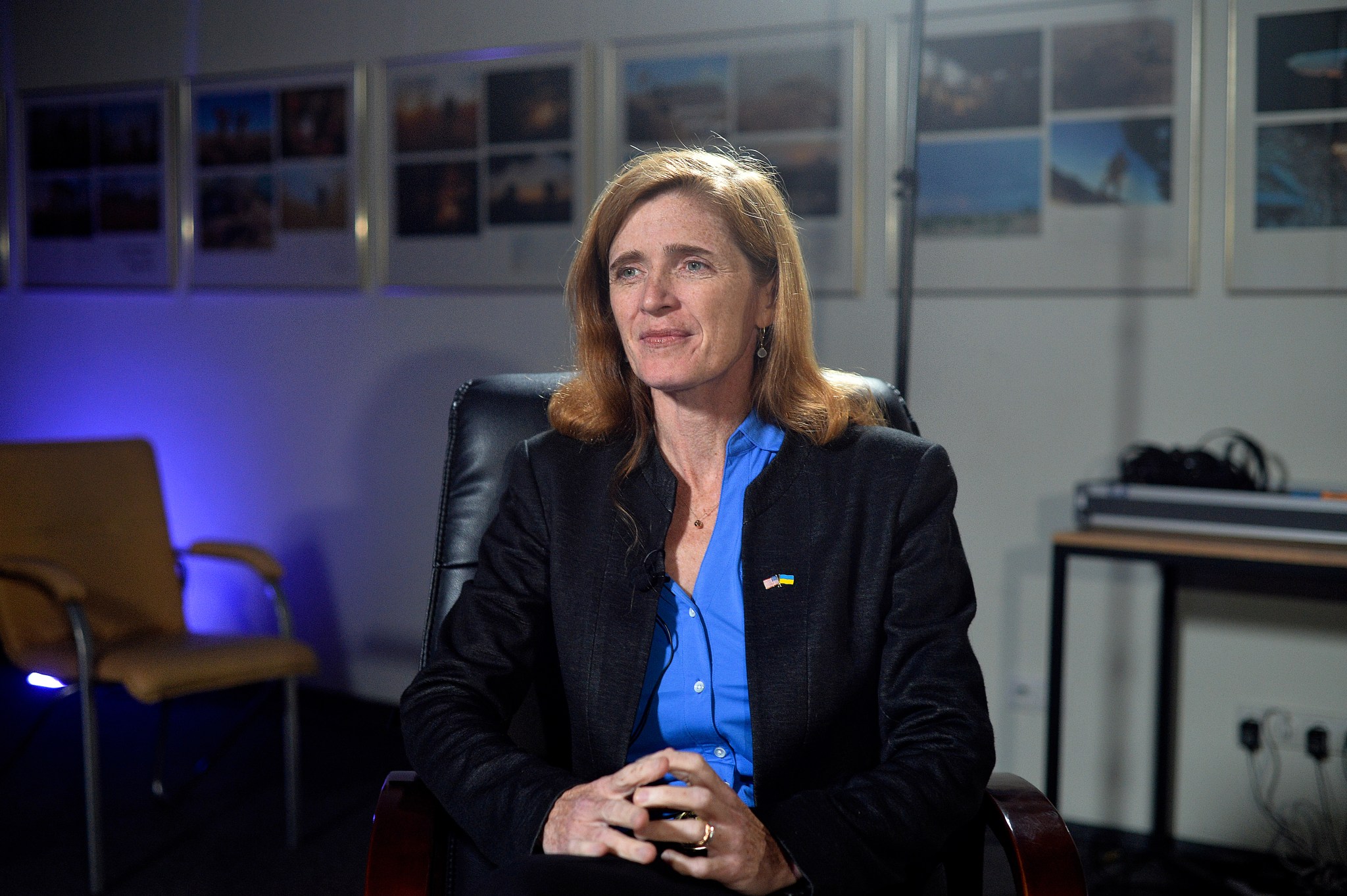
Samantha Power Young in the Spotlight: From War Correspondent to Global Diplomat
Samantha Power entered the public spotlight in her early twenties as a intrepid war correspondent covering the Bosnian War, before gaining international acclaim at age 31 for her Pulitzer Prize-winning book, "A Problem from Hell": Amer...
Samantha Power entered the public spotlight in her early twenties as a intrepid war correspondent covering the Bosnian War, before gaining international acclaim at age 31 for her Pulitzer Prize-winning book, "A Problem from Hell": America and the Age of Genocide. Her early prominence transformed her from a passionate journalist and academic into a central foreign policy advisor to Barack Obama, later leading to her appointments as U.S. Ambassador to the United Nations and Administrator of the U.S. Agency for International Development (USAID).
Contents
Early Years and Educational Foundation (1970–1992)
Samantha Power was born in Dublin, Ireland, in 1970. She spent her early childhood in Ireland before immigrating to the United States with her mother and brother in 1979 at the age of nine, settling in Pittsburgh and later Atlanta, Georgia. Raised in an environment that prioritized education and political awareness, Power adapted quickly to American life, developing a keen interest in sports broadcasting and political science.
She attended Yale University, earning a Bachelor of Arts in 1992. During her undergraduate years, Power initially intended to pursue a career in sports journalism, working as a summer intern for Atlanta's local news networks. However, pivotal geopolitical events in the late 1980s and early 1990s—specifically the 1989 Tiananmen Square protests and the collapse of the Berlin Wall—altered her career trajectory. Seeing television coverage of young pro-democracy protesters confronted by state violence sparked a deep interest in human rights, state sovereignty, and international intervention.
Upon graduating from Yale, Power sought opportunities to report directly from regions experiencing severe political turmoil. Her decision to move to the Balkans in the early 1990s marked the beginning of her public identity as a foreign correspondent willing to work on the front lines of conflict.
Into the War Zone: Reporting from Bosnia in Her Twenties (1993–1996)
In 1993, at just 22 years old, Power moved to former Yugoslavia to cover the ongoing conflict as a freelance journalist. Armed with little more than a typewriter, notebook, and press credentials, she reported from Sarajevo and other war-torn areas during the bloody dissolution of Yugoslavia.
Over the next three years, Power wrote for major global publications, including The Boston Globe, The Washington Post, The New Yorker, and The New Republic. Her dispatch reporting brought the human toll of ethnic cleansing, mass displacement, and military aggression directly to Western readers. Operating under shellfire during the Siege of Sarajevo, Power developed an acute frustration with the hesitation of Western governments—particularly the United States and NATO allies—to intervene militarily to halt atrocities.
Key Influences on Power's Early Philosophy (1993–1996):
- Eyewitness to Siege of Sarajevo & Srebrenica Massacre
- Observation of UN peacekeeper operational limitations
- Critical analysis of U.S. and NATO diplomatic hesitation
- Commitment to "liberal interventionism" and human rights advocacy
Her experiences covering the 1995 Srebrenica massacre, where Bosnian Serb forces murdered over 8,000 Bosniak men and boys, left a indelible mark on her intellectual and political worldview. It solidified her conviction that national sovereignty should not serve as a shield for governments committing mass atrocities against their own citizens—a stance that would later define the doctrine of "Responsibility to Protect" (R2P) within international law.
"A Problem from Hell" and Academic Acclaim (1998–2003)
Returning to the United States after her time in the Balkans, Power enrolled at Harvard Law School, earning her Juris Doctor in 1999. Parallel to her legal studies, she became the founding Executive Director of the Carr Center for Human Rights Policy at Harvard Kennedy School, serving in that role from 1998 to 2002. During this period, she synthesized her field observations into a comprehensive historical examination of U.S. foreign policy toward genocide.
In 2002, at age 31, Power published her landmark book, "A Problem from Hell": America and the Age of Genocide. The text meticulously documented how 20th-century U.S. leaders repeatedly failed to stop genocide—ranging from the Armenian Genocide and the Holocaust to the Cambodian killing fields, the Rwandan Genocide, and Srebrenica—due to political risk aversion, systemic indifference, and a lack of sustained domestic political pressure.
The book was a monumental critical success:
- Won the 2003 Pulitzer Prize for General Non-Fiction.
- Received the National Book Critics Circle Award.
- Established Power as one of the preeminent human rights theorists of her generation.
- Catapulted her into national political conversations regarding humanitarian intervention.
The central thesis of "A Problem from Hell" argued that American non-intervention in the face of mass murder was rarely a failure of intelligence or awareness, but rather a deliberate policy choice driven by political self-interest. The work established Power as the leading voice of modern liberal internationalism, arguing that moral imperatives must be integrated into strategic foreign policy decisions.
Entering the Political Arena and Early Campaign Controversies (2005–2008)
Power’s prominent public profile caught the attention of fresh political figures in Washington, D.C. In 2005, following a meeting prompted by her book, newly elected U.S. Senator Barack Obama invited Power to join his congressional office as a foreign policy fellow. Power worked in Obama’s office from 2005 to 2006, briefing him on global human rights abuses, international institutions, and African security issues, particularly the crisis in Darfur, Sudan.
When Obama launched his presidential campaign for the 2008 election, Power stepped into a senior role as his primary foreign policy advisor. She advocated strongly for a foreign policy that balanced realpolitik with humanitarian principles, contrasting Obama's platform with both traditional conservative policy and established Democratic approaches.
However, her early political career encountered a major setback in March 2008. During an interview with the Scottish newspaper The Scotsman while on a promotional tour for her book Chasing the Flame, Power made candid off-the-record remarks calling Senator Hillary Clinton—then Obama’s chief rival for the Democratic nomination—a "monster." Although she immediately attempted to retract the remark, the journalist published the quote, triggering a media firestorm.
Recognizing that the controversy had become a distraction to the campaign, Power resigned from her role as advisor to Obama on March 7, 2008. The incident was a sharp baptism by fire in the discipline of campaign politics, highlighting the difficult transition from uninhibited commentator and academic to disciplined political operative.
Transition to High Office: National Security Council and UN Ambassadorship
Despite her temporary withdrawal during the 2008 campaign, Power returned to Obama's team after his election victory. Her career in public service advanced through several high-profile appointments across successive presidential administrations:
National Security Council (2009–2013)
In 2009, President Obama appointed Power as Special Assistant to the President and Senior Director for Multilateral Affairs and Human Rights on the National Security Council (NSC). In this position, she pushed for the elevation of human rights within national security strategy. She was instrumental in shaping the U.S. response to the 2011 Arab Spring, famously lobbying alongside Secretary of State Hillary Clinton and UN Ambassador Susan Rice for military intervention in Libya to protect civilians in Benghazi from forces loyal to Muammar Gaddafi.
U.S. Ambassador to the United Nations (2013–2017)
In June 2013, President Obama nominated Power to serve as the 28th U.S. Ambassador to the United Nations. Confirmed by the U.S. Senate in a 87–10 vote, she represented U.S. interests at the UN Security Council during major global crises, including:
- The Syrian Civil War and the chemical weapons attacks in Ghouta.
- Russia's 2014 annexation of Crimea and military action in Eastern Ukraine.
- The 2014 Western Africa Ebola virus epidemic, where she spearheaded international response efforts.
- Advocacy for LGBTQ+ rights globally and the release of political prisoners.
Administrator of USAID (2021–Present Context)
In January 2021, President Joe Biden nominated Power to lead the U.S. Agency for International Development (USAID), elevating the position to a seat on the National Security Council. Confirmed by a 68–26 Senate vote, Power focused USAID's mandate on global health security, climate resilience, emergency food aid during the Russia-Ukraine war, and defending democratic institutions against autocratic pressure.
Key Milestones in Samantha Power’s Early Career
The table below outlines the career trajectory, focus areas, and political impacts of Samantha Power’s rise from young journalist to cabinet-level official:
| Years | Role / Title | Key Focus & Primary Achievements | Impact on Foreign Policy |
|---|---|---|---|
| 1993–1996 | Freelance War Correspondent | Covered the Yugoslav Wars (Sarajevo, Srebrenica) for The Boston Globe, The New Yorker, and The Washington Post. | Elevated public awareness of genocide and criticized Western non-intervention. |
| 1998–2002 | Executive Director, Carr Center | Led human rights research at Harvard Kennedy School while completing her J.D. | Built an academic framework combining international law and foreign intervention. |
| 2002–2003 | Author & Scholar | Published "A Problem from Hell": America and the Age of Genocide; won the 2003 Pulitzer Prize. | Reshaped political debates on humanitarian obligation and national sovereignty. |
| 2005–2008 | Senior Foreign Policy Advisor | Advised Senator Barack Obama; stepped down after published campaign controversy in March 2008. | Shaped early Obama foreign policy platform on multilateralism and human rights. |
| 2009–2013 | Senior Director, NSC | Managed multilateral affairs; advocated for human rights and the 2011 NATO intervention in Libya. | Embedded liberal interventionism into national security decision-making structures. |
| 2013–2017 | U.S. Ambassador to the UN | Represented U.S. on UN Security Council; addressed Syrian conflict, Crimean crisis, and Ebola outbreak. | Championed institutional accountability, human rights, and global health response. |
| 2021–2026 | USAID Administrator | Managed U.S. international development aid, global food security, and democratic resilience programs. | Integrated development assistance directly into national security policy. |
Evolution of Idealism: Lessons from Power's Early Spotlight
Samantha Power’s career trajectory offers a case study in the tension between moral idealism and political pragmatism. In her 2019 memoir, The Education of an Idealist, Power reflected on her transition from an outside critic hurling barbs at government paralysis to an inside policymaker constrained by real-world geopolitical trade-offs.
The Idealist's Evolution:
- Outside Critic (Journalist / Scholar)
- Uncompromising moral clarity
- Focus on atrocities
- Demands swift intervention
- Inside Policymaker (NSC / UN / USAID Roles)
- Bureaucratic trade-offs
- Managing competing alliances
- Navigating vetoes & realpolitik
Critics from various political perspectives have scrutinized this evolution:
- Realist Foreign Policy Critics: Argued that her passion for humanitarian intervention led to costly foreign engagements—such as the 2011 intervention in Libya—that destabilized regions without creating lasting security structures.
- Human Rights Activist Critics: Expressed frustration when the Obama administration failed to intervene decisively in the Syrian Civil War, questioning how the author of "A Problem from Hell" navigated state hesitation while serving inside government.
Power acknowledged these complexities, arguing that working inside system machinery requires accepting imperfect compromises to achieve incremental progress. Her early years in the spotlight demonstrated that moving public opinion through investigative journalism is fundamentally different from building diplomatic consensus among sovereign states with competing national interests.
Frequently Asked Questions
How did Samantha Power start her career in public life?
Samantha Power began her career in her early twenties as a freelance war correspondent covering the Yugoslav Wars from 1993 to 1996. Her reporting from Sarajevo and Srebrenica for major news organizations established her reputation as an unyielding chronicler of human rights abuses and international policy failures.
What book made Samantha Power famous?
Samantha Power became nationally and internationally famous after publishing her 2002 book, "A Problem from Hell": America and the Age of Genocide. The book won the 2003 Pulitzer Prize for General Non-Fiction and analyzed why the U.S. government repeatedly failed to stop mass atrocities throughout the 20th century.
Why did Samantha Power resign from Barack Obama’s presidential campaign in 2008?
In March 2008, Power resigned from her role as senior foreign policy advisor to Barack Obama's presidential campaign after referring to Senator Hillary Clinton as a "monster" in an off-the-record comment during an interview with The Scotsman. She recognized the comment was a major distraction to the campaign, though she later rejoined Obama's administration in 2009.
What positions has Samantha Power held in the U.S. government?
Samantha Power has held three major foreign policy positions in the U.S. government:
- Special Assistant to the President and Senior Director for Multilateral Affairs and Human Rights on the National Security Council (2009–2013).
- 28th U.S. Ambassador to the United Nations (2013–2017).
- Administrator of the U.S. Agency for International Development (USAID) (appointed in 2021).
How did her reporting in Bosnia influence her view on foreign policy?
Witnessing the atrocities of the Bosnian War firsthand convinced Power that moral outrage was insufficient without decisive political action. It led her to advocate for "liberal interventionism," the belief that democratic nations have a moral responsibility to use military power, diplomacy, and international sanctions to prevent mass atrocities and protect vulnerable populations.
Key Takeaways for Scholars and Policy Analysts
For researchers, students of political science, and historians analyzing Samantha Power’s early career and public legacy:
- Examine Primary Writings: Read "A Problem from Hell" alongside her 2019 memoir The Education of an Idealist to trace how her perspective shifted from an outside observer to a senior government official.
- Analyze Diplomatic Documents: Review state department press releases, UN Security Council voting records, and National Security Council memos from 2009 to 2017 to evaluate how policy principles were executed in real-world crisis management.
- Assess Humanitarian Doctrine: Study the historical performance of the "Responsibility to Protect" (R2P) framework in cases like Libya (2011) and Syria (2013–2016) to understand the practical limits and challenges of modern humanitarian intervention.
Image Gallery