Choosing Term vs. Universal vs. Whole Life Insurance: A Complete Guide
Choosing between term, universal, and whole life insurance depends primarily on your financial goals, budget, and how long you need coverage. Term life offers temporary, straightforward protection at the lowest cost, while whole life p...
Choosing between term, universal, and whole life insurance depends primarily on your financial goals, budget, and how long you need coverage. Term life offers temporary, straightforward protection at the lowest cost, while whole life provides lifelong coverage with fixed premiums and guaranteed cash value growth. Universal life adds premium and death benefit flexibility, with growth tied to fixed interest or equity indexes.
Contents
Disclaimer: This guide is for educational purposes only and does not constitute formal financial, legal, or tax advice. Consult a licensed insurance professional or accredited financial planner to assess your specific situation.
Core Differences at a Glance
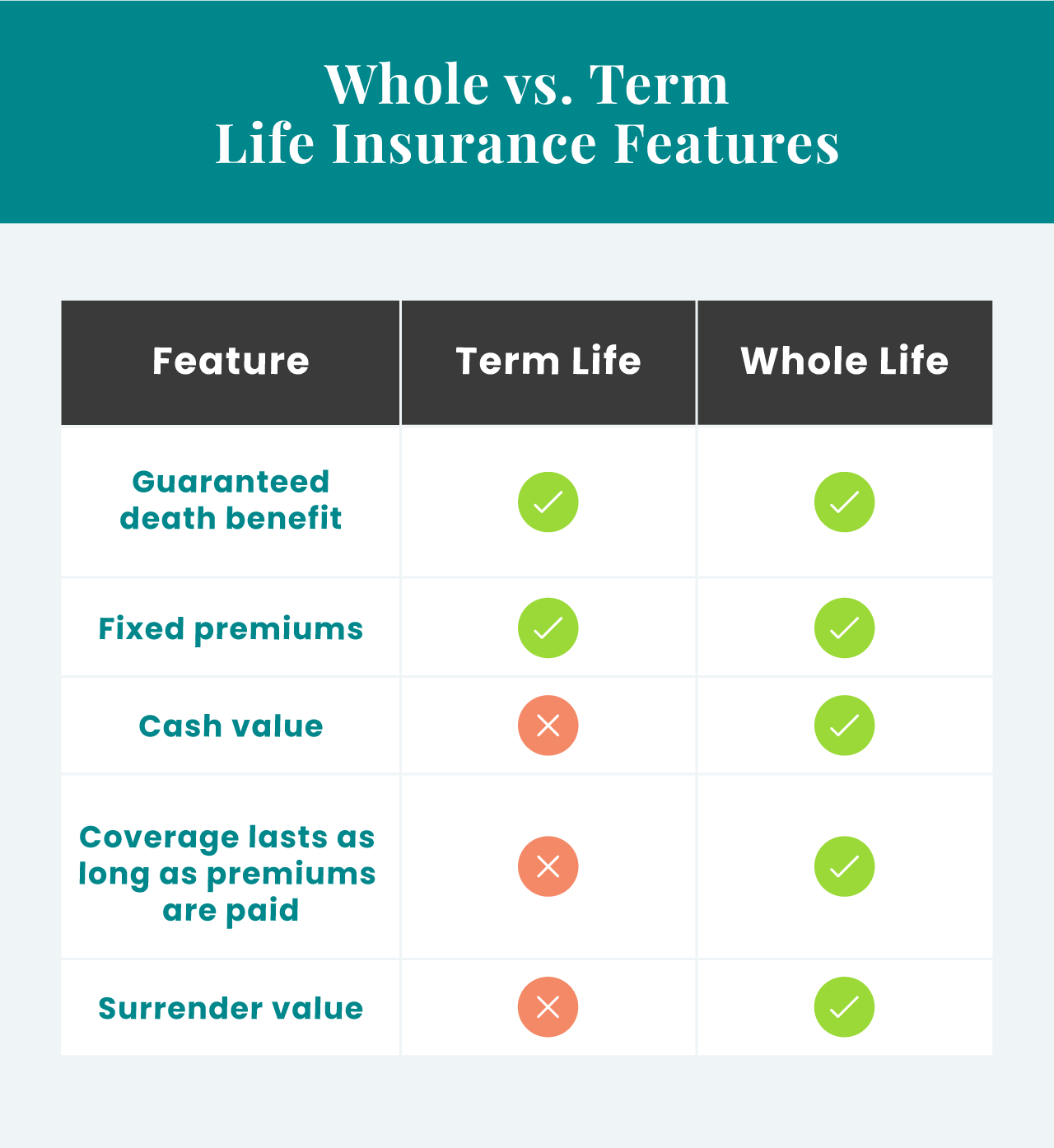
Life insurance policies fall into two main categories: pure protection (temporary coverage) and permanent coverage (lifelong protection with a cash value accumulation component). Term life insurance falls into the pure protection category, whereas whole life and universal life are forms of permanent life insurance.
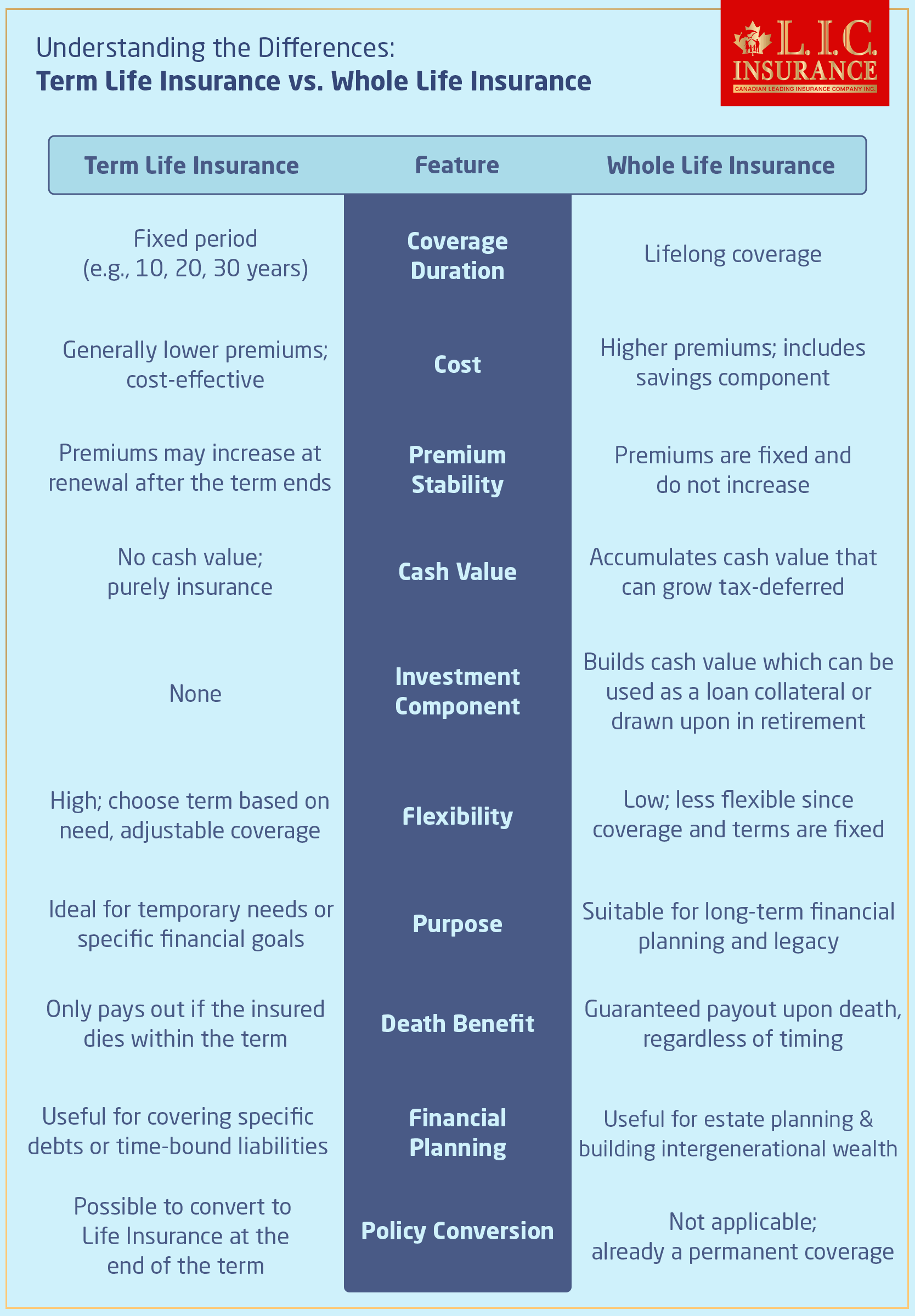
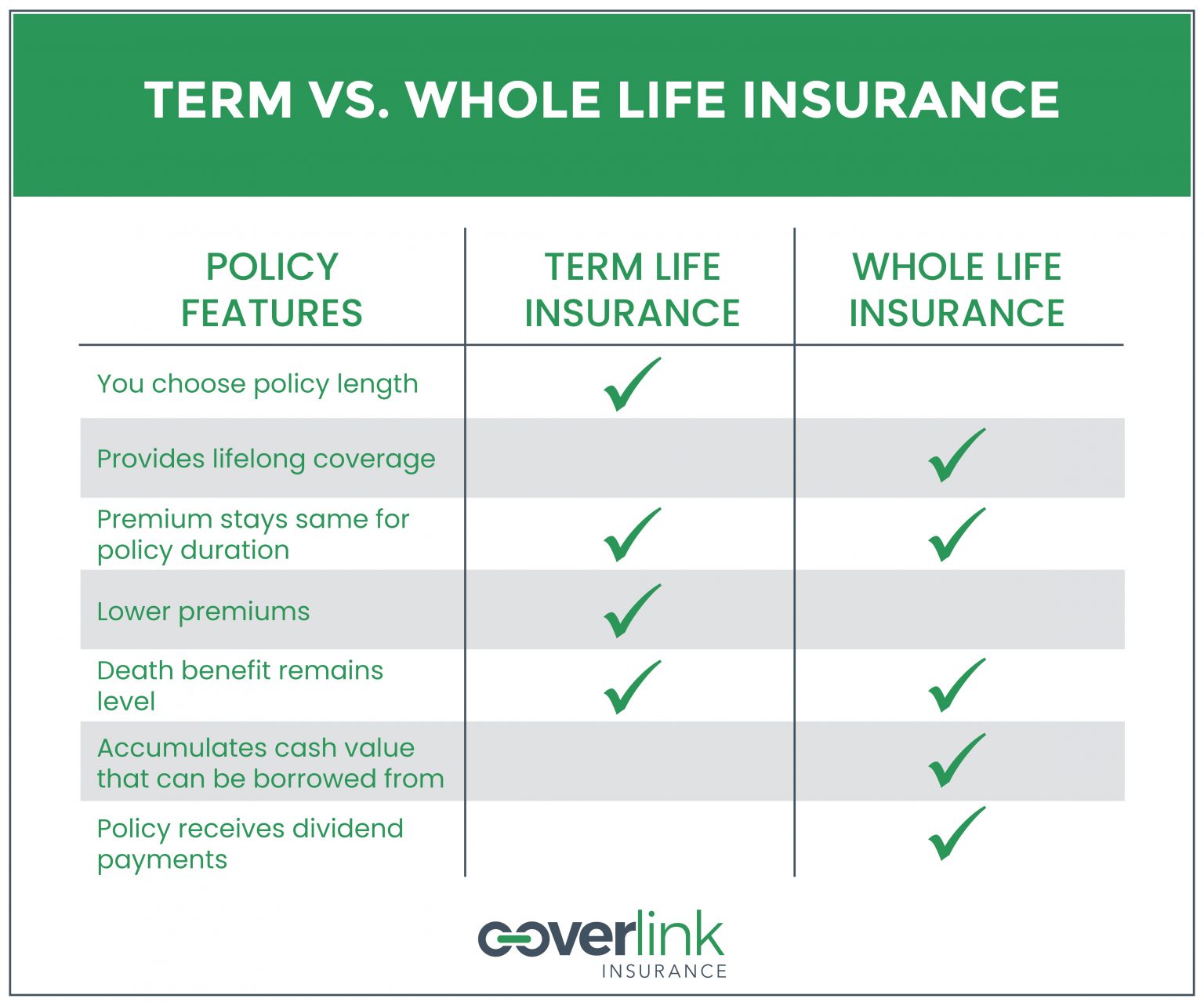
| Feature / Dimension | Term Life Insurance | Whole Life Insurance | Universal Life Insurance (UL / IUL) |
|---|---|---|---|
| Coverage Duration | Specified period (e.g., 10, 20, 30 years) | Entire lifetime (up to age 100 or 121) | Entire lifetime (if properly funded) |
| Premium Structure | Fixed for chosen term; increases upon renewal | Fixed and guaranteed for life | Flexible; can adjust payment amounts and timing |
| Cash Value Component | None | Guaranteed cash value growth with fixed return | Variable/Indexed; growth tied to interest rates or equity indexes |
| Death Benefit | Fixed during term period | Guaranteed fixed amount (can increase via dividends) | Flexible; can adjust death benefit over time |
| Relative Cost | Lowest initial premium | Highest fixed premium | Moderate to high; depends on cash funding |
| Complexity | Simple and straightforward | Moderate (guaranteed tables, potential dividends) | High (requires monitoring cost of insurance and caps/floors) |
| Primary Use Case | Income replacement, mortgage protection, debt payoff | Estate planning, lifelong dependents, stable cash accumulation | Flexible financial planning, wealth transfer, tax-advantaged growth |
Term Life Insurance: Pure Income Protection
Term life insurance provides financial protection for a pre-determined period—typically 10, 15, 20, 25, or 30 years. If the insured passes away during the active term, the insurer pays the full death benefit tax-free to designated beneficiaries. If the policyholder outlives the term, coverage simply ends without a payout or residual value.
- Term Life Mechanics:
- Fixed Premium: Policy Active
- Death During Term: Tax-Free Payout to Beneficiary
- Outlive Term: Coverage Expires (No Payout / Cash)
- Fixed Premium: Policy Active
Key Features of Term Life Insurance
- Level Premiums: Most term policies use level premiums, meaning the monthly or annual premium remains unchanged throughout the policy term.
- No Cash Accumulation: Term life insurance does not feature an investment or savings account. Every dollar paid goes directly toward the cost of insurance and carrier administrative fees.
- Conversion Options: Many policyholders purchase policies with a term conversion rider. This contractual provision allows the policyholder to convert term coverage into permanent life insurance (whole or universal) without undergoing a new medical exam or proving insurability.
Advantages of Term Life Insurance
- Maximum Affordability: Term life delivers the highest death benefit per premium dollar spent. This makes it ideal for young families, primary earners, and individuals with significant mid-term financial liabilities.
- Predictable Financial Planning: Fixed monthly premiums make budgeting simple during critical financial phases, such as raising children or paying down a mortgage.
- Simplicity: The policy contract contains no complex investment sub-accounts, administrative charge deductions, or market participation rates.
Disadvantages of Term Life Insurance
- Expiration Risk: Coverage ends when the term expires. Renewing coverage after the term ends leads to significantly higher premiums based on attained age and updated health status.
- Zero Asset Accumulation: Premiums paid generate no cash value or equity that can be borrowed against or withdrawn later in life.
Whole Life Insurance: Permanent Guarantees and Stability
Whole life insurance is the most traditional form of permanent coverage. It guarantees a fixed death benefit, fixed premium payments, and a guaranteed rate of cash value accumulation for the lifetime of the insured, provided premiums are paid as agreed.
How Whole Life Cash Value Accumulates
When a premium payment is made on a whole life policy, the insurance company splits the payment between administrative overhead, the mortality pool (cost of insurance), and the policy’s cash value account.
- Monthly Premium Paid:
- Insurer Overhead & Administrative Costs
- Mortality Risk Pool (Cost of Insurance)
- Guaranteed Cash Value Accumulation (Generates Tax-Deferred Interest)
The cash value grows tax-deferred at a guaranteed contract rate specified by the insurer. As the cash value builds, the net amount at risk to the insurance carrier decreases.
Participating vs. Non-Participating Whole Life
Whole life insurance policies fall into two main structure types:
- Non-Participating: The policy guarantees basic cash growth and a fixed death benefit, but the policyholder receives no profit shares or performance distributions from the insurer.
- Participating: Offered primarily by mutual insurance companies, participating whole life policies allow policyholders to receive non-guaranteed policy dividends. Policyholders can receive dividends in cash, apply them to reduce future premiums, accumulate interest, or use them to purchase paid-up additions (additional whole life coverage that expands both the death benefit and cash value).
Advantages of Whole Life Insurance
- Unconditional Guarantees: Premiums never increase, the death benefit cannot decrease, and cash value growth follows a guaranteed schedule regardless of broader economic volatility.
- Policy Loan Access: Policyholders can take tax-free loans against accumulated cash value to fund liquidity needs, business capital, or emergency expenses.
- Lifelong Coverage: The policy remains in force for the insured's entire life, ensuring money is left behind for funeral expenses, estate taxes, or family inheritances.
Disadvantages of Whole Life Insurance
- High Cost: Premiums can run five to ten times higher than term life insurance for an equivalent death benefit amount.
- Inflexibility: Policyholders cannot adjust premium payments or decrease the death benefit without altering or surrendering the underlying policy contract.
- Lower Comparative Growth: Guaranteed cash value interest rates tend to yield lower long-term returns than well-diversified equity portfolios.
Universal Life Insurance: Flexible Cash-Value Coverage
Universal life (UL) insurance is a form of permanent coverage designed for maximum flexibility. Unlike whole life's rigid structure, universal life allows policyholders to adjust premium payments, modify the policy death benefit, and leverage different financial mechanisms to grow cash value.
| Guaranteed (GUL) | Indexed (IUL) | Variable (VUL) |
|---|---|---|
| Payout Focus | Index-Linked Growth | Direct Market |
| Fixed No-Lapse Guarantees | Equity Index Cap/Floor Protection | Investment Sub-Accounts |
Main Variations of Universal Life Insurance
1. Guaranteed Universal Life (GUL)
GUL functions like a hybrid between term and whole life insurance. It prioritizes a guaranteed death benefit up to a chosen age (such as age 90, 95, or 121) with fixed premiums. GUL policies generate little to no cash value growth, keeping premiums lower than whole life while ensuring permanent protection.
2. Indexed Universal Life (IUL)
IUL ties cash value growth performance to a financial index, such as the S&P 500 or Nasdaq-100, without directly investing policy funds in the market.
- Caps and Returns: The carrier sets an interest rate cap (maximum return credit, e.g., 8–10%) and an interest rate floor (minimum return credit, typically 0%).
- Downside Protection: If the underlying market index loses value, the floor prevents negative index crediting to the cash value, preserving capital. However, monthly internal insurance charges still apply.
3. Variable Universal Life (VUL)
VUL policies allow policyholders to allocate cash value directly into professionally managed sub-accounts containing equities, bonds, and mutual funds. VUL offers higher growth potential alongside investment loss risks; if sub-account investments underperform, policyholders must pay higher out-of-pocket premiums to keep the policy active.
The Mechanics of Flexible Premiums and Internal Costs
In a universal life policy, premiums paid enter the policy cash value. Each month, the insurance carrier deducts the Cost of Insurance (COI) and administrative fees directly from that cash balance.
As a policyholder ages, the monthly COI increases significantly. If the cash value performance falls short of projections, policyholders must increase out-of-pocket premium payments to cover rising COI charges and prevent the policy from lapsing.
Comparing Term, Whole, and Universal Life
To evaluate which product suits your financial situation, examine how these three insurance models perform across critical criteria:
- Choosing the Right Policy Type:
- Income Protection (Term Life):
- Budget-friendly
- Specific term length
- No cash value
- Permanent Safety (Whole Life):
- Guaranteed growth
- Fixed premiums
- Lifetime protection
- Flexible Wealth (Universal Life):
- Flexible premiums
- Market/Index exposure
- Needs ongoing monitoring
- Income Protection (Term Life):
1. Cost and Budgetary Impact
- Term Life: Delivers high death benefits at a manageable cost, making it an effective choice for debt coverage and family protection.
- Whole Life: Requires substantial financial capacity. Premium commitment is permanent and non-negotiable without risking contract lapses.
- Universal Life: Allows flexibility during lean financial years, as accumulated cash value can pay policy fees. However, underfunding early in the policy life cycle can cause coverage failures later.
2. Financial Goals Beyond Payouts
- Term Life: Best for pure loss protection. Extra capital can be independently invested in tax-advantaged accounts like 401(k)s or IRAs.
- Whole Life: Serves as a conservative asset class, providing stable guarantees unaffected by market downturns.
- Universal Life: Offers tax-advantaged growth, high contribution limits, and flexible strategies for high-net-worth estate planning.
Step-by-Step Framework for Choosing a Policy
Follow this practical roadmap to select the ideal policy structure:
- Step 1: Calculate Coverage Need (DIME Method: Debt, Income, Mortgage, Education)
- Step 2: Determine Required Duration (Temporary vs. Lifelong Need)
- Step 3: Evaluate Investment Priorities (Maxed Out Retirement Accounts?)
- Step 4: Select Policy Structure (Term, Whole Life, or Universal Life)
Step 1: Calculate Your Required Coverage Amount
Use the DIME framework to estimate your total coverage requirement:
- D (Debt): Total short-term obligations and final expenses (credit cards, personal loans, car loans).
- I (Income Replacement): Annual salary multiplied by the number of years your dependents need financial support (typically 7–10 times your annual income).
- M (Mortgage): Remaining balance on your primary residential mortgage.
- E (Education): Expected college tuition and expenses for your children.
Step 2: Establish the Coverage Timeline
Ask yourself a key question: Will this financial obligation disappear over time?
- If YES: Choose Term Life Insurance. If your primary goal is covering a 20-year mortgage or raising toddlers until independence, term coverage aligns with these timelines.
- If NO: Consider Permanent Coverage (Whole or Universal Life). Lifelong needs include supporting a special-needs child, providing liquidity for estate taxes, or funding buy-sell agreements for a business entity.
Step 3: Assess Your Financial Discipline and Retirement Account Limits
Before buying whole or universal life for cash value accumulation, verify whether you are maxing out available tax-advantaged accounts, such as employer 401(k) match programs, Traditional/Roth IRAs, and Health Savings Accounts (HSAs). For most retail investors, standard retirement accounts provide lower fee structures and clearer tax advantages than insurance cash sub-accounts.
Common Pitfalls and Structural Risks
1. Relying on "Buy Term and Invest the Difference" Without Discipline
The strategy of buying low-cost term insurance and investing the saved premium difference works well on paper. However, if you spend the premium savings on consumption rather than investing it, you lose the long-term wealth accumulation benefits of permanent insurance without building an independent investment portfolio.
2. Underfunding Universal Life Policies
Universal life illustrations often project optimistic future interest rates. If actual market performance falls below those projections, the policy's cash growth will fail to offset rising monthly cost-of-insurance charges. Policyholders must regularly review annual statements to confirm the policy remains adequately funded.
3. Misunderstanding Early Cash Value Surrender Charges
Permanent insurance policies charge significant surrender fees during the first 10 to 15 years. Canceling a whole or universal life policy shortly after purchase often results in a total loss of the cash value accumulated early on.
Frequently Asked Questions
Can I convert a term policy to a permanent policy later?
Yes, provided your contract includes a term conversion rider. This feature lets you convert all or part of your term policy into a whole or universal life policy within a set period (such as before age 65) without undergoing a new medical exam or health evaluation.
What happens if I can no longer afford whole life premiums?
If you cannot pay your whole life premiums, you can use built-in non-forfeiture options. You can use accumulated cash value to pay premiums, surrender the policy for net cash value, convert it to a smaller paid-up policy with no further premiums, or switch to extended term coverage.
Is the cash value payout added to the death benefit when I pass away?
Generally, no. On basic whole life and option-A universal life policies, the insurer pays the face-value death benefit to beneficiaries upon death, while the accumulated cash value returns to the insurance company. To pass along cash value, you must purchase specific policy options, such as participating paid-up additions riders or Option B (increasing death benefit) universal policies.
Are life insurance payouts subject to income taxes?
Death benefits paid to named individual beneficiaries are generally tax-free under federal income tax laws. However, if the policy proceeds enter an estate, they may be subject to federal or state estate taxes depending on the estate's overall valuation.
What is the difference between Indexed Universal Life (IUL) and Variable Universal Life (VUL)?
An IUL policy links interest returns to an external market index with caps and floors, protecting your cash value from direct market losses. A VUL policy invests your cash value directly into market sub-accounts, exposing your balance to both market gains and market losses without a guaranteed floor.
Next Steps
- Calculate Your Needs: Use the DIME formula to determine your target death benefit amount.
- Review Existing Accounts: Check your current coverage through work and review your retirement account contributions (401(k), IRA, HSA).
- Compare Quotes: Request quotes for term, whole, and universal life from reputable carriers with top financial ratings (e.g., A.M. Best rating of A or higher).
- Consult a Professional: Speak with a licensed insurance advisor or fee-only financial planner to choose the policy structure that best fits your long-term plan.
Image Gallery