NoSQL Databases Advantages: Why Modern Enterprises Choose Non-Relational Architectures
NoSQL databases offer superior horizontal scalability, flexible schema design, and high-performance processing for unstructured or rapidly changing data. Unlike traditional relational systems, NoSQL architectures allow for seamless dis...
NoSQL databases offer superior horizontal scalability, flexible schema design, and high-performance processing for unstructured or rapidly changing data. Unlike traditional relational systems, NoSQL architectures allow for seamless distributed computing and high availability, making them essential for real-time web applications, big data analytics, and cloud-native microservices in 2026.
Contents
The database landscape has undergone a radical transformation over the last two decades. As we navigate the technological demands of 2026, the reliance on NoSQL (Not Only SQL) systems has shifted from a niche "big tech" requirement to a standard architectural choice for enterprises of all sizes. The primary driver behind this shift is the sheer volume, velocity, and variety of data generated by modern applications, which often outpace the rigid capabilities of traditional Relational Database Management Systems (RDBMS).
The Evolution of Data Management: Moving Beyond the Relational Model
For nearly forty years, the relational model dominated the industry. By organizing data into neat rows and columns and enforcing strict relationships through foreign keys, SQL databases like Oracle, MySQL, and PostgreSQL provided a reliable way to ensure data integrity. However, as the internet grew into a global infrastructure, the limitations of the "one-size-fits-all" relational approach became apparent.
Traditional databases typically scale vertically, meaning that to handle more traffic, you must move the database to a larger, more powerful server. This approach is not only expensive but also has a definitive physical ceiling. Furthermore, the requirement for a fixed schema—where every piece of data must fit into a predefined structure—became a bottleneck for developers working in Agile environments where features and data types change weekly. NoSQL emerged as a response to these constraints, prioritizing distributed growth and developer flexibility over rigid normalization.
Core Advantages of NoSQL Databases
To understand why NoSQL has become a cornerstone of modern software engineering, one must look at the specific operational advantages these systems provide. These benefits are not merely incremental; they represent a fundamental change in how data is stored and retrieved.
Horizontal Scalability (Scaling Out)
The most significant advantage of NoSQL databases is their ability to scale horizontally. Instead of upgrading a single expensive server, NoSQL systems are designed to run on clusters of distributed commodity hardware. By using a process called sharding, the database partitions data across multiple nodes.
In 2026, where global applications must serve millions of concurrent users, the ability to add ten or twenty more nodes to a cluster to handle a traffic spike is invaluable. This "scale-out" architecture ensures that performance remains consistent regardless of data growth. Because NoSQL databases handle load balancing and data distribution internally, organizations can avoid the complex and risky manual sharding processes often required to scale relational databases.
Dynamic Schema and Flexibility
In a relational database, changing the data structure (such as adding a new column) often requires a "migration" that can result in application downtime or significant performance degradation. NoSQL databases, particularly Document Stores like MongoDB, use a schema-less or flexible schema approach.
Data is often stored as JSON or BSON documents, allowing different records within the same collection to have different fields. This flexibility is a massive boon for modern product development. When a team needs to add a new feature—for example, adding social media handles to user profiles—they can simply start saving the new data without refactoring the entire database. This accelerates time-to-market and aligns perfectly with Continuous Integration/Continuous Deployment (CI/CD) pipelines.
High Performance and Low Latency
NoSQL databases are often optimized for specific data models and access patterns. For instance, Key-Value stores like Redis or Memcached are built for extreme speed, often residing entirely in memory to provide sub-millisecond response times.
In a traditional SQL database, retrieving a complex set of data often involves "joining" multiple tables, a process that becomes computationally expensive as the tables grow to millions of rows. NoSQL databases frequently use a "denormalized" approach, where all the data required for a specific query is stored together in a single record. This eliminates the need for expensive joins, resulting in significantly lower latency for read and write operations.
High Availability and Fault Tolerance
Most NoSQL architectures are built with a "shared-nothing" design, meaning there is no single point of failure. Through built-in replication, data is automatically copied across multiple nodes and often across different geographic regions.
If a single server fails in a NoSQL cluster, the system automatically routes requests to a replica. This ensures "always-on" availability, which is a non-negotiable requirement for sectors like e-commerce, healthcare, and financial services in 2026. Many NoSQL systems, such as Apache Cassandra, allow for "Masterless" replication, where any node can handle any request, further enhancing the system's resilience against network partitions or hardware failures.
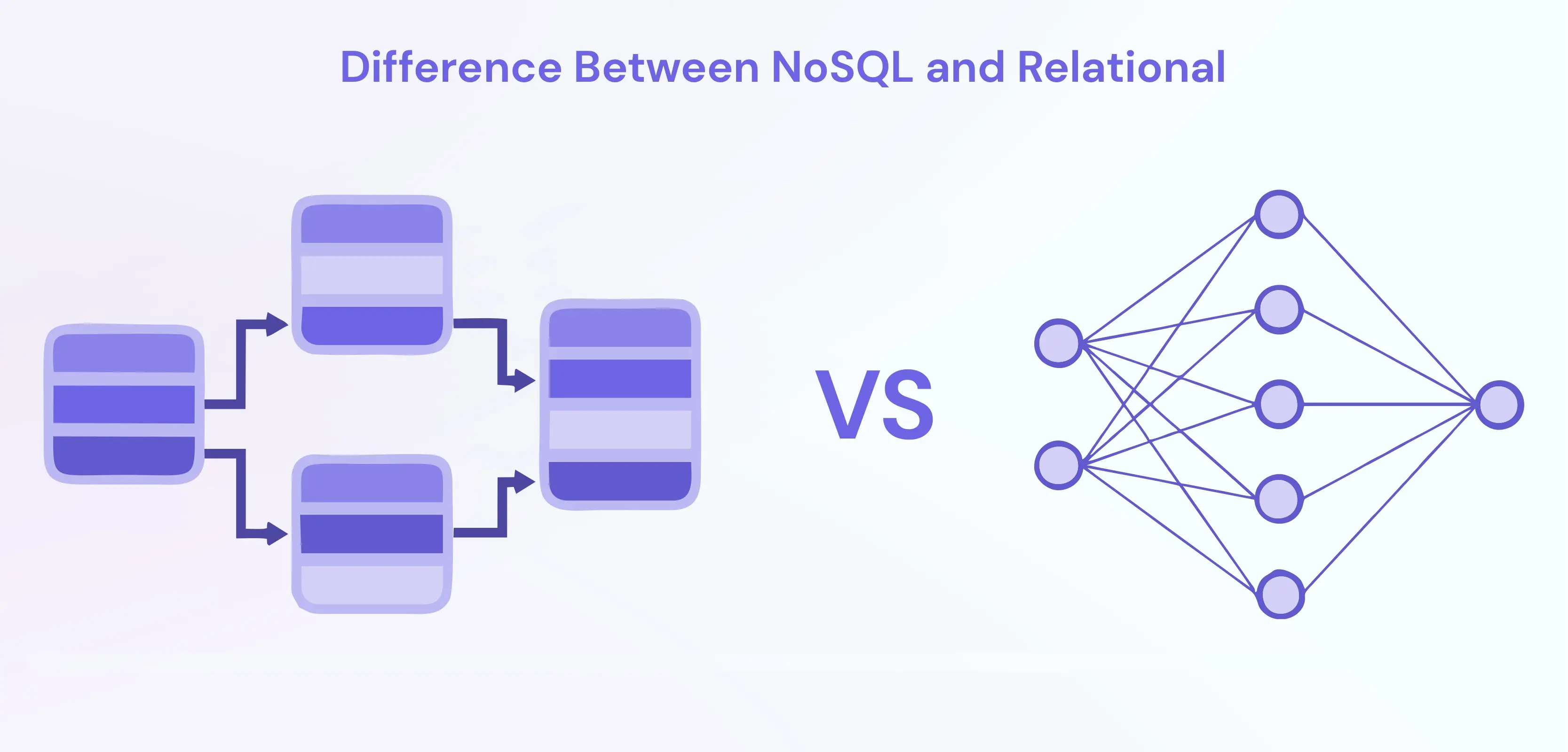
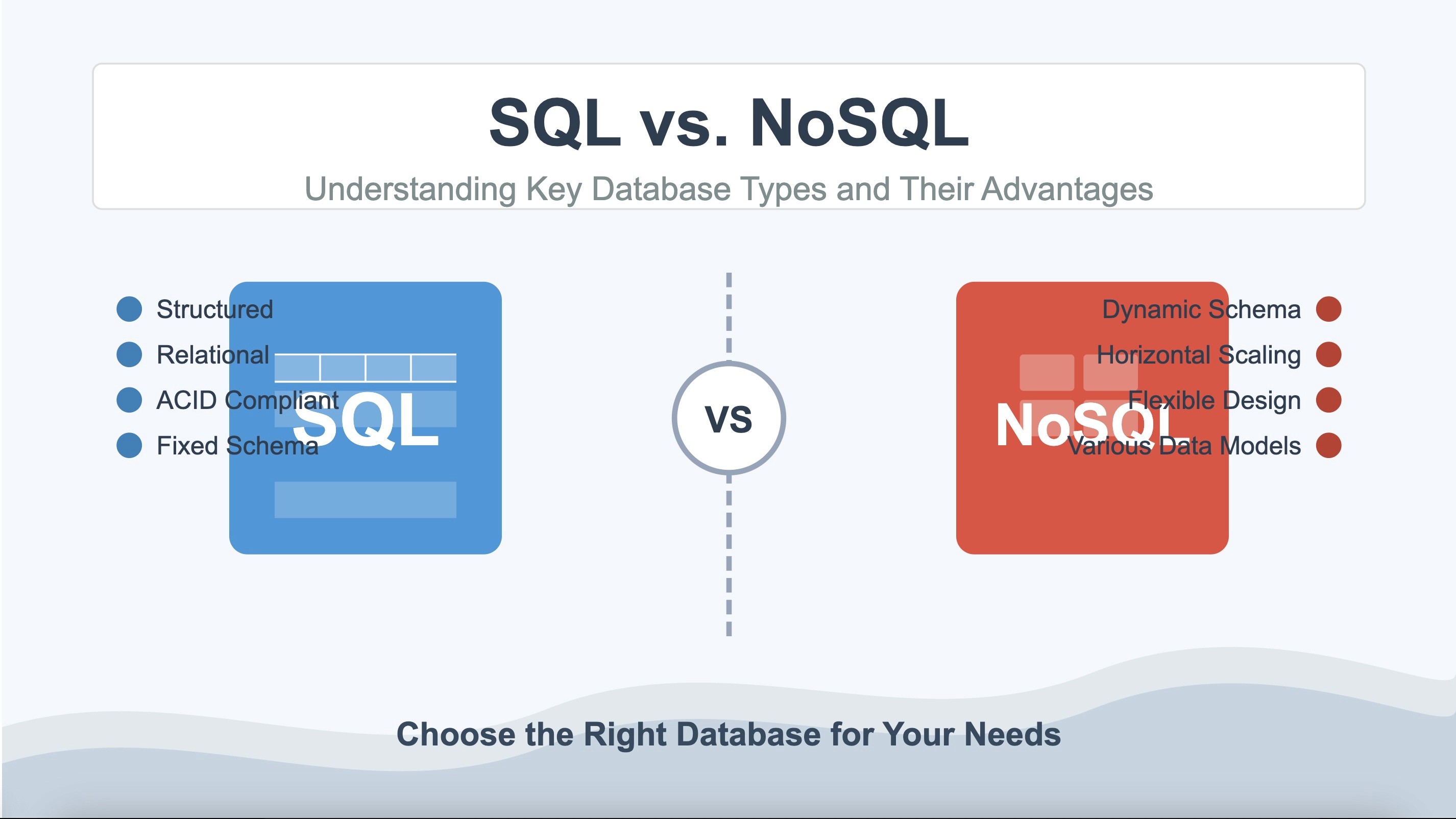
Comparative Analysis: NoSQL vs. Relational (SQL)
Choosing between SQL and NoSQL requires an understanding of the trade-offs involved. The following table highlights the primary differences that influence architectural decisions.
| Feature | Relational (SQL) Databases | NoSQL Databases |
|---|---|---|
| Data Model | Table-based (Rows/Columns) | Document, Key-Value, Graph, Wide-column |
| Schema | Fixed / Predefined | Dynamic / Flexible |
| Scalability | Vertical (Scale Up) | Horizontal (Scale Out) |
| Transactionality | Strong ACID compliance | Base (Eventually Consistent) or Tunable ACID |
| Query Language | Structured Query Language (SQL) | Varies (JSON, Gremlin, CQL, etc.) |
| Best For | Complex joins, Multi-row transactions | Big data, real-time web, unstructured data |
| Hardware | High-end, specialized servers | Distributed commodity hardware clusters |
Strategic Use Cases for NoSQL in 2026
The advantages of NoSQL are best realized when applied to specific types of workloads. While NoSQL can replace SQL in many scenarios, it excels in the following areas:
Real-time Big Data and Analytics
As enterprises process massive streams of data from user interactions, NoSQL systems provide the ingestion speed necessary to capture this information without bottlenecks. Systems like Apache Cassandra are used by organizations to handle petabytes of data that would overwhelm a single relational instance.
Content Management and Personalization
Websites with millions of diverse content types—videos, articles, comments, and user-generated metadata—benefit from the document model. NoSQL allows for the storage of complex, nested data structures in a single document, making it easier to serve personalized content to users based on their unique browsing history and preferences.
Internet of Things (IoT) and Sensor Data
IoT devices generate a constant stream of time-series data. NoSQL databases, specifically wide-column stores, are designed to handle high-frequency writes and can efficiently store the timestamped data points generated by millions of sensors across smart cities or industrial environments.
Artificial Intelligence and Vector Search
In 2026, the integration of AI is ubiquitous. Many NoSQL databases have evolved to include Vector Search capabilities. This allows developers to store "embeddings" (mathematical representations of data) directly within the database, facilitating high-speed similarity searches for recommendation engines, image recognition, and Large Language Model (LLM) memory.
Understanding the Trade-offs: The CAP Theorem
While the advantages are numerous, NoSQL is not a "silver bullet." The CAP Theorem states that a distributed system can only provide two out of three guarantees: Consistency, Availability, and Partition Tolerance.
- Consistency: Every read receives the most recent write.
- Availability: Every request receives a response (even if it's not the latest data).
- Partition Tolerance: The system continues to operate despite network failures.
Because a distributed system must have partition tolerance to survive in a cloud environment, NoSQL databases usually force a choice between Consistency and Availability. Many NoSQL systems opt for Eventual Consistency, where data is updated across all nodes over a few milliseconds rather than instantly. For applications like social media "likes," this is acceptable. For a bank transfer, it is not. However, many modern NoSQL databases in 2026 now offer "tunable consistency," allowing developers to choose the level of rigor required for each specific operation.
Selecting the Right NoSQL Type for Your Project
Not all NoSQL databases are created equal. They are generally categorized into four main types, each with its own specific advantages:
- Document Databases (e.g., MongoDB, Couchbase): Best for general-purpose web apps, content management, and data that mimics JSON structures.
- Key-Value Stores (e.g., Redis, Amazon DynamoDB): Best for session management, caching, and simple lookups where speed is the absolute priority.
- Wide-Column Stores (e.g., Cassandra, ScyllaDB): Best for large-scale data storage where write performance is critical and schemas are relatively stable.
- Graph Databases (e.g., Neo4j, ArangoDB): Best for social networks, fraud detection, and recommendation engines where the relationships between data points are as important as the data itself.
Frequently Asked Questions
Is NoSQL better than SQL?
NoSQL is not inherently "better" than SQL; it is optimized for different goals. SQL is superior for complex, multi-table joins and applications requiring strict data integrity (ACID compliance), such as accounting systems. NoSQL is superior for high-scale, flexible-schema, and distributed environments.
Does NoSQL support ACID transactions?
In the early days, most NoSQL databases lacked ACID (Atomicity, Consistency, Isolation, Durability) support. However, as of 2026, major NoSQL platforms like MongoDB and Amazon DynamoDB support multi-document ACID transactions, bridging the gap for developers who need both scale and reliability.
What is the biggest disadvantage of NoSQL?
The primary disadvantage is the lack of a standardized query language across all systems. While SQL is universal for relational databases, each NoSQL database often has its own unique API or query language (though many are adopting SQL-like interfaces). Additionally, developers must often design their data models based on specific query patterns rather than general normalization.
Can I use both SQL and NoSQL together?
Yes, this is known as Polyglot Persistence. Most modern enterprise architectures use a relational database for core transactional data (like billing) and a NoSQL database for high-volume traffic, session data, or real-time analytics.
Final Recommendation
When evaluating NoSQL databases in 2026, start by analyzing your access patterns. If your data structure is unpredictable or if you anticipate needing to scale rapidly across multiple geographic regions, NoSQL is likely the correct choice. For teams building microservices or AI-driven applications, the flexibility and horizontal scaling of a document store or vector-enabled NoSQL database will provide the most significant long-term competitive advantage. Begin with a pilot project using a managed cloud service to minimize operational overhead while you assess the performance gains.
Image Gallery