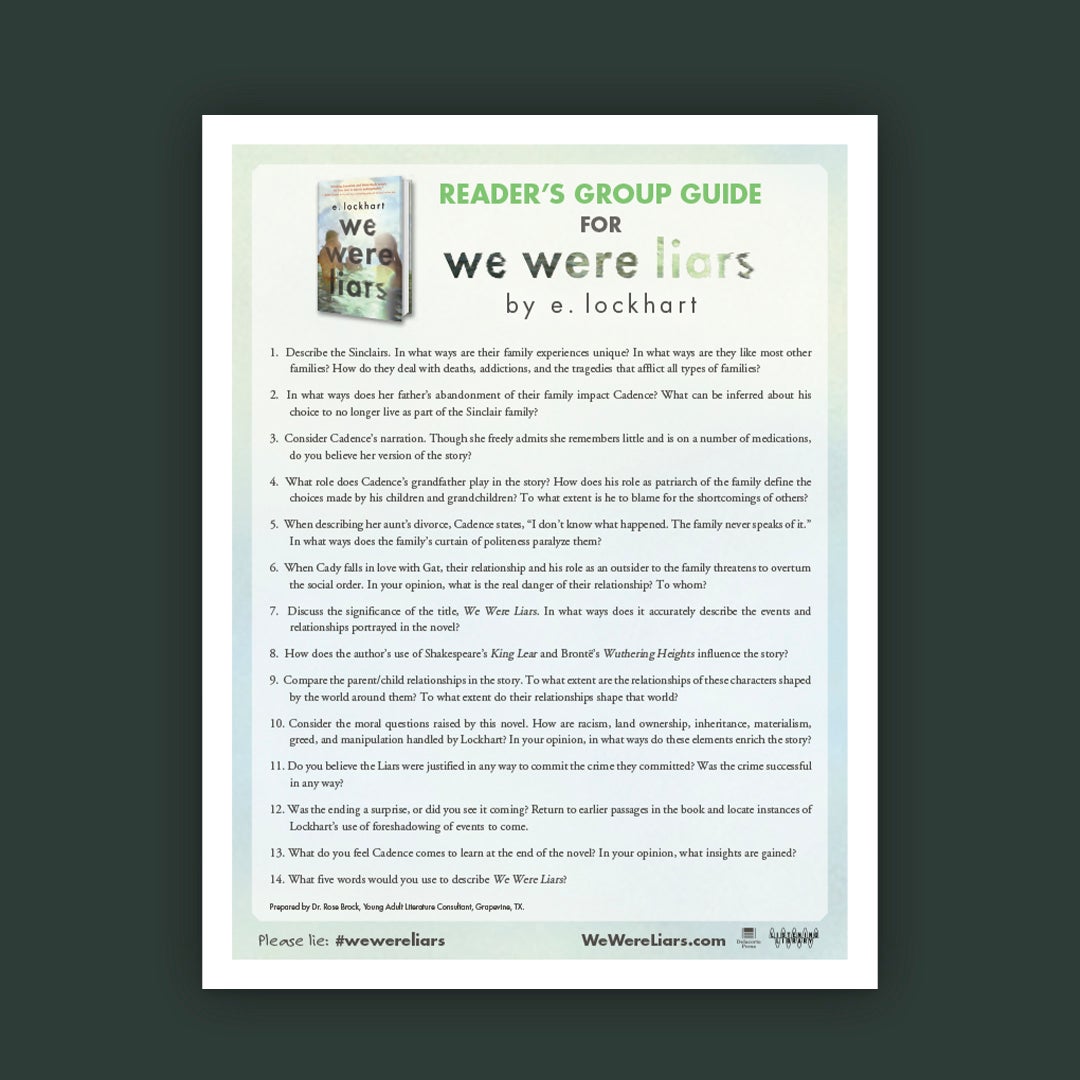
We Were Liars: Shifting Labels and the Ongoing Debate
The shifting labels of E. Lockhart’s We Were Liars refer to its transition from a standard young adult (YA) mystery to a definitive case study in psychological suspense and social critique. The ongoing debate centers on the narrative e...
The shifting labels of E. Lockhart’s We Were Liars refer to its transition from a standard young adult (YA) mystery to a definitive case study in psychological suspense and social critique. The ongoing debate centers on the narrative ethics of its famous twist ending and whether its portrayal of extreme privilege serves as a genuine subversion or a romanticization of wealth.
Contents
Released originally in 2014, We Were Liars has maintained an unusual longevity in the literary zeitgeist, reaching a fever pitch during the social media resurgence of the early 2020s. As we look at the landscape in 2026, the book is no longer just a "summer read"; it is a foundational text for discussing unreliable narration, the "trauma-core" aesthetic in marketing, and the evolving ethics of spoiler-based promotion.
The Evolution of Genre Labels: From Contemporary to Gothic Suspense
When We Were Liars first hit the shelves, it was largely categorized under the broad umbrella of YA Contemporary Mystery. However, as the readership matured and literary criticism caught up with the nuance of the text, the labels began to shift. By 2026, it is frequently categorized as Modern American Gothic.
The Gothic label stems from the Sinclair family’s private island, Beechwood, which functions as a haunted manor in everything but name. The isolation, the decaying moral fiber of the patriarch, and the presence of "ghosts"—both literal and metaphorical—align the book more closely with the works of Shirley Jackson than with typical teen beach reads. This shift in labeling is significant because it changes the reader's expectations. A "contemporary mystery" suggests a puzzle to be solved, whereas "Gothic suspense" prepares the reader for an exploration of atmospheric dread and inherited trauma.
Furthermore, the book has been retroactively labeled as Prestige YA. This term, which gained traction in the mid-2020s, describes young adult literature that prioritizes experimental prose, heavy symbolism, and darker, more complex thematic resolutions over the standard "happily ever after" or clear moral lessons. E. Lockhart’s use of short, staccato sentences and vivid, surreal metaphors (such as the protagonist’s heart literally bleeding on the floor) solidified this status.
The "BookTok" Effect and the Marketing of Emotion
The most significant shift in the book's labeling occurred not through traditional critics, but through the grassroots categorization of social media. In the early 2020s, We Were Liars became the face of "books that will make you sob." This shifted the marketing label from plot-driven to emotion-driven.
This emotional labeling created a unique paradox. For years, the primary marketing hook was the command: "If anyone asks you how it ends, just LIE." This turned the ending—the twist—into the product itself. In 2026, the ongoing debate regarding this marketing strategy asks whether labeling a book as a "twist book" inherently ruins the experience. When a reader enters a story primarily looking for the "gotcha" moment, the thematic depth—such as the critique of the Sinclair family’s racism and classism—often takes a backseat to the mechanical shock of the revelation.
The Ongoing Debate: The Ethics of the Twist
The central debate surrounding We Were Liars remains its ending. Without revealing the specific mechanics for those few who remain uninitiated, the controversy involves the intersection of mental health and narrative reliability.
Critics of the novel argue that the twist relies on memory loss as a plot device, which some view as a tired trope that can marginalize actual survivors of traumatic brain injuries or PTSD. The debate focuses on whether the narrative "tricks" the reader in a way that feels earned through foreshadowing or if it uses trauma as a convenient rug-pull to generate viral conversation.
On the other side of the debate, proponents argue that the twist is the only logical conclusion for a story about the crushing weight of family expectations. In this view, the ending is not a gimmick but a literal manifestation of the protagonist's inability to process grief and guilt. In 2026, many literary scholars point to the 2022 prequel, Family of Liars, as evidence that Lockhart was playing a "long game" with the Sinclair family's history, proving that the labels of "shock value" were perhaps too reductive.
Analyzing the Sinclair Family: Privilege or Critique?
A major pillar of the ongoing debate concerns the depiction of the Sinclair family. The Sinclairs are wealthy, white, and obsessed with maintaining a façade of perfection. They are "democrats," "tall," and "athletic," but beneath the surface, they are fractured by greed and an inability to acknowledge their own shortcomings.
The Problem of Glamorization
Some readers argue that the book’s lush descriptions of private islands, ivory-colored clothes, and old-money aesthetics inadvertently glamorize the very people it seeks to criticize. The label of "Wealth Porn" has been occasionally applied to the first half of the book. The concern is that the aesthetic appeal of the "Liars" (Cadence, Johnny, Mirren, and Gat) overshadows the systemic issues the book tries to address.
The Subversive Narrative
Conversely, many readers see the book as a biting critique of WASp culture (White Anglo-Saxon Protestant). Gat, the one outsider in the group who is of South Asian descent, serves as the narrative’s moral compass and the catalyst for the Sinclair's internal collapse. The debate often centers on whether Gat is a fully realized character or merely a "sacrificial lamb" used to highlight the Sinclairs' racism. In 2026, modern readings of the text frequently focus on Gat’s dialogue as the most enduring and relevant part of the novel, as he explicitly challenges the "shifting labels" the Sinclairs use to hide their true nature.
Comparison of Key Elements: We Were Liars vs. Family of Liars
The release of the prequel changed how the original book is perceived. Below is a comparison of how the "labels" and "debates" shifted between the two works.
| Feature | We Were Liars (Original) | Family of Liars (Prequel) |
|---|---|---|
| Primary Label | Psychological Thriller / Mystery | Tragedy / Generational Drama |
| Core Theme | Personal guilt and grief | Inherited trauma and family secrets |
| Narrator Reliability | High level of unreliability | Mostly reliable but biased |
| The "Twist" Factor | High (Shocking Revelation) | Low (Contextual Revelation) |
| Representation Focus | Socio-economic class and race | Gender roles and systemic silence |
| Primary Debate | Validity of the ending | Effectiveness of humanizing the "villains" |
The Role of Modern Content Labels
As of 2026, the debate over "shifting labels" has moved into the realm of Content Warnings (CW). We Were Liars is often at the center of discussions regarding how much a publisher should reveal on the back cover.
Because the book deals with themes of fire, death, and severe psychological distress, there is a tension between protecting the reader's mental health and preserving the "spoiler" that the marketing relies on. The ongoing debate asks: does a content label like "death of a minor" or "graphic fire imagery" constitute a spoiler? Or is it a necessary safety requirement in modern publishing? This has led to the book being a frequent example in library science courses regarding the ethics of labeling in the YA sector.
Literary Significance in 2026
Why does the debate persist? We Were Liars is one of the few YA novels from the 2010s that has successfully transitioned into a permanent fixture of high school and university curricula. Its use of intertextuality—referencing fairy tales, King Lear, and Wuthering Heights—allows for layers of academic study that transcend its initial "beach read" label.
The debate is also fueled by the book's structure. Lockhart uses a "five-act" structure that mimics classical tragedy. By labeling the characters "The Liars," she invites the reader to distrust them from page one, yet the emotional resonance of their bond often causes readers to forget that warning. This tension between what the book is (a tragedy about the consequences of greed) and what it presents as (a teenage romance) is the engine that keeps the conversation alive.
Common Misconceptions and Clarifications
Despite its popularity, several misconceptions continue to haunt the discourse around the book. Resolving these is essential for any nuanced debate.
- Is it based on a true story? No. While it draws on common themes of old-money New England families, the events on Beechwood Island are entirely fictional.
- Is the "twist" guessable? This is a point of pride for many readers. While there is significant foreshadowing (especially regarding the dogs and the use of the basement), the "shifting labels" of the genre often distract readers from the clues.
- Is it a horror novel? While it contains elements of horror, it is officially classified as a psychological thriller. However, the label of "Gothic" is increasingly accepted in 2026.
FAQs: Addressing the Shifting Discourse
Why did the book become popular again years after its release?
The resurgence was primarily due to the "BookTok" community on TikTok, which prioritized emotional reactions and "aesthetic" reading. We Were Liars fit the "sad girl aesthetic" perfectly, leading to a new generation of readers who approached the book through a lens of emotional catharsis rather than just mystery-solving.
Does the book have a definitive moral?
The moral is often debated, but the most common interpretation is that "silence is the greatest lie." The Sinclair family's refusal to speak about uncomfortable truths—race, money, or death—is ultimately what leads to their destruction.
How does the prequel, Family of Liars, change the original story?
The prequel shifts the labels of the adults in the original book. In We Were Liars, the aunts and the grandfather are seen as antagonists or obstacles. Family of Liars provides the context of their own trauma, making the "ongoing debate" about the Sinclair family even more complex by adding layers of generational cycles.
Is the unreliable narrator trope handled well?
This is subjective. Supporters point to the physical and psychological symptoms Cadence exhibits as fair warning to the reader. Critics argue that the narrative withholding is too extreme, bordering on a "cheat" rather than a stylistic choice.
What is the significance of the "Liars" label?
The group calls themselves "The Liars" as a form of rebellion against their family’s polished image. However, the debate arises from whether they are lying to the world, to their family, or—most importantly—to themselves.
Future Outlook: The Legend of Beechwood
As we move further into the late 2020s, We Were Liars is likely to remain a controversial and highly analyzed text. Its ability to shift labels—from a simple mystery to a complex social critique—is a testament to its depth. Whether you view the ending as a brilliant subversion or a manipulative trope, the book's impact on the YA genre is undeniable.
For those looking to engage with the text today, the best approach is to look beyond the "twist" marketing. Focus on the prose, the critique of American aristocracy, and the way the island of Beechwood serves as a microcosm for the crumbling of the "American Dream." The debate may never be fully resolved, but that is precisely why the book remains a staple of modern literature.
Image Gallery