How Marriott’s TV Rollout Reshapes Guest Experience Across Properties
Marriott’s broad deployment of modernized guest room entertainment platforms—featuring native streaming app integrations, secure QR-code casting, and interactive service portals—fundamentally transforms the in-room guest experience. By...
Marriott’s broad deployment of modernized guest room entertainment platforms—featuring native streaming app integrations, secure QR-code casting, and interactive service portals—fundamentally transforms the in-room guest experience. By allowing travelers to securely stream personal content and access hotel services directly from the in-room television, Marriott eliminates digital friction and elevates overall satisfaction scores.
Contents
The Evolution of In-Room Entertainment: From Cable to Connected Screens
For decades, hotel room televisions were treated as static appliances. Hoteliers relied on linear cable channels and high-margin, pay-per-view video-on-demand (VOD) systems to deliver content. However, as consumer behavior shifted dramatically toward on-demand streaming services, the traditional hotel media model became obsolete. Guests routinely expressed frustration with limited channel selections, complex remote controls, and the inability to access their personal streaming accounts.
Recognizing this operational mismatch, Marriott International pioneered a fundamental rethink of in-room entertainment (IRE). Becoming the first major hotel enterprise to integrate native streaming applications like Netflix directly into its Guest Entertainment System (GES), Marriott set off an industry-wide transition toward modern connected rooms.
Over subsequent technology refresh cycles, the strategy evolved beyond pre-installed native applications. Modern travelers carry multiple personal devices—smartphones, tablets, and laptops—and expect instant continuity between their mobile subscriptions and the guest room display. To bridge this gap, Marriott expanded its television architecture to support enterprise-grade screen casting technologies, including Google Chromecast for Hospitality and Apple AirPlay for Hotels, integrated alongside property management software.
- Legacy Coax & VOD (Cable / Pay-Per-View)
- Native App Integrations (Pre-installed Netflix)
- Secure Dynamic QR Code Casting
Key Technological Pillars of the Marriott TV Infrastructure
Modernizing television displays across a global footprint of over 30 distinct brand portfolios—ranging from select-service locations like Courtyard and Fairfield to luxury properties like the St. Regis and The Ritz-Carlton—requires a scalable, modular hardware and software stack. Marriott’s modern TV ecosystem relies on four interconnected operational components:
1. Interactive Guest Entertainment System (GES)
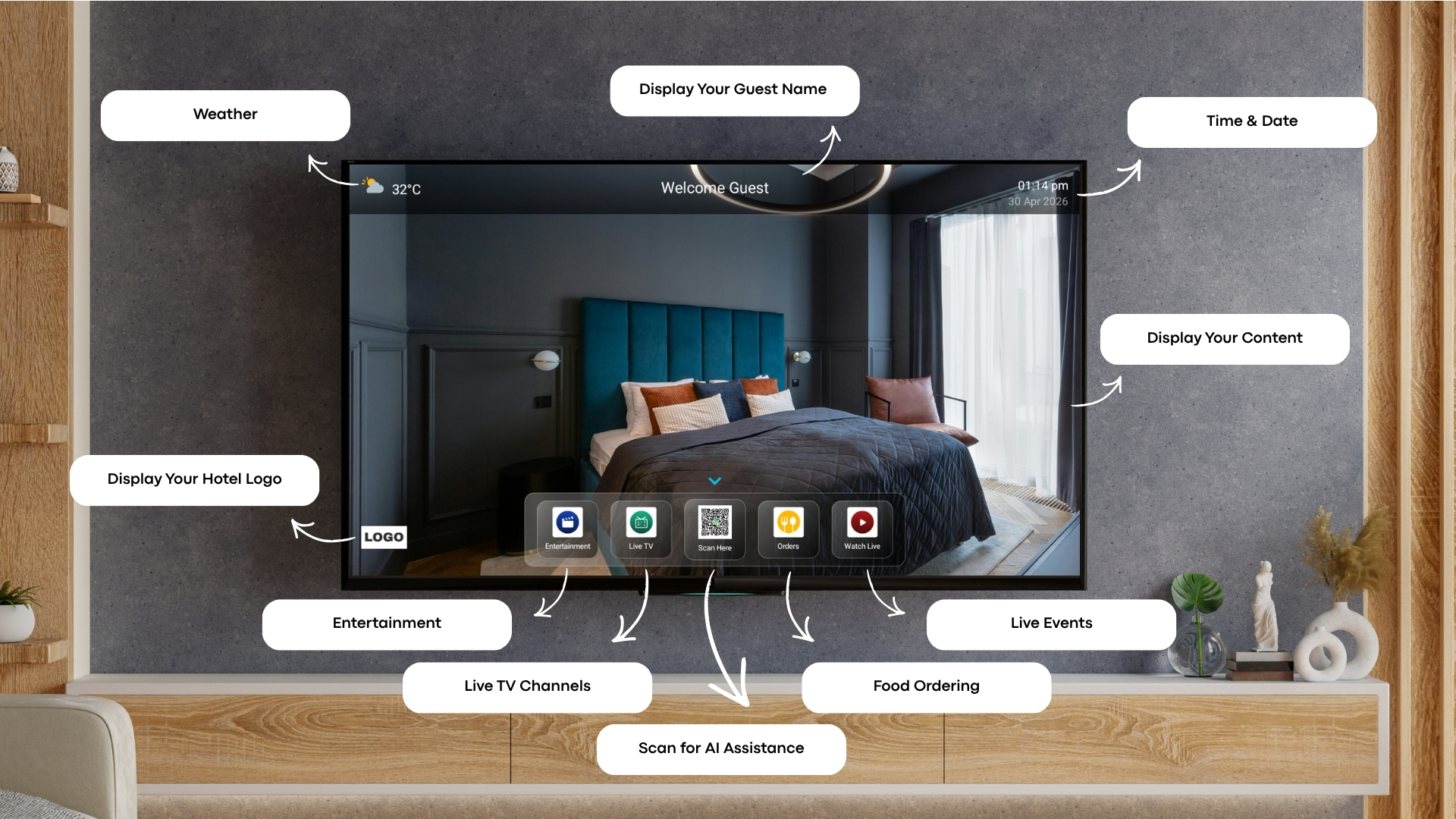
The customized operational interface serves as the primary digital touchpoint when a guest turns on the television. Rather than displaying a generic feed, the system displays a branded welcome screen linked to the hotel’s Property Management System (PMS).
- Personalized Greetings: Displays the primary guest's name and loyalty status upon arrival.
- On-Demand Hotel Services: Provides digital menus for room service, spa appointments, housekeeping requests, and express checkout.
- Property Information: Features curated digital guides detailing local attraction listings, pool hours, and fitness center capabilities.
2. Secure Mobile-to-TV Casting
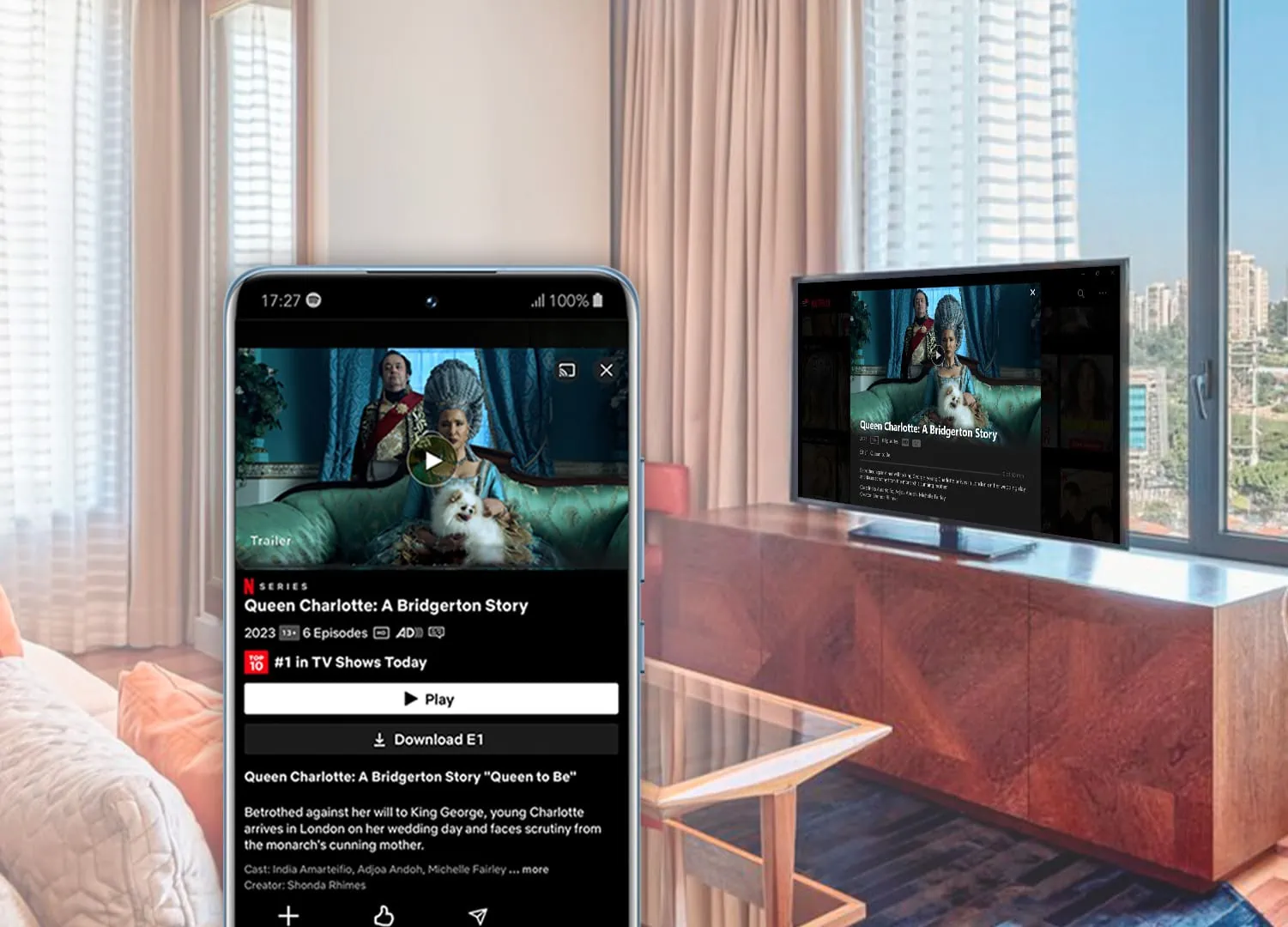
While native applications built into smart TVs allow guests to sign in using on-screen keyboards, casting technologies offer a faster, more secure alternative. Guests scan a unique dynamic QR code displayed on the room screen, creating a encrypted point-to-point connection between their personal device and the TV.
- No Manual Authentication: Guests do not need to type sensitive passwords into shared television hardware using an infrared remote control.
- Session Isolation: Personal media streams directly from the mobile application (e.g., Netflix, Max, Disney+, Spotify, YouTube) while leaving non-media data private.
- Universal Ecosystem Support: Supports both Android and iOS operating systems via native casting protocols without requiring custom third-party application downloads.
3. Deep Integration with Marriott Bonvoy
The in-room television acts as an active extension of the Marriott Bonvoy mobile ecosystem. Guests can view their current point balances, examine pending folio charges, and explore exclusive member benefits directly from the screen. In advanced installations, guests can synchronize their mobile key and app preferences with the television interface to maintain a cohesive environment throughout their stay.
4. Commercial Display Hardware & Specialized Middleware
Residential televisions cannot handle the rigorous operating demands, security vulnerabilities, or centralized management needs of a commercial hospitality network. Marriott partners with display manufacturers such as LG Electronics and Samsung to deploy commercial-grade smart displays. These displays run specialized middleware engines developed by technology integrators such as Enseo, SONIFI Solutions, and WorldVue.
- Pro:Idiom Encryption: Protects high-definition digital content signals against unauthorized interception or recording across shared coax or Ethernet networks.
- Centralized Content Management Systems (CMS): Enables property managers to push global updates, emergency notices, or tailored promotional messages across hundreds of room screens instantly.
Technical Comparison of Hospitality In-Room Architectures
The operational capabilities, guest setup requirements, and security controls of modern hospitality TV deployments differ significantly from legacy television installations.
| Feature / Architecture Metric | Legacy Linear Cable / Coax | Native App Smart TV Systems | Secure Dynamic QR-Casting | Full Connected Room Hub (IoT/PMS) |
|---|---|---|---|---|
| Guest Authentication Effort | None (Channel surfing only) | High (Manual keyboard input) | Low (Single QR scan via mobile) | Automated via Mobile App / PMS |
| Data Privacy & Credential Risk | N/A (No user credentials) | Moderate (Requires auto-wipe on checkout) | High (Zero credentials stored on TV) | High (Encrypted token authentication) |
| Bandwidth Requirements | Minimal / RF Distribution | High per display (Independent app streams) | Moderate (Optimized local streaming) | High (Dynamic concurrent sessions) |
| PMS Integration Capability | None | Limited (Basic guest greeting) | Operational (Pairing tied to room network) | Deep (Folio, guest services, ambient room control) |
| Hardware / Infrastructure | Coaxial RG-6 distribution | Smart TV + Dedicated High-Speed Internet | Commercial Display + Casting Bridge | Smart Commercial Display + IoT Gateway |
Privacy, Data Security, and Automatic Account Sanitization
Providing personal streaming access on shared in-room equipment introduces potential data security risks. If a guest remains logged into an account upon checkout, subsequent occupants could access private view histories, personal profiles, or linked payment methods.
To mitigate these operational and legal liabilities, Marriott’s enterprise platform incorporates strict data sanitization protocols:
Session Sanitization via PMS Triggers
The television system is directly tied to the hotel’s central PMS database. The moment a guest completes the checkout process—whether at the front desk, through the Marriott Bonvoy app, or directly on the room TV screen—the system issues an automated hard-reset signal to the assigned room gateway.
- Credential Purging: All cached login tokens, application cookies, and local storage data stored during native application sessions are immediately cleared.
- Pairing Disconnection: Active casting bridges and Bluetooth pairing bonds are severed instantly to prevent cross-room access.
Isolated Virtual Local Area Networks (VLANs)
A primary challenge of consumer-grade Wi-Fi network design in hotels is preventing cross-device visibility. On unmanaged networks, a user in room 204 could accidentally cast video content to the television in room 205.
Marriott’s network standards enforce Private VLAN Assignment (or access point-level client isolation). When a guest connects to the hotel Wi-Fi, their personal device and their specific room's display hardware are segregated into a private micro-network. Devices outside this micro-network cannot detect or communicate with the room’s hardware.
- Isolated Per-Room VLAN Architecture
- Guest Smartphone to Private Micro-VLAN to Room TV Display
- Network Isolation Boundary
- Room 102 Smartphone (Cannot detect or interact with Room 101)
Operational and Financial Impact for Hotel Franchisees
While interactive TV rollouts deliver immediate experiential benefits to travelers, property managers and franchise owners must evaluate hardware expenditures, infrastructure upgrades, and operational return on investment (ROI).
Infrastructure Prerequisites
Upgrading an existing property to support Marriott's contemporary TV platform requires several foundational network upgrades:
- High-Density Wi-Fi Infrastructure: Properties must maintain robust Wi-Fi coverage across all guest rooms, utilizing enterprise Access Points (APs) capable of managing high concurrent device densities and bandwidth-heavy video streams.
- Structured Ethernet Cabling: Legacy coaxial cabling must frequently be supplemented or replaced with Category 6 (Cat6) cabling to feed dedicated gigabit bandwidth directly to smart displays or external set-back boxes (SBBs).
- High-Speed Internet Access (HSIA) Circuits: Property-wide Internet bandwidth must scale dynamically to prevent buffering during peak utilization hours (typically 7:00 PM to 11:00 PM).
Financial Drivers and ROI
- Direct Cost Reduction: Replacing traditional linear video subscriptions with hybrid casting architectures reduces per-room monthly programming fees charged by legacy cable distributors.
- Increased Guest Satisfaction Scores (GSS): In-room entertainment functionality correlates strongly with overall guest satisfaction metrics. Higher GSS scores directly influence brand ranking, repeat booking rates, and regional occupancy premiums.
- In-Room Revenue Generation: Digital room service ordering and interactive amenity marketing on the primary TV screen increase average guest spend on food, beverage, spa services, and late checkout upgrades.
Common Technical Challenges and Troubleshooting Protocols
Despite systematic enterprise standards, hospitality TV deployments encounter occasional operational hurdles. Understanding common failure modes helps hotel staff and technical teams resolve issues efficiently.
1. Bandwidth Throttling and Video Buffering
- Symptom: Pixelated video feeds, extended buffering loops, or dropped casting connections during peak evening hours.
- Root Cause: Inadequate HSIA pipe sizing or poorly configured Quality of Service (QoS) rules on the local router gateway.
- Resolution: Network administrators implement dynamic bandwidth allocation rules that prioritize real-time casting traffic over background software updates or non-latency-sensitive downloads.
2. QR Code Pairing Failures
- Symptom: Scanning the TV's dynamic pairing code fails to establish a streaming link between the guest's mobile device and the screen.
- Root Cause: The guest’s mobile device is connected to a cellular network instead of the designated hotel Wi-Fi, breaking the local network handshake required for private VLAN communication.
- Resolution: The interactive interface prompts the guest to verify that their smartphone is connected to the property's primary guest Wi-Fi network before re-attempting the QR scan.
3. DRM Content Blackouts
- Symptom: Audio plays correctly through the room television, but the video screen remains black.
- Root Cause: Digital Rights Management (DRM) mismatches or broken High-bandwidth Digital Content Protection (HDCP) handshakes over HDMI connections between set-back boxes and commercial displays.
- Resolution: Technical teams verify HDMI cabling compliance and ensure midband encoders maintain updated Pro:Idiom or HDCP security firmware.
Frequently Asked Questions
How does streaming work on modern Marriott hotel TVs?
Guests can stream content using either native smart TV applications or secure wireless casting. To cast content, guests connect their smartphone or tablet to the hotel's Wi-Fi network, scan the dynamic QR code on the TV screen, and press the cast icon within supported mobile streaming applications like Netflix, YouTube, or Max.
Are guest streaming credentials saved on the room television?
No. When using QR-code casting protocols like Apple AirPlay or Google Chromecast, no account credentials or passwords are ever transferred to or stored on the hotel television. For native TV applications requiring a direct login, the system automatically purges all stored credentials, tokens, and browser data upon checkout through Property Management System integration.
Can guests use Apple AirPlay on Marriott TVs?
Yes. Many modern Marriott properties support native Apple AirPlay for Hotels on compatible commercial LG smart displays. Guests scan a unique QR code displayed on their room TV screen to securely share content from their iPhone or iPad without installing additional applications.
What happens if a guest forgets to log out of a native streaming application?
The hotel's Guest Entertainment System automatically triggers a complete system wipe when the front desk checks out the reservation. The PMS sends an automated sanitization command to the room's gateway, resetting the television software to its default state before the next guest enters the room.
Why do some Marriott locations have different TV interfaces?
Marriott International oversees a diverse portfolio ranging from select-service brands to ultra-luxury properties, along with independent hotel collections. While core technology standards apply across the network, specific user interface designs, feature availability, and hardware generations vary based on property renovation cycles, brand specifications, and franchisee technology refresh schedules.
Recommendations for Hoteliers and Travelers
Practical Steps for Hotel Developers and Operators
- Audit Infrastructure Early: Ensure that structured Ethernet cabling and high-density Wi-Fi AP deployment are completed prior to ordering smart display hardware.
- Prioritize Network Security: Enforce client isolation and micro-VLAN segmentation across all guest Wi-Fi access gateways to maintain guest privacy.
- Establish Automated Maintenance: Regularly verify that automated PMS checkout triggers effectively wipe cached application credentials across all room displays.
Best Practices for Hotel Guests
- Connect to Hotel Wi-Fi First: Verify that your mobile device is connected to the property's official guest Wi-Fi network before attempting to cast media.
- Use QR Code Casting: Opt for QR-code screen casting instead of typing personal account passwords directly into smart TV interfaces using an infrared remote control.
- Verify Checkout Status: Check out via the Marriott Bonvoy app or front desk upon departure to ensure immediate automated clearing of your in-room preferences and active sessions.
Image Gallery