Laser Eye Surgery in Pittsburgh for Better Vision: Options, Technology, and What to Expect
Pittsburgh residents seeking to reduce or eliminate their dependence on glasses and contact lenses have access to several advanced refractive surgery centers. Whether you are dealing with nearsightedness, farsightedness, or astigmatism...
Pittsburgh residents seeking to reduce or eliminate their dependence on glasses and contact lenses have access to several advanced refractive surgery centers. Whether you are dealing with nearsightedness, farsightedness, or astigmatism, modern technological advancements have made laser eye surgery safer, more precise, and more accessible than ever before. Understanding the types of procedures available, candidate requirements, local care standards, and financial considerations will help you navigate your journey toward achieving clearer, unhindered vision.
Contents
Understanding Laser Vision Correction in Pittsburgh
Laser eye surgery encompasses a variety of outpatient procedures designed to reshape the cornea—the clear, dome-shaped front surface of your eye—so that light traveling through it is properly focused onto the retina. When the cornea is misshapen, light bends incorrectly, resulting in refractive errors such as myopia (nearsightedness), hyperopia (farsightedness), and astigmatism.
In the Greater Pittsburgh area, patients can choose from comprehensive ophthalmology clinics and specialized refractive surgery centers equipped with state-of-the-art diagnostic and surgical platforms. Modern advancements utilize femtosecond lasers and excimer lasers to create ultra-precise corneal flaps or reshape tissue with microscopic accuracy. These technologies minimize patient discomfort, shorten recovery times, and optimize visual outcomes compared to historical techniques.
Primary Types of Laser Eye Procedures
Different corneal structures, lifestyle demands, and vision prescriptions require distinct surgical approaches. Clinics in Pittsburgh typically evaluate patients for several core laser vision correction procedures.
LASIK (Laser-Assisted In Situ Keratomileusis)
LASIK remains the most widely performed laser eye surgery due to its rapid visual recovery and minimal postoperative discomfort. During a LASIK procedure, a specialized femtosecond laser creates a thin, hinged flap on the surface of the cornea. The surgeon lifts this flap and uses an excimer laser to precisely sculpt the underlying corneal tissue. Once reshaping is complete, the flap is repositioned, where it naturally adheres without the need for stitches.
Most LASIK patients experience a dramatic improvement in visual acuity within 24 to 48 hours. It is ideal for individuals with moderate refractive errors who want a quick return to work, driving, and daily activities.
PRK (Photorefractive Keratectomy)
PRK is the predecessor to LASIK and remains an exceptional choice for patients who may not be ideal candidates for a corneal flap. Instead of creating a flap, the surgeon gently removes the outermost layer of the cornea (the epithelium) before applying the excimer laser directly to the surface. A specialized contact lens is placed over the eye temporarily to protect the area while the epithelium naturally regenerates over the course of a few days to a week.
While PRK involves a slightly longer initial healing timeline and more postoperative discomfort than LASIK, it completely avoids flap-related complications. It is frequently recommended for individuals with thinner corneas, chronic dry eye tendencies, or professions and hobbies involving high physical impact, such as contact sports or military service.
SMILE (Small Incision Lenticule Extraction)
SMILE is a minimally invasive laser vision correction option designed primarily for nearsightedness and associated astigmatism. Utilizing an advanced femtosecond laser, the surgeon creates a small, disk-shaped piece of tissue (lenticule) inside the intact cornea and extracts it through a tiny microscopic incision measuring just a few millimeters. Because no large corneal flap is created, the eye's biomechanical stability is largely preserved, and fewer corneal nerves are severed, which can reduce the likelihood of postoperative dryness.
Candidate Requirements and Preliminary Evaluation
Not everyone is an immediate candidate for laser eye surgery. A thorough, comprehensive consultation with a qualified Pittsburgh ophthalmologist or optometrist is mandatory to determine eligibility and screen for underlying eye conditions.
Essential Eligibility Criteria
- Age and Stability: Patients should generally be at least 18 years old, though many surgeons prefer individuals to be 21 or older whose prescription has remained stable for at least 12 consecutive months.
- Corneal Thickness: Adequate corneal tissue must be present to safely tolerate the tissue removal required by the laser. Thin corneas may disqualify a patient from LASIK but may still allow for PRK or SMILE.
- Overall Eye Health: The absence of active ocular disease, such as severe dry eye syndrome, keratokonus, cataracts, uncontrolled glaucoma, or severe retinal disorders, is critical.
- Systemic Health: Conditions that impair wound healing, such as uncontrolled diabetes, rheumatoid arthritis, lupus, or other autoimmune disorders, may preclude surgery.
- Pregnancy and Nursing: Hormonal fluctuations during pregnancy and lactation can temporarily alter corneal shape and refractive prescription, requiring patients to postpone surgery until hormones stabilize postpartum.
Comparison of Common Laser Eye Procedures
| Procedure Name | Flap Required? | Average Visual Recovery | Best Suited For | Key Considerations |
|---|---|---|---|---|
| LASIK | Yes (Femtosecond Laser) | 24 to 48 hours | Moderate myopia, hyperopia, astigmatism | Fast recovery, minimal discomfort; not recommended for very thin corneas. |
| PRK | No | Several days to a week | Thin corneas, active lifestyles, dry eye tendencies | Slower epithelial healing, no flap complications. |
| SMILE | No (Micro-incision) | A few days | Nearsightedness and mild astigmatism | Minimally invasive, preserves corneal structure, lower risk of dry eye. |
What to Expect During Your Surgical Journey in Pittsburgh
Navigating laser eye surgery involves a structured pathway from your initial consultation to postoperative follow-up appointments. Knowing what to expect at each stage can significantly reduce anxiety and ensure a smooth recovery.
Phase 1: The Comprehensive Consultation
Your journey begins with a detailed diagnostic evaluation. Modern refractive centers in Pittsburgh use advanced diagnostic imaging to map your corneal topography, measure pupil size, check intraocular pressure, and analyze wavefront aberrations. This data creates a customized treatment profile unique to your optical system.
Phase 2: Procedure Day
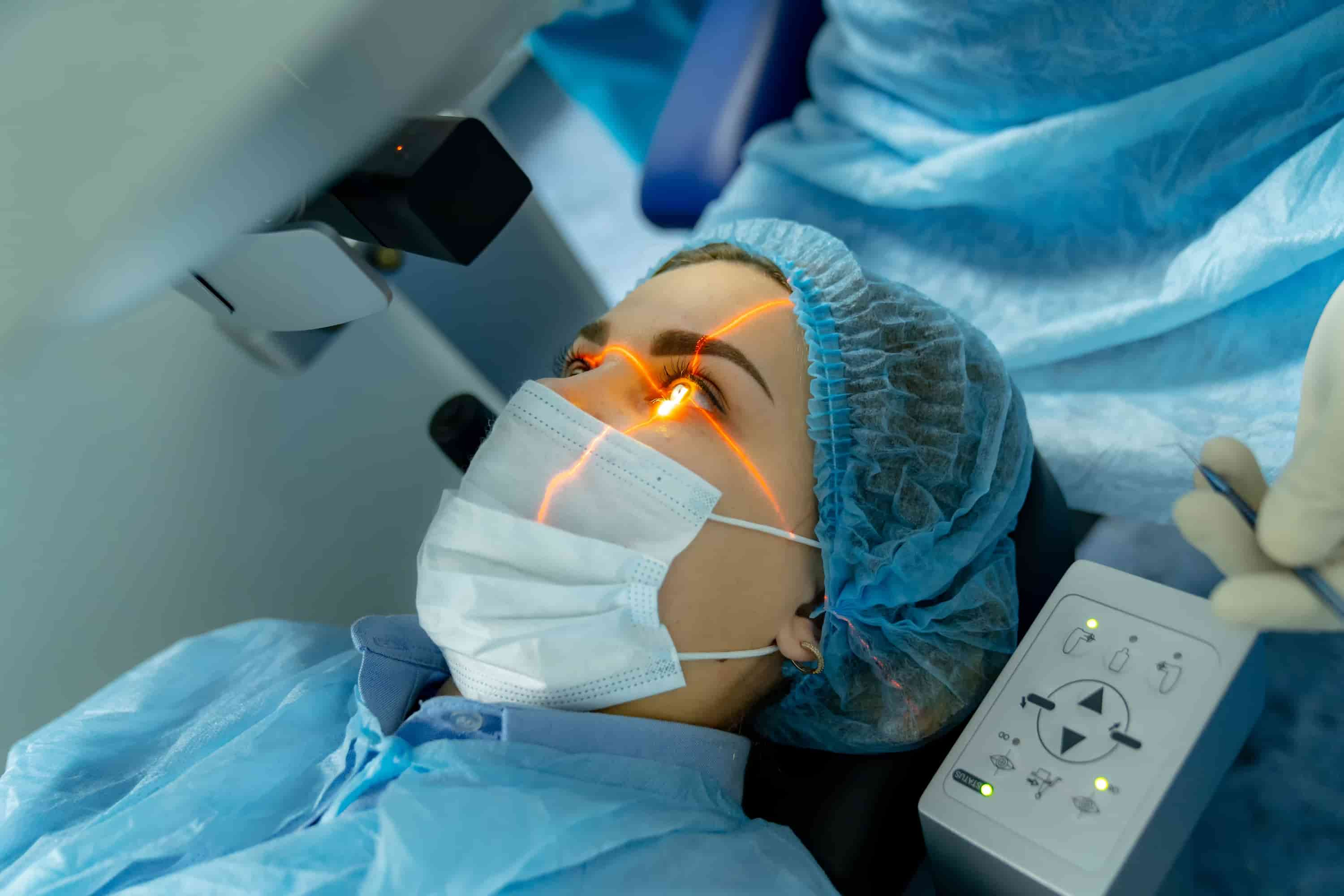
On the day of surgery, you will arrive at the center, where numbing eyedrops are administered to eliminate pain. Mild oral sedatives are sometimes provided to help you relax.
- You will lie comfortably beneath the laser suite.
- An instrument called a lid speculum is placed gently to keep your eyelids open and prevent blinking.
- You will be instructed to fixate on a target light while the laser performs its automated sequence, which typically takes less than a minute per eye.
- The entire procedure generally takes between 15 to 30 minutes for both eyes.
Phase 3: Immediate Post-Op and Recovery
You cannot drive immediately following surgery and must arrange for a designated driver to take you home. Most patients are instructed to go home and rest with their eyes closed for several hours. Prescribed medicated eyedrops—typically antibiotics and anti-inflammatory steroids—must be used strictly according to schedule to prevent infection and control healing. Follow-up visits are scheduled for the day after surgery, as well as at designated intervals over the subsequent six months.
Financial Considerations and Investment
Laser eye surgery is typically classified as an elective, cosmetic procedure by major medical insurance providers, meaning standard health insurance plans do not cover the cost. However, investing in better vision often pays off over time when weighed against the recurring annual expenses of purchasing prescription eyeglasses, daily contact lenses, cleaning solutions, and routine vision exam upgrades.
Pittsburgh clinics generally offer transparent, all-inclusive pricing models that cover pre-operative testing, the surgical procedure itself, surgeon fees, facility fees, and all standard postoperative follow-up care for a designated period. To make these procedures manageable, many local practices partner with specialized healthcare financing companies, such as CareCredit or Alphaeon Credit, offering promotional zero-interest or low-interest monthly payment plans. Additionally, patients often utilize Flexible Spending Accounts (FSAs) or Health Savings Accounts (HSAs) through their employers to pay for laser eye surgery using pre-tax dollars, yielding significant overall savings.
Potential Risks and Complications
While laser eye surgery boasts a very high safety and satisfaction rate, like any surgical intervention, it carries inherent risks. A responsible Pittsburgh surgeon will discuss these potential complications thoroughly during your consultation.
- Dry Eyes: Temporary dryness, irritation, or gritty sensations are common during the initial healing weeks and are managed effectively with artificial tears.
- Visual Distortions: Some patients report seeing halos, starbursts, or glare around lights at night, particularly when driving in dark conditions. These symptoms typically diminish as the eyes heal.
- Under-correction or Over-correction: If the laser removes slightly too much or too little tissue, your target vision may not be fully achieved. An enhancement procedure (touch-up) can often resolve this once the prescription stabilizes.
- Flap Complications: Unique to LASIK, issues related to the corneal flap are rare but can occur during healing, requiring minor medical intervention.
Disclaimer: This article is for informational purposes only and does not constitute formal medical, legal, or financial advice. Consult a qualified ophthalmologist or optometrist in the Pittsburgh area to receive a personalized evaluation and professional guidance tailored to your specific ocular health needs.
Frequently Asked Questions
Does laser eye surgery hurt?
No, the procedure itself is virtually painless. Numbing eyedrops are applied to the surface of the eye prior to surgery, ensuring you do not feel pain. Patients often report feeling a brief pressure sensation during the creation of the LASIK flap or SMILE lenticule, but active discomfort is minimal. Mild irritation, burning, or a gritty feeling may occur for a few hours to days as the surface heals, which is managed with prescribed soothing drops.
How long do the results of laser eye surgery last?
The structural reshaping performed on the cornea is permanent. For the vast majority of patients, the vision correction achieved is stable for decades or a lifetime. However, laser surgery does not prevent natural age-related changes to the eye’s internal lens, a condition known as presbyopia, which typically manifests in your 40s and necessitates reading glasses for close-up tasks regardless of prior refractive surgery.
Can I get laser eye surgery if I have severe astigmatism?
Many patients with moderate to high astigmatism are excellent candidates for modern LASIK, PRK, or SMILE procedures. Advanced diagnostic mapping and wavefront-guided lasers allow surgeons to correct complex corneal irregularities with remarkable precision. However, extremely high prescriptions or unusually shaped corneas may exceed safety limits, making a professional evaluation essential.
What is the typical recovery time before I can return to work?
Most LASIK and SMILE patients return to desk jobs, computer work, and normal daily activities within 24 to 48 hours. If you undergo PRK, the recovery timeline is slightly extended, and most individuals take three to five days off work until the surface epithelium heals sufficiently for comfortable reading and screen use. Strenuous contact sports and swimming are restricted for several weeks across all procedures to protect the healing eye.
Are both eyes treated on the same day?
Yes, bilateral refractive surgery—treating both eyes during the same appointment—is standard practice across modern surgical centers in Pittsburgh. This approach allows patients to experience a balanced, synchronized visual recovery and requires only one recovery period rather than dividing the process across separate appointments.
Image Gallery