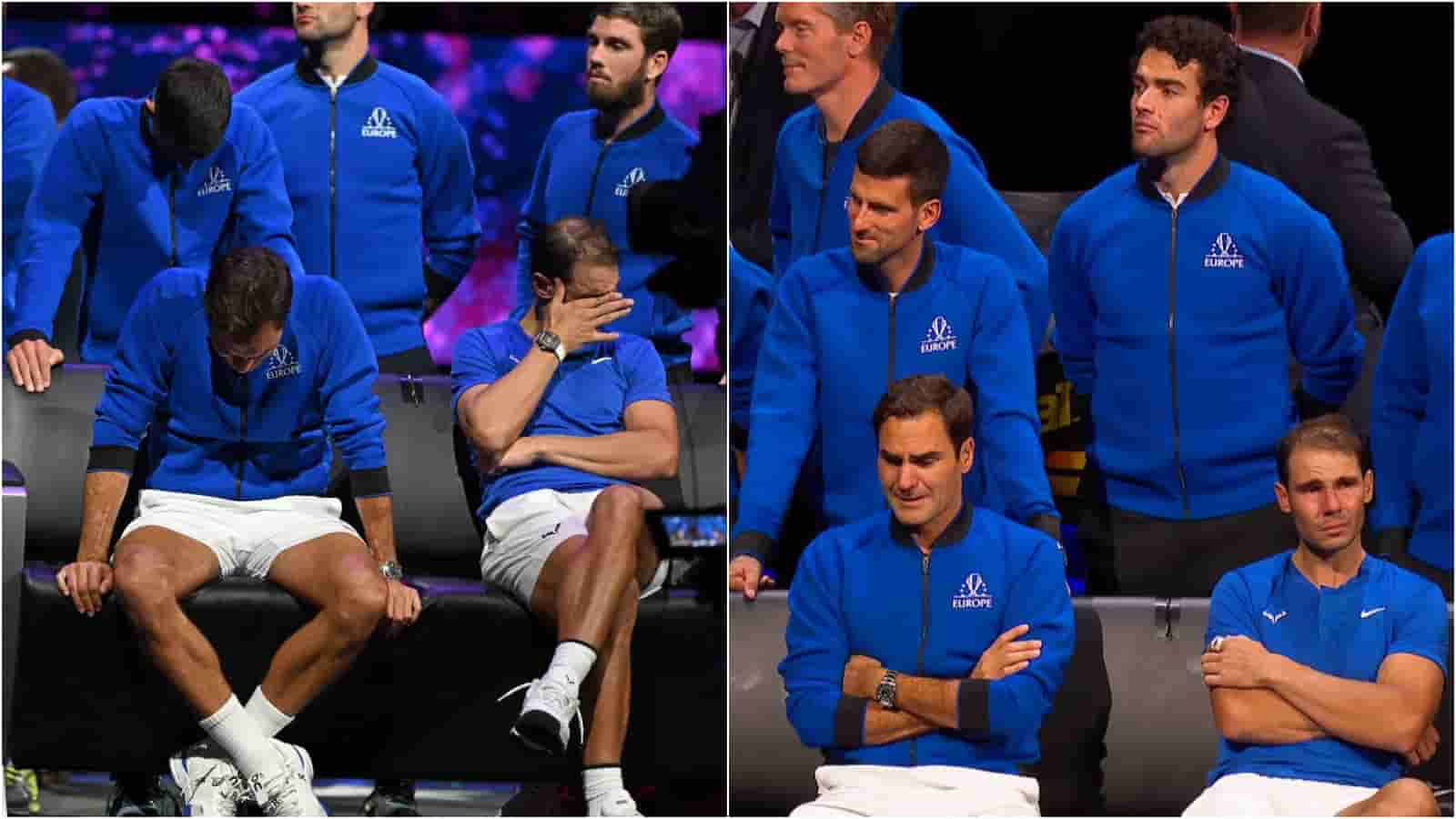
Nadal and Federer Crying on the Court: The Iconic Moment of Friendship and Rivalry
The iconic image of Rafael Nadal and Roger Federer sitting side by side and crying on the court at the 2022 Laver Cup captures the definitive emotional climax of a two-decade tennis rivalry. As Federer played the final professional mat...
The iconic image of Rafael Nadal and Roger Federer sitting side by side and crying on the court at the 2022 Laver Cup captures the definitive emotional climax of a two-decade tennis rivalry. As Federer played the final professional match of his illustrious career alongside his greatest competitor, the shared tears on the London O2 Arena bench symbolized the end of an era defined by mutual respect, sportsmanship, and transcendent athletic achievement.
Contents
The Context of the 2022 Laver Cup: Roger Federer’s Farewell
To understand why Rafael Nadal and Roger Federer sat together crying on the court, one must examine the specific context of the 2022 Laver Cup. Held at the O2 Arena in London, the tournament served as the final professional event for Roger Federer. Beset by chronic knee injuries that required multiple surgeries and limited him to a handful of matches over the preceding three years, the Swiss maestro announced his impending retirement on September 15, 2022.
Federer chose the Laver Cup—an international indoor hard court team tournament he helped conceptualize through his management company, TEAM8—as his final stage. Crucially, he requested to play his farewell match in doubles, partnering with his longtime rival and friend, Rafael Nadal. Team Europe, captained by Björn Borg, faced Team World in a high-stakes team competition, but the atmosphere inside the arena transcended normal athletic competition. It transformed into a global vigil for one of the greatest athletes in sporting history.
The Match: Federer and Sock Thriller
On September 23, 2022, Federer and Nadal stepped onto the court to represent Team Europe in a doubles match against the American pair of Jack Sock and Frances Tiafoe, representing Team World. For Federer, the physical limitations that forced his retirement were immediately apparent; his serve lacked its historical velocity, and his movement was restricted. Yet, flashes of his legendary brilliance illuminated the court, including a remarkable forehand winner threading a seemingly impossible alleyway through the net posts during the second set.
The match itself was a tense, emotional affair. Federer and Nadal won the first set 6-4, but Sock and Tiafoe fought back to take the second set 7-6. The encounter culminated in a dramatic match tiebreak, where Team World ultimately prevailed 11-9, saving a match point along the way. While the result of the match was nominally significant for the tournament standings, the scoreline was entirely secondary to the emotional weight of the evening. The final point marked the official end of Federer's 24-year professional career, shifting the focus entirely to the post-match ceremony and the legendary emotional breakdown that followed.
Deconstructing the Tears: Rivalry, Friendship, and Mortality in Sports
The sight of two fierce competitors weeping openly on a courtside bench shocked and moved millions of viewers worldwide. The emotional display was not merely about a tennis match ending; it represented a complex psychological convergence of shared history, physical vulnerability, and the bittersweet acceptance of time passing.
The Evolution from Antagonists to Allies
In the early years of their rivalry, Federer and Nadal represented starkly different tennis philosophies and demographics. Federer, the smooth, effortless baseline-and-volley artist from Switzerland, dominated the mid-2000s with a cool, aristocratic demeanor. Nadal, the ferocious, left-handed spinning powerhouse from Mallorca, Spain, emerged as his primary foil, challenging Federer's supremacy on clay and eventually across all surfaces. Their rivalry spanned 40 official matches, featuring epic encounters at Wimbledon, the Australian Open, and the French Open.
Initially, their relationship was marked by polite professional distance. However, over decades of sharing press rooms, locker rooms, and Grand Slam finals, their mutual rivalry evolved into a profound, genuine friendship. They discovered common ground as elder statesmen of the sport, player council members, and cultural icons. Seeing them weep together highlighted how their fierce competition had actually forged an unbreakable bond.
Confronting the End of an Era
Elite athletes spend their entire lives cultivating physical mastery. When age and injury strip that ability away, it requires a painful psychological transition. When Federer realized his body could no longer compete at the highest level, the grief of losing his identity as an active competitor was palpable. Nadal, who has fought his own grueling battles with chronic foot and knee injuries, understood that pain intimately. When Nadal cried next to Federer, he was mourning the loss of his greatest adversary and the partial closing curtain on his own playing days.
Cultural Impact and Global Resonance
The image of Nadal and Federer holding hands while wiping away tears instantly became one of the most iconic photographs in sports history. Media outlets worldwide published the image on front pages, and social media platforms generated billions of impressions within hours.
The moment resonated so deeply because it subverted traditional masculine stereotypes in professional sports. For decades, athletes were culturally conditioned to suppress vulnerability, display stoicism, and treat opponents with emotional detachment. By contrast, Federer and Nadal demonstrated that deep emotional expression, affectionate friendship, and mutual vulnerability are compatible with supreme athletic dominance. Their tears humanized them, transforming untouchable sporting gods into relatable human beings experiencing the universal pain of transition and loss.
| Aspect of the Event | Details & Context |
|---|---|
| Date | September 23, 2022 |
| Location | O2 Arena, London, United Kingdom |
| Tournament | 2022 Laver Cup (Day 1 Evening Session) |
| Match | Roger Federer & Rafael Nadal vs. Jack Sock & Frances Tiafoe |
| Result | Sock/Tiafoe won 4-6, 7-6(2), [11-9] |
| Significance | Final professional match of Roger Federer’s career |
Frequently Asked Questions
Why were Nadal and Federer crying during the Laver Cup?
They were crying because Roger Federer was playing the final professional match of his career after battling severe, career-ending knee injuries. The tears reflected the end of a legendary era, deep relief after decades of intense athletic pressure, and the profound emotional bond forged through their historic 20-year rivalry and friendship.
Did Rafael Nadal cry because he was retiring too?
While Nadal was not retiring at that exact moment, his own career was heavily impacted by chronic physical injuries, including Müller-Weiss syndrome in his foot and various abdominal tears. Witnessing Federer's retirement brought home the realization that his own legendary career was also nearing its inevitable conclusion.
Who won the match where Federer and Nadal cried?
Jack Sock and Frances Tiafoe of Team World won the doubles match against Roger Federer and Rafael Nadal of Team Europe with a score of 4-6, 7-6(2), [11-9].
How many times did Federer and Nadal play against each other?
Roger Federer and Rafael Nadal played each other 40 times in official ATP Tour and Grand Slam matches over their careers, with Nadal leading the head-to-head record 24–16.
Why did Roger Federer choose Rafael Nadal as his final doubles partner?
Federer chose Nadal because of their unique history. Despite competing fiercely for the sport's highest honors for two decades, they maintained a deep mutual respect and friendship, making Nadal the most fitting companion to share the court for Federer's emotional farewell.
Final Recommendation
For fans wishing to revisit this historic milestone, viewing the full, unedited post-match ceremony from the 2022 Laver Cup provides an unmatched masterclass in sportsmanship and emotional honesty. Observers seeking deeper insight into this golden era of tennis should also examine documentary coverage detailing the final years of the "Big Three"—Roger Federer, Rafael Nadal, and Novak Djokovic—and how their collective drive elevated the global standard of professional tennis.
Image Gallery