Understanding the Lerner Family's Impact on the Washington Nationals
The Lerner family's acquisition of the Washington Nationals in 2006 permanently reshaped Major League Baseball in the nation’s capital. Through massive infrastructure investment, real estate development in D.C.'s Navy Yard, and sustain...
The Lerner family's acquisition of the Washington Nationals in 2006 permanently reshaped Major League Baseball in the nation’s capital. Through massive infrastructure investment, real estate development in D.C.'s Navy Yard, and sustained competitiveness culminating in a 2019 World Series championship, the family transformed a relocated franchise into an elite sports brand.
Contents
The 2006 Acquisition and the Return of Baseball to D.C.
When Major League Baseball (MLB) relocated the Montreal Expos to Washington, D.C., in 2005, the league temporarily owned and operated the franchise while searching for a long-term local ownership group. In 2006, MLB selected a group led by real estate developer Ted Lerner to purchase the franchise for $450 million. The selection ended a 33-year absence of baseball in Washington, which had been without a team since the Senators relocated to Texas after the 1971 season.
Ted Lerner, a Bethesda-native who founded Lerner Enterprises in 1952, brought a distinctly regional, real-estate-centric perspective to sports management. Joining him in the ownership group were key family members, including his son, Mark Lerner, and sons-in-law Edward Cohen and Robert Tanenbaum. Former sports executive Stan Kasten was brought in as team president to construct the baseball operations framework from the ground up.
The acquisition was about more than establishing a roster; it required building an organizational infrastructure that had been entirely neglected during the franchise's final years in Montreal and its interim period under MLB stewardship. The Lerner family assumed immediate financial responsibility for modernizing scouting networks, international player academies, and corporate sponsorships.
Real Estate Synergy and the Navy Yard Transformation
The most pronounced off-field impact of the Lerner family’s ownership was the economic revitalization of the South Capitol Street corridor and the surrounding Navy Yard neighborhood. Before the construction of Nationals Park, the Southeast D.C. waterfront consisted largely of underutilized industrial sites and public housing complexes.
As one of the largest private real estate developers in the Washington metropolitan area, Lerner Enterprises recognized the potential of pairing a modern sports venue with urban infill development.
- Industrial Waterfront Area
- Public Infrastructure Investment
- Nationals Park Opens (2008)
- Commercial/Residential Growth
Key aspects of this urban development included:
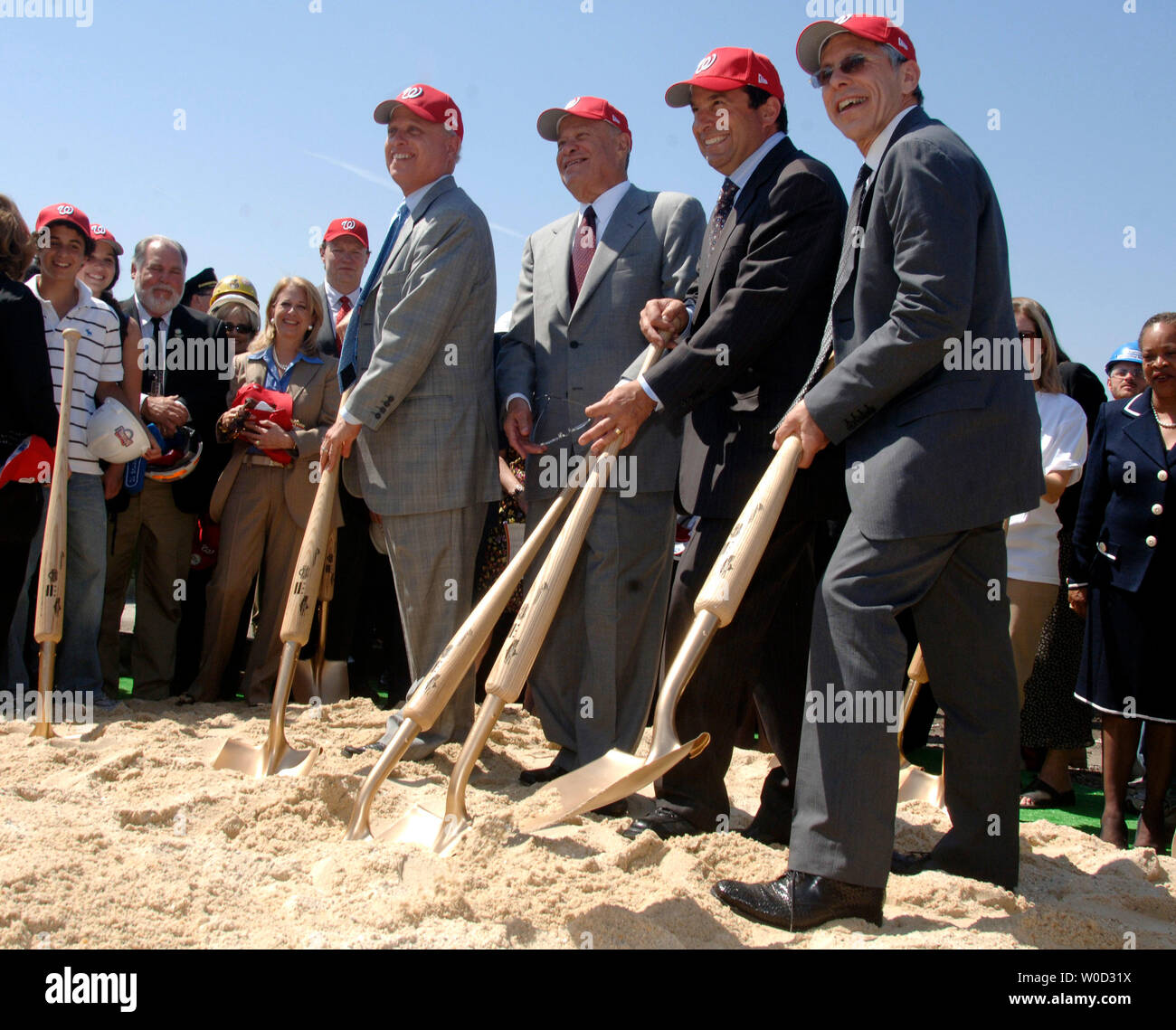
- Public-Private Funding Model: The $693 million construction of Nationals Park was financed primarily through D.C. municipal bonds, backed by taxes levied on stadium sales, utility usage, and corporate gross receipts.
- Transit-Oriented Design: Opened in 2008 as the first LEED-certified professional sports stadium in the United States, Nationals Park was explicitly integrated with the Navy Yard-Ballpark Metro station.
- Commercial Density: The stadium anchored a transformation that added thousands of residential units, hotel rooms, retail spaces, and corporate offices to the neighborhood, converting Navy Yard into one of Washington's fastest-growing commercial hubs.
The synergy between Lerner Enterprises' real estate expertise and the franchise's presence created a permanent asset for the municipality, vastly increasing the city's commercial tax base while establishing a modern home for the club.
On-Field Development: Rebuilding to the 2019 Championship
The Lerner family’s management of baseball operations underwent a distinct evolution. The initial years were marked by intentional rebuilding, securing high draft picks due to poor record finishes. Under General Manager Mike Rizzo, hired in 2009, the organization established a core through the amateur draft, acquiring elite talents such as Stephen Strasburg (2009) and Bryce Harper (2010).
Once the homegrown core matured, the Lerner family demonstrated a willingness to commit substantial capital in free agency to transition the club into a championship contender.
- Rebuild Phase (2006–2011)
- Contender Phase (2012–2018)
- Championship Peak (2019)
- Roster Restructure (2020–2026)
Strategic Free-Agent Investments
Unlike owners who rely strictly on low-payroll models, the Lerners routinely placed the Nationals in the top tier of MLB payrolls during their competitive window. Notable contract commitments included:
- Jayson Werth (2010): A seven-year, $126 million contract that signaled to Major League Baseball that Washington was ready to compete for elite talent.
- Max Scherzer (2015): A landmark seven-year, $210 million deal featuring significant deferred compensation, which yielded two Cy Young Awards and a championship.
- Patrick Corbin (2018): A six-year, $140 million contract designed to complete a dominant starting rotation ahead of the 2019 season.
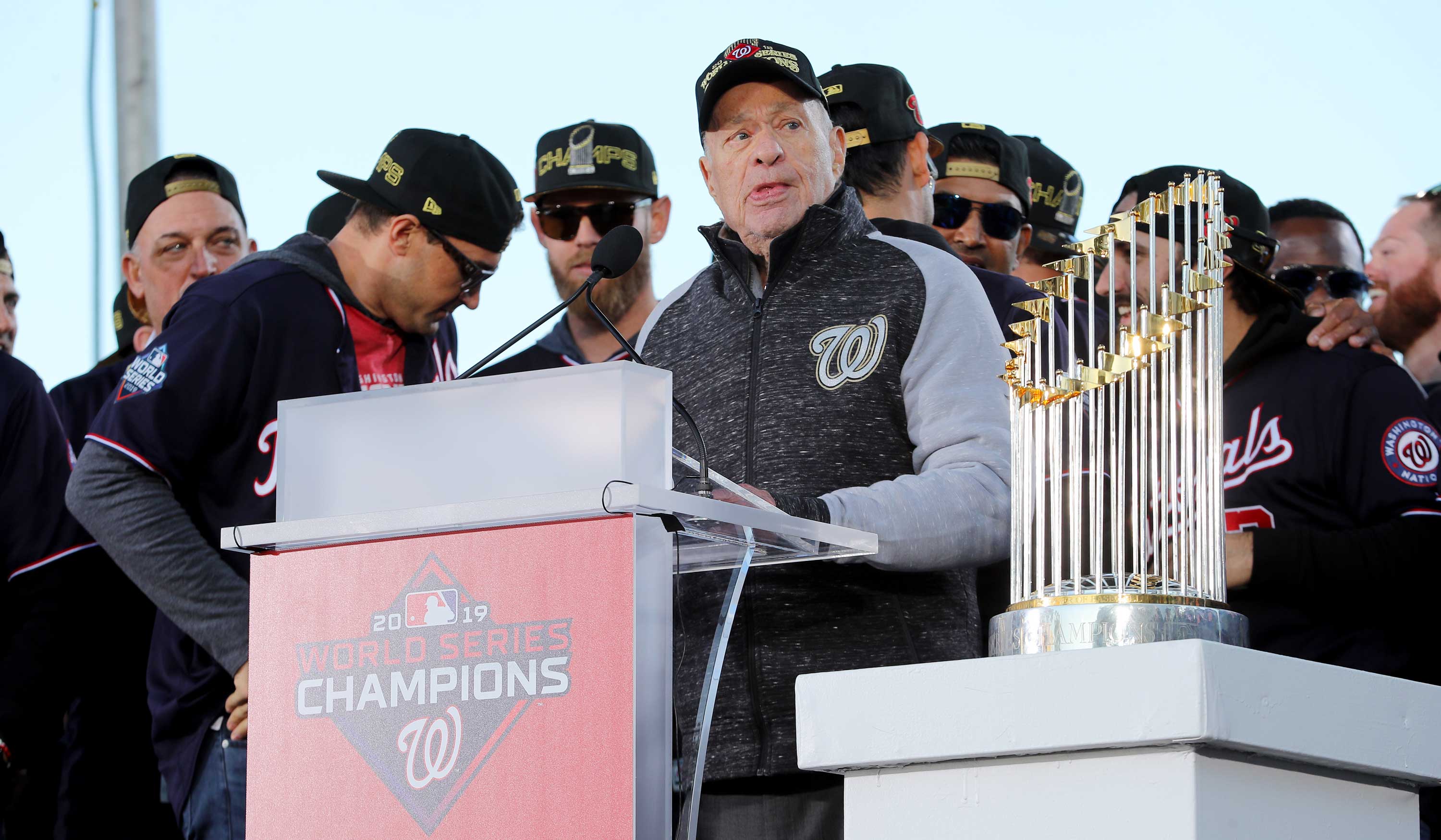
This aggressive approach yielded four National League East division titles (2012, 2014, 2016, and 2017). The peak of the Lerner family’s stewardship arrived in 2019, when the Nationals secured the franchise’s first World Series title by defeating the Houston Astros in seven games.
Financial Strategy and Contract Deferrals
A defining feature of the Lerner family’s financial management was the structural utilization of deferred compensation. To manage cash flow while maintaining high annual payrolls, the team routinely structured multi-million dollar deals with payments extending decades into the future.
While this strategy allowed the club to sign high-value free agents like Scherzer and Strasburg simultaneously, it created long-term financial liabilities. The heavy reliance on deferred money was a factor in negotiations with stars like Bryce Harper and Anthony Rendon, both of whom ultimately signed elsewhere in free agency when seeking fully guaranteed, non-deferred contracts.
| Contract Structure Strategy | Description |
|---|---|
| Short-Term Advantage | Lowers immediate luxury tax payroll obligations. |
| Short-Term Advantage | Enables simultaneous signing of top-tier free agents. |
| Long-Term Impact | Creates multi-decade financial liabilities for the franchise. |
| Long-Term Impact | Reduces flexibility during subsequent rebuilding phases. |
The MASN Dispute and Regional Media Challenges
The defining operational hurdle of the Lerner ownership era was the ongoing legal and financial struggle surrounding regional sports television rights. When the Expos moved to Washington in 2005, Baltimore Orioles owner Peter Angelos insisted on protections to prevent market cannibalization.
MLB brokered an agreement establishing the Mid-Atlantic Sports Network (MASN), controlled majority-wise by the Orioles, with the Nationals holding an initial 10% stake that incrementally increased over time. Under the arrangement, MASN held the broadcasting rights for both franchises, but the television rights fees paid to the Nationals were subject to mandatory resets every five years.
Decades of arbitration, litigation, and appeals followed over the fair market value of those rights fees:
- 1997–2005 Baseline: The territorial agreement locked the Nationals into a minority posture within their own regional television market.
- Arbitration Battles: The Nationals consistently argued that MASN underpaid the club by tens of millions of dollars annually compared to comparable MLB television markets.
- Impact on Operations: The suppressed media revenue directly affected the club's organic cash flow, forcing the ownership group to self-fund or rely on debt and deferrals to maintain peak payrolls.
The litigation created long-term financial friction that complicated franchise valuations and operational planning for more than fifteen years.
Ownership Transition, Roster Restructure, and Sale Exploration
In 2018, Ted Lerner officially passed the role of Managing Principal Owner to his son, Mark Lerner. Ted Lerner later passed away in February 2023 at the age of 97, marking a formal generational shift in the family’s business empire.
Following the 2019 championship, the team faced an aging roster, depleted farm system, and mounting deferred financial commitments. The front office executed a comprehensive roster teardown between 2021 and 2022, trading away franchise cornerstones including Max Scherzer, Trea Turner, and Juan Soto to rebuild the minor league system.
In April 2022, the Lerner family publicly announced that it had retained financial advisors to explore a potential sale of the Washington Nationals. However, after nearly two years of evaluating market conditions, complex MASN obligations, and franchise valuations, Mark Lerner announced in early 2024 that the family had formally taken the team off the market and intended to retain ownership for the foreseeable future.
Comparative Overview of Lerner Ownership Eras
The table below outlines the distinct operational phases of the Lerner family’s stewardship over the Washington Nationals:
| Era / Phase | Primary Strategic Focus | Major On-Field & Business Events | Operational & Financial Impact |
|---|---|---|---|
| 2006–2011: Foundation & Infrastructure | Stadium construction, urban integration, and farm system accumulation | Opening of Nationals Park (2008); Drafting Strasburg and Harper | High civic investment; established low payroll baseline while building talent base |
| 2012–2019: Championship Window | Aggressive free-agent acquisition and sustained contention | 4 NL East titles; 2019 World Series Victory; Signing Scherzer & Werth | Payroll reached top-5 in MLB; extensive use of deferred payment contracts |
| 2020–2023: Restructuring & Sale Exploration | Farm system replenishment and financial consolidation | Trading Juan Soto; Ted Lerner passing (2023); Hiring sale advisors | Reduced payroll; restored minor league depth; unresolved regional media rights |
| 2024–Present: Stable Stewardship | Organic player development and long-term retention | Halting of sale process; integration of new talent core | Focus on sustainable payroll structures and debt normalization |
Key Takeaways for Evaluating the Lerner Legacy
To understand the full impact of the Lerner family on the Washington Nationals and the surrounding region, evaluate the following dimensions:
- Civic Transformation: The family successfully utilized a professional sports venue as an anchor for urban redevelopment, turning Southeast D.C. into an economic driver for the District.
- On-Field Success: They delivered Washington's first World Series title in 95 years (since the Senators won in 1924), transitioning the club from an MLB-owned asset into a competitive franchise.
- Contract Complexity: The extensive use of deferred money secured elite talent in the short term but created long-term balance-sheet commitments that influenced subsequent roster management.
- Media Rights Constraints: The institutional arrangement of the MASN dispute posed a continuous headwind for the franchise's organic top-line revenue growth.
The Lerner family's stewardship established the Washington Nationals as a permanent, high-profile fixture in modern Major League Baseball, leaving an indelible imprint on both the sport and the landscape of Washington, D.C.
Frequently Asked Questions
Why did the Lerner family purchase the Washington Nationals in 2006?
The Lerner family, led by Bethesda real estate developer Ted Lerner, purchased the Nationals for $450 million to return Major League Baseball to Washington, D.C., after a 33-year absence. The acquisition aligned with the family’s real estate development background, allowing them to integrate sports management with urban renewal in D.C.'s South Capitol Street corridor.
How did Nationals Park impact the Navy Yard neighborhood in Washington, D.C.?
Nationals Park served as the economic catalyst for the Navy Yard neighborhood. Before the stadium opened in 2008, the area consisted primarily of industrial lots. The stadium attracted private real estate investments, leading to thousands of new residential apartments, corporate headquarters, hotels, and retail establishments surrounding the venue.
What was the MASN dispute and how did it affect the Nationals?
The MASN dispute was an ongoing legal battle between the Nationals and the Baltimore Orioles over regional television rights fees. Under an agreement created when the Expos moved to D.C., the Orioles controlled the Mid-Atlantic Sports Network (MASN). The Nationals contested their annual rights fee allocations for years, arguing they were significantly underpaid relative to market value, which limited the team's operational media revenue.
Why did the Nationals frequently use deferred payments in player contracts?
The Lerner family used deferred compensation—paying out portions of multi-million dollar contracts over decades—to manage immediate payroll expenses and lower annual luxury tax thresholds. This approach allowed the team to sign elite free agents like Max Scherzer and Patrick Corbin simultaneously, though it created long-term financial obligations.
Are the Washington Nationals still for sale by the Lerner family?
No. While the Lerner family hired financial advisors in April 2022 to explore a potential sale of the franchise, Managing Principal Owner Mark Lerner officially announced in early 2024 that the family had halted the sale process and decided to retain control of the team.
Image Gallery