Who Is the Most Famous Artist in the World?
Determining the most famous artist in the world depends on whether fame is measured through historic fine art iconicity or contemporary musical reach. In visual fine art, Renaissance master Leonardo da Vinci is globally recognized as t...
Determining the most famous artist in the world depends on whether fame is measured through historic fine art iconicity or contemporary musical reach. In visual fine art, Renaissance master Leonardo da Vinci is globally recognized as the most famous artist in human history. In modern popular music, figures like Michael Jackson and Taylor Swift represent the pinnacle of global audience reach and commercial recognition.
Contents
Defining "Artist": Visual Fine Art vs. Performing and Musical Arts
When answering who the most famous artist is, clear disambiguation is required. The term "artist" broadly encompasses two distinct domains: visual fine artists (painters, sculptors, and architects) and musical performing artists (singers, songwriters, and musicians).
In institutional art history, academic literature, and general encyclopedic knowledge, the question almost always refers to visual fine artists who created enduring physical masterpieces. Within this realm, recognition spans centuries, driven by museum display, academic consensus, global education, and commercial auction values.
Conversely, in contemporary pop culture and digital media, search interest frequently shifts toward recording artists who command billions of audio streams, record-breaking concert tours, and massive social media followings. To provide a complete and rigorous evaluation, this analysis examines both traditional visual masters and modern musical icons, detailing the unique metrics that define global fame across each category.
Leonardo da Vinci: The Most Famous Visual Artist in History
Across centuries of cultural documentation, global educational curricula, and public awareness surveys, Leonardo da Vinci (1452–1519) consistently ranks as the most famous visual artist in history. His reputation rests not only on the extraordinary quality of his surviving works, but also on his role as the quintessential "Renaissance Man"—a polymath whose expertise spanned painting, anatomy, engineering, optics, and botany.
- Leonardo da Vinci (Universal Name Recognition)
- Iconic Masterpieces
- Mona Lisa
- The Last Supper
- Vitruvian Man
- Institutional Value
- Louvre Footfall
- Auction Records
- Global Curricula
- Iconic Masterpieces
The Cultural Reach of the Mona Lisa and The Last Supper
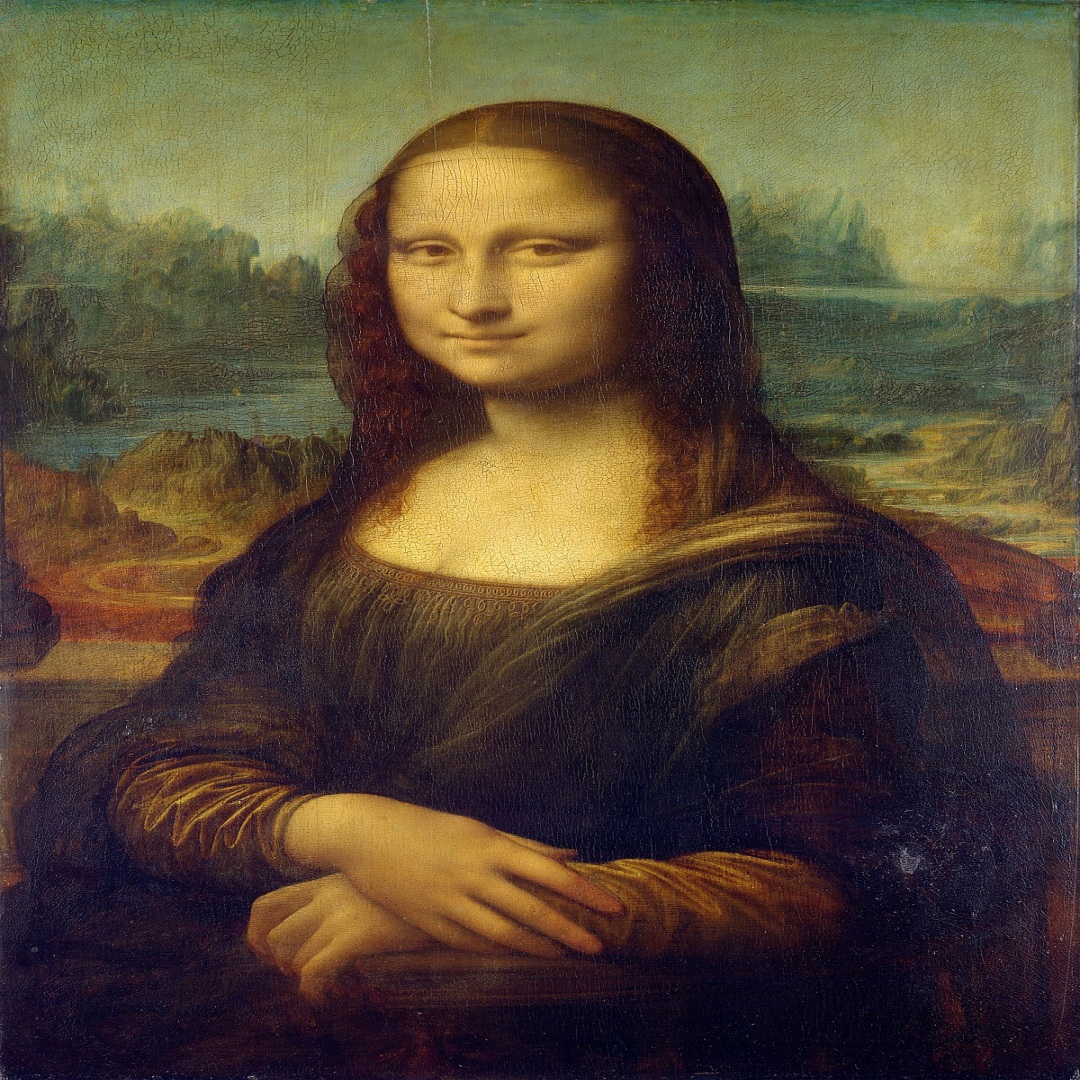
Leonardo created two of the world's most recognizable paintings: the Mona Lisa (c. 1503–1519) and The Last Supper (c. 1495–1498). The Mona Lisa, housed in the Musée du Louvre in Paris, attracts millions of visitors annually, making it the most visited, written about, and satirized work of art on Earth. The painting's enigmatic smile, innovative use of sfumato (soft atmospheric shading), and high-profile theft from the Louvre in 1911 propelled it into a tier of global fame unmatched by any other canvas.
Similarly, The Last Supper, painted on the refectory wall of the Convent of Santa Maria delle Grazie in Milan, remains one of the most reproduced religious images in human history. Coupled with the Vitruvian Man—the definitive illustration of human proportion—Leonardo's imagery permeates global culture, advertising, media, and academic study.
Auction Precedent and Institutional Status
Leonardo's global profile is further underscored by the market evaluation of his rare works. In 2017, Salvator Mundi, a portrait of Christ attributed to Leonardo, sold at Christie's for $450.3 million, setting the record for the most expensive artwork ever sold at public auction. This transaction reinforced Leonardo's status as an unparalleled figure in art economics, combining historical gravity with extreme commercial value.
The Titans of Fine Art: Van Gogh, Picasso, and Michelangelo
While Leonardo da Vinci holds the top position overall, three other visual artists command nearly equal levels of worldwide brand recognition: Vincent van Gogh, Pablo Picasso, and Michelangelo Buonarroti.
Vincent van Gogh: Posthumous Fame and Emotional Resonance
Dutch Post-Impressionist painter Vincent van Gogh (1853–1890) represents one of the most dramatic stories of posthumous recognition in cultural history. Selling only one confirmed painting during his lifetime (The Red Vineyard), Van Gogh produced over 2,100 artworks, including roughly 860 oil paintings, during a rapid ten-year period.
Works such as The Starry Night (1889), Sunflowers (1888), and his numerous self-portraits are recognizable across continents. Van Gogh's intense color palette, expressive brushwork, and tragic personal life—marked by severe mental health struggles—have inspired countless books, films, and immersive digital exhibitions worldwide. His legacy demonstrates how narrative, emotional vulnerability, and distinctive visual style can combine to build global fame.
Pablo Picasso: Modern Master of Innovation and Commercial Output
Spanish painter and sculptor Pablo Picasso (1881–1973) dominates 20th-century art history. As the co-founder of Cubism alongside Georges Braque, Picasso fundamentally altered the trajectory of Western visual art by breaking down traditional spatial perspective.
Picasso was extraordinarily prolific, producing an estimated 50,000 artworks over his seven-decade career, including paintings, sculptures, ceramics, drawings, and prints. Major masterpieces like Guernica (1937)—a monumentally scaled anti-war mural depicting the bombing of Guernica during the Spanish Civil War—and Les Demoiselles d'Avignon (1907) established him as a dominant intellectual and aesthetic force. Picasso's name remains synonymous with artistic avant-garde experimentation and staggering auction dominance.
Michelangelo: The Benchmark of Sculptural and Architectural Genius
Italian High Renaissance master Michelangelo Buonarroti (1475–1564) achieved supreme renown during his own lifetime—a rare feat recorded by his contemporary biographer Giorgio Vasari, who referred to him as Il Divino ("The Divine One").
Michelangelo's masterpieces span multiple artistic disciplines:
- Sculpture: The monumental marble David in Florence and the Pietà in St. Peter's Basilica.
- Painting: The breathtaking Sistine Chapel ceiling frescos and The Last Judgment in Vatican City.
- Architecture: The design of the main dome of St. Peter's Basilica.
Michelangelo set the technical standards for physical realism, anatomical precision, and emotional grandeur in European sculpture and painting, ensuring his permanent placement among history's top artists.
Modern Musical Artists: Who Holds the Global Crown Today?
In contemporary public discourse, the question of global artistic fame often shifts toward recording artists. Music benefits from digital distribution, global radio broadcast, and streaming services, allowing musical creators to achieve immediate, ubiquitous penetration across demographics.
- Visual Fine Art vs. Musical Performing Arts
- Visual Fine Art
- Leonardo da Vinci
- Vincent van Gogh
- Pablo Picasso
- Michelangelo
- Century-scale survival
- Museum foot traffic
- Public auction records
- Musical Performing Arts
- Michael Jackson
- Taylor Swift
- The Beatles
- Drake
- Mass digital distribution
- Global streaming volumes
- Physical/Digital sales
- Visual Fine Art
Michael Jackson: Unmatched Pop Reach
Michael Jackson (1958–2009), universally designated as the "King of Pop," achieved a degree of worldwide fame that remains unprecedented in the music industry. His 1982 album Thriller remains the best-selling album of all time globally, with certified sales exceeding 70 million copies worldwide according to the Recording Industry Association of America (RIAA).
Jackson pioneered the use of music videos as a narrative art form with releases like Billie Jean, Beat It, and Thriller. His dance innovations, such as the moonwalk, alongside stadium-filling tours across non-English speaking markets, established a global footprint during an era prior to internet distribution.
Taylor Swift: Streaming Records and Stadium Dominance
In the modern digital streaming era, American singer-songwriter Taylor Swift has established record-breaking levels of global popularity and economic impact. Her multi-year Eras Tour became the highest-grossing concert tour in history, surpassing $1 billion in revenue and impacting localized economies around the world.
Swift's mastery of music catalog ownership, continuous album releases, and direct fan engagement through digital channels have positioned her as a dominant cultural figure. Her performance on platforms like Spotify and Apple Music, combined with widespread critical acclaim, makes her the leading candidate for the title of world's most famous living musical artist.
The Beatles: Cultural Transformation and Total Sales
English rock group The Beatles (John Lennon, Paul McCartney, George Harrison, and Ringo Starr) represent the commercial gold standard of recording groups. With certified physical sales estimated above 600 million units globally, The Beatles hold the record for the most number-one albums on worldwide charts. Their artistic evolution between 1962 and 1970 revolutionized songwriting, studio production, and popular music aesthetics.
Comparative Matrix: Indicators of Global Fame
Quantifying fame requires balancing historical longevity against modern media volume. The following table compares top-tier visual and musical artists across established performance metrics:
| Artist | Primary Domain | Era / Active Period | Key Masterpiece / Work | Primary Metric of Global Fame |
|---|---|---|---|---|
| Leonardo da Vinci | Fine Art (Painting) | 1452–1519 | Mona Lisa, The Last Supper | Most visited artwork in history; public auction record ($450.3M). |
| Vincent van Gogh | Fine Art (Painting) | 1853–1890 | The Starry Night, Sunflowers | Universal imagery recognition; high museum footfall; cultural licensing. |
| Pablo Picasso | Fine Art (Multi-disciplinary) | 1881–1973 | Guernica, Les Demoiselles d'Avignon | Broadest output (50,000+ works); dominant cumulative auction volume. |
| Michelangelo | Fine Art (Sculpture/Fresco) | 1475–1564 | David, Sistine Chapel ceiling | Benchmark of Renaissance sculpture; Vatican cultural attendance. |
| Michael Jackson | Popular Music | 1964–2009 | Thriller, Billie Jean | Best-selling album in history (Thriller); global pre-internet audience reach. |
| Taylor Swift | Popular Music | 2006–Present | Midnights, 1989, The Eras Tour | Highest-grossing concert tour in history; digital streaming volume. |
| The Beatles | Popular Music | 1960–1970 | Abbey Road, Sgt. Pepper's | Highest overall physical album sales in recorded music history. |
Key Factors That Drive Enduring Artistic Fame
The transition from temporary popularity to permanent global fame depends on several structural factors:
- Accessibility and Public Display: Masterpieces displayed in non-profit, high-capacity public institutions (such as the Louvre, the Metropolitan Museum of Art, or the Vatican Museums) maintain constant exposure across generations.
- Reproducibility and Media Integration: Artworks that can be easily reproduced on prints, digital media, consumer products, and educational textbooks build subconscious familiarity worldwide.
- Narrative and Mythos: A compelling personal narrative—whether Leonardo's secretive notebooks, Van Gogh's tragic struggles, or Picasso's avant-garde rebelliousness—deepens public interest beyond aesthetic appreciation.
- Market Valuation: High-profile auction sales covered by international news organizations reinforce an artist's status as a figure of historic economic importance.
- Cross-Cultural Penetration: True worldwide fame requires recognition outside the artist's home country and primary language group.
Frequently Asked Questions
Why is Leonardo da Vinci considered more famous than Pablo Picasso or Vincent van Gogh?
Leonardo da Vinci holds top recognition because his works (Mona Lisa and The Last Supper) have saturated global education and popular culture for over 500 years. Furthermore, his identity as an inventor, scientist, and artist creates a unique polymath narrative that captures global imagination more broadly than traditional painters.
Is Taylor Swift currently more famous than historical painters?
In terms of daily digital interaction, social media impressions, and real-time news coverage, contemporary pop stars like Taylor Swift experience higher active daily media volume than historical painters. However, historical painters like Leonardo da Vinci possess century-spanning longevity and universal recognition across diverse demographic groups that lack internet access or pop music interests.
What is the most famous single artwork in the world?
The Mona Lisa, painted by Leonardo da Vinci between 1503 and 1519, is universally recognized as the most famous single artwork in the world. It is permanently exhibited at the Musée du Louvre in Paris, where it attracts approximately 8 to 10 million viewers per year.
How do art historians measure an artist's global fame?
Art historians and cultural analysts evaluate fame using a combination of institutional presence (museum acquisitions and major retrospective exhibitions), academic citations in global curricula, auction records at major houses like Christie's and Sotheby's, overall museum attendance figures, and digital search trends.
Who is the most famous living visual artist?
Prominent living visual artists with widespread global recognition include Banksy (the pseudonymous UK-based street artist known for political satire), Yayoi Kusama (famous for her immersive Infinity Mirror Rooms and polka-dot motifs), and Jeff Koons (known for large-scale stainless steel sculptures of balloon animals).
Practical Recommendations for Art Researchers and Enthusiasts
For those seeking to explore or quantify artistic fame further:
- Examine Official Institutional Records: Review annual attendance statistics published by major institutions like the Musée du Louvre, the Metropolitan Museum of Art, and the British Museum to observe real-world engagement with visual art.
- Consult Art Market Indexing: Utilize verified databases from established auction houses such as Sotheby's and Christie's to evaluate market demand and liquidity for historical fine art.
- Distinguish Medium and Context: When conducting research or writing analyses, clearly specify whether your scope covers visual fine arts, performing arts, or modern recording artists to avoid ambiguous comparisons.
Image Gallery