Workers’ Compensation Hearing Loss Claims Explained: A Complete Guide
Workers' compensation hearing loss claims provide medical benefits and financial indemnity to employees who suffer auditory damage due to workplace noise or trauma. To succeed, a claimant must prove the hearing loss is work-related thr...
Workers' compensation hearing loss claims provide medical benefits and financial indemnity to employees who suffer auditory damage due to workplace noise or trauma. To succeed, a claimant must prove the hearing loss is work-related through diagnostic audiograms and medical expert testimony, typically following the impairment rating standards set by the American Medical Association (AMA).
Contents
Occupational hearing loss is one of the most prevalent but frequently overlooked workplace injuries. Unlike a sudden fall or a broken bone, hearing degradation often occurs incrementally over years of exposure to high-decibel environments. As of 2026, regulatory bodies and insurance carriers continue to refine the criteria for these claims, focusing heavily on objective data and specific medical formulas to determine settlement values. Navigating this system requires a technical understanding of how hearing is measured, how legal "dates of injury" are established for gradual conditions, and how to counter common employer defenses regarding age-related decline.
The Nature of Occupational Hearing Loss
Hearing loss in a professional setting generally falls into two categories: Noise-Induced Hearing Loss (NIHL) and Traumatic Hearing Loss. Understanding the distinction is the first step in filing an accurate claim, as the evidentiary requirements for each can differ significantly.
Noise-Induced Hearing Loss (NIHL)
NIHL is a cumulative condition caused by prolonged exposure to high levels of noise. In industrial, construction, and manufacturing sectors, employees are often exposed to machinery that exceeds 85 decibels (dB), the threshold at which the Occupational Safety and Health Administration (OSHA) requires a hearing conservation program. Over time, this noise damages the microscopic hair cells (cilia) in the inner ear. Because this damage is permanent and cannot be medically reversed, workers' compensation is designed to cover the lifetime cost of hearing aids and provide a permanent partial disability (PPD) award.
Traumatic Hearing Loss
Traumatic loss occurs due to a single, identifiable event. Examples include a sudden explosion, a head injury resulting from a fall, or a severe change in atmospheric pressure (barotrauma). Unlike NIHL, which is usually bilateral (affecting both ears), traumatic loss can be unilateral. These claims are often easier to link to a specific workday, but they still require immediate medical documentation to prevent the insurance carrier from arguing that the damage occurred elsewhere.
Eligibility Criteria and Exposure Thresholds
To qualify for a workers' compensation hearing loss claim in 2026, a claimant must generally meet several criteria. While specific statutes vary by jurisdiction, the following standards are common across most state and federal systems:
- Duration of Exposure: Many states require a minimum period of employment (often 90 days or more) in an environment with "hazardous noise."
- The 85 dB Standard: Most workers' compensation boards use the OSHA standard of 85 dB for an 8-hour time-weighted average (TWA) as the benchmark for hazardous exposure.
- Wait Periods: In several jurisdictions, a worker must be removed from the noisy environment for a specific period (often 3 to 30 days) before a final "qualifying" audiogram can be performed. This ensures that the results reflect permanent damage rather than "temporary threshold shift," which is a short-term dulling of hearing that recovers after rest.
- Statutes of Limitation: For gradual hearing loss, the "clock" for filing a claim often begins on the date the employee was last exposed to the noise or the date a doctor informed them that their hearing loss was work-related—whichever is later.
How Medical Experts Calculate Hearing Impairment Ratings
The financial value of a hearing loss claim is not subjective; it is calculated using precise mathematical formulas found in the AMA Guides to the Evaluation of Permanent Impairment. In 2026, most states utilize either the 5th or 6th Edition of these guides.
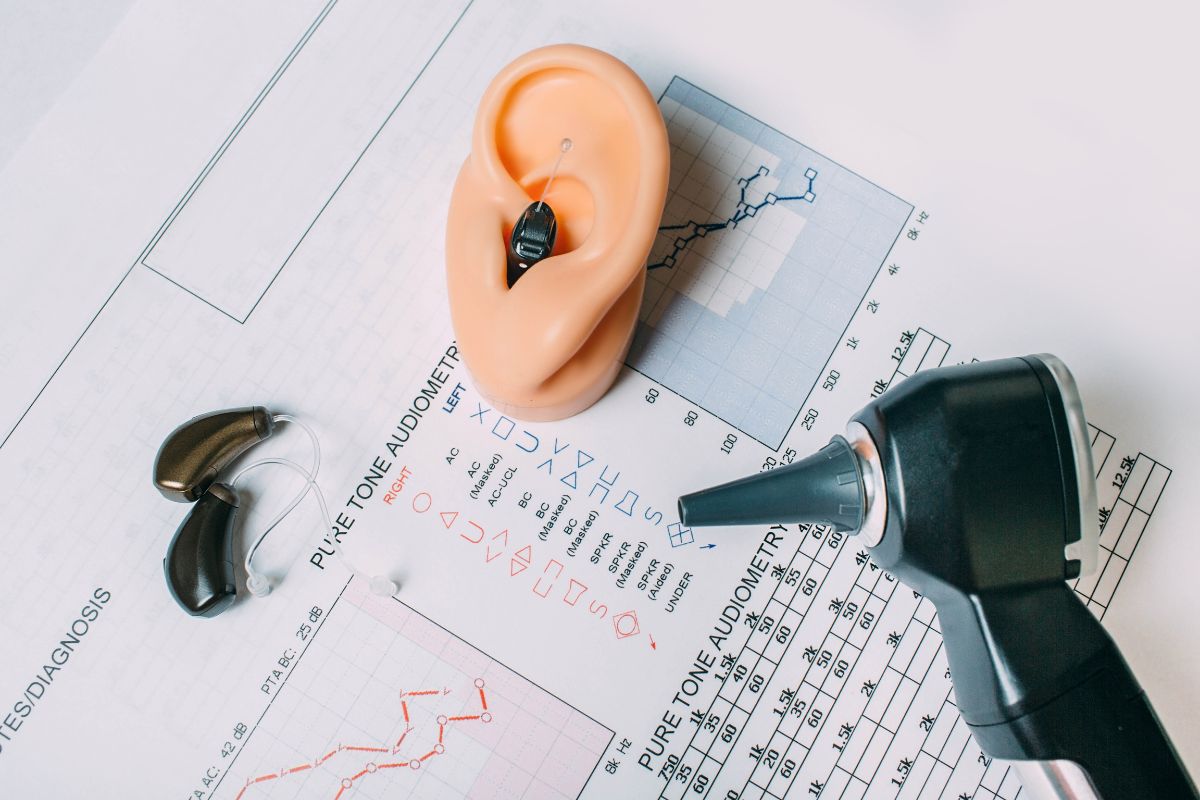
Medical providers perform a series of tests to determine the worker's "hearing threshold" at four specific frequencies: 500, 1000, 2000, and 3000 Hertz (Hz). These frequencies are critical because they represent the range of human speech.
The Calculation Process
- Averaging: The decibel loss at each of the four frequencies is added together and divided by four to find the average loss for each ear.
- The 25 dB Fence: The first 25 decibels of loss are typically considered "non-compensable" as they fall within a range that doesn't significantly impact daily life. Therefore, 25 is subtracted from the average.
- The 1.5% Multiplier: The remaining number is multiplied by 1.5% to determine the percentage of impairment for that ear (monaural impairment).
- Binaural Weighting: To determine the total body impairment, the "better ear" is weighted more heavily than the "poorer ear" (usually a 5:1 ratio) to reflect how the brain processes sound from both sides.
| Feature | Noise-Induced Hearing Loss (NIHL) | Traumatic Hearing Loss |
|---|---|---|
| Onset | Gradual (Years) | Sudden (Instantaneous) |
| Symmetry | Typically Bilateral (Both ears) | Can be Unilateral (One ear) |
| Cause | Machinery, Engines, Constant Hum | Explosions, Physical Impact, Pressure |
| Proof Needed | Long-term noise surveys/logs | Accident report, ER records |
| Primary Benefit | Hearing aids & PPD Award | Surgery, Treatment & PPD Award |
The Filing Process: Evidence and Documentation
Filing a claim for hearing loss requires a more rigorous documentation trail than a typical injury because of the invisible nature of the condition.
Step 1: Reporting the Injury
Even if the loss was gradual, you must notify your employer in writing as soon as you are diagnosed with work-related hearing loss. Failure to report within the state-mandated window (often 30 to 90 days) can result in a denial.
Step 2: The Independent Medical Examination (IME)
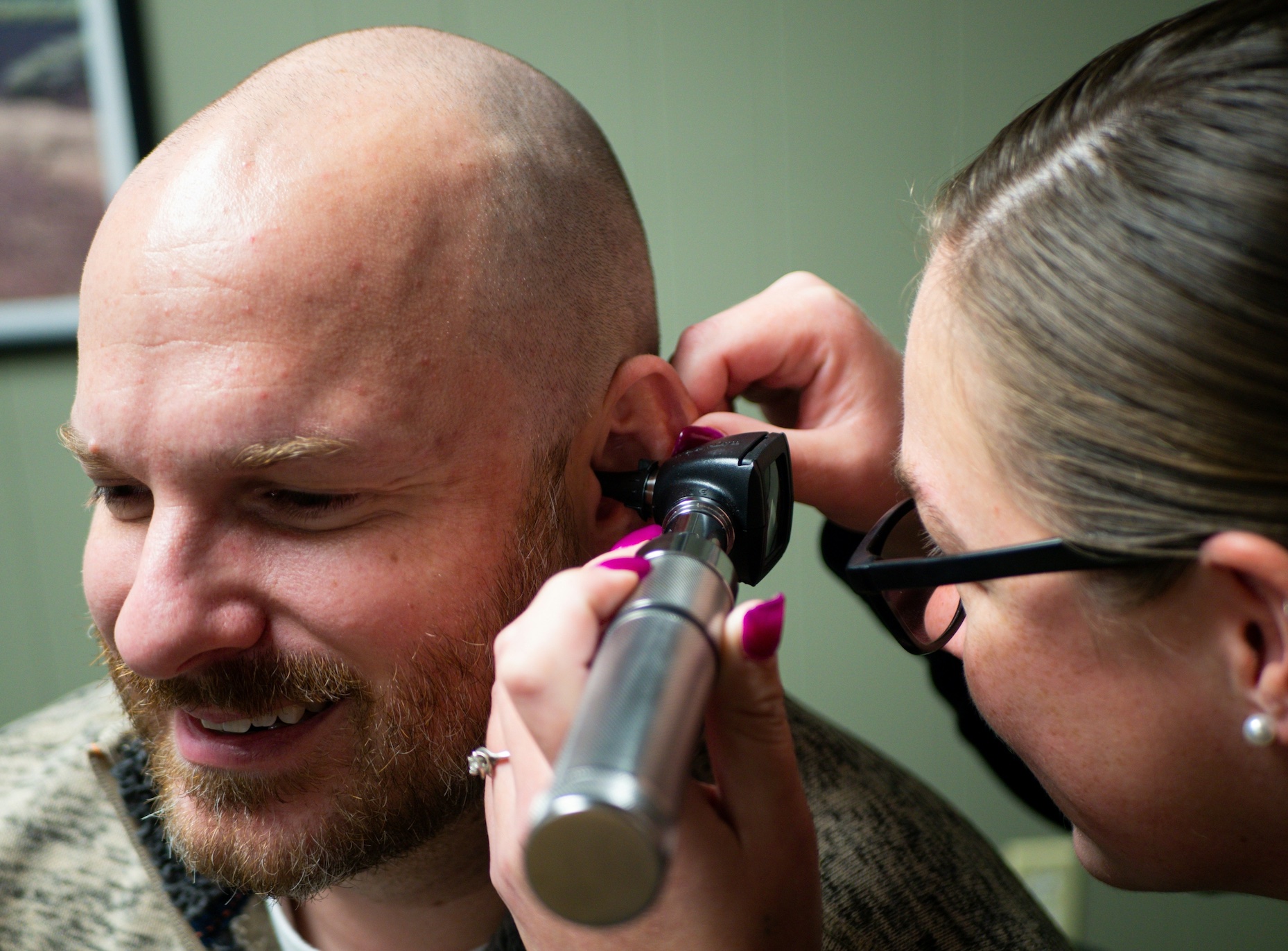
The insurance carrier will likely require you to visit an audiologist or Otolaryngologist (ENT) of their choosing. This doctor will perform a comprehensive audiogram and may also conduct "speech discrimination" tests to see how well you understand words in a noisy room. It is vital to provide this doctor with a complete history of your noise exposure at work.
Step 3: Establishing the Link (Causation)
The biggest hurdle in these claims is proving "medical causation." Your physician must state that your workplace environment was a "substantial contributing factor" to your hearing loss. If you worked for multiple employers in noisy environments, many states have "Last Injurious Exposure" rules, which place the liability on the most recent employer where the noise was sufficient to cause damage.
Employer Challenges: Age, Hobbies, and Prior History
Insurance companies frequently contest hearing loss claims by pointing to external factors. Understanding these defenses allows claimants to prepare their evidence more effectively.
- Presbycusis (Aging): This is the most common defense. As people age, natural hearing loss occurs. Some state laws allow insurance companies to "subtract" a certain number of decibels from a claim based on the worker's age to ensure they are only paying for the work-related portion of the loss.
- Non-Occupational Exposure: Carriers will investigate your life outside of work. Do you hunt? Do you ride motorcycles? Do you play in a band? If they can prove significant "recreational" noise exposure, they may argue that your workplace was not the primary cause of the damage.
- Pre-existing Conditions: If you had hearing issues before starting the job, the employer is only responsible for the aggravation or worsening of the condition during your tenure with them. This is why "baseline audiograms" taken at the start of employment are so important for both parties.
Benefits and Settlements in 2026
Once a claim is accepted or awarded, the benefits typically fall into two categories:
Medical Benefits
The employer's insurance is responsible for all "reasonable and necessary" medical care related to the hearing loss. In 2026, this includes high-end digital hearing aids, which can cost between $3,000 and $7,000 per pair. Most states also require the insurance company to pay for replacement hearing aids every 3 to 5 years, as well as batteries, repairs, and annual check-ups for the remainder of the worker's life.
Permanent Partial Disability (PPD)
This is a cash settlement or a series of weekly payments intended to compensate the worker for the permanent loss of a bodily function. The amount is usually based on a "schedule of benefits." For example, a state might decree that total loss of hearing in one ear is worth 60 weeks of pay, while total loss in both ears is worth 200 weeks. Your specific impairment rating (e.g., 20% binaural loss) would then be applied to that schedule to determine your final payout.
Disclaimer: The information provided in this article is for educational purposes only and does not constitute legal or medical advice. Workers' compensation laws vary significantly by state and country. Consult with a qualified attorney or medical professional in your jurisdiction for specific guidance on your claim.
Frequently Asked Questions
Can I still file a claim if I have already retired?
Yes, in many jurisdictions you can file a claim after retirement, provided you do so within the statute of limitations. This "discovery rule" often allows you to file within a year or two of the date you first learned from a doctor that your hearing loss was related to your former career.
Do I need to be completely deaf to qualify?
No. Workers' compensation covers "partial" hearing loss. Even if you can still hear some sounds, if your hearing threshold has dropped significantly below the "25 dB fence" in the speech frequencies, you may be eligible for benefits and a permanent disability award.
Will filing a claim affect my current job?
By law, employers are prohibited from retaliating against an employee for filing a workers' compensation claim. Hearing loss claims are common in industrial sectors, and most employers view them as a standard cost of doing business covered by their insurance premiums.
What if my employer didn't provide ear protection?
Failure to provide Personal Protective Equipment (PPE) like earplugs or muffs may increase the employer's liability or result in OSHA fines, but you are eligible for workers' compensation regardless of whether the employer was "at fault." Workers' compensation is a no-fault system.
How often do I get new hearing aids under a claim?
Standard practice in 2026 allows for new hearing aids every 3 to 5 years. Technology in the auditory field advances rapidly, and the insurance carrier is generally required to provide equipment that maintains your functional hearing at the highest possible level.
Next Steps: Securing Your Rights
If you suspect you are suffering from work-related hearing loss, your first action should be to schedule a comprehensive audiogram with an ENT or a licensed audiologist. Request a copy of the results and a written opinion on whether the "pattern" of loss (often a "notch" at 4000 Hz) is consistent with occupational noise exposure. Once you have this medical evidence, provide a formal written notice of injury to your employer and consider consulting a workers' compensation specialist to ensure your impairment rating is calculated accurately under the 2026 guidelines.
Image Gallery