The Biomechanics and Physical Conditioning of Coco Gauff: An Elite Athlete Profile
Coco Gauff’s physical profile is defined by a 5'9" (1.75m) frame that prioritizes explosive lateral movement, elite-level endurance, and a significant wingspan. Her athletic success is the result of a specialized training regimen that...
Coco Gauff’s physical profile is defined by a 5'9" (1.75m) frame that prioritizes explosive lateral movement, elite-level endurance, and a significant wingspan. Her athletic success is the result of a specialized training regimen that balances lean muscle development for power serves with the flexibility required for world-class defensive baseline play.
Contents
The Evolution of Coco Gauff’s Athletic Frame
Since her professional debut at age 15, Coco Gauff has undergone a deliberate physical transformation. In 2026, looking back at her developmental arc, it is clear that her team focused on a "functional strength" model rather than pure hypertrophy. As a teenager, Gauff was recognized for her natural speed; however, the transition to a Grand Slam champion required a more robust physical foundation to withstand the rigors of the WTA Tour’s calendar.
Her physical evolution has been characterized by three distinct phases. First, the development of a stable core to support her high-velocity serve. Second, the hardening of her lower body to facilitate the "open-stance" hitting that allows her to recover quickly from the corners of the court. Finally, a focus on shoulder stability and endurance, which has been critical in maintaining her service speed during long, three-set matches in humid conditions like those found at the US Open or Miami Open.
By age 22, Gauff’s body has reached a peak state of athletic maturity. She possesses a unique combination of "long levers" (her arms and legs) and a low center of gravity when defending, which allows her to slide on hard courts—a maneuver that puts immense strain on the ankles and hips but provides a tactical advantage in court coverage.
Biomechanics and On-Court Performance
To understand the "Coco Gauff body" is to understand the physics of modern tennis. Her height, while not as towering as some of her peers like Aryna Sabalenka or Elena Rybakina, is considered the "sweet spot" for women’s tennis. It provides enough leverage for a 120+ mph serve while remaining compact enough to maintain the elite agility required for transition play.
The Power of the Kinetic Chain
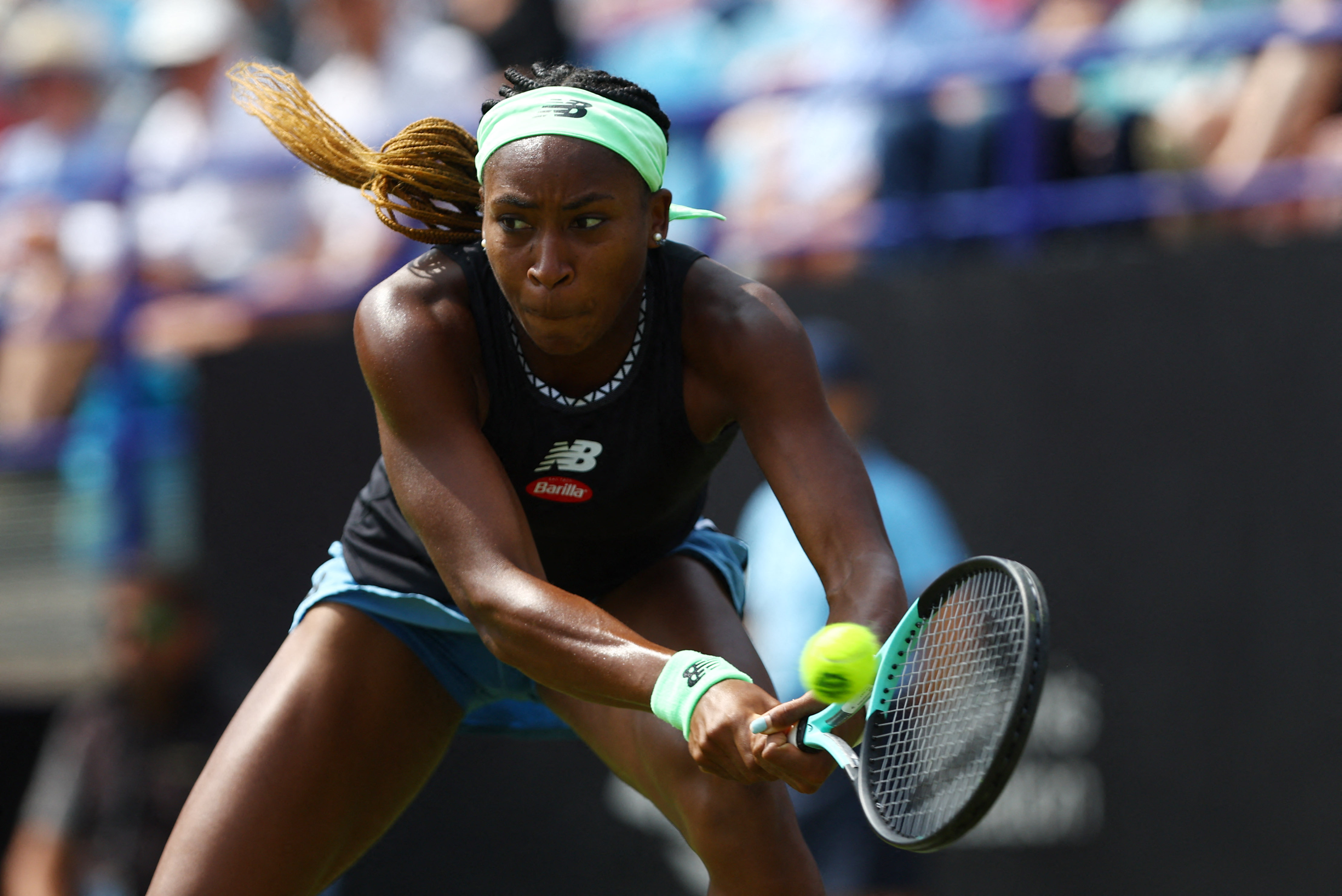
Gauff’s power does not originate solely from her upper body. Instead, it is generated through a highly efficient kinetic chain. When Gauff prepares for a backhand—statistically one of the most reliable shots in tennis—her power is drawn from the ground up. Her quads and glutes drive the rotation, while her core transfers that energy through her torso to her arms.
Lateral Speed and Fast-Twitch Fibers
One of Gauff's greatest physical assets is her "first-step" explosion. This is a result of a high density of fast-twitch muscle fibers and specific plyometric training. In professional tennis, the ability to recognize a ball’s trajectory and move 10 feet in under two seconds is the difference between a winner and a forced error. Gauff’s body is optimized for these short, violent bursts of speed, followed by the immediate deceleration required to set her feet for a shot.
Training Regimen and Functional Fitness
Gauff’s physique is maintained through a disciplined, year-round conditioning program. While the specifics of her gym sessions are often kept private by her coaching team, the results suggest a heavy emphasis on:
- Plyometrics: Box jumps, lateral bounds, and medicine ball tosses to maintain explosive power.
- Isometrics: Holding positions to build the stabilizing strength necessary for deep lunges on the court.
- Resistance Band Work: Used extensively for shoulder health and rotator cuff maintenance, which is vital for a player with such a high-volume serve.
- Yoga and Mobility: Maintaining the "elasticity" of the muscles to prevent tears and strains during extreme stretches.
In 2026, the integration of data-driven recovery—using wearable technology to monitor heart rate variability (HRV) and sleep quality—has become a standard part of her physical maintenance. This ensures that her body is not overtrained, reducing the risk of the stress fractures that often plague younger players.
The 2024 ESPN Body Issue and Cultural Impact
In May 2024, Coco Gauff was featured in the ESPN Body Issue, a significant moment in her career that shifted the conversation from her "potential" to her "power." The feature showcased her physique not as a product of aesthetic pursuit, but as a finely tuned machine built for a specific purpose: professional tennis.
The images highlighted the muscularity of her back and shoulders, areas that are often underdeveloped in amateur athletes but are essential for the high-intensity service motions of the pro game. For many young athletes, Gauff’s appearance in the issue served as a blueprint for "strong over skinny," emphasizing that the "ideal" body is one that is capable of achieving the athlete's specific performance goals.
Comparative Physical Analysis
To better understand Gauff’s physical advantages, it is helpful to compare her attributes with the "standard" archetypes currently found on the WTA Tour as of 2026.
| Physical Attribute | Coco Gauff | Power Baseliner (e.g., Sabalenka) | Tactician (e.g., Swiatek) |
|---|---|---|---|
| Primary Strength | Speed & Recovery | Raw Groundstroke Power | Precision & Footwork |
| Reach Advantage | High (Long Limbs) | Very High | Moderate |
| Agility Rating | Elite | Moderate/High | Elite |
| Serve Leverage | High Efficiency | Maximum Torque | High Placement Accuracy |
| Durability Style | High Elasticity | High Mass/Impact | Balance & Fluidity |
This comparison illustrates that while Gauff may not have the sheer mass of the tour’s biggest hitters, her body is engineered for a "hybrid" style—combining the defensive capabilities of an agile mover with the offensive potential of a tall server.
Nutrition and Recovery Protocols
A world-class athlete's body is also a reflection of their metabolic management. For Gauff, nutrition is viewed as "fueling for the fifth set." Her diet is high in complex carbohydrates during tournament weeks to maintain glycogen stores, with a significant emphasis on lean proteins for muscle repair.
Recovery is perhaps the most critical component of the "Coco Gauff body" in 2026. Given the grueling nature of the tour, her team utilizes:
- Cryotherapy and Ice Baths: To reduce systemic inflammation after matches.
- Compression Therapy: Utilizing pneumatic boots to enhance blood flow and lymphatic drainage in the legs.
- Hyperbaric Chambers: Occasionally used by top-tier athletes to increase oxygen saturation and speed up cellular repair.
Injury Prevention and Longevity
The greatest threat to an athlete’s body is "wear and tear." For a player like Gauff, who plays a high-intensity, movement-heavy game, the knees and ankles are under constant duress. Her training includes "pre-habilitation" exercises specifically designed to strengthen the small stabilizing muscles around the patella and the anterior talofibular ligament (ATFL).
By focusing on balance and proprioception—the body’s ability to sense its position in space—Gauff reduces the likelihood of "non-contact" injuries. This focus on the "invisible" side of fitness is what allows elite athletes to remain at the top of the rankings well into their late 20s and early 30s.
FAQ: Understanding Coco Gauff's Physical Profile
How tall is Coco Gauff and how does it help her game?
Coco Gauff is 5'9" (1.75m). This height is considered optimal for tennis as it provides a high contact point for the serve, increasing the "window" of the service box, while still allowing for the low-to-the-ground movement required to return deep groundstrokes.
Did Coco Gauff appear in the ESPN Body Issue?
Yes, Coco Gauff was a featured athlete in the 2024 ESPN Body Issue. The feature focused on her muscular development and the physical demands of being a top-five WTA player, highlighting her as a symbol of strength and athletic utility.
What is the focus of Coco Gauff's gym workouts?
Her workouts focus on functional athleticism rather than bodybuilding. This includes explosive plyometrics for speed, core stability for service power, and high-repetition resistance training to build muscular endurance for long matches.
How does Coco Gauff maintain her speed?
Her speed is maintained through a combination of genetic fast-twitch fiber dominance and specific track-style sprint drills. She also works extensively on "court-specific" agility, which involves lateral shuffles and rapid direction changes.
Has Coco Gauff's physique changed since she turned pro?
Yes, since 2019, Gauff has added significant lean muscle mass, particularly in her shoulders, core, and legs. This physical maturation has allowed her to increase her average first-serve speed and hit the ball with more "heavy" topspin.
What are the most common injuries Gauff’s training seeks to prevent?
Her team focuses on preventing shoulder impingement, lower back strains, and ankle rolls. These are the most common injuries for players with her high-speed, defensive-to-offensive transition style.
Practical Recommendations for Aspiring Athletes
If you are looking to emulate the physical principles of Coco Gauff’s conditioning, the focus should be on functional mobility rather than static strength.
- Prioritize the Core: A strong core is the "bridge" between your movement and your power. Without it, you cannot transfer energy from your legs to your arms.
- Focus on Flexibility: High-level tennis requires the body to move through extreme ranges of motion. Incorporate dynamic stretching and yoga to ensure your muscles can handle sudden extensions.
- Consistency Over Intensity: Gauff’s body is the result of years of daily, incremental improvements. Avoid "ego lifting" and focus on movements that translate directly to your sport.
- Invest in Recovery: You do not get stronger during the workout; you get stronger while you sleep. Prioritize rest and nutrition as much as you do the training itself.
Gauff remains a premier example of the "modern athlete"—one whose body is a testament to the intersection of sports science, disciplined nutrition, and relentless physical preparation.
Image Gallery