Term Life Insurance After 60: Policy Options, Costs, and Eligibility in 2026
Securing term life insurance after age 60 is a practical strategy for managing late-stage financial obligations, such as outstanding mortgages, final debts, or income replacement for a surviving spouse. In 2026, seniors have access to...
Securing term life insurance after age 60 is a practical strategy for managing late-stage financial obligations, such as outstanding mortgages, final debts, or income replacement for a surviving spouse. In 2026, seniors have access to diverse term options ranging from 10 to 20 years, featuring streamlined digital underwriting and competitive pricing for those in good health.
Contents
Understanding Term Life Insurance Availability for Seniors
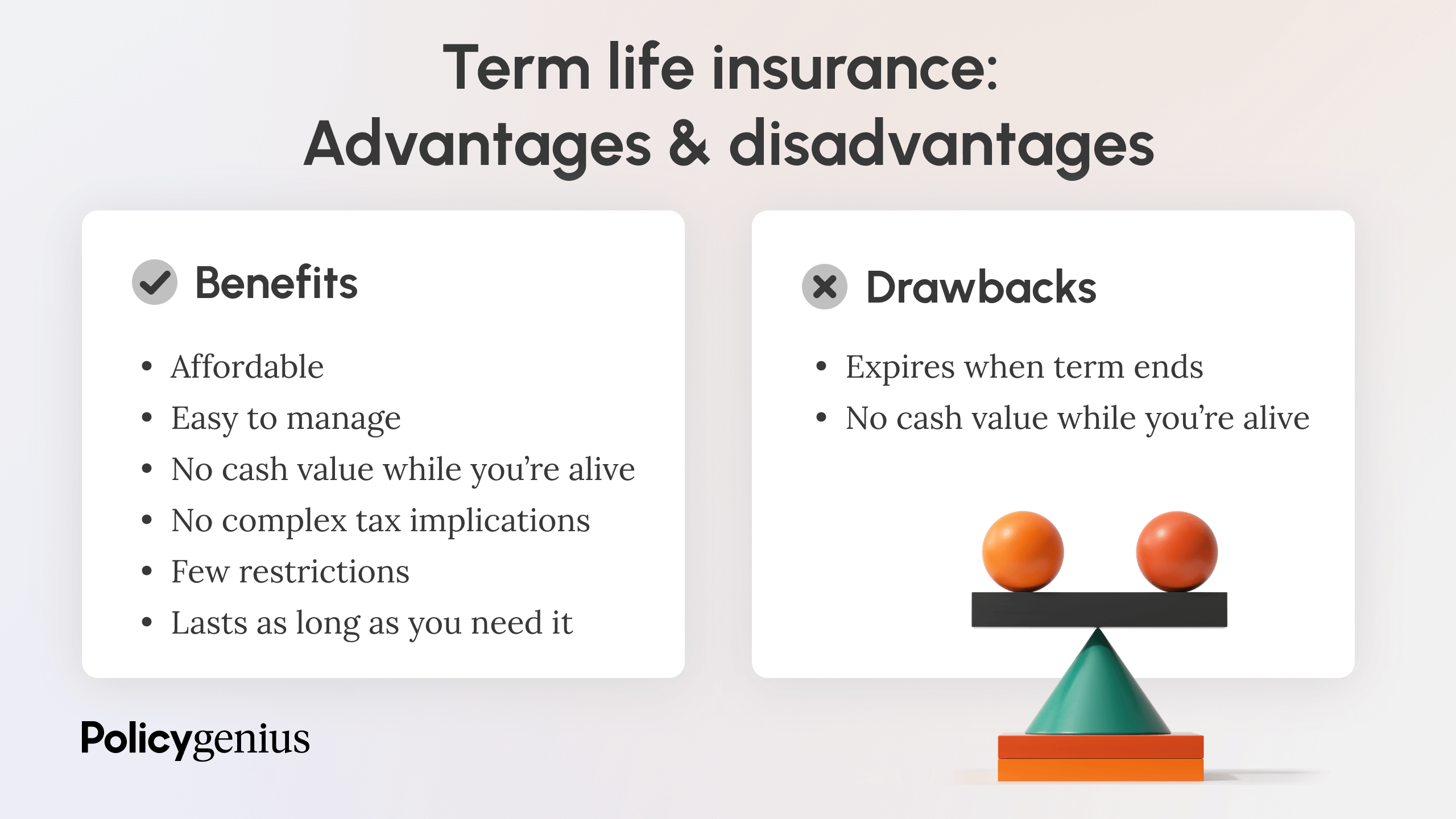
For individuals entering their sixties, the primary purpose of life insurance often shifts from long-term family protection to specific debt liquidation and estate liquidity. Term life insurance remains the most cost-effective way to address these needs because it provides coverage for a fixed period—typically 10, 15, or 20 years—without the high management fees associated with permanent cash-value policies.
As of 2026, the life insurance industry has refined its risk assessment for the "silver" demographic. Advances in geriatric medicine and longer life expectancies have encouraged carriers to extend term limits. While a 30-year term is rarely available to someone over 60, 10-year and 15-year policies are widely accessible. These policies pay a tax-free death benefit to beneficiaries if the insured passes away during the term. If the insured outlives the term, the coverage simply expires, unless a conversion rider is in place.
The eligibility for these products depends heavily on the "attained age" at the time of application. Most top-tier insurers set a maximum entry age for specific term lengths. For example, while you can easily find a 10-year term at age 75, finding a 20-year term at age 70 is significantly more challenging due to the statistical probability of mortality within that window.
Key Term Life Insurance Options After Age 60
When evaluating options, the choice usually comes down to the duration of the "need." If the goal is to cover a mortgage that has 12 years remaining, a 15-year term is the logical choice. If the goal is to provide a safety net until Social Security benefits maximize at age 70, a 10-year term suffices.
10-Year and 15-Year Term Policies
These are the most common selections for seniors. They offer the lowest premiums because the insurer’s risk is limited to a shorter timeframe. In 2026, many carriers have introduced "Level Term" products for this bracket, meaning your premiums are guaranteed never to increase during the 10 or 15-year period. This provides budgetary certainty for those on fixed retirement incomes.
20-Year Term Policies
Securing a 20-year term at age 60 or 62 is possible but requires stricter underwriting. By age 65, many carriers begin to phase out the 20-year option, shifting applicants toward shorter durations. The premium jump between a 15-year and a 20-year policy for a 60-year-old is often substantial, as the insurer is pricing in the higher mortality risk of the insured reaching their 80s.
Laddering Strategies
Some seniors utilize a "laddering" strategy to optimize costs. This involves purchasing multiple smaller policies with different expiration dates. For instance, a 60-year-old might buy a $200,000 10-year term to cover a specific business debt and a $100,000 20-year term to provide for a spouse’s long-term needs. This ensures that as financial liabilities decrease over time, the total premium load also decreases.
Annual Renewable Term (ART)
While less common, ART allows an individual to buy insurance one year at a time. The advantage is a very low initial cost. However, the disadvantage is that the premium increases every single year based on your current age. This is generally only recommended for very short-term needs, such as covering a bridge loan or waiting for a property sale to close.
The Underwriting Process: What to Expect in 2026
Underwriting is the process by which an insurance company evaluates your health and lifestyle to determine your premium. For those over 60, this process has become significantly faster due to the integration of Electronic Health Records (EHR).
Traditional vs. Accelerated Underwriting
Traditional underwriting often involves a paramedical exam, where a technician visits your home to take blood pressure, height, weight, and blood/urine samples. However, in 2026, "Accelerated Underwriting" (AU) has become the standard for many healthy seniors. AU uses algorithms to scan your prescription history, motor vehicle records, and MIB (Medical Information Bureau) reports to approve policies in hours or days without a medical exam.
Key Health Metrics for Seniors
Insurers looking at applicants over 60 focus heavily on "well-managed" conditions. Having high blood pressure or high cholesterol is not an automatic disqualifier, provided it is controlled by medication and documented by regular physician visits. Carriers in 2026 are particularly interested in:
- Cognitive Health: Some insurers may include a brief phone interview or "word recall" test for applicants over 70.
- Tobacco Use: Smoking remains the single largest factor in premium inflation, often tripling the cost of coverage.
- Build (BMI): Stability in weight is viewed favorably, as sudden weight loss can indicate underlying health issues.
Cost Comparison and Premium Estimations
Premiums are calculated based on mortality tables. For every year you wait to apply after age 60, the cost typically increases by 8% to 12%. The following table illustrates estimated monthly premiums for a $250,000 10-Year Level Term policy in 2026 for non-smokers in "Preferred" health.
| Issue Age | Gender | Monthly Premium (10-Year Term) | Monthly Premium (20-Year Term) |
|---|---|---|---|
| 60 | Male | $85 - $110 | $160 - $210 |
| 60 | Female | $65 - $85 | $115 - $150 |
| 65 | Male | $145 - $185 | $310 - $390 |
| 65 | Female | $105 - $135 | $210 - $275 |
| 70 | Male | $270 - $350 | N/A (Limited Availability) |
| 70 | Female | $185 - $240 | N/A (Limited Availability) |
Note: These figures are estimates based on 2026 market trends. Actual quotes depend on specific health history and carrier guidelines.
Essential Riders for Senior Term Policies
Riders are optional add-ons that customize a policy. For seniors, certain riders provide critical flexibility that can protect the policy's value if health changes.
- Terminal Illness Accelerated Death Benefit: Most modern policies include this for free. It allows the insured to access a portion of the death benefit (usually up to 75-90%) if they are diagnosed with a terminal illness with a life expectancy of 12-24 months.
- Conversion Rider: This is perhaps the most important rider for someone over 60. it allows you to convert your term policy into a permanent (whole life or universal life) policy without a new medical exam. This is vital if you develop a chronic illness during the term and realize you will need coverage indefinitely.
- Waiver of Premium: If you become totally disabled, the insurer waives your premium payments. However, many carriers stop offering this rider after age 60 or 65.
- Chronic Illness Rider: Similar to the terminal illness rider, this allows for an early payout if the insured cannot perform two of the six "Activities of Daily Living" (ADLs), such as bathing or dressing.
Alternatives to Term Life Insurance
If the cost of term insurance is prohibitive or if you have significant health issues, other products may be more suitable.
Guaranteed Issue Life Insurance
These policies require no medical exam and ask no health questions. The trade-off is that they have low coverage limits (usually capped at $25,000) and a "graded" death benefit. If you die within the first two or three years of the policy from natural causes, your beneficiaries only receive a refund of premiums plus interest. This is a last-resort option for those who are uninsurable on the open market.
Final Expense Insurance
Also known as "burial insurance," this is a small whole life policy designed to cover funeral costs and small debts. Unlike term insurance, it never expires as long as premiums are paid. For seniors who only need $10,000 to $20,000 in coverage, a final expense policy may be more practical than a term policy with a $100,000 minimum.
Permanent Life Insurance (Whole or Universal)
For those who need coverage to last until death for estate tax purposes or to leave a guaranteed legacy, permanent insurance is the solution. While significantly more expensive than term, it builds cash value and offers lifelong protection. In 2026, "Guaranteed Universal Life" (GUL) is a popular middle ground; it functions like a term policy that lasts until age 100 or 121 but does not focus on cash value accumulation, making it cheaper than standard whole life.
Common Pitfalls to Avoid
When shopping for term life insurance after 60, avoiding certain mistakes can save thousands of dollars over the life of the policy.
- Waiting for Better Health: Many people wait to "lose weight" or "lower their blood pressure" before applying. However, the age increase often offsets any savings gained from health improvements. It is usually better to secure coverage now and request a "re-rating" later if your health improves.
- Over-insuring: Do not buy more coverage than you need. Use a calculator to determine the exact amount required to cover your mortgage and immediate survivor needs. Every $50,000 of extra coverage adds significant cost at age 60+.
- Ignoring the Financial Strength of the Carrier: Always check the A.M. Best or Standard & Poor’s ratings of the insurer. You want a company with an "A" rating or better to ensure they have the claims-paying ability to be there when your family needs them.
- Failing to Disclose Medical History: Being dishonest on an application can lead to a denial of claims during the "contestability period" (usually the first two years of the policy). Be transparent about all medications and past diagnoses.
Practical Recommendations
If you are over 60 and considering term life insurance, your first step should be to define your timeline. If your youngest child graduates college in five years and your mortgage is paid off in seven, a 10-year term is your most efficient vehicle.
Next, gather your medical records. Knowing your exact dosages and the dates of your last check-ups will allow an independent broker to shop multiple carriers on your behalf. Since different companies have different "niches"—some are more lenient with diabetes, while others are better for prostate cancer survivors—shopping the market is essential.
Finally, review your existing employer-provided life insurance. Many "group" policies end or reduce significantly upon retirement. Do not rely on work-based coverage as your primary plan if you intend to retire within the next few years. Secure an individual policy while your health and age are at their most favorable points.
For more information on insurance regulations and consumer protections, you can visit the National Association of Insurance Commissioners (NAIC) or consult the Insurance Information Institute (III) for educational resources on senior coverage options.
FAQ
Can I get a 30-year term life policy at age 60? It is extremely difficult to find a 30-year term policy for a 60-year-old. Most insurers cap the expiration of term policies at age 80 or 85. Since a 30-year term would take the insured to age 90, carriers view the risk as too high for a term product. A 20-year term is typically the maximum duration available for this age group.
Is a medical exam mandatory for seniors? No, a medical exam is not always mandatory in 2026. Many companies offer "no-exam" or "accelerated" underwriting for those up to age 70, provided they have a relatively clean medical history. However, if you have significant health issues, a traditional exam might actually help you get a better rate by proving your condition is well-managed.
What happens if I outlive my term policy? If you outlive the term (e.g., your 10-year policy ends when you are 70), the coverage ceases. You will not receive any money back unless you purchased a "Return of Premium" rider, which is rare and expensive for seniors. This is why the "Conversion Rider" is crucial; it allows you to move to a permanent policy before the term expires without a new exam.
Does term life insurance cover COVID-19 or other pandemics? Yes. As long as you were truthful on your application and the policy is active, term life insurance covers death from natural causes, including respiratory viruses, pneumonia, and other complications arising from pandemics. There are no "pandemic exclusions" in standard life insurance contracts in 2026.
Image Gallery