How to Choose the Best Fashion Design Program for Your Career Goals
Choosing the best fashion design program requires evaluating accreditation, technical curriculum balance—such as patternmaking, 3D digital apparel software, and textile science—industry connections, and facility quality. Candidates sho...
Choosing the best fashion design program requires evaluating accreditation, technical curriculum balance—such as patternmaking, 3D digital apparel software, and textile science—industry connections, and facility quality. Candidates should match their target career niche with a school’s specific strengths, faculty network, internship placement rates, and portfolio output expectations to maximize return on educational investment.
Contents
Aligning Career Specializations with Educational Outcomes
Fashion design encompasses diverse industry sectors, each requiring distinct technical skill sets, material knowledge, and aesthetic philosophies. Before selecting an educational institution, aspiring designers must define their primary career target, as curricula vary significantly between colleges.
- Determine Your Career Path
- Ready-to-Wear / Couture
- Focus on Draping, Tailoring, Art History & Runway
- Technical / Performance
- Focus on Functional Textiles, Pattern Grading & Specs
- Sustainable & Digital Apparel
- Focus on 3D CAD, Supply Chains, Circular Design
- Ready-to-Wear / Couture
Ready-to-Wear and Luxury Couture
Programs tailored toward haute couture and high-end ready-to-wear (prêt-à-porter) emphasize traditional craftsmanship, high-fashion illustration, experimental silhouette development, fine draping, and garment construction. Students aiming for luxury houses benefit from schools with strong ties to historic fashion capitals like Paris, Milan, London, or New York, where heritage techniques and conceptual design lead the curriculum.
Performance Wear and Functional Apparel
Designers interested in activewear, outerwear, or functional medical and protective clothing require an education grounded in technical textile performance, garment ergonomics, and specialized construction methods like seam-sealing and sonic welding. Look for programs offering dedicated sportswear tracks or active partnerships with performance gear manufacturers.
Sustainable and Circular Design
As environmental regulations and consumer expectations shift, sustainable design has evolved from an elective topic into a primary discipline. Leading institutions integrate circular supply chain strategy, zero-waste pattern cutting, bio-materials, upcycling methodology, and life-cycle assessment (LCA) tools directly into their core studio tracks.
Digital Fashion and Virtual Apparel
Modern apparel development relies heavily on digital workflows. Students aiming to design for virtual environments, gaming, digital fitting, or accelerated physical prototyping should prioritize programs that integrate 3D CAD software, virtual runway visualization, and digital asset management from the first year of study.
Understanding Degree Types, Credentials, and Accreditation
Navigating higher education credentials ensures that your chosen qualification aligns with your long-term career trajectory, budget, and learning preferences.
- Select Educational Path
- BFA
- 65-80% Studio
- BA
- 30-50% Studio
- AAS / Dip
- 80-100% Technical
- BFA
Bachelor of Fine Arts (BFA) in Fashion Design
The BFA is a studio-intensive four-year degree designed for students seeking deep immersion in hands-on garment creation. Typically, 65% to 80% of coursework takes place in studio settings, focusing on draping, flat patternmaking, sewing, collection development, and digital design. This path provides the comprehensive portfolio output necessary for institutional design roles at major apparel brands.
Bachelor of Arts (BA) in Fashion Design
The BA degree balances practical studio work with academic studies in liberal arts, fashion history, theory, and business administration. Studio credits usually represent 30% to 50% of total coursework. A BA suits students targeting roles in fashion journalism, trend forecasting, creative direction, brand management, or design strategy.
Associate Degrees (AAS or AA) and Professional Diplomas
Associate of Applied Science (AAS) degrees and one- to two-year diploma programs focus exclusively on fundamental technical execution—such as patternmaking, sample sewing, and technical illustration. These programs provide a fast, cost-effective route into entry-level technical design, assistant tailoring, or sample room production roles.
Master of Fine Arts (MFA) and Master of Arts (MA)
Graduate design programs cater to individuals with existing foundational training or industry experience who wish to refine a distinct creative identity, conduct material research, or transition into academic and directorial positions. Master’s programs prioritize original theoretical inquiry, interdisciplinary collaboration, and high-level portfolio presentation.
Institutional and Programmatic Accreditation
Verification of institutional status protects your financial investment and academic standing. In North America, regional accreditation ensures degree legitimacy and federal financial aid eligibility. Program-specific oversight from organizations such as the National Association of Schools of Art and Design (NASAD) confirms that facilities, faculty qualifications, library resources, and educational rigor meet national studio art benchmarks.
Evaluating the Core Curriculum: Essential Technical and Business Skills
A robust fashion design curriculum balances traditional craft, modern technology, and commercial viability. Ensure your target school provides rigorous instruction across four primary pillars:
| 1. Physical Craftsmanship | 2. Digital Software Proficiency |
|---|---|
| • Draping & Tailoring• Industrial Sewing | • CLO 3D / Browzwear / Optitex• Adobe Illustrator / TechPacks |
| 3. Material Science | 4. Business & Supply Chain |
|---|---|
| • Textile Identification• Sustainable Fiber Sourcing | • Costing & Merchandising• Intellectual Property |
Physical Craftsmanship and Technical Patternmaking
Digital tools augment physical craft but cannot replace a fundamental understanding of how three-dimensional fabric moves over the human form. Look for course descriptions detailing:
- Three-dimensional draping: Manipulating muslin directly on standard and custom dress forms to build complex silhouettes.
- Flat patternmaking and drafting: Translating 3D drape concepts into accurate 2D paper patterns using precise measurements.
- Industrial garment construction: Sewing with specialized equipment, including overlockers, coverstitch machines, leather stitchers, and pressing systems.
- Advanced tailoring: Constructing structured outerwear, inner canvas support systems, linings, and technical closures.
Digital Software Proficiency
Industry-standard software integration is crucial for employment readiness. Prioritize programs incorporating:
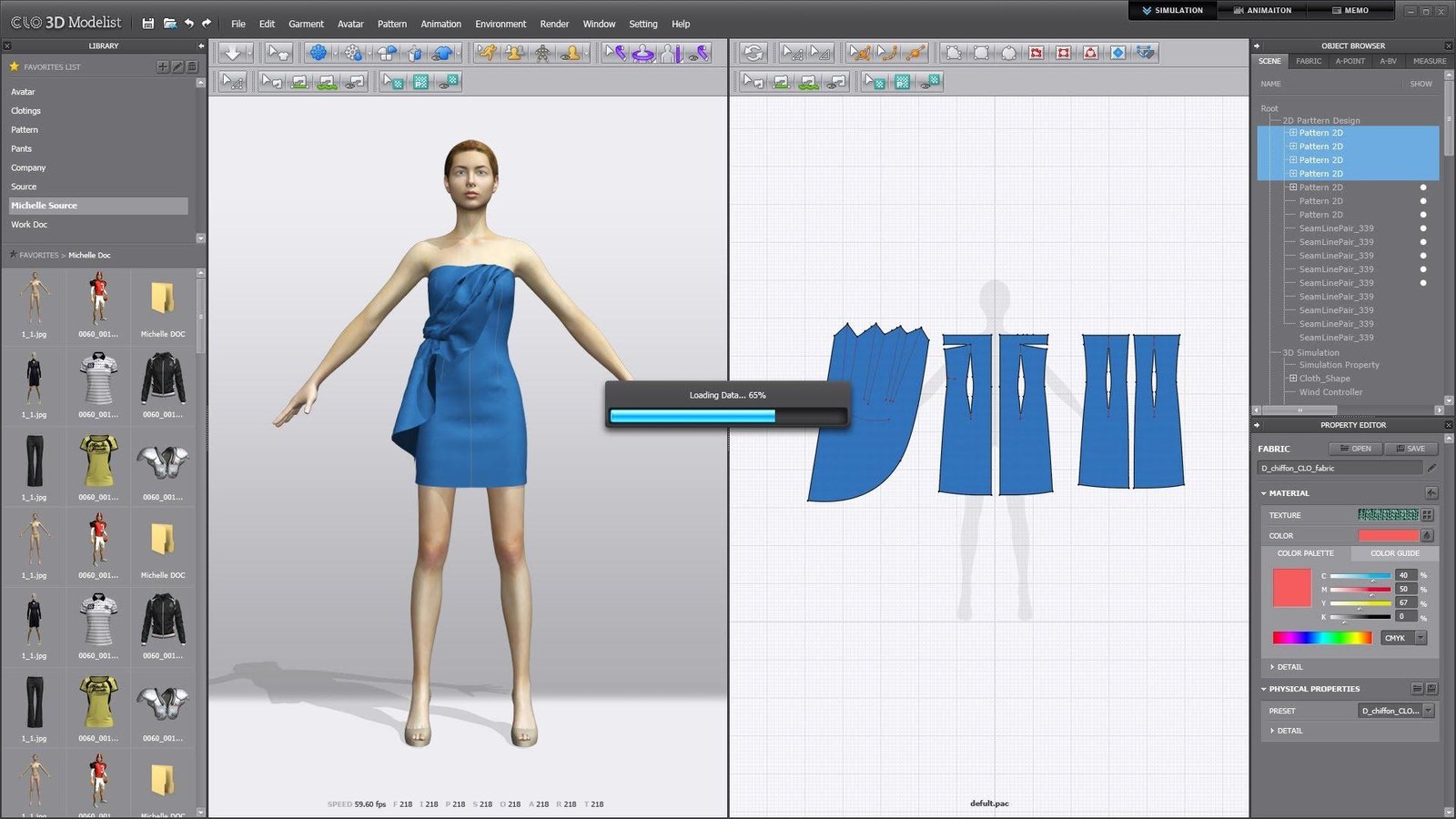
- 3D Digital Fashion Software: Training in applications such as CLO 3D or Browzwear V-Stitcher, which enable true-to-scale digital draping, pattern testing, and virtual line building.
- 2D CAD & Flat Illustration: Technical specification rendering using Adobe Illustrator and Photoshop to build clear, industry-ready line sheets.
- Tech Pack Generation: Structuring comprehensive bill-of-materials (BOM) files, measurement spec sheets, and construction instructions necessary for overseas production facilities.
Material Science and Textile Innovation
Designers must understand fabric properties to predict performance, drape, and durability. Ensure the program offers dedicated laboratory coursework covering:
- Fibers, yarns, knits, wovens, and non-woven structures.
- Dyeing, printing, finish applications, and eco-friendly chemical processing.
- Textile testing standards (tensile strength, colorfastness, shrinkage, pilling).
- Sustainable fiber alternatives, recycled synthetics, and regenerative organic fabrics.
The Business of Fashion and Production
A creative vision requires commercial execution. Strong design programs feature modules covering line planning, garment costing, retail price structure, global supply chain dynamics, factory compliance, intellectual property protection, and brand positioning.
Facilities, Location, and Industry Connections
The physical environment and geographic location of a fashion school directly affect internship access, material sourcing, and career entry opportunities.
| Facility Infrastructure | Geographic & Network Value |
|---|---|
| • Industrial Sample Sewing• Digital Knitting / 3D Print• Specialized Cutting Tables• Textile Sourcing Labs | • Proximity to Garment Districts• Corporate Capstone Sponsors• Annual Runway / Exhibition• Formal Internship Pipelines |
Studio Equipment and Dedicated Workspace
Visit or virtually tour facilities to inspect the technical infrastructure. Key items to look for include:
- Individual drafting tables and professional dress forms (such as Wolf or Alvanon forms) in dedicated year-round studio spaces.
- Industrial sewing machines, specialty seamers, buttonhole cutters, and heat transfer presses.
- Digital fabrication tools, including computerized knitting machines, laser cutters, 3D body scanners, and wide-format fabric printers.
- Material libraries and sample archives available for student research.
Geographic Proximity to Fashion Hubs
Attending a school located in or near major fashion ecosystems (e.g., New York, London, Paris, Milan, Tokyo, or Los Angeles) offers distinct practical benefits:
- Immediate access to fabric shops, trim suppliers, and sample-making workshops.
- Opportunities for term-time internships and part-time assistantships at active fashion houses.
- Guest lectures, portfolio reviews, and critiques delivered by practicing industry professionals.
Internships, Mentorships, and Industry Sponsorships
Inquire about graduate placement records and corporate partnerships. Leading programs require structured summer internships and sponsor senior capstone projects in collaboration with active apparel brands. Direct access to industry recruiters at final capstone showcases significantly accelerates immediate employment after graduation.
Tuition Costs, Financial Aid, and Return on Investment (ROI)
Pursuing fashion design education requires substantial financial planning. Evaluating true total costs against projected career earnings helps ensure long-term stability.
- Calculating Total Education Cost
- Direct Costs
- Tuition
- Campus Fees
- Room/Board
- Hidden Costs
- Fabrics
- Software
- Senior Cap
- Direct Costs
Total Cost of Attendance
Look beyond published base tuition rates. A full financial evaluation must include:
- Institutional Fees: Technology fees, studio access costs, and equipment maintenance charges.
- Material and Supply Expenses: Fabrics, trims, pattern paper, drafting tools, dress forms, specialized thread, and printing services often add $1,500 to $4,000 annually.
- Senior Collection Expenses: Final year capstone collections frequently cost designers between $2,000 and $10,000+ out-of-pocket for specialized textiles, custom shoes, models, and photography.
Financial Assistance and Merit Scholarships
Investigate institutional scholarship opportunities early. Many top design schools award merit-based aid directly tied to the quality of the applicant’s portfolio. Supplemental aid may include need-based grants, work-study positions in studio supply rooms, or donor-funded material stipends.
Salary Expectations and Career Progression
To evaluate potential return on investment, consider entry-level compensation trends. According to industry data from sources like the U.S. Bureau of Labor Statistics, assistant designer and junior technical designer starting salaries typically range from $45,000 to $65,000 annually, depending on region and company scale. Mid-level and senior designers, patternmakers, and 3D technical specialists can see earnings increase substantially after 5 to 10 years of consistent growth.
Portfolio Preparation and Application Strategy
Admissions requirements for competitive fashion design programs center heavily on the creative portfolio, which demonstrates visual literacy, spatial awareness, and conceptual thinking.
| Visual Research & Ideation | Technical Execution |
|---|---|
| • Raw Sketchbook Pages• Mood Boards & Fabric Swatches• Color Palette Explorations | • Garment Construction Photos• 2D Technical Flat Drawings• Material Experimentation |
Key Elements of a Strong Fashion Portfolio
Admissions boards prioritize problem-solving and authentic creative process over perfectly finished drawings. Essential portfolio contents include:
- Research and Concept Development: Mood boards, visual references, art historical inspirations, and consumer research showing how a project began.
- Sketchbooks and Ideation: Raw, unedited sketching pages displaying varied silhouette exploration, detail studies, and design iterations.
- Color and Fabric Stories: Swatch selections, original print developments, and color palettes applied directly to fashion illustrations.
- Technical Drawings: Clear 2D CAD flats rendered by hand or digitally using Adobe Illustrator to show garment construction logic.
- Finished 3D Works: Clear photographs of physical garments, tailored pieces, 3D digital renders, or wearable art created by the applicant, including detail shots of seams and finishes.
Admissions Challenges and Home Tests
Select top-tier fashion institutions require applicants to complete a specific design challenge or "home test." These prompts usually ask students to create original work based on a specific brief within a fixed timeframe, testing independent research skills, creative agility, and adherence to guidelines.
Comparative Matrix: Evaluating Fashion Education Formats
The table below outlines standard fashion design program formats, helping candidates match educational structures to their financial resources and career timelines.
| Program Type | Typical Duration | Studio vs. Academic Ratio | Core Strengths | Ideal Candidate |
|---|---|---|---|---|
| Bachelor of Fine Arts (BFA) | 4 Years | 70% Studio / 30% Academic | Comprehensive technical skills, portfolio development, runway showcases, direct corporate recruitment. | Candidates seeking dedicated, long-term studio immersion and full-scale fashion house employment. |
| Bachelor of Arts (BA) | 3 to 4 Years | 40% Studio / 60% Academic | Strong theoretical, historical, and strategic foundation paired with essential design skill sets. | Students interested in fashion direction, journalism, creative strategy, or combined business-design roles. |
| Associate Degree (AAS / AA) | 2 Years | 80% Studio / 20% Academic | Fast, practical technical skill building focused on patternmaking, sewing, and entry-level execution. | Budget-conscious learners or professionals pivoting into technical assistant roles quickly. |
| Professional Certificate | 6 to 12 Months | 90% Studio / 10% Academic | Highly targeted training in specific tools (e.g., CLO 3D, pattern grading, or bespoke tailoring). | Industry workers upskilling in digital software or specialized craft niches. |
| Master of Fine Arts (MFA / MA) | 1 to 2 Years | 85% Studio / 15% Academic | Conceptual research, advanced material exploration, brand establishment, and academic preparation. | Experienced designers seeking to launch an independent label, enter upper management, or teach. |
Frequently Asked Questions
Is a university degree strictly required to work as a fashion designer?
While formal degrees are not legally required to work in fashion, most established apparel brands, design houses, and corporate retailers use a BFA or BA in Fashion Design as an initial screening requirement for entry-level applicants. A structured degree program provides systematic technical training, industry software access, structured internship pipelines, and portfolio critiques that are difficult to replicate independently.
What is the main difference between Fashion Design and Fashion Merchandising?
Fashion Design focuses on creative product creation, silhouette development, textile selection, patternmaking, digital prototyping, and garment assembly. Fashion Merchandising focuses on the commercial business side of apparel—including buying, retail planning, sales analytics, inventory management, visual merchandising, and consumer behavior analysis.
What digital design tools should a high-quality fashion program teach?
A contemporary fashion curriculum should provide dedicated instruction in industry-standard 2D and 3D digital applications. Look for software training in Adobe Illustrator and Photoshop for flat technical sketching and line sheets, along with 3D digital prototyping tools such as CLO 3D, Browzwear V-Stitcher, or Optitex.
How important is attending a fashion school in a major city?
Location plays a significant role in fashion education. Attending school in or near major fashion centers provides immediate access to specialized material districts, local manufacturing facilities, design archives, and term-time internships. However, strong regional university programs with high-end digital labs and established corporate recruitment pipelines can also deliver excellent career outcomes at lower overall living costs.
What matters most to an admissions committee reviewing a portfolio?
Admissions committees prioritize original visual thinking, creative process, and curiosity over polished finished fashion illustrations. Showing raw sketchbook ideation, conceptual research, fabric exploration, and a clear understanding of three-dimensional form gives reviewers a complete view of your artistic potential and problem-solving abilities.
Next Steps to Finalize Your Choice
- Define Your Specialization Target: Identify your primary areas of interest—such as luxury ready-to-wear, performance outerwear, sustainable apparel, or 3D digital fashion.
- Audit Program Curricula: Review course catalogs from prospective schools to confirm balance across draping, flat patternmaking, 3D CAD software (e.g., CLO 3D), and textile science.
- Inspect Facilities and Tech Access: Schedule on-campus or virtual tours to verify studio equipment, sewing machine access, drafting space, and digital printing capabilities.
- Confirm Accreditation and Alumni Outcomes: Check institutional accreditation, review graduate career placement rates, and evaluate real graduate portfolios from recent exit showcases.
- Build a Process-Focused Portfolio: Compile visual research, original sketchbooks, material studies, and physical or digital work samples that highlight your overall creative journey and design logic.
Image Gallery