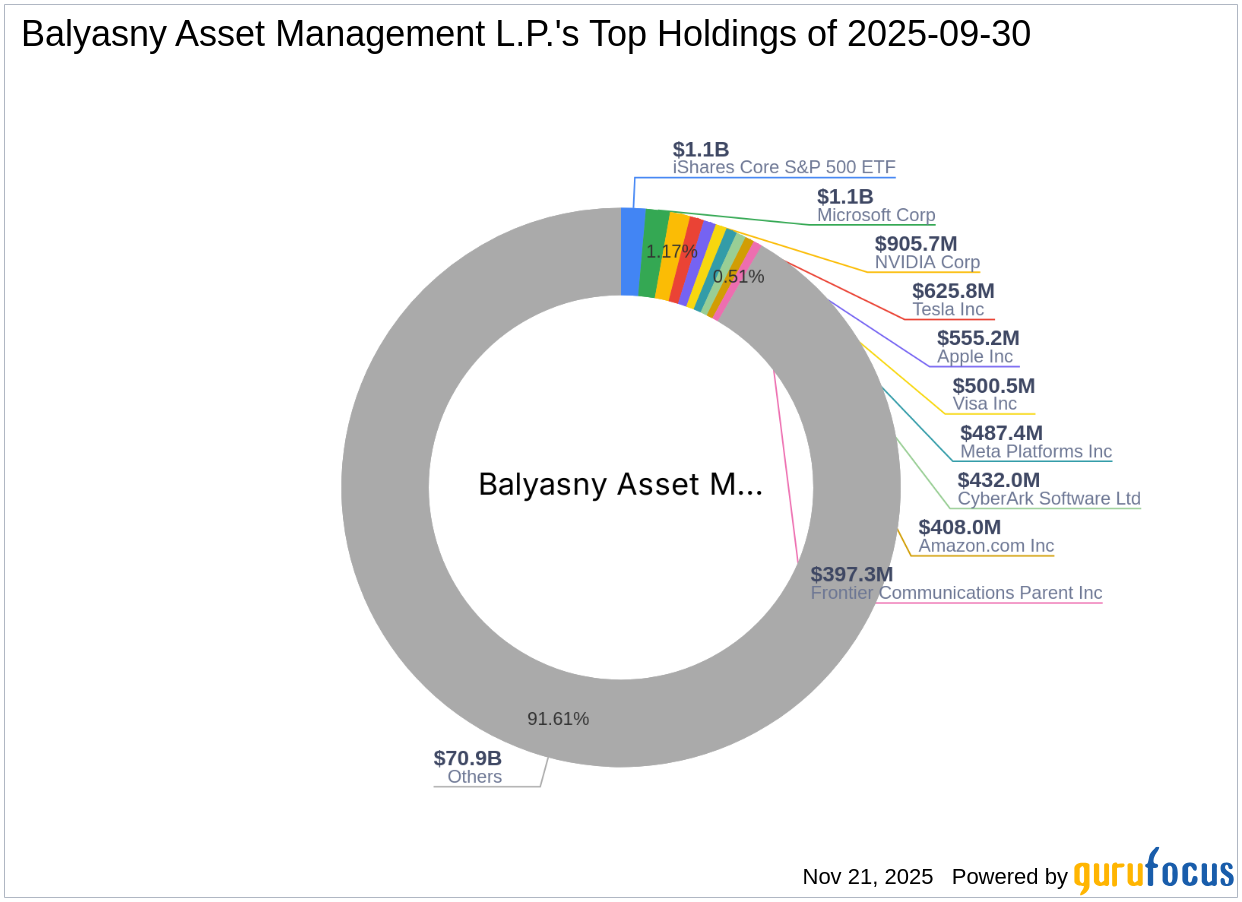
Navigating Career Trajectories in Quantitative Finance: The Context of Tanner Cook at Balyasny Asset Management
The transition of quantitative professionals and portfolio managers between top-tier multi-strategy hedge funds, such as Balyasny Asset Management, reflects the dynamic nature of institutional asset management, where talent mobility hi...
The transition of quantitative professionals and portfolio managers between top-tier multi-strategy hedge funds, such as Balyasny Asset Management, reflects the dynamic nature of institutional asset management, where talent mobility highlights strategic shifts in data infrastructure, risk management, and quantitative research capabilities.
Contents
Understanding the Landscape of Multi-Strategy Hedge Funds
Multi-strategy hedge funds operate through diverse autonomous trading pods, combining equities, fixed income, macro, and quantitative strategies under a centralized institutional umbrella. Firms like Balyasny Asset Management deploy capital across global markets using a blend of fundamental and quantitative investment approaches.
Understanding how professionals navigate careers within these organizations requires looking at the structural components that drive modern hedge fund operations. These firms rely heavily on robust technology stacks, proprietary alternative data sources, and rigorous risk frameworks. Talent acquisition and retention within these firms focus on individuals who can scale quantitative research, optimize execution algorithms, or manage systematic risk parameters across multi-asset portfolios.
Key Operational Pillars of Multi-Strategy Funds
- Podular Structure: Allocating risk and capital to specialized portfolio managers and quantitative research teams.
- Infrastructure Investment: Maintaining low-latency data pipelines and high-performance computing clusters.
- Risk Overlays: Enforcing strict stop-losses, leverage limits, and liquidity controls at the firm level.
- Alpha Generation: Continuously sourcing non-correlated return streams through statistical arbitrage and machine learning models.
The Role of Quantitative Talent in Institutional Asset Management
Quantitative researchers and technologists form the backbone of systematic trading desks. Their responsibilities typically span alpha signal generation, portfolio optimization, backtesting framework development, and transaction cost analysis. When skilled practitioners move between prominent institutions, it often signals a recalibration of trading desks or an expansion into new asset classes and regional markets.
In the context of multi-manager platforms, quantitative professionals must align their research methodologies with the firm's centralized risk management systems. This requires a deep understanding of factor modeling, covariance estimation, and liquidity constraints. Firms compete aggressively for talent capable of translating raw alternative data into repeatable, scalable trading strategies.
Core Competencies Valued by Multi-Strategy Funds
| Competency Area | Primary Focus | Technical Requirements |
|---|---|---|
| Alpha Research | Identifying predictive pricing anomalies | Advanced statistics, machine learning, Python, R |
| Data Engineering | Processing and cleaning unstructured datasets | SQL, Apache Spark, distributed computing |
| Execution Trading | Minimizing market impact and slippage | FIX protocol, algorithmic execution, C++ |
| Risk Management | Monitoring portfolio drawdowns and exposure | Value at Risk (VaR), stress testing, factor models |
Evaluating Career Transitions in Alternative Investments
For professionals navigating career moves within quantitative finance, several factors dictate institutional success and stability. Understanding these considerations helps clarify the implications of executive and researcher mobility within the sector.
1. Capital Allocation and Infrastructure Support
A researcher's success depends heavily on the quality of the firm's data infrastructure and the stability of its capital allocation. Transitioning to a platform like Balyasny Asset Management typically provides access to institutional-grade datasets and robust execution technology, which can significantly enhance research productivity.
2. Compensation and Performance Incentives
Multi-manager platforms generally operate on performance-linked compensation models, where payouts are directly tied to the net P&L generated by the specific strategy or pod, minus operational overhead and funding costs.
3. Non-Compete and Compliance Constraints
The alternative investment industry enforces stringent restrictive covenants, including garden leave periods and non-compete clauses, to protect proprietary research and trade secrets when professionals change firms.
Frequently Asked Questions
What is Balyasny Asset Management?
Balyasny Asset Management is a global institutional investment firm that employs a multi-strategy approach, combining fundamental equity, macro, credit, and quantitative trading strategies across international markets.
Why do quantitative researchers move between hedge funds?
Movements are often driven by opportunities for larger capital allocations, better technological infrastructure, more competitive compensation structures, or shifts in firm-level strategic priorities.
What skills are most in-demand for quantitative roles at multi-strategy funds?
Strong programming capabilities in languages like Python and C++, advanced proficiency in statistical modeling, experience working with large alternative datasets, and a proven track record in alpha generation are highly valued.
How do multi-strategy funds manage risk across different trading pods?
Firms utilize centralized risk management systems that monitor real-time exposures, enforce strict leverage and drawdown limits, and mandate diversification across uncorrelated asset classes and strategies.
What is the typical career progression for a quantitative researcher?
Professionals often start as quantitative analysts or researchers supporting senior portfolio managers before advancing to lead independent research pods, manage direct capital allocations, or oversee broader quantitative strategies.
Strategic Next Actions for Industry Professionals
For those monitoring trends in quantitative finance and institutional asset management, tracking executive and researcher mobility offers valuable insights into where capital and technology are concentrating. Industry participants should analyze regulatory filings, institutional disclosures, and market reports to maintain an accurate understanding of competitive dynamics among top-tier multi-strategy funds.
Image Gallery