Mold Remediation in Galveston: Professional Standards and Coastal Property Recovery in 2026
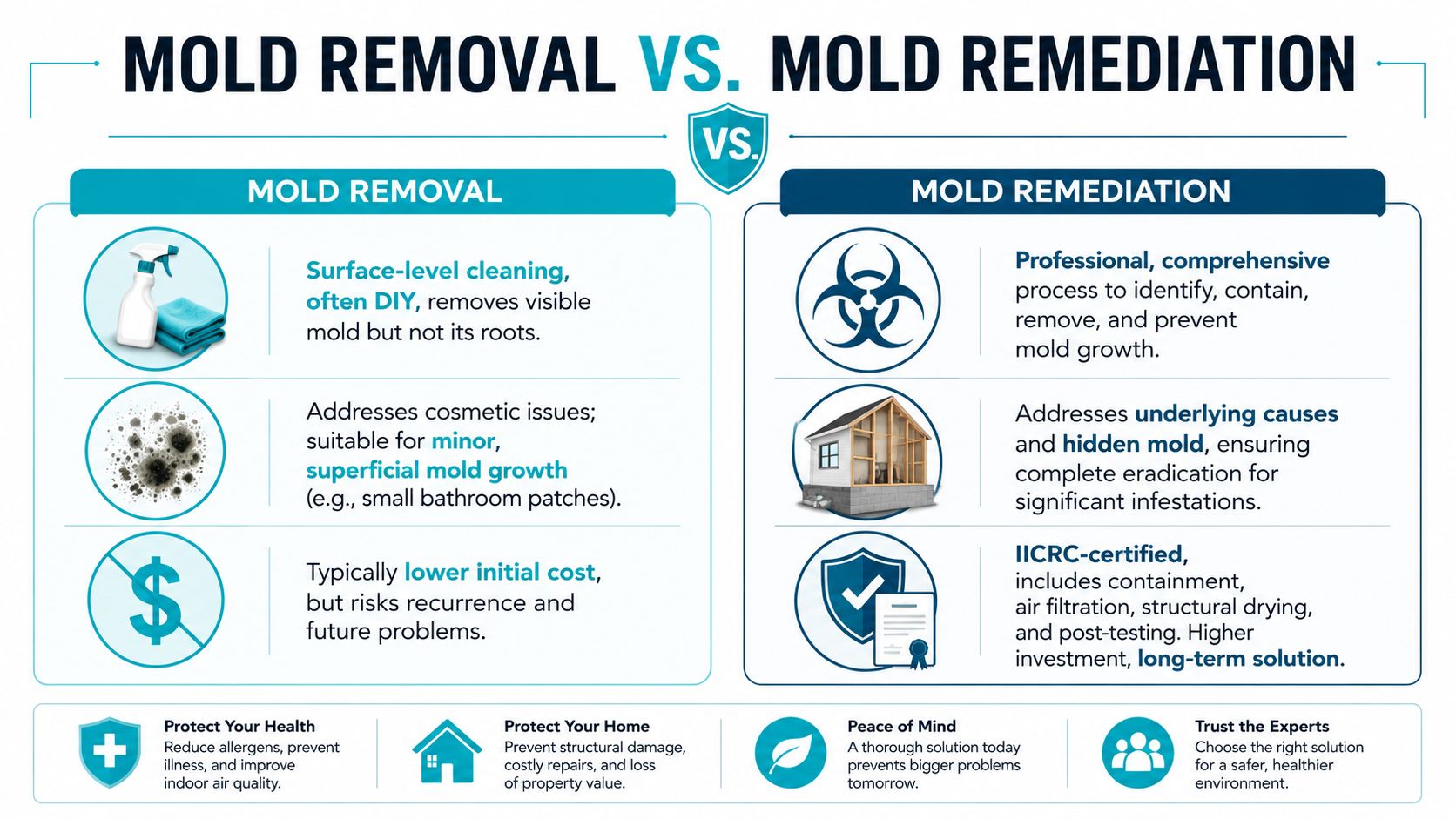
Professional mold remediation in Galveston requires a specialized approach due to the island’s high humidity and Texas's strict regulatory environment. In 2026, effective remediation involves moisture mapping, HEPA-filtered containment...
Professional mold remediation in Galveston requires a specialized approach due to the island’s high humidity and Texas's strict regulatory environment. In 2026, effective remediation involves moisture mapping, HEPA-filtered containment, and obtaining a Certificate of Mold Remediation (CMR) for any project exceeding 25 square feet to ensure property value and safety.
Contents
The Unique Environmental Challenges of Galveston
Galveston’s geographic location on the Gulf Coast creates a persistent environment conducive to fungal growth. With relative humidity levels frequently exceeding 70%, the equilibrium moisture content of building materials like drywall and lumber often hovers near the threshold for mold germination. In 2026, property owners continue to face the compounding effects of seasonal flooding and tropical moisture, making rapid response essential for preventing structural degradation.
Salt-air environments also complicate the drying process. Hygroscopic salts trapped in building materials can pull moisture from the air even after a flood has receded, providing a recurring water source for mold colonies. Professional remediation in this region must account for these "micro-climates" within a structure, utilizing industrial-grade dehumidification and precision moisture meters to ensure the building envelope is truly dry before reconstruction begins.
Navigating Texas Mold Regulations in 2026
Texas remains one of the most strictly regulated states regarding mold assessment and remediation. Under the Texas Occupations Code Chapter 1958, there is a mandatory separation of roles designed to protect consumers from conflicts of interest. Understanding these legal distinctions is the first step for any Galveston homeowner or commercial property manager.
The Separation of Roles
In the State of Texas, the person or company who conducts the initial mold assessment and writes the remediation protocol cannot be the same person or company that performs the actual cleanup. This ensures that the remediator does not "self-verify" their own work or exaggerate the scope of the problem to increase repair costs.
- Licensed Mold Assessment Consultant (MAC): This individual inspects the property, takes air or surface samples, and develops the "Mold Remediation Protocol." They also perform the final "clearance" testing.
- Licensed Mold Remediation Contractor (MRC): This entity follows the protocol established by the MAC to physically remove the mold and treat the affected areas.
The 25-Square-Foot Rule
If a mold contamination covers a contiguous area of more than 25 square feet, Texas law requires the use of licensed professionals and the filing of specific paperwork with the Texas Department of State Health Services (DSHS). Upon successful completion, the owner receives a Certificate of Mold Remediation (CM-1). This document is vital for property sales, as it proves the issue was handled according to state standards and protects the owner from certain liability for five years following the remediation.
The Professional Remediation Process: A Step-by-Step Guide
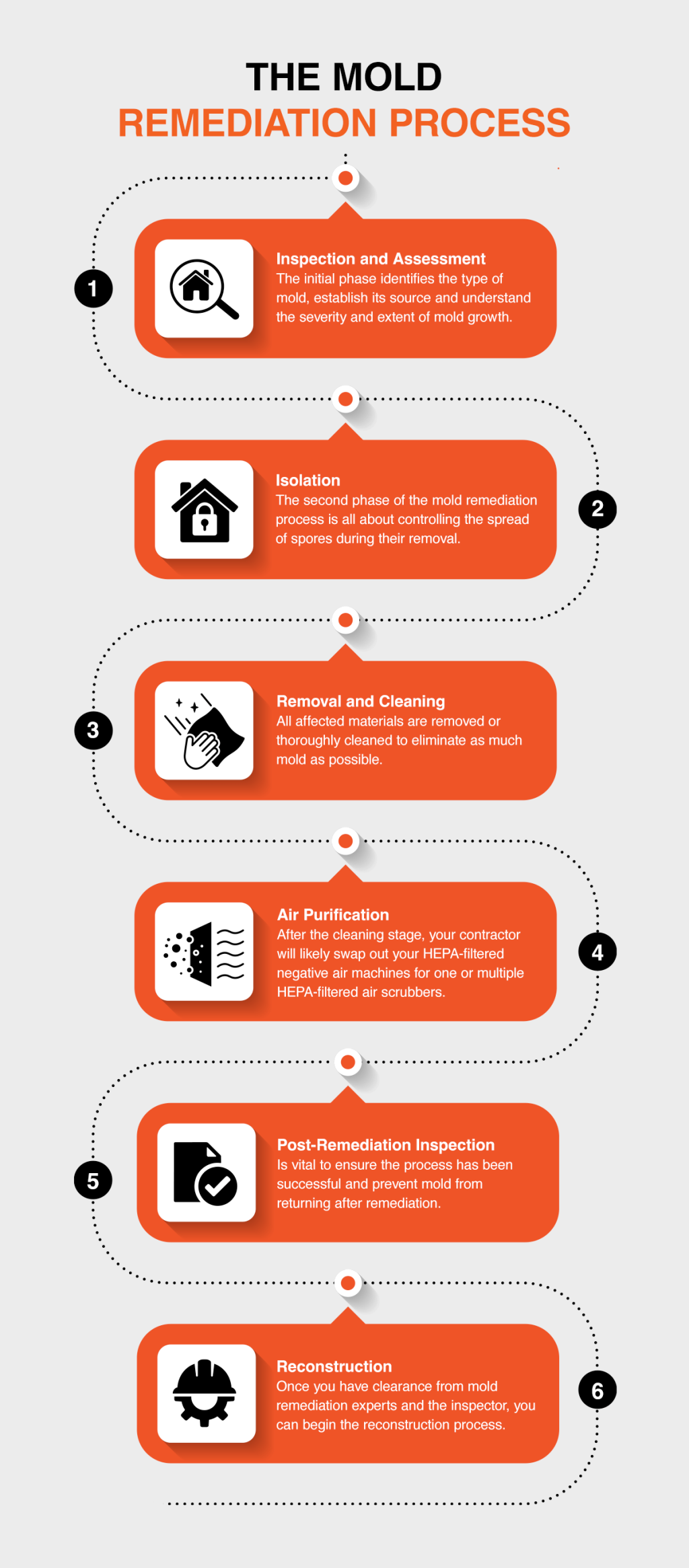
When professional mold remediation is initiated in Galveston, it follows a rigorous technical sequence defined by the IICRC S520 Standard for Professional Mold Remediation.
Phase 1: Assessment and Moisture Mapping
The process begins with a Licensed Mold Assessment Consultant identifying the moisture source. In 2026, consultants utilize thermal imaging cameras to detect cool spots behind walls that indicate hidden leaks or condensation. Once the source is identified—whether it is a roof leak, a plumbing failure, or high indoor humidity—it must be repaired before remediation starts.
Phase 2: Containment and Air Pressure Management
To prevent the cross-contamination of unaffected areas, remediators establish physical barriers using 6-mil fire-retardant polyethylene sheeting. HEPA-filtered air scrubbers are used to create negative air pressure within the containment zone. This ensures that any spores disturbed during the removal process are pulled into a filtration system rather than drifting into the rest of the home.
Phase 3: Removal of Contaminated Materials
Mold-damaged materials are categorized based on their porosity:
- Porous Materials: Drywall, insulation, and carpeting usually cannot be fully cleaned and must be removed and discarded in sealed bags.
- Semi-Porous Materials: Structural wood and concrete can often be salvaged through specialized cleaning methods such as HEPA vacuuming, wire brushing, or media blasting.
- Non-Porous Materials: Metal, glass, and hard plastics are cleaned using antimicrobial detergents.
Phase 4: Cleaning and Antimicrobial Application
After the bulk removal of materials, all surfaces within the containment zone are meticulously cleaned. Remediators use a "HEPA-Sand-HEPA" or "HEPA-Wash-HEPA" method. An EPA-registered antimicrobial coating may be applied to remaining structural elements to inhibit future fungal growth, though this is not a substitute for proper moisture control.
Comparing Assessment vs. Remediation Roles in Texas
The following table outlines the distinct responsibilities of the two primary professionals required for a legal mold project in Galveston.
| Feature | Mold Assessment Consultant (MAC) | Mold Remediation Contractor (MRC) |
|---|---|---|
| Primary Goal | Diagnose the problem and verify success. | Execute the physical cleanup and removal. |
| Key Deliverable | Mold Remediation Protocol & Clearance Report. | Mold Remediation Work Plan & CM-1 Form. |
| Testing | Performs air/surface sampling and moisture testing. | Not permitted to perform independent clearance testing. |
| Legal Status | Licensed by Texas DSHS. | Licensed by Texas DSHS. |
| Conflict of Interest | Cannot be the same company as the remediator. | Cannot be the same company as the assessor. |
| When Required | Contamination > 25 contiguous sq. ft. | Contamination > 25 contiguous sq. ft. |
Cost Factors and Insurance in 2026
The cost of mold remediation in Galveston varies significantly based on the scale of the infestation and the structural accessibility of the area. In 2026, average residential projects typically range from $3,500 to $9,000, while complex commercial remediations or those following major storm surges can exceed $30,000.
Key Cost Drivers
- Square Footage: Larger areas require more labor, more polyethylene sheeting, and more air scrubbing capacity.
- HVAC Involvement: If mold has entered the ductwork or the air handling unit, the cleaning process becomes significantly more technical and expensive.
- Building Type: Older Galveston "raised" homes may have crawlspace issues that require specialized moisture barriers and ventilation.
- Urgency: Post-hurricane demand often spikes labor and material costs across the island.
Insurance Considerations
Homeowners should review their policies for "Mold Coverage" or "Fungi, Wet or Dry Rot" endorsements. Many standard policies in 2026 have sub-limits for mold (often $5,000 or $10,000), which may not cover the full cost of a major remediation. It is important to note that insurance typically covers mold only if it resulted from a "covered peril," such as a sudden pipe burst. Mold resulting from long-term neglect or high humidity is frequently excluded.
Post-Remediation Verification (The Clearance Phase)
The final step in the Galveston mold remediation process is Post-Remediation Verification (PRV). This must be conducted by the independent Mold Assessment Consultant. The PRV includes:
- Visual Inspection: Ensuring the area is free of visible mold and dust/debris.
- Odorous Evaluation: Confirming the absence of musty microbial volatile organic compounds (mVOCs).
- Air Sampling: Comparing indoor spore counts within the containment area to outdoor "baseline" samples. For a successful clearance, the indoor concentrations must be lower than and ecologically similar to the outdoor samples.
Once the MAC issues a passing clearance report, the MRC can finalize the paperwork for the Certificate of Mold Remediation. This certificate is the property owner’s primary defense during future real estate transactions in Galveston.
Frequently Asked Questions
Can I do my own mold remediation in Galveston?
For areas under 25 square feet, Texas law allows homeowners to perform their own cleanup. However, given Galveston’s humidity, DIY efforts often fail if the underlying moisture issue isn't professionally diagnosed. For areas over 25 square feet, hiring licensed professionals is required if you want to receive a state-recognized certificate of remediation, which is often requested by buyers and insurers.
How long does the remediation process usually take?
A typical residential remediation in Galveston takes between 3 and 7 days. This includes the setup of containment, the physical removal of materials, and the 24-48 hours of air scrubbing required before the final clearance testing can be conducted.
Does bleach kill mold on drywall?
No. Bleach is largely ineffective on porous materials like drywall. The chlorine in bleach stays on the surface, while the water content penetrates the material, often feeding the mold roots (hyphae) deeper into the substrate. Professional standards require the physical removal of mold-contaminated porous materials rather than topical treatment.
Why is a Certificate of Mold Remediation important in 2026?
The Certificate of Mold Remediation (CMR) provides legal evidence that the property was remediated according to Texas state law. In 2026, most lenders and savvy buyers in the Galveston market require this document to ensure the home is safe and that the previous mold issue will not impact the property's insurability or resale value.
What are the health signs that I might need mold remediation?
Occupants of mold-impacted buildings in coastal environments often report respiratory irritation, persistent coughing, sinus congestion, or skin rashes. While "black mold" (Stachybotrys chartarum) receives the most media attention, more common types like Aspergillus and Penicillium can also cause significant health issues for sensitive individuals. If you notice a persistent musty odor, an inspection is recommended regardless of whether visible mold is present.
Practical Recommendations for Galveston Property Owners
If you suspect mold in your Galveston property, your first action should be to stop the moisture source. In the 2026 climate, this often means checking for condensation on HVAC ducts or ensuring that perimeter drainage is moving water away from the foundation.
Next, contact a Licensed Mold Assessment Consultant for an initial inspection. Avoid hiring a company that offers both "free inspections" and "remediation services," as this is a violation of Texas law for larger projects and represents a conflict of interest for smaller ones. Once you have a written protocol, solicit bids from at least two Licensed Mold Remediation Contractors to compare costs and timelines. Always ensure the project concludes with a passing clearance test and the issuance of a CMR to protect your long-term investment.
Image Gallery