How to Start Building Financial Statements: A Step-by-Step Guide
To start building financial statements, you must collect raw transaction data, organize accounts using a standardized Chart of Accounts, post journal entries to a general ledger, compile an adjusted trial balance, and then generate the...
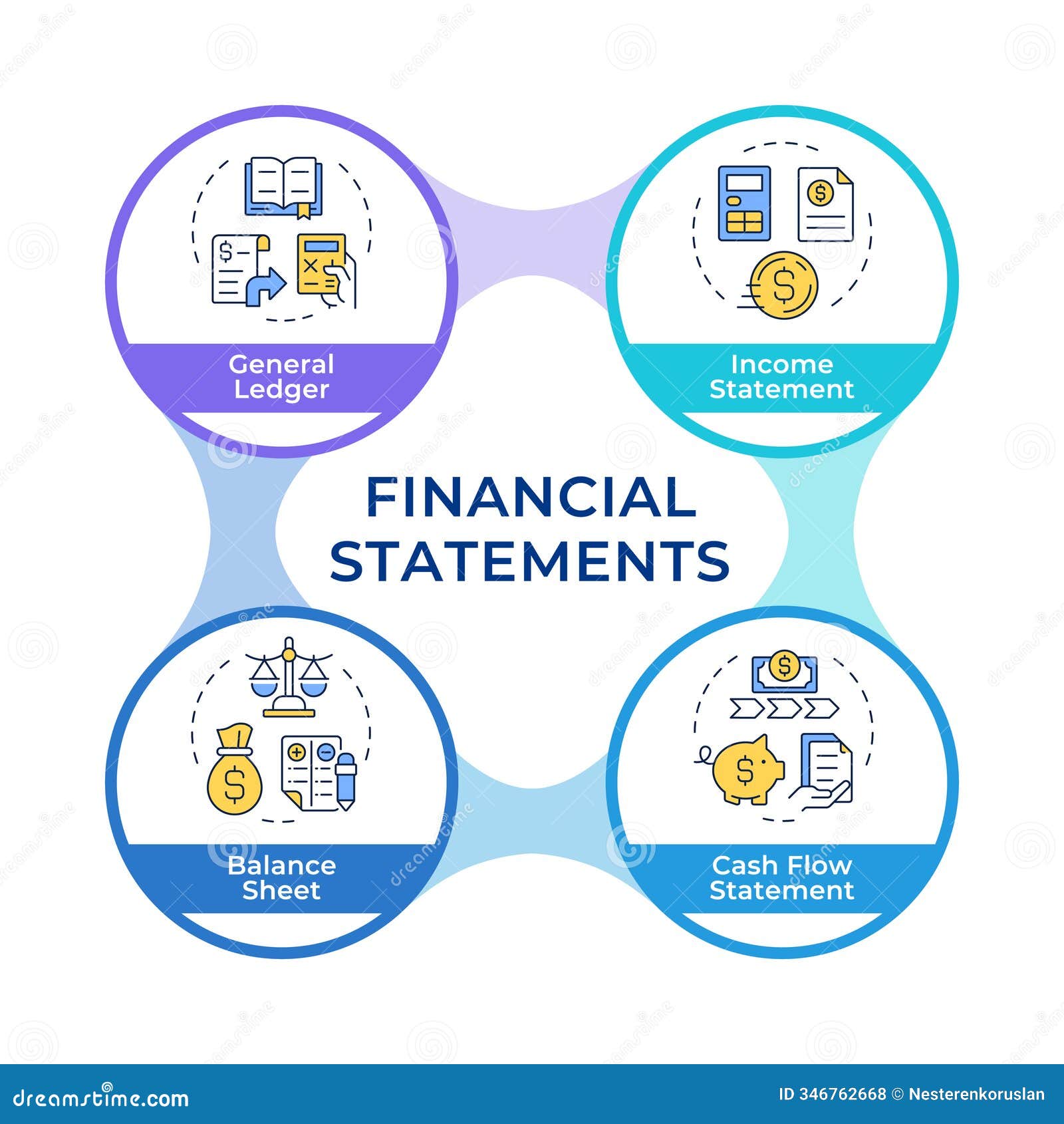
To start building financial statements, you must collect raw transaction data, organize accounts using a standardized Chart of Accounts, post journal entries to a general ledger, compile an adjusted trial balance, and then generate the three core financial statements in sequence: the Income Statement, the Balance Sheet, and the Statement of Cash Flows.
Contents
Building accurate financial statements is essential for evaluating business performance, securing bank financing, satisfying tax obligations, and attracting prospective investors. Whether you manage a small business, oversee corporate finance, or build financial models, structuring these reports correctly ensures compliance with established standards like U.S. Generally Accepted Accounting Principles (GAAP) or International Financial Reporting Standards (IFRS).
Prerequisites for Building Financial Statements
Before drafting reports, you must establish an organized record-keeping system. Attempting to draft financial statements directly from loose receipts or unparsed bank feeds usually leads to balance errors and misstated earnings.
1. Establish a Chart of Accounts (COA)
A Chart of Accounts is a structured index of every financial account in your organization. Accounts are categorized into five primary financial categories:
- Assets: Resources owned (e.g., cash, accounts receivable, inventory, equipment).
- Liabilities: Obligations owed to outside parties (e.g., accounts payable, bank loans, accrued payroll).
- Equity: The residual claim of owners after deducting liabilities (e.g., common stock, retained earnings).
- Revenue: Inflows generated from selling goods or delivering services.
- Expenses: Outflows incurred to generate revenue (e.g., rent, utilities, cost of goods sold, salaries).
2. Choose Your Accounting Method: Cash vs. Accrual
You must determine which accounting framework governs transaction timing:
- Cash Basis Accounting: Revenue is recognized when cash is received, and expenses are recognized when cash is paid. While simpler for small sole proprietorships, it does not comply with GAAP/IFRS and can distort long-term financial trends.
- Accrual Basis Accounting: Revenue is recognized when earned (performance obligation satisfied), and expenses are recognized when incurred (matching principle). Accrual accounting provides a far more accurate picture of financial health and is required for formal financial statements.
3. Verify Source Documentation
Every financial transaction requires supporting documentation. Gather all bank statements, credit card statements, client invoices, vendor bills, payroll summaries, and loan payment schedules for the reporting period.
The 8-Step Process to Prepare Financial Statements
Accounting follows a structured, sequential workflow known as the financial accounting cycle. Below are the steps required to transform raw transaction records into complete financial statements.
- Source Docs
- Journal Entries
- General Ledger
- Adjusting Entries
- Adjusted Trial Balance
- Income Stmt
- Balance Sheet
- Cash Flow Stmt
Step 1: Collect and Analyze Transactions
Review every transaction from the reporting period (monthly, quarterly, or annually). Identify which accounts are affected and calculate the exact monetary impact.
Step 2: Record General Journal Entries
Using double-entry bookkeeping rules, record every transaction as a journal entry. In double-entry accounting, every transaction impacts at least two accounts, and total debits must always equal total credits.
- Debits ($DR$): Increase assets and expenses; decrease liabilities, equity, and revenue.
- Credits ($CR$): Increase liabilities, equity, and revenue; decrease assets and expenses.
Step 3: Post Entries to the General Ledger
Transfer journal entries to their respective individual account ledgers (T-accounts). The general ledger tracks running debit and credit balances for every account in your Chart of Accounts.
Step 4: Prepare an Unadjusted Trial Balance
Sum the ending balances of every ledger account and display them in a two-column sheet (Debits on the left, Credits on the right). Verify that total debits equal total credits. If the columns do not match, review posted entries for transposition errors or omitted records.
Step 5: Record Adjusting Journal Entries
At the close of an accounting period, record adjusting entries to satisfy accrual accounting rules:
- Accrued Expenses: Expenses incurred but not yet paid (e.g., unpaid employee wages at month-end).
- Accrued Revenue: Earned income not yet billed or collected.
- Deferred Expenses (Prepayments): Upfront cash payments spent for future benefits (e.g., prepaid insurance amortized monthly).
- Deferred Revenue (Unearned Income): Upfront cash received before services are performed.
- Depreciation & Amortization: Allocating the cost of long-term physical or intangible assets across their useful life.
Step 6: Generate the Adjusted Trial Balance
Post the adjusting entries to the general ledger and prepare an updated, adjusted trial balance. These finalized account balances form the exact inputs for building the primary financial statements.
Step 7: Constructing the Three Core Statements in Sequence
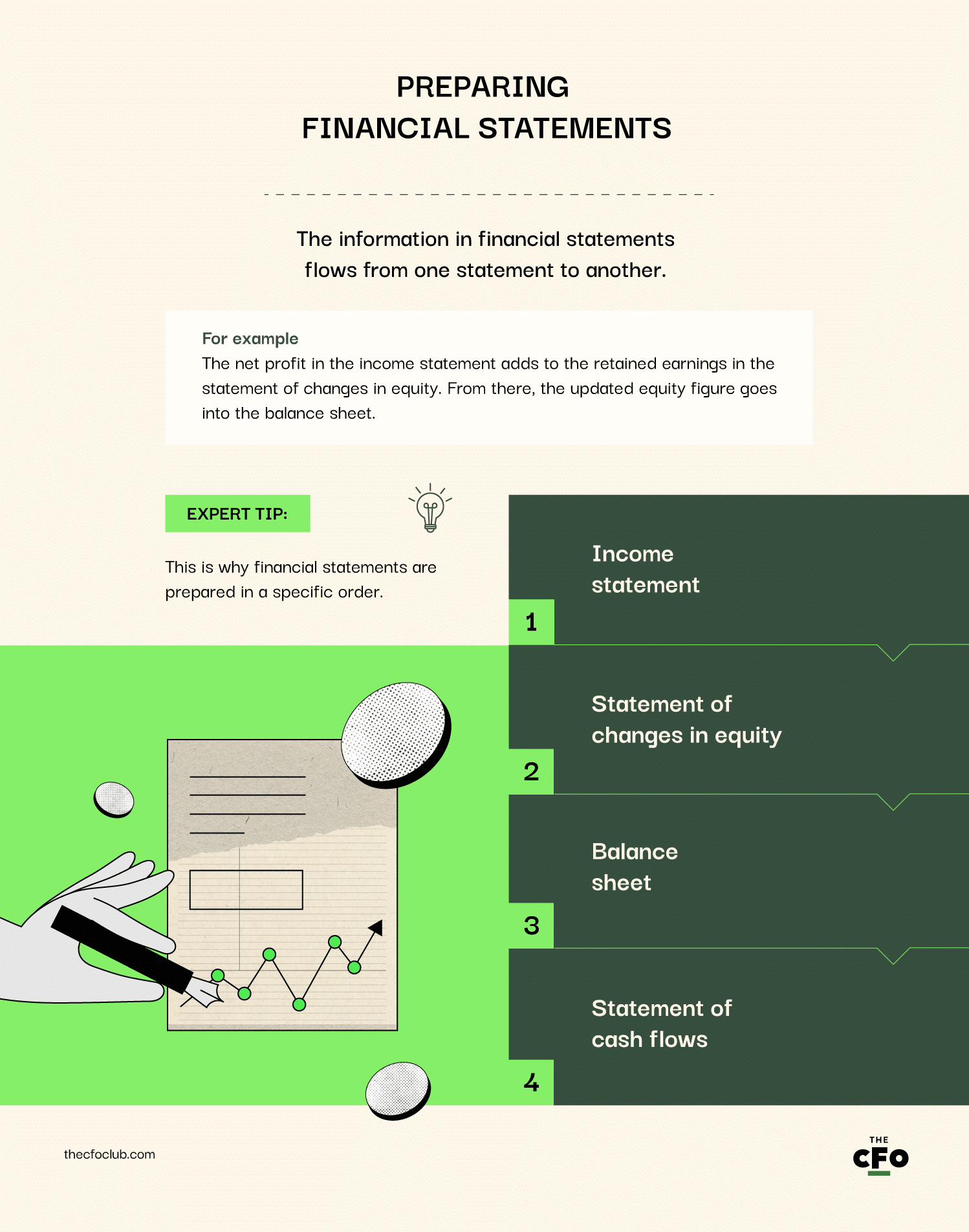
Financial statements must be built in a specific sequence because figures from one statement flow directly into the next.
- INCOME STATEMENT [ Revenues - Expenses ]
- Net Income
- BALANCE SHEET [ Retained Earnings Updated ]
- STATEMENT OF CASH FLOWS [ Net Income Start Point ]
- Net Income
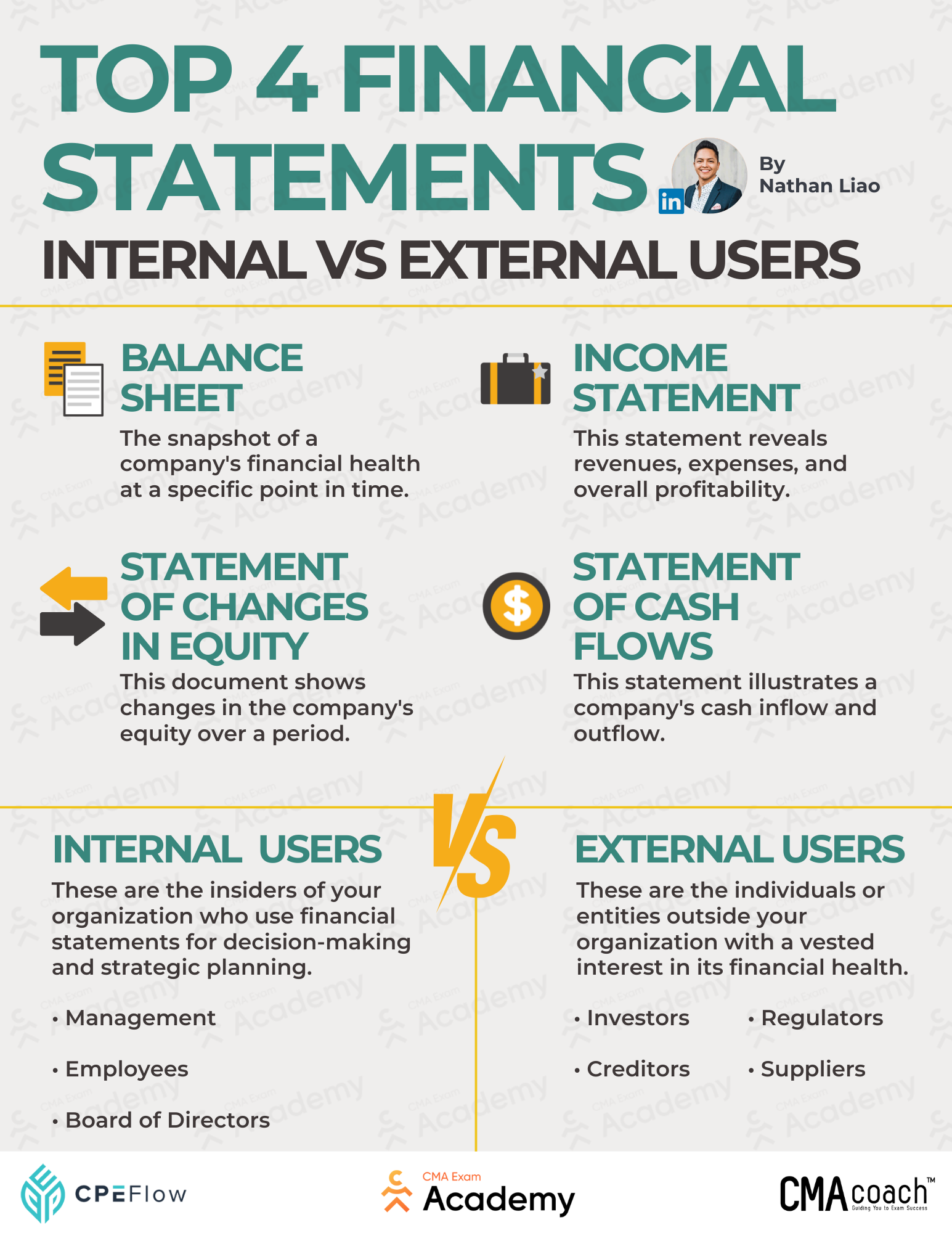
1. Build the Income Statement (Profit and Loss Statement)
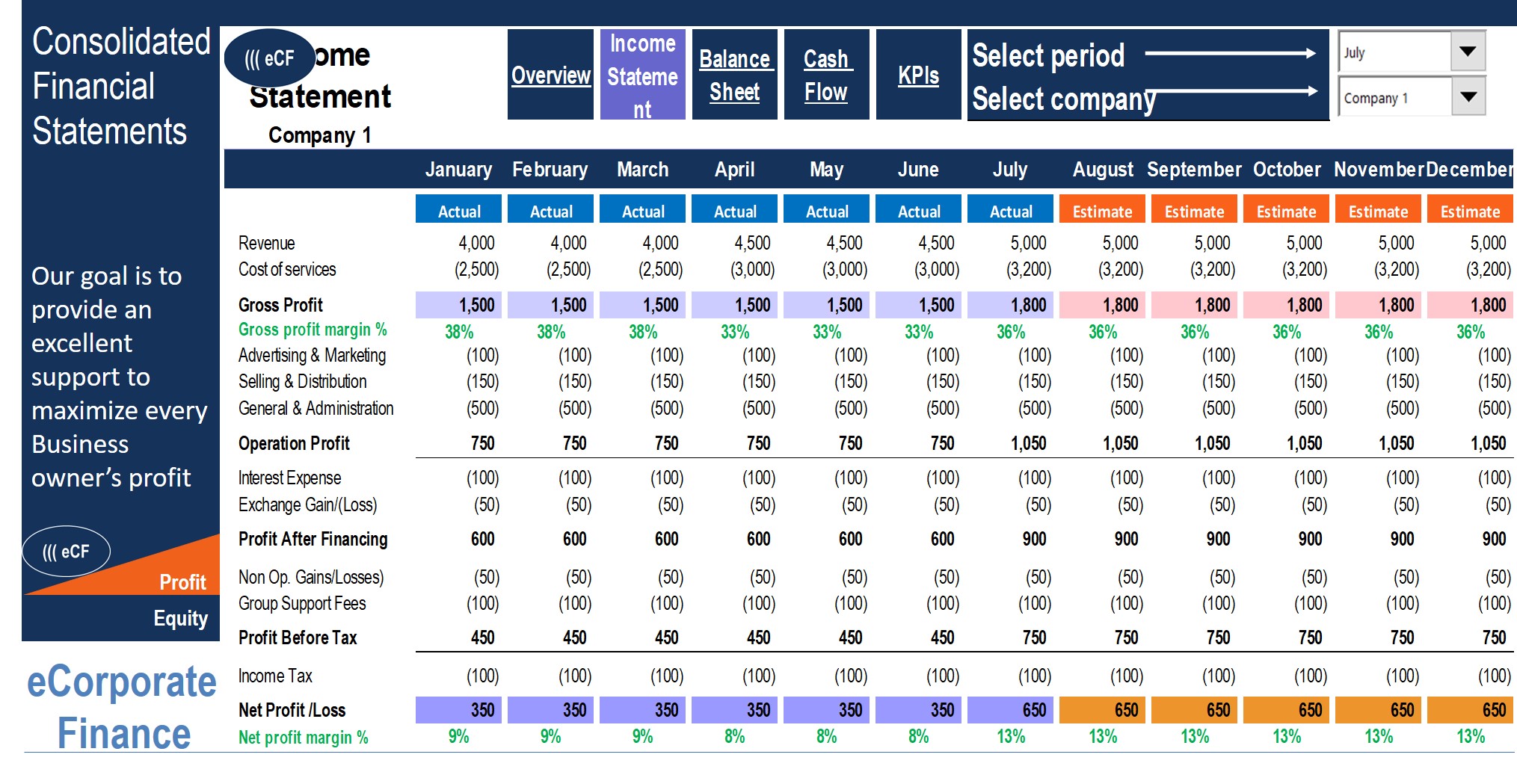
The Income Statement reports operational profitability over a specific timeframe (e.g., Quarter 1 2026 or Fiscal Year 2026).
Formula: $$\text{Net Income} = \text{Total Revenues} - \text{Total Expenses}$$
Structure of an Income Statement:
- Operating Revenues: Core sales of products or services.
- Cost of Goods Sold (COGS): Direct costs tied to producing goods (raw materials, direct labor).
- Gross Profit: $\text{Revenue} - \text{COGS}$.
- Operating Expenses (OPEX): General administrative expenses, sales and marketing, rent, utilities, and research.
- Operating Income (EBIT): $\text{Gross Profit} - \text{Operating Expenses}$.
- Non-Operating Items: Interest expense, tax liabilities, and gain/loss on asset sales.
- Net Income (or Net Loss): The final bottom-line earnings figure.
2. Build the Balance Sheet
The Balance Sheet presents a snapshot of a company's financial position at a single point in time (e.g., As of December 31, 2026).
Accounting Equation: $$\text{Assets} = \text{Liabilities} + \text{Shareholders' Equity}$$
Structure of a Balance Sheet:
- Current Assets: Cash, accounts receivable, inventory, and short-term investments expected to liquidate within one year.
- Non-Current Assets: Property, plant, and equipment (PP&E), less accumulated depreciation, alongside long-term investments and intangible assets.
- Current Liabilities: Accounts payable, short-term debt, and accrued expenses due within one year.
- Long-Term Liabilities: Mortgages, bonds payable, and multi-year loan obligations.
- Shareholders' Equity: Capital contributions, common stock, plus Retained Earnings. Retained earnings are updated by adding the Net Income calculated on the Income Statement and subtracting any paid shareholder dividends: $$\text{Ending Retained Earnings} = \text{Beginning Retained Earnings} + \text{Net Income} - \text{Dividends}$$
3. Build the Statement of Cash Flows
The Statement of Cash Flows tracks actual cash movements in and out of the entity over a period, eliminating non-cash accruals like accounts receivable or depreciation.
It is split into three primary sections:
- Operating Activities: Cash generated or used in core business operations. Under the widely used Indirect Method, start with Net Income from the Income Statement, add back non-cash expenses (such as depreciation), and adjust for changes in working capital accounts (Accounts Receivable, Inventory, Accounts Payable).
- Investing Activities: Cash outflows for purchasing capital assets (equipment, real estate) and inflows from selling investments or fixed assets.
- Financing Activities: Cash inflows from issuing equity or debt, and outflows for principal loan repayments, share buybacks, or dividend distributions.
Final Reconciliation: $$\text{Net Change in Cash} = \text{Operating Cash} + \text{Investing Cash} + \text{Financing Cash}$$ Adding the net change in cash to the Beginning Cash Balance must yield the exact Ending Cash Balance reported on the current period's Balance Sheet.
Comparative Overview of Core Financial Statements
Understanding how these three financial statements compare helps clarify their distinct roles within reporting frameworks:
| Feature | Income Statement | Balance Sheet | Statement of Cash Flows |
|---|---|---|---|
| Time Orientation | Over a period of time (e.g., FY 2026) | Point in time (e.g., Dec 31, 2026) | Over a period of time (e.g., FY 2026) |
| Primary Focus | Revenues, Expenses, Profitability | Assets, Liabilities, Financial Position | Cash Inflows and Outflows |
| Governing Equation | Net Income = Revenue - Expenses | Assets = Liabilities + Equity | Net Cash = Operating + Investing + Financing |
| Core Connection | Net Income transfers to Equity & Cash Flow | Shows accumulated assets funded by debt/equity | Explains exact changes in Cash asset balance |
| Key Users | Management, Investors, Lenders | Lenders, Credit Rating Agencies, Buyers | Treasury, Management, Investors |
| Non-Cash Items | Included (Depreciation, Accruals) | Included (Receivables, Payables) | Excluded (Reconciled out of Net Income) |
How the Statements Interlink: A Practical Example
To verify financial statements, accountants track how figures flow across all three reports:
- [ Income Statement ]
- Net Income: $50,000
- Added to Retained Earnings (Balance Sheet)
- Top line of Indirect Cash Flow (Cash Flow Statement)
- Net Income: $50,000
- [ Balance Sheet ]
- Asset Depreciation: $5,000 (Reduces Net Asset Value)
- Added back to Cash Flow Operating Activities (Non-cash expense)
- Asset Depreciation: $5,000 (Reduces Net Asset Value)
- [ Cash Flow Statement ]
- Ending Cash Balance: $120,000
- Matches Cash & Cash Equivalents (Balance Sheet Asset)
- Ending Cash Balance: $120,000
- Net Income Flow: Suppose a company earns $50,000 in Net Income on its 2026 Income Statement.
- Balance Sheet Link: That $50,000 increases Retained Earnings within Shareholders' Equity on the Balance Sheet.
- Cash Flow Link: The $50,000 serves as the starting line of Operating Cash Flows on the Statement of Cash Flows.
- Depreciation Adjustment: If the Income Statement included $5,000 in non-cash depreciation expense, this $5,000 is added back to Net Income on the Cash Flow Statement because no actual cash left the business.
- Cash Balance Reconciliation: The final calculated ending cash on the Cash Flow Statement must equal the Cash asset figure on the Balance Sheet.
Common Mistakes to Avoid When Building Statements
- Misclassifying Capital Expenditures (CapEx): Recording major long-term asset purchases (e.g., purchasing a manufacturing machine) as immediate operational expenses instead of capitalizing them on the Balance Sheet and depreciating them over time.
- Omitting Accrued Liabilities: Failing to account for accrued expenses (like unpaid end-of-month employee salaries or incurred interest) understates liabilities on the Balance Sheet and overstates net income.
- Mixing Personal and Business Funds: Commingling owner cash flows with corporate accounts creates distorted financial figures and invalidates tax filings.
- Forgetting Non-Cash Expenses: Ignoring depreciation, amortization, or stock-based compensation leads to mismatched tax records and inaccurate earnings totals.
- Unbalanced Balance Sheet: Forcing balance sheet reconciliations by creating arbitrary plug figures rather than tracing journal entry discrepancies back to source ledgers.
Regulatory and Accounting Standards (GAAP vs. IFRS)
Depending on your business jurisdiction, statement presentation must comply with relevant accounting standards:
- U.S. GAAP: Overseen by the Financial Accounting Standards Board (FASB). Requires specific presentation for rules-based reporting, strict inventory valuation rules (e.g., LIFO allowed), and explicit line items for U.S. public corporations.
- IFRS: Maintained by the International Accounting Standards Board (IASB). Principles-based standard used in over 140 countries. Prohibits LIFO inventory accounting and permits revaluation of certain non-current assets to fair market value.
Disclaimer: While this guide outlines standard financial reporting procedures, complex tax structures, audit preparation, or statutory reporting may require guidance from a licensed Certified Public Accountant (CPA) or qualified financial advisor.
Frequently Asked Questions
Which financial statement should I prepare first?
You must always prepare the Income Statement first. The resulting Net Income figure is required to update Retained Earnings on the Balance Sheet and serves as the starting line item for the Statement of Cash Flows (under the indirect method).
Can I build financial statements using cash accounting?
While you can draft basic profit summaries using cash accounting, formal financial statements—specifically the Balance Sheet and Cash Flow Statement—require accrual accounting. Accrual accounting accurately matches earned revenues with incurred expenses regardless of cash settlement dates.
Why does my Balance Sheet not balance?
A Balance Sheet fails to balance when debits do not equal credits in your general ledger, when adjusting entries were posted incorrectly to one account instead of two, or when Net Income was not correctly transferred to Retained Earnings.
What is the difference between Gross Profit and Net Income?
Gross Profit is total sales revenue minus the direct Cost of Goods Sold (COGS). Net Income is the final profit remaining after deducting all operational expenses, overhead, interest, depreciation, and corporate taxes from Gross Profit.
What software should I use to build financial statements?
Small businesses often start with accounting platforms like QuickBooks, Xero, or Wave, which automatically generate financial statements from recorded transactions. Financial analysts and corporate finance teams frequently build custom financial statement models using Microsoft Excel or specialized Enterprise Resource Planning (ERP) tools like NetSuite or SAP.
Next Steps
To begin building your financial statements today:
- Organize Your Records: Gather bank accounts, invoices, and expense receipts for the accounting period.
- Clean Your Ledger: Run an unadjusted trial balance to ensure all debits and credits balance.
- Calculate Adjustments: Record accrued expenses, deferred revenues, and depreciation entries.
- Generate Reports sequentially: Draft your Income Statement first, apply Net Income to your Balance Sheet equity, and conclude by building your Statement of Cash Flows.
Image Gallery