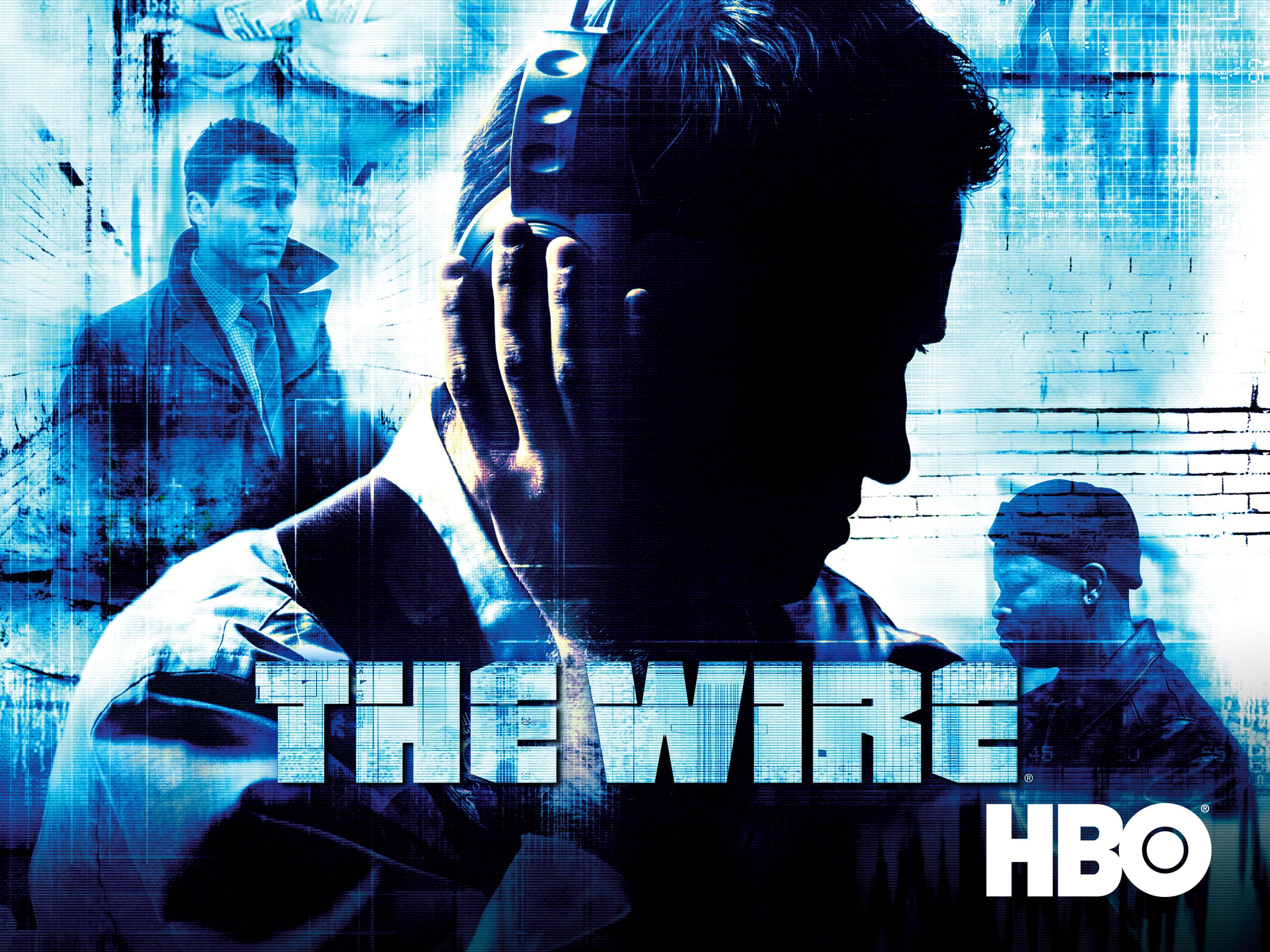
The Wire Pilot Overview: "The Target" Plot, Characters, and Institutional Context
The pilot episode of HBO’s landmark drama The Wire, titled "The Target," premiered on June 2, 2002. Written by series creator David Simon and former homicide detective Ed Burns, and directed by Clark Johnson, the episode establishes th...
The pilot episode of HBO’s landmark drama The Wire, titled "The Target," premiered on June 2, 2002. Written by series creator David Simon and former homicide detective Ed Burns, and directed by Clark Johnson, the episode establishes the show's intricate focus on institutional dysfunction, street-level drug trade, and bureaucratic police work in Baltimore, Maryland.
Contents
Episode Metadata and Narrative Premise
"The Target" serves as both an introduction to the city of Baltimore and a deliberate subversion of conventional television police procedurals. Rather than presenting a self-contained crime solved within forty-five minutes, the episode introduces a sprawling ecosystem where individual choices are continuously shaped and constrained by institutional mandates.
The episode opens with one of the most celebrated cold opens in television history. Homicide Detective James "Jimmy" McNulty (played by Dominic West) sits on a curb at night, interviewing a witness regarding the murder of a local figure known as "Snot Boogie." When McNulty asks why the victim was allowed to play in a weekly dice game despite repeatedly stealing the pot, the witness casually replies, "Got to. It's America, man." This scene establishes the central thesis of The Wire: individuals operate within broken systems governed by unwritten, self-perpetuating rules.
| Production & Broadcast Details | Value / Specification |
|---|---|
| Series Title | The Wire |
| Episode Title | "The Target" (Season 1, Episode 1) |
| Original Air Date | June 2, 2002 |
| Network | HBO |
| Teleplay Creator / Writer | David Simon (Story by David Simon & Ed Burns) |
| Director | Clark Johnson |
| Running Time | 60 minutes |
| Primary Setting | Baltimore, Maryland (West Baltimore / Circuit Court) |
Plot Breakdown: How "The Target" Initiates the Investigation
The primary narrative thrust of the pilot centers on the murder trial of D'Angelo Barksdale (Larry Gilliard Jr.), a mid-level manager in the drug organization led by his uncle, Avon Barksdale (Wood Harris).
The Trial of D'Angelo Barksdale
D'Angelo is on trial for the murder of Pooh Blanchard. Detective McNulty attends the proceedings while off-duty. During the trial, Stringer Bell (Idris Elba), Avon Barksdale’s second-in-command, sits silently in the gallery to observe. When a key eye-witness, Stephrid Johnson, takes the stand, she unexpectedly recants her prior identification of D'Angelo as the shooter, claiming confusion under oath.
This blatant witness intimidation leads to D'Angelo's acquittal. The verdict illustrates the sophisticated operational control exercised by the Barksdale organization over its surrounding neighborhood, as well as the systemic weakness of traditional eyewitness testimony in violent narcotics cases.
McNulty’s Backchannel Strategy and Judicial Intervention
Frustrated by the failed prosecution and recognizing a broader pattern of unpunished violence, McNulty bypasses his department's strict chain of command. He approaches presiding Circuit Court Judge Daniel Phelan (Peter Gerety) in his chambers. McNulty informs Phelan that the Barksdale organization is responsible for ten murders in West Baltimore over the past year and controls a massive portion of the city's heroin trade, yet no law enforcement agency is actively investigating them as an enterprise.
Judge Phelan, motivated by political considerations and personal outrage, calls Deputy Commissioner of Operations Ervin Burrell (Frankie Faison). Phelan demands to know why the department is ignoring a criminal empire operating openly within the city limits. This informal judicial pressure forces the Baltimore Police Department (BPD) leadership to react.
Institutional Resistance and Detail Formation
The political fallout inside the BPD is immediate. Major William Rawls (John Doman), Commander of the Homicide Division, is incensed by McNulty's breach of protocol. Rawls views McNulty's conversation with Judge Phelan as outright treason against the department, as it exposes management's reliance on superficial crime statistics over meaningful long-term investigations.
To satisfy Judge Phelan while minimizing disruption to their preferred statistics-driven operational model, Police Management orders Lieutenant Cedric Daniels (Lance Reddick) of the Narcotics Division to assemble a temporary detail. However, upper management does not want a genuine, deep-tier conspiracy investigation; they demand quick buy-and-bust arrests to show immediate progress and close the file. Daniels is caught between his personal career ambitions and his duty to conduct a legitimate investigation.
[Barksdale Drug Enterprise] <---> [Street-Level Narcotics Trade] | (D'Angelo Trial) | [McNulty's Off-Record Action] ---> [Judge Phelan Inquiry] ---> [BPD Command (Burrell/Rawls)] | [Detail Formed under Daniels]
Key Characters Introduced in the Pilot
The Wire avoids a single central protagonist, instead utilizing an ensemble cast representing various layers of law enforcement, civil government, and criminal enterprises.
Key Characters & Organizational Roles
| Character | Actor | Faction / Institution | Role & Initial Significance in "The Target" |
|---|---|---|---|
| Jimmy McNulty | Dominic West | BPD Homicide | Talented but self-destructive detective who triggers the central investigation by circumnavigating superiors. |
| Cedric Daniels | Lance Reddick | BPD Narcotics | Shift Lieutenant appointed to command the Barksdale detail; torn between political obedience and professional integrity. |
| D'Angelo Barksdale | Larry Gilliard Jr. | Barksdale Organization | Mid-level crew chief acquitted of murder; struggles with the moral reality of his family's narcotics business. |
| Stringer Bell | Idris Elba | Barksdale Organization | Avon Barksdale's ruthless and business-minded second-in-command; oversees courtroom intelligence and operational discipline. |
| Avon Barksdale | Wood Harris | Barksdale Organization | Kingpin controlling West Baltimore housing project drug corners; intentionally maintains a low public profile. |
| Shakima "Kima" Greggs | Sonja Sohn | BPD Narcotics | Capable, dedicated narcotics detective brought onto the detail; serves as an effective field investigator. |
| William Rawls | John Doman | BPD Homicide | Major in charge of Homicide; prioritizes case clearance rates and absolute obedience over long-term strategic policing. |
| Ervin Burrell | Frankie Faison | BPD Executive Command | Deputy Commissioner of Operations; focuses on political risk management and police public relations. |
| Daniel Phelan | Peter Gerety | Baltimore Judiciary | Circuit Court Judge whose inquiry forces BPD leadership to establish the special detail against the Barksdale empire. |
| Ellis Carver | Seth Gilliam | BPD Narcotics | Aggressive officer assigned to the detail who favors physical enforcement over slow intelligence gathering. |
| Thomas "Herc" Hauk | Domenick Lombardozzi | BPD Narcotics | Carver's partner; shares a heavy-handed approach to street policing and lacks interest in long-term surveillance work. |
Law Enforcement Dynamics
The pilot establishes sharp divisions within the police department itself. Detectives like McNulty and Shakima "Kima" Greggs (Sonja Sohn) understand that street-level drug trade cannot be dismantled through low-level street arrests. Conversely, officers like Thomas "Herc" Hauk (Domenick Lombardozzi) and Ellis Carver (Seth Gilliam) embody traditional physical enforcement, relying on street confrontations and immediate arrests.
Lieutenant Daniels must balance these contrasting operational styles while managing the political pressure from Major Rawls and Deputy Commissioner Burrell, both of whom want the detail concluded as quickly as possible.
The Barksdale Enterprise Structure
On the street side, the pilot highlights the internal hierarchy of the Barksdale organization. Following his acquittal, D'Angelo is demoted by his uncle Avon and Stringer Bell. Instead of returning to his lucrative role managing the high-rise towers, he is demoted to running "the Pit"—an open-air drug market in the center of a low-income housing project.
This move demonstrates Avon's strict management style and introduces viewers to the spatial dynamics of West Baltimore's drug trade, where territory and internal discipline dictate daily operations.
Core Themes Introduced in "The Target"
The pilot lays the foundational thematic architecture that defines all five seasons of The Wire.
The Primacy of the Chain of Command
The episode heavily emphasizes how bureaucratic hierarchies corrupt individual intent. McNulty's decision to speak directly to Judge Phelan is treated by his superiors not as a heroic effort to fight crime, but as a severe breach of organizational protocol. Major Rawls makes it explicit that loyalty to the department's hierarchy and maintenance of favorable statistical metrics (clearance rates) supersede actual public safety outcomes.
Institutional Self-Preservation
Every institution depicted in "The Target"—from the Baltimore Police Department to the municipal courts and the drug trade itself—prioritizes its own survival above the well-being of the individuals within it. Police commanders seek to minimize scandal and manage career trajectories, while drug kingpins eliminate potential witnesses and strictly enforce silence to protect their market share.
Authenticity and Anti-Melodrama
Unlike conventional prime-time crime series, The Wire avoids sensationalized action sequences, dramatic gunfights, or idealized moral clarity. The dialogue incorporates authentic regional phrasing, realistic police jargon, and actual street vernacular. The pilot relies on procedural accuracy, showing the tedious administrative, logistical, and legal hurdles required to build a federal or state conspiracy case.
Narrative Structure and Critical Reception
When "The Target" first aired in June 2002, critical reaction was cautiously positive, though many reviewers noted its deliberate pace. The series was created by David Simon, a former investigative reporter for The Baltimore Sun and author of Homicide: A Year on the Killing Streets, alongside Ed Burns, a primary school teacher and veteran BPD homicide detective. Their combined firsthand experience provided the pilot with an unprecedented level of realism.
Rather than relying on rapid exposition, the episode forces the viewer to acclimate to the show's dialect, pacing, and multi-layered perspective without hand-holding. This slow-burn storytelling model requires audience patience, as major plot points and character arcs unfold across entire seasons rather than individual episodes.
Over time, television historians and media scholars have identified "The Target" as a foundational episode in prestige television history. It established the series' novelistic structure, treating each episode as a single chapter within a comprehensive visual study of American civic institutions.
Viewing Guidance and Next Steps
For viewers starting The Wire, the pilot requires an active viewing approach. Because the series refrains from heavy expository dialogue, subtle interactions in "The Target" carry significant long-term narrative consequences.
Recommended Viewing Checklist for the Pilot
- Track the Institutional Motivations: Pay close attention to why officers act—whether to advance their careers, clear cases, or pursue genuine justice.
- Observe Spatial Hierarchy: Note how physical location (courtrooms, command offices, high-rise housing projects, low-rise "Pit" locations) reflects power dynamics within both the BPD and the Barksdale organization.
- Focus on Procedural Details: Recognize that administrative maneuvers, judicial orders, and shift assignments dictate the pace of the investigation far more than physical altercations.
- Continue Through Episode Four: Because the series is structured novelistically, the full weight of the narrative setup in "The Target" begins to consolidate around the fourth episode ("Old Cases").
Frequently Asked Questions
What is the title of the first episode of The Wire?
The pilot episode of The Wire is titled "The Target." It was written by series creator David Simon (story by Simon and Ed Burns) and directed by Clark Johnson.
When did the pilot episode of The Wire originally air?
"The Target" originally aired on HBO on June 2, 2002, marking the series premiere of The Wire.
What is the significance of the "Snot Boogie" opening scene?
The cold open featuring the story of "Snot Boogie" establishes the central theme of the series: individuals operate within flawed, self-perpetuating systems governed by established rules. It introduces Detective Jimmy McNulty and sets the naturalistic tone and systemic perspective of the show.
Why does Major Rawls get angry with Jimmy McNulty in the pilot?
Major William Rawls is furious because McNulty went outside the police department's strict chain of command to speak directly with Judge Daniel Phelan. By revealing that the department was ignoring the Barksdale organization, McNulty exposed the BPD's focus on short-term statistics over meaningful long-term investigations, inviting unwanted judicial oversight.
What is D'Angelo Barksdale's role in the pilot episode?
D'Angelo Barksdale is a mid-level manager in his family's drug enterprise. In the pilot, he is tried and acquitted for murder after a key witness alters her testimony under intimidation. Following the trial, he is demoted by Avon Barksdale and Stringer Bell to manage "the Pit," an open-air drug market in the low-rise housing projects.
Who directed the pilot episode of The Wire?
The pilot episode was directed by actor and director Clark Johnson, who also directed the series finale ("30") and played newspaper editor Augustus Haynes in the show's fifth season.
Image Gallery