Mastering Zillow Rental Comps for Accurate Market Analysis in 2026
Zillow rental comps serve as a vital data-driven resource for landlords, real estate investors, and property managers seeking to evaluate rental market values using active listings and historical rental data. By analyzing comparable pr...
Zillow rental comps serve as a vital data-driven resource for landlords, real estate investors, and property managers seeking to evaluate rental market values using active listings and historical rental data. By analyzing comparable properties, stakeholders can determine optimal rental pricing, reduce vacancy rates, and maximize investment returns based on hyper-local neighborhood trends.
Contents
Understanding the Mechanics Behind Zillow Rental Data
Zillow collects and aggregates vast amounts of rental data through multiple ingestion channels, including direct property management software feeds, individual landlord listings, and public real estate records. This information powers tools like the Zillow Rental Manager and the Zillow Rent Zestimate algorithm.
The underlying valuation model relies on a proprietary hedonic pricing model. This statistical technique estimates property values by breaking them down into individual characteristics. Instead of simply averaging every apartment in a zip code, the algorithm weighs specific attributes to isolate how each feature impacts the final monthly rent.
Key variables integrated into the Zillow rental valuation engine include:
- Square footage and total lot size
- Exact geographic coordinates and neighborhood boundaries
- Bedroom and bathroom counts
- Property type (single-family detached, condo, townhouse, or multi-family unit)
- Specific interior amenities (in-unit laundry, central HVAC, updated kitchen appliances)
- Community amenities (parking availability, swimming pools, fitness centers, security features)
Evaluating Strengths and Limitations of Zillow Rent Zestimates
While Zillow provides immense visibility into housing markets, reliance on automated valuation models requires a balanced understanding of their operational accuracy and blind spots. Real estate professionals must weigh these factors before establishing lease rates.
| Feature | Advantage | Potential Limitation |
|---|---|---|
| Data Volume | Massive repository of historical and active listings nationwide. | Data can be skewed by mislabeled or spam listings. |
| Speed & Accessibility | Instantaneous estimates available for free across web and mobile platforms. | Lacks qualitative interior assessment (e.g., outdated vs. luxury renovation). |
| Market Trends | Excellent for tracking broad macroeconomic rental shifts over time. | Lagging indicator in rapidly appreciating or declining hyper-local markets. |
| User Interface | Highly intuitive mapping tools and visual comp filters. | Can display active asking rents rather than finalized executed lease prices. |
Step-by-Step Guide to Pulling Accurate Rental Comps on Zillow
Executing a manual comparable market analysis (CMA) requires more than glancing at the initial search results page. Follow this structured workflow to extract actionable, high-fidelity rental comps on the platform.
- Define the Subject Property Baseline: Note the exact square footage, bedroom/bathroom count, property subtype, and year built.
- Navigate to the Rental Map: Go to Zillow, click the "Rent" filter tab, and center the map directly on the subject property's neighborhood.
- Establish Strict Geographic Boundaries: Draw a custom boundary using the polygon tool on the map. Ideally, comps should be within a 0.5-mile radius in dense urban areas or within a 2-mile radius in suburban or rural settings. Crossing major highways, school district boundaries, or commercial zones should be avoided.
- Apply Rigorous Filter Parameters: Filter results by exact property type, bedroom count, and bathroom count. Exclude outliers that do not match the structural integrity or age bracket of the target asset.
- Analyze Status (Active vs. Recently Rented): Toggle the filter settings to view both "Active" listings (current competition) and "Recently Rented" listings (historical validation, typically within the last 90 days).
- Normalize the Data: Adjust comp prices up or down relative to the subject property. If a comp features a newly renovated kitchen and garage parking while the subject property does not, discount the comp's rent to establish a true baseline.
Comparing Zillow Rental Comps with Alternative Valuation Methods
Relying on a single data source can introduce bias into pricing strategies. Professional investors frequently cross-reference Zillow's data with alternative platforms and physical verification methods to ensure market alignment.
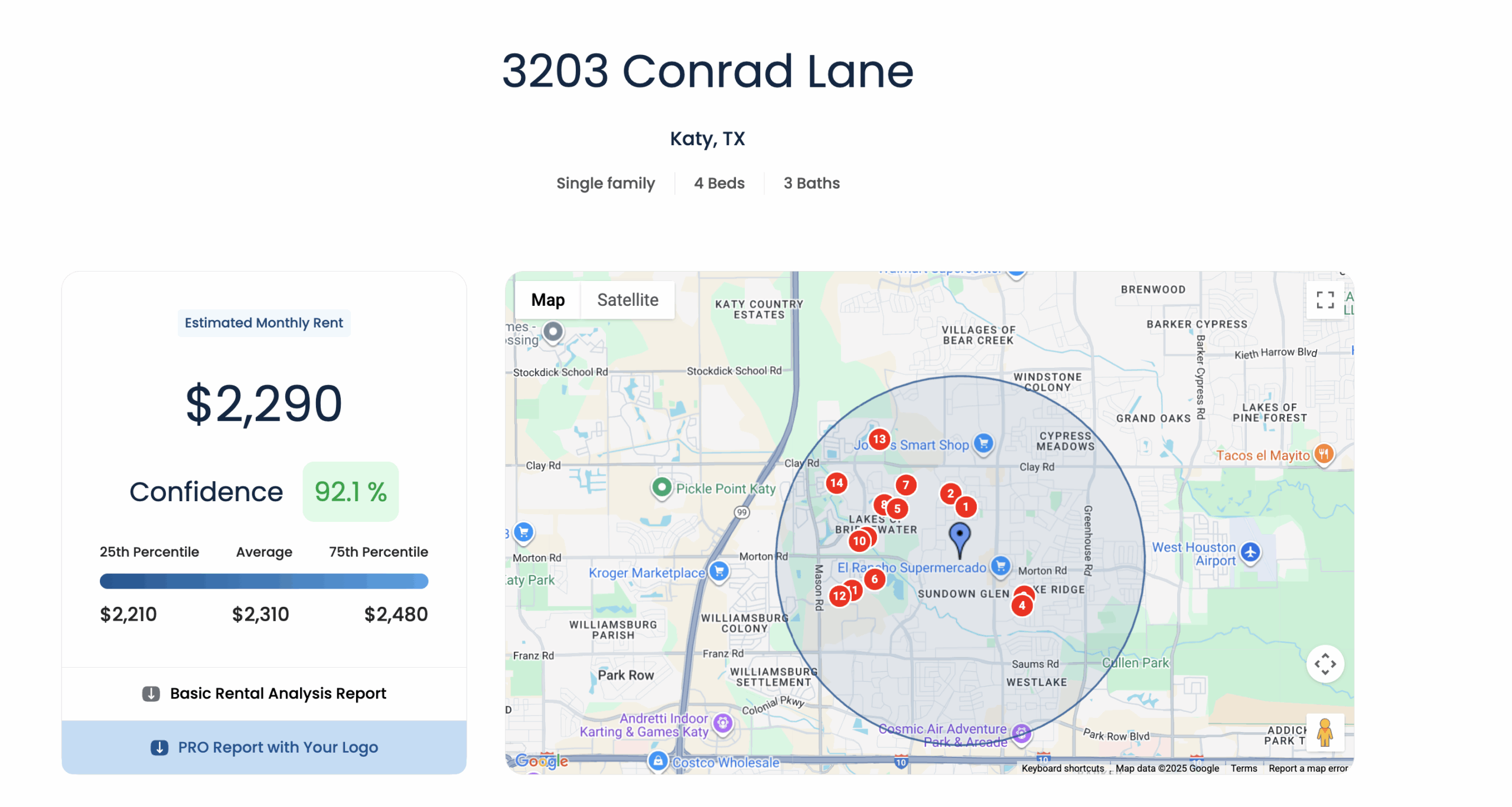
- Zillow vs. Rentometer: Rentometer aggregates raw historical rent data and provides quick percentile reports (median, 25th, and 75th percentiles) for specific addresses, making it superior for quick neighborhood sanity checks. However, it lacks Zillow's rich visual property interface and mapping details.
- Zillow vs. MLS (Multiple Listing Service): For licensed agents and investors working with brokerages, the MLS provides executed lease data rather than just asking prices. Zillow often displays what landlords hope to get, whereas MLS data shows what tenants actually paid.
- Zillow vs. RentSpree and Trulia: Since Trulia is owned by the same parent company (Zillow Group), their underlying data pipelines overlap significantly. RentSpree leans more heavily into tenant screening but offers robust localized rent estimates derived from specialized rental networks.
Troubleshooting Common Discrepancies in Rental Estimates
Discrepancies often arise when a Zillow Rent Zestimate conflicts with local market reality or appraisals. Understanding why these gaps occur prevents costly pricing mistakes.
Data Lag and Outliers: Automated algorithms can take weeks to process sudden macroeconomic shifts, such as local factory openings or sudden spikes in mortgage rates driving more families into the rental pool. Furthermore, single-family homes with luxury upgrades or unpermitted accessory dwelling units (ADUs) can heavily distort median zip-code calculations if the algorithm misclassifies the property footprint.
To resolve these variances, always verify the underlying comps feeding the estimate. If the system is pulling comps from an inferior school district across a major thoroughfare, manually discard those properties from your analysis and recalculate the average price-per-square-foot manually.
Frequently Asked Questions About Zillow Rental Comps
Are Zillow rental comps completely free to use?
Yes, accessing active rental listings, map filters, and basic Rent Zestimates on Zillow is entirely free for consumers and property owners without requiring a paid subscription.
Do Zillow rent estimates reflect asking prices or final executed lease agreements?
Zillow estimates and active comps primarily reflect asking prices listed by landlords and property managers, which may differ slightly from final negotiated lease rates.
How often are Zillow Rent Zestimates updated?
Zillow updates its rental algorithms and individual property Zestimates multiple times per week as new market data, listing updates, and public records are ingested into the platform.
Can Zillow comps be used for commercial real estate properties?
No, Zillow rental comps are strictly designed for residential real estate, including single-family homes, apartments, townhomes, condos, and duplexes, rather than commercial retail or industrial spaces.
Why is there no Rent Zestimate available for a specific property?
If a property lacks sufficient public tax records, historical listing data, or comparable neighboring properties, the algorithm cannot generate a statistically reliable estimate.
Optimizing Your Rental Strategy with Data
Leveraging Zillow rental comps provides a strong foundation for competitive market positioning, but successful property management requires continuous monitoring of local supply and demand dynamics. Combine algorithmic insights with regular drive-by inspections and direct contact with local property managers to ensure your rental rates consistently outpace market averages while minimizing vacancy periods.
Image Gallery