Understanding the Financial Legacy and Net Worth of Ric Ocasek
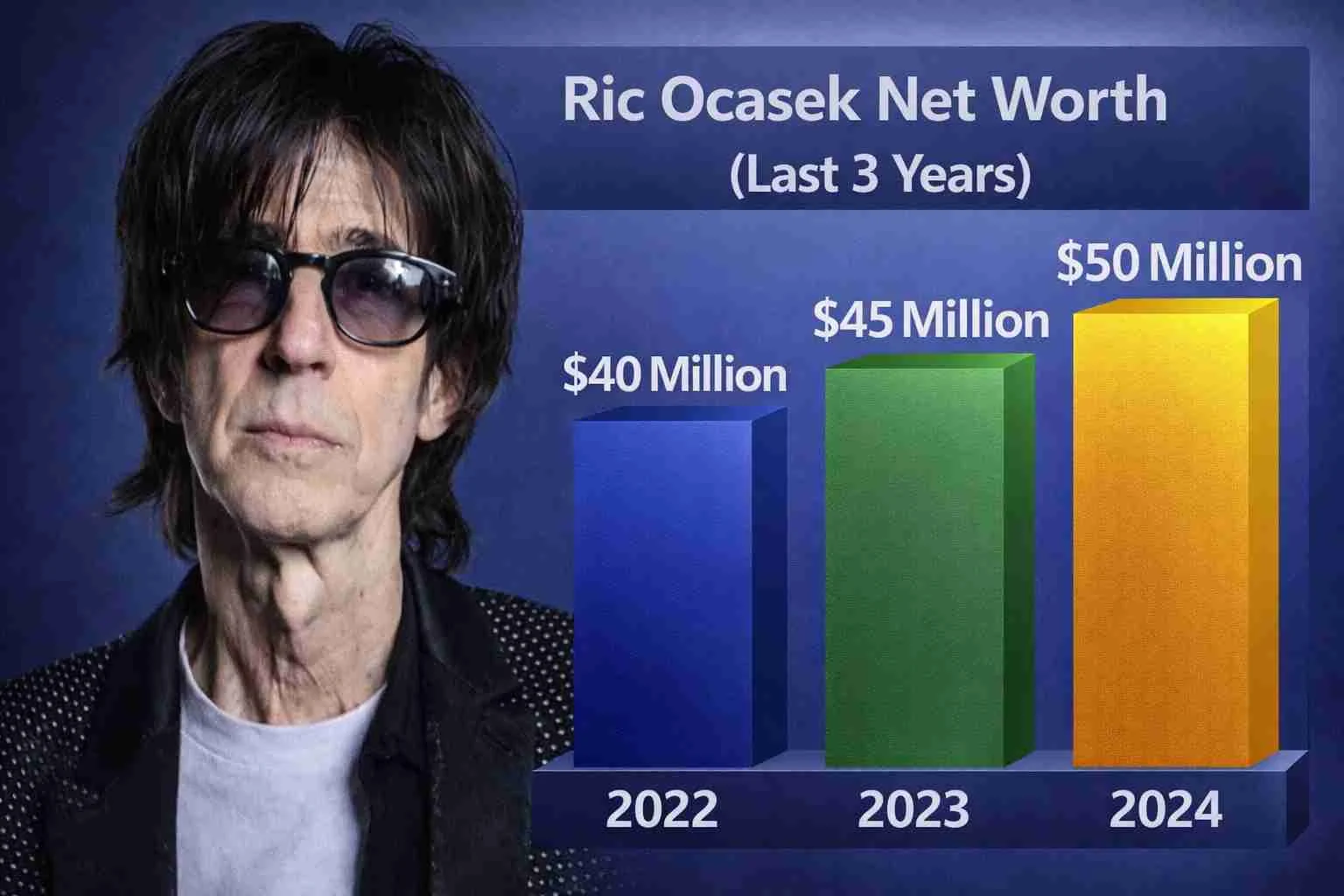
At the time of his passing in 2019, Ric Ocasek, the iconic frontman of The Cars and a prolific music producer, had an estimated net worth of approximately $25 million. This valuation primarily stemmed from his decades-long career in th...
At the time of his passing in 2019, Ric Ocasek, the iconic frontman of The Cars and a prolific music producer, had an estimated net worth of approximately $25 million. This valuation primarily stemmed from his decades-long career in the music industry, encompassing successful record sales, concert tours, songwriting royalties, and his influential work as a record producer for numerous high-profile bands.
Contents
The Foundation of Ric Ocasek’s Wealth
Ric Ocasek’s path to financial success was built on a multifaceted career that spanned over four decades. As the lead vocalist, rhythm guitarist, and songwriter for The Cars, he was at the heart of one of the most successful American new wave bands of the late 1970s and 1980s.
The primary driver of his wealth was songwriting. Unlike many performers who rely solely on performance fees, Ocasek penned the vast majority of The Cars' hits, including "Just What I Needed," "My Best Friend’s Girl," "Let’s Go," and "Shake It Up." In the music industry, owning the publishing rights to a catalog of enduring radio hits provides a consistent, passive revenue stream that appreciates over time. Because Ocasek wrote the music and lyrics for these tracks, he received consistent royalties from radio play, streaming services, sync licensing for film and television, and mechanical royalties from physical and digital sales.
Career as a Prolific Record Producer
While his fame was cemented by The Cars, Ocasek’s financial portfolio was significantly bolstered by his secondary career as a record producer. Starting in the mid-1980s, Ocasek transitioned into the studio, helping shape the sound of iconic alternative and rock albums. His production credits include seminal works such as Weezer’s "Blue Album" and "Green Album," Bad Brains’ "Rock for Light," and No Doubt’s "Rock Steady."
Production work is a distinct income stream in the music industry. Producers are often paid a flat fee upfront, known as an advance, and frequently negotiate "points"—a percentage of the record’s royalties. By producing albums for massive bands like Weezer, Ocasek secured both high-profile recognition and long-term financial returns from those albums' continued commercial success. His ability to modernize the sound of emerging artists kept him financially relevant long after The Cars' initial commercial peak.
Assets and Estate Complexity
Ric Ocasek’s financial situation was a subject of public attention following his death in 2019. His will, which was filed in the Manhattan Surrogate’s Court, revealed specific directives regarding his assets, notably his decision to disinherit his estranged wife, Paulina Porizkova.
The estate included significant personal property, such as an Upper East Side townhouse in New York City, which was valued in the millions of dollars. The management of these assets post-mortem highlighted the importance of estate planning in the entertainment industry. In New York, the laws governing wills and probate ensure that while an individual has the right to distribute their assets as they see fit, there are legal mechanisms for surviving spouses to claim a portion of an estate, often referred to as an "elective share." This legal nuance is critical for anyone managing a multi-million dollar estate involving complex family dynamics and real estate holdings.
Breakdown of Revenue Sources
The following table summarizes the primary contributors to Ocasek’s total net worth throughout his career.
| Revenue Stream | Description | Impact on Net Worth |
|---|---|---|
| Songwriting Royalties | Publishing income from The Cars' hit catalog. | High (consistent, recurring) |
| Performance Fees | Revenue from global tours and appearances. | Moderate (periodic) |
| Production Fees | Advances and royalties from producing other bands. | High (long-term portfolio) |
| Real Estate | Investments in premium properties (e.g., NYC). | High (asset appreciation) |
| Recording Contracts | Advances and sales splits for studio albums. | Moderate (declining post-CD era) |
Intellectual Property and Catalog Value
In the modern music industry, an artist’s catalog is often their most valuable asset. For someone like Ocasek, the "The Cars" brand and the associated song rights represent a perpetual revenue-generating entity. Even in 2026, music catalogs are frequently sold to private equity firms and music publishing conglomerates. While Ocasek maintained ownership of his work during his lifetime, the valuation of such assets is based on a multiple of annual earnings. A catalog that earns, for example, $500,000 to $1 million annually in royalties can command a market price of ten to fifteen times that amount, explaining how his estate valuation remained robust despite shifts in music consumption formats from CDs to digital streaming.
Legal and Financial Lessons for Creatives
The financial trajectory of Ric Ocasek serves as a case study for artists in high-earning industries. Key takeaways include:
- Catalog Ownership: Owning the publishing rights is the single most effective way to build long-term wealth in music.
- Diversification: Ocasek did not rely solely on his own band's performance; he diversified by producing for others.
- Estate Planning: The public nature of Ocasek's will serves as a reminder that without clear, updated legal documents, the distribution of complex assets—especially those involving intellectual property—can lead to prolonged legal proceedings.
- Inflation and Maintenance: Like any high-net-worth individual, the "worth" of his estate was tied heavily to real estate. Holding property in major metropolitan markets like New York City requires significant liquidity for taxes and maintenance, a factor often overlooked when estimating net worth.
Frequently Asked Questions
Was Ric Ocasek a billionaire? No. While Ocasek was highly successful and accumulated a multi-million dollar estate, he was not a billionaire. His wealth was consistent with a highly successful musician and producer who managed his royalties and investments effectively over a long career.
How did The Cars’ success impact his net worth? The Cars sold millions of albums globally. Because Ocasek wrote the songs, he received the lion's share of the songwriting and publishing royalties. This provided the capital he later used to purchase real estate and invest in his production career.
Why was there controversy over his will? Ocasek’s will explicitly excluded his then-estranged wife, supermodel Paulina Porizkova. This became a matter of public record, highlighting the complexities of estate law in New York, where spouses are generally entitled to an elective share of an estate regardless of the language within a will.
Are music royalties considered a permanent asset? Royalties are perpetual as long as the copyrights exist. In the United States, copyright for works created by an individual generally lasts for the life of the author plus 70 years. This means the income generated by Ocasek’s music will continue to benefit his heirs for decades to come.
Next Steps for Financial Review
If you are evaluating the legacy of an artist or managing your own intellectual property assets, the most vital step is to ensure that your estate planning is current. Consult with an attorney specializing in entertainment law and trusts and estates. They can ensure that your copyright interests, real estate holdings, and liquid assets are structured to minimize tax liabilities and avoid the public, often complicated, probate disputes that can follow the passing of a high-profile individual.
Image Gallery