Qatar Family Net Worth: A Snapshot of Wealth, Assets, and Sovereign Holdings
The collective net worth of Qatar’s ruling family, the House of Thani, is estimated between $335 billion and $450 billion. This wealth is distributed across thousands of family members, featuring extensive global real estate, private l...
The collective net worth of Qatar’s ruling family, the House of Thani, is estimated between $335 billion and $450 billion. This wealth is distributed across thousands of family members, featuring extensive global real estate, private luxury assets, and overlapping ties to Qatar's sovereign wealth fund, the Qatar Investment Authority (QIA).
Contents
Understanding the Wealth of Qatar's Ruling Dynasty
The House of Thani (Al Thani) has ruled Qatar since the mid-19th century. Over the past several decades, the transformation of Qatar from a modest pearling and fishing economy into one of the world's highest per-capita income nations has reshaped the financial profile of its royal family. Modern estimates place the combined valuation of dynastic holdings, private real estate portfolios, and family-controlled corporate entities well into the hundreds of billions of dollars.
Unlike private corporate founders whose wealth is tied directly to publicly traded shares with daily market valuations, royal wealth in Gulf nations operates through a dual architecture. It consists of strictly personal private assets—such as global real estate, private art collections, superyachts, and holding firms—alongside influence over sovereign institutions that manage state revenues derived from the country's vast natural gas reserves.
Disentangling personal dynastic wealth from state assets requires examining official filings, regulatory disclosures, institutional asset management practices, and property registry records across multiple international jurisdictions.
Sovereign Wealth vs. Personal Net Worth: Delineating the QIA
A fundamental step in evaluating Qatar's financial structure is distinguishing between the personal fortunes of the Al Thani family and the assets of the state via the Qatar Investment Authority (QIA). Established in 2005 to manage the country's oil and natural gas surpluses, the QIA is a sovereign wealth fund tasked with diversifying national revenues for future generations.
| Sovereign Holdings (QIA) | Dynastic & Private Holdings |
|---|---|
| • Public Stock Portfolios | • Private Luxury Real Estate |
| • International Infrastructure | • Private Equity & Holding Co's |
| • Foreign State Joint Ventures | • Art Collections & Superyachts |
| • State Reserve Assets | • Personal Liquid Portfolios |
While members of the ruling family serve on the board of directors and hold key leadership roles within the QIA, the fund's estimated $450–$500+ billion in Assets Under Management (AUM) is legally defined as state property rather than the personal equity of individual family members.
However, the liquidity generated by the country's natural resource operations historically provided civil list allocations, royal stipends, and foundational capital for private family investment vehicles. This historical capital accumulation has enabled individual prominent family members to build private investment entities independent of the sovereign fund.
Key Figures Shaping Qatari Dynastic and Executive Wealth
The distribution of wealth within the House of Thani is concentrated among several high-profile figures who lead major business groups or hold central roles in public life.
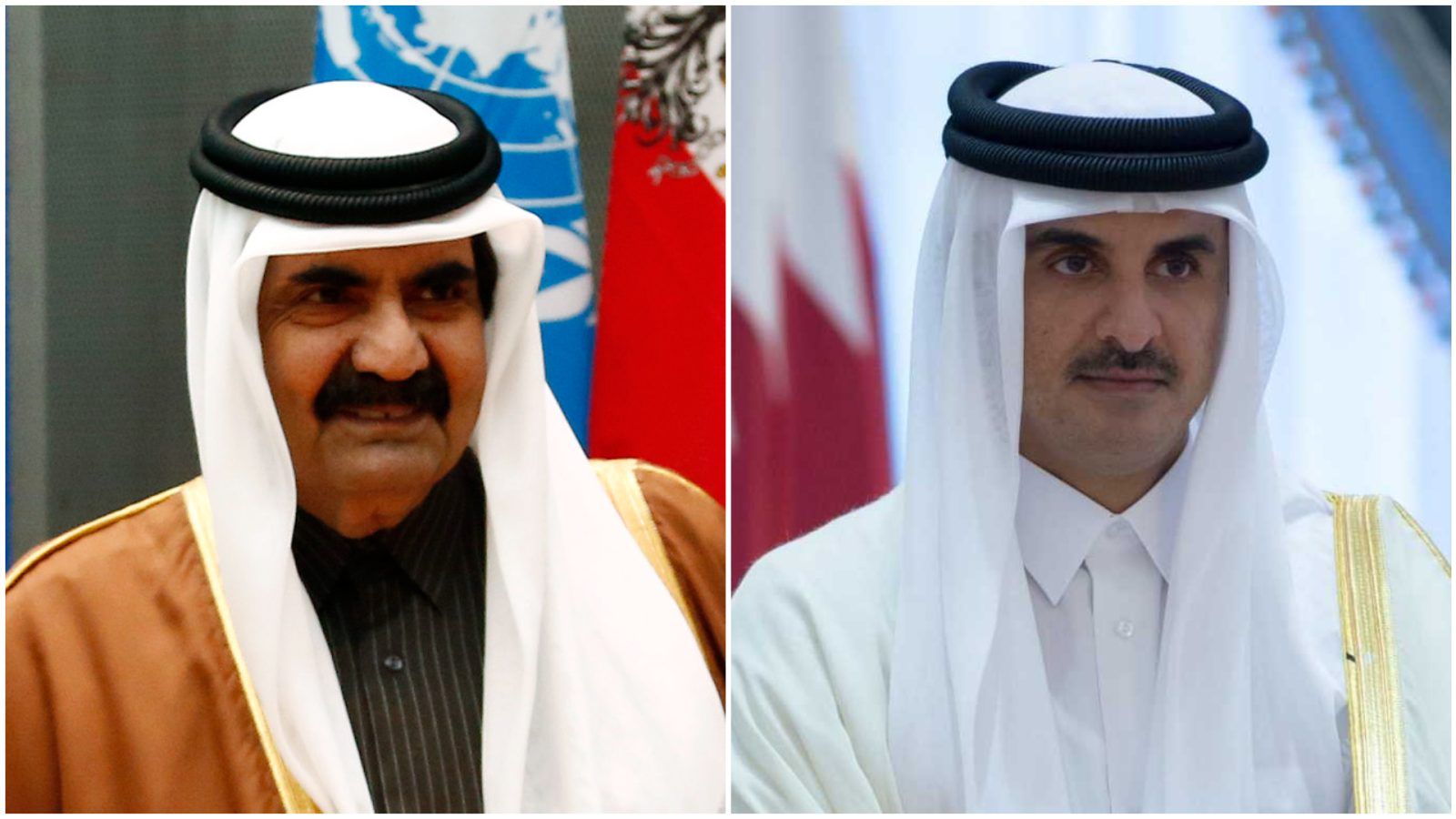
Sheikh Tamim bin Hamad Al Thani (Amir of Qatar)
As the reigning Amir, Sheikh Tamim exercises control over state assets while maintaining substantial private family estates. His personal net worth is widely estimated between $2 billion and $5 billion, distinct from state assets. His holdings focus primarily on luxury real estate, primary residences across Europe and the Middle East, and private investment vehicles managed through family offices.
Sheikh Hamad bin Khalifa Al Thani (Father Amir)
The former ruler of Qatar, Sheikh Hamad, laid the structural foundation for modern Qatari wealth by expanding the development of the North Field liquefied natural gas (LNG) reserves in the 1990s. His private wealth includes major property acquisitions in Europe, high-value private vessels, and significant stakes in private investment portfolios established during his reign.
Sheikh Hamad bin Jassim bin Jaber Al Thani (HBJ)
The former Prime Minister and Foreign Minister of Qatar, known widely as HBJ, is recognized as one of the world's most prominent private investors. Operating through entities such as Paramount Services Holdings and Premier Group, HBJ's personal net worth is independently estimated to exceed $1.2 billion to $3 billion. His portfolio has historically included direct stakes in major international banking institutions, luxury hotel chains, and prime commercial real estate in London and Paris.
Major Global Assets and Real Estate Holdings
The global investment footprint of Qatar’s prominent family members and associated investment funds is heavily weighted toward prime international real estate, high-end hospitality, and iconic commercial properties, particularly in Western Europe.
| Asset / Entity | Primary Location | Associated Ownership Entity | Sector |
|---|---|---|---|
| The Shard | London, United Kingdom | Qatari Diar / Sovereign & Dynastic Affiliates | Commercial / Mixed-Use Real Estate |
| Harrods Department Store | London, United Kingdom | Qatar Investment Authority (QIA) | Retail & Real Estate |
| Claridge's, The Connaught, The Berkeley | London, United Kingdom | Constellation Hotels (Private/Dynastic Capital) | Luxury Hospitality |
| Hôtel Lambert | Paris, France | Private Al Thani Estates | Historic Residential Property |
| Paris Saint-Germain FC (PSG) | Paris, France | Qatar Sports Investments (QSI) | Sports & Media Entertainment |
| Volkswagen Group (Major Shareholding) | Wolfsburg, Germany | Qatar Holding LLC (QIA Subsidiary) | Automotive & Manufacturing |
| Barclays Capital (Historical Position) | London, United Kingdom | Challenger Universal / HBJ Vehicles | Financial Services |
London Real Estate Concentration
London has historically served as the primary international center for Qatari real estate investments. Family members and national investment arms collectively own millions of square feet of prime real estate in Mayfair, Knightsbridge, and Belgravia. This concentration has led financial commentators to refer informally to portions of central London as "the Qatari Quarter."
Luxury Hospitality and Cultural Holdings
Beyond commercial office towers, dynastic capital has flowed into legendary luxury hotels across Paris, London, and Rome. Furthermore, members of the Al Thani family are among the world's largest private purchasers of fine art, having assembled vast collections of classical Islamic art, modern masterworks, and rare artifacts housed in both private residences and public institutions like the Museum of Islamic Art in Doha.
Drivers of Wealth Accumulation: Liquefied Natural Gas (LNG)
The foundation of Qatar's financial position rests on the North Field, the world's largest non-associated natural gas field. Qatar's state-owned energy firm, QatarEnergy, manages the extraction, liquefaction, and export of LNG to global markets across Europe and Asia.
- Natural Gas Extraction (North Field)
- State Revenue & Oil/Gas Surpluses
- Sovereign Capital (QIA)
- Global Stock & Infra
- Dynastic Allocations
- Private Real Estate & Equity
- Sovereign Capital (QIA)
The expansion of the North Field East and North Field South projects has increased Qatar's total LNG production capacity. This ongoing resource expansion ensures long-term fiscal surpluses, providing the capital reserves necessary to sustain public infrastructure projects, sovereign wealth growth, and dynastic financial security.
Asset Transparency, Valuation Challenges, and Methodology
Estimating royal net worth involves inherent analytical and legal limits. While public companies must publish shareholder lists and sovereign funds disclose governance frameworks, private family assets are held through layered structures, trusts, and private holding firms across multiple jurisdictions.
Key Factors Impacting Net Worth Calculations:
- Private Ownership Structures: Many high-value assets—such as offshore real estate, artwork, and private equity investments—are held through private companies registered in jurisdictions like Jersey, Luxembourg, or the Cayman Islands, where beneficial ownership disclosures vary.
- Overlap Between State and Dynasty: Disentangling public funds allocated for national development from private dynastic capital requires careful evaluation of statutory ownership markers and corporate filings.
- Market Volatility: Valuations of foreign commercial real estate and equity stakes fluctuate alongside global interest rates, currency valuations, and real estate market cycles.
Disclaimer: Financial estimates of private family net worth are based on compiled public disclosures, land registry filings, regulatory reports, and independent journalistic investigations. They should be viewed as contextual estimates rather than audited accounting statements.
Frequently Asked Questions
What is the estimated total net worth of the Qatari royal family?
The collective net worth of the House of Thani is estimated between $335 billion and $450 billion. This figure encompasses assets held across thousands of extended family members, including private real estate, luxury holdings, and private corporate investments worldwide.
Is the Qatar Investment Authority (QIA) part of the royal family's net worth?
No. The QIA is Qatar's official sovereign wealth fund, holding over $450 billion in assets under management. While members of the ruling family sit on its governance board and direct its strategy, the fund's assets belong legally to the State of Qatar, not to individual family members as private personal wealth.
Who is the wealthiest individual in the Qatari royal family?
Individual net worth figures are kept private, but prominent figures such as former Prime Minister Sheikh Hamad bin Jassim bin Jaber Al Thani (HBJ) and members of the immediate ruling branch hold multi-billion-dollar private fortunes composed of international real estate, private equity, and banking stakes.
What are the main foreign assets owned by Qatari investors?
Qatari sovereign and private investors hold prominent international assets, including London's Harrods department store, The Shard, stakes in the Volkswagen Group and Barclays, luxury hotel portfolios across Europe (such as Claridge's), and the Paris Saint-Germain football club.
How does Qatar generate the wealth that funds these investments?
The fundamental source of Qatari wealth is its vast reserves of natural gas, primarily located in the offshore North Field. Exports of liquefied natural gas (LNG) generate massive national trade surpluses, which fund state operations, the sovereign wealth fund, and the broader domestic economy.
Tracking Sovereign and Dynastic Wealth
To verify claims, track corporate equity stakes, or research international real estate holdings related to Gulf investment entities, use official registry and financial disclosure tools:
- UK Companies House & Register of Overseas Entities: Search public records for property ownership and corporate control registered by foreign entities in the United Kingdom via the UK Government Companies House Portal.
- Sovereign Wealth Fund Institute (SWFI): Review structural profiles, estimated AUM, and investment trends of the Qatar Investment Authority and global peers through the Sovereign Wealth Fund Institute.
- Regulatory Financial Disclosures: Examine regulatory filings with the US Securities and Exchange Commission via the SEC EDGAR System or the European Securities and Markets Authority (ESMA) for major public shareholding disclosures in multinational corporations.
Image Gallery