How Are Air Force One Pilots Selected?
Selecting pilots to fly the President of the United States on Air Force One is one of the most rigorous, elite, and highly scrutinized processes in global aviation. Pilots are not chosen through a standard job application or open publi...
Selecting pilots to fly the President of the United States on Air Force One is one of the most rigorous, elite, and highly scrutinized processes in global aviation. Pilots are not chosen through a standard job application or open public posting. Instead, they are handpicked from a small, highly qualified pool of active-duty United States Air Force mobility pilots who have demonstrated exceptional flying skill, flawless military records, ironclad character, and the highest levels of security clearance.
Contents
The selection pipeline begins well before a pilot ever steps foot near the iconic blue-and-white presidential Boeing VC-25 aircraft. Candidates must be active-duty Air Force commissioned officers holding the rank of Lieutenant Colonel or Colonel, with thousands of hours of flight time in heavy, multi-engine aircraft. Furthermore, because the mission requires absolute discretion and unflappable composure under pressure, candidates undergo intensive background checks, psychological evaluations, and extensive peer reviews before being invited to join the Presidential Airlift Group.
The Operational Structure of the Presidential Airlift Group
The pilots who fly the commander-in-chief belong to the Presidential Airlift Group, a specialized unit headquartered at Joint Base Andrews in Maryland. This group operates under the 89th Airlift Wing and is exclusively tasked with global transport for the President, the Vice President, cabinet members, and other high-ranking dignitaries.
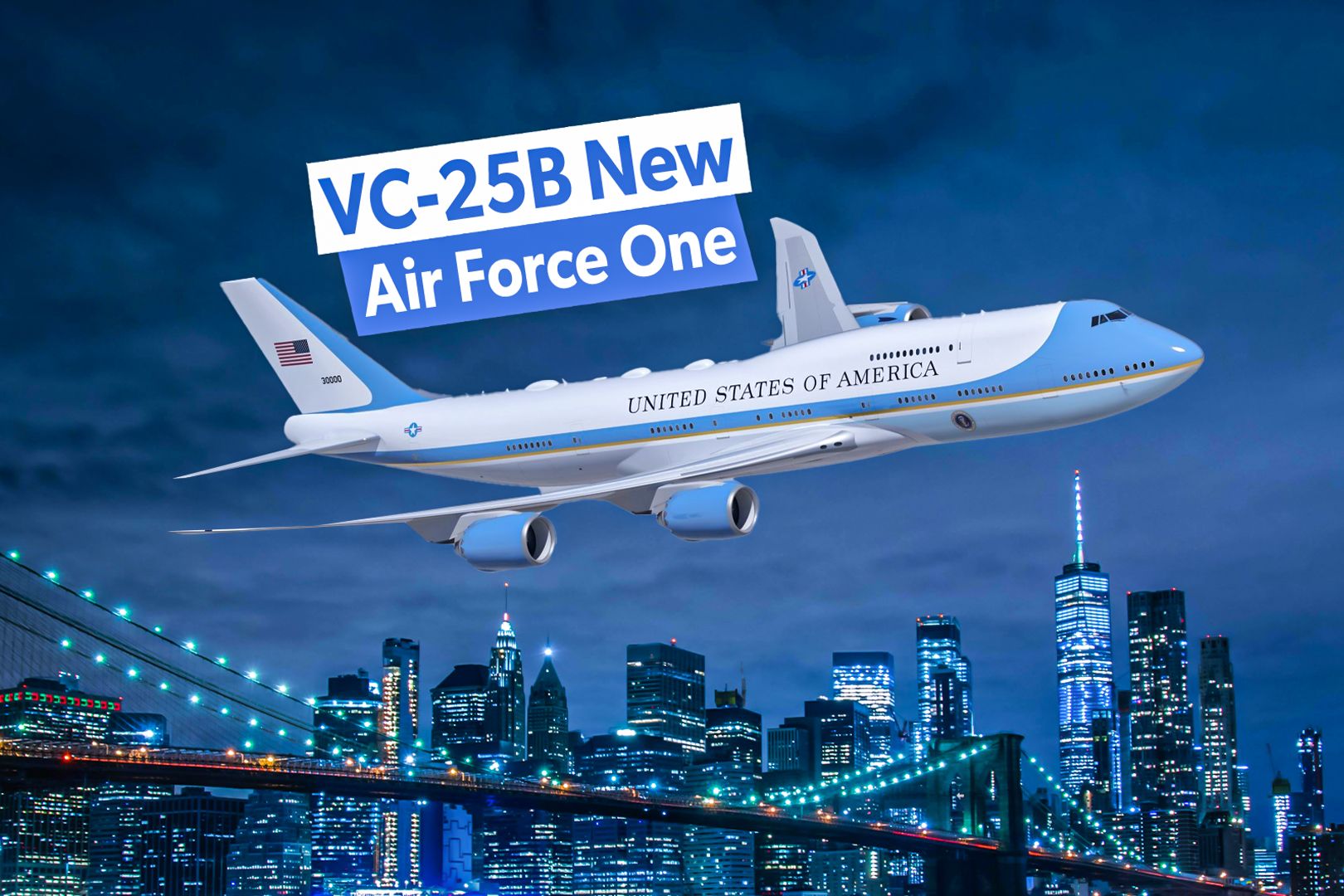
Unlike standard operational squadrons, the Presidential Airlift Group maintains a distinct culture focused on meticulous preparation, redundancy, and precision. Pilots assigned to the unit do not fly exclusively on the primary Boeing VC-25A (or its upcoming replacement, the VC-25B); they also pilot the C-35, C-40, and C-32 aircraft used for smaller delegations or shorter runways. This operational breadth ensures that every pilot maintains absolute proficiency across multiple airframes.
To understand the scope of responsibility carried by these aviators, consider the structural makeup of the unit:
- Command Structure: Commanded by a senior Air Force Colonel who reports directly to military and civilian leadership regarding flight safety and mission execution.
- Flight Crews: Each mission utilizes multiple complete flight crews, including primary aircraft commanders, co-ordinators, navigators, flight engineers, and communications officers.
- Support Personnel: Thousands of maintenance technicians, security forces, and logistics experts work in tandem with the pilots to secure the aircraft at every domestic and international destination.
Minimum Prerequisites and Flight Hour Benchmarks
Before an Air Force aviator can even be considered for the Presidential Airlift Group, they must meet staggering baseline career achievements. The Air Force does not train pilots specifically for Air Force One from scratch; instead, candidates must already be seasoned master aviators within the mobility fleet.
Most selected pilots have spent decades flying strategic airlift or refueling aircraft such as the C-17 Globemaster III, C-5 Galaxy, or KC-135 Stratotanker. The baseline qualifications demand extraordinary technical mastery of heavy, swept-wing aircraft.
| Qualification Metric | Baseline Requirement | Preferred Candidate Profile |
|---|---|---|
| Rank | Major or Lieutenant Colonel | Senior Lieutenant Colonel or Colonel |
| Total Flight Hours | Minimum 2,500 hours | 3,500 to 5,000+ hours |
| Command Experience | Squadron Commander or Director of Operations | Wing Commander or equivalent leadership experience |
| Aircraft Qualification | Aircraft Commander in Major Weapon System (MWS) | Evaluator Pilot or Instructor Pilot status |
| Security Clearance | Top Secret / Sensitive Compartmented Information (TS/SCI) | Single-Scope Background Investigation (SSBI) with Tier 5 Investigation |
The Rigorous Vetting and Evaluation Process
Once an eligible pilot's record is nominated, they enter a multi-layered screening process designed to evaluate not just their stick-and-rudder capabilities, but their psychological stability, interpersonal communication skills, and personal background.
The vetting process is comparable to astronaut selection. Investigators comb through every facet of the candidate's personal and professional life. Financial histories, family stability, foreign contacts, and behavioral patterns are evaluated to ensure the individual is entirely immune to coercion, extortion, or external pressure.
The Integrity Mandate Beyond technical flying capability, the primary filter for Air Force One pilots is absolute, uncompromised integrity. Because these pilots have direct access to the nation's highest leadership and sensitive operational communications, their character must withstand the most intensive background scrutiny the United States military can perform.
Furthermore, candidates undergo simulator evaluations that test their capacity to handle catastrophic mechanical failures, severe weather anomalies, and rapidly shifting diplomatic itineraries under intense observation by senior evaluators.
Training and Transition to the Presidential Fleet
Passing the selection board is only the beginning. Once selected, pilots enter an extensive, months-long transition training pipeline. Even though these aviators are already expert captains of heavy aircraft, flying the presidential fleet requires mastering specialized communication suites, electronic countermeasures, secure navigation systems, and unique performance profiles.
The training curriculum emphasizes precision execution. Every takeoff, descent, and landing must be executed with maximum passenger comfort in mind—smoothness is prized just as highly as technical accuracy. Pilots train extensively in high-fidelity full-motion simulators that replicate every conceivable emergency, from engine failures over hostile airspace to hydraulic system degradation during landing.
- System Integration: Learning classified onboard communications, defensive systems, and encrypted data links.
- Crew Resource Management (CRM): Perfecting cockpit coordination under high-stress, no-fail operational tempos.
- Global Route Familiarization: Studying unfamiliar international airports, security protocols, and diplomatic clearance procedures across hundreds of global destinations.
Career Progression and Rotation Rules
Service in the Presidential Airlift Group is not a permanent career assignment. To ensure fresh leadership, continuous skill dissemination across the broader Air Force, and manageable career progression, pilots typically serve a tour of duty lasting between three and five years.
After completing their tenure flying the President, these officers generally rotate back into senior leadership roles within the Air Force, such as wing commanders, numbered air force staff positions, or senior Pentagon assignments. Their time on Air Force One represents the pinnacle of an already distinguished military flying career, after which many transition to major commercial airline captain roles or defense sector leadership.
Frequently Asked Questions
Can female pilots fly Air Force One?
Yes. The United States Air Force selects pilots strictly based on merit, qualifications, experience, and security clearance, allowing female aviators who meet the rigorous criteria to serve in the Presidential Airlift Group.
Do Air Force One pilots vote for the President they fly?
Pilots are active-duty military members and are strictly bound by Department of Defense directives regarding political neutrality. They serve the office of the presidency and the Commander-in-Chief regardless of political party.
How many flight crews are assigned to Air Force One?
The Presidential Airlift Group maintains multiple fully qualified flight crews at any given time to ensure continuous global availability, redundancy, crew rest compliance, and operational flexibility.
Are Air Force One pilots armed?
While the pilots themselves focus entirely on flight operations and aircraft command, security is maintained by heavily armed onboard Secret Service agents and dedicated security forces accompanying the aircraft.
What aircraft do these pilots fly besides the VC-25?
In addition to the primary Boeing VC-25 aircraft, Presidential Airlift Group pilots regularly fly smaller executive transport aircraft such as the C-32 (Boeing 757 derivative) and C-40 (Boeing 737 derivative) depending on mission requirements and runway limitations.
Secure Your Aviation Career Path Today
Understanding how elite military aviation units operate underscores the value of precision, dedication, and uncompromising standards. Whether you are pursuing a career in military aviation, studying defense logistics, or tracking aerospace developments, maintaining a commitment to technical excellence remains the ultimate prerequisite for success at the highest levels of global flight operations.
Image Gallery