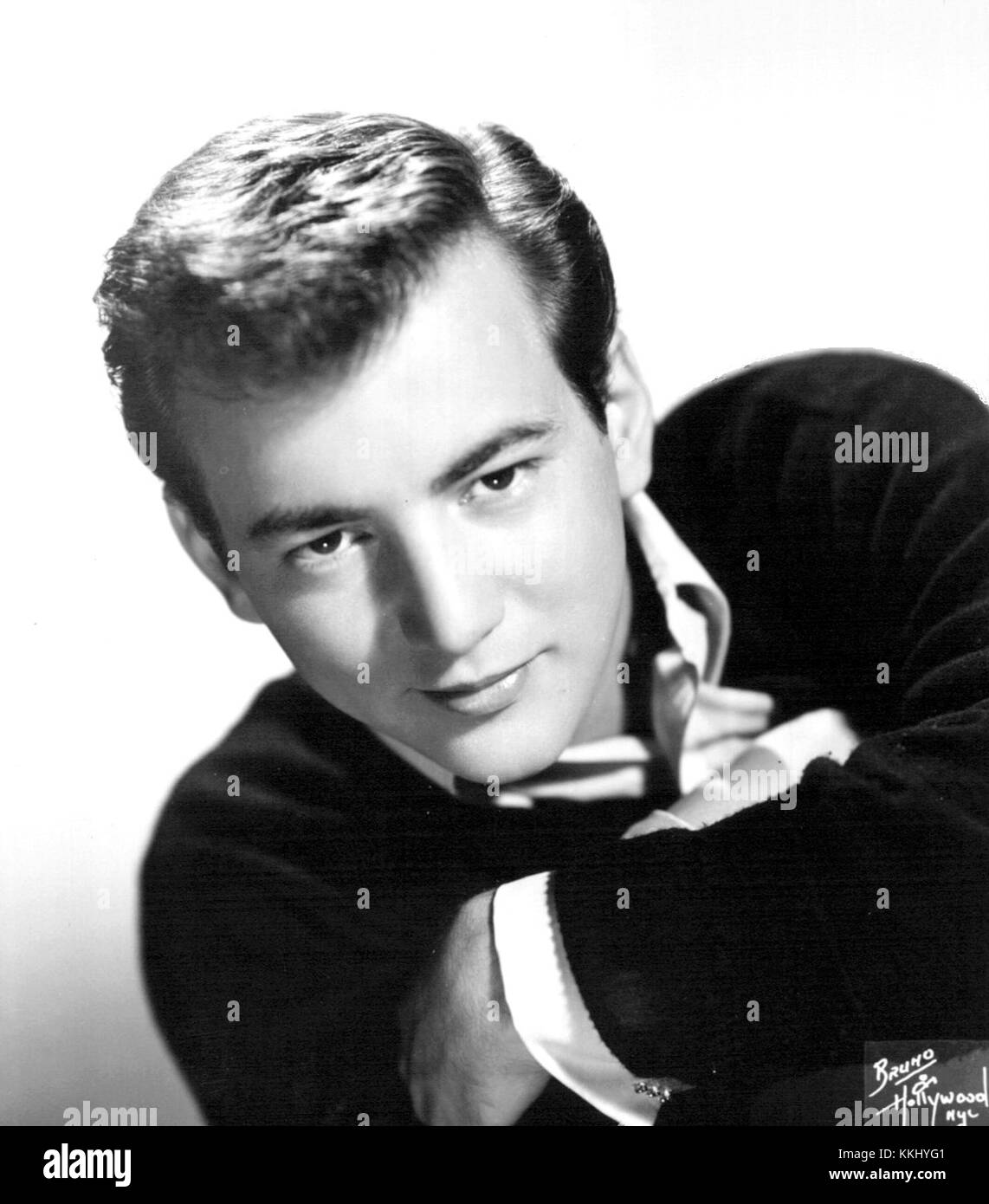
What Genre Is Bobby Darin? Exploring His Evolution from Rock to Swing and Folk
Bobby Darin was a genre-defying American vocalist, songwriter, and multi-instrumentalist whose music spanned Rock and Roll, Traditional Pop, Big Band Swing, Country, Folk Rock, and Motown Soul. Rather than adhering to a single style, D...
Bobby Darin was a genre-defying American vocalist, songwriter, and multi-instrumentalist whose music spanned Rock and Roll, Traditional Pop, Big Band Swing, Country, Folk Rock, and Motown Soul. Rather than adhering to a single style, Darin systematically mastered multiple musical movements across his career, achieving historic chart hits in early teen pop, orchestral jazz, adult contemporary, and protest folk.
Contents
The Genre-Defying Musical Legacy of Bobby Darin
Categorizing Bobby Darin (born Walden Robert Cassotto, 1936–1973) under a single musical genre fails to capture the scope of his recording career. While many 20th-century vocalists found a signature sound and remained within its stylistic boundaries, Darin actively resisted artistic confinement. Over less than two decades of recording, he transitioned from a teenage rock-and-roll sensation into a quintessential Vegas lounge headliner, a country crossover artist, a barefoot protest folk singer, and a Motown soul artist.
This refusal to stay in one lane was driven partly by his technical versatility as a singer, pianist, drummer, and guitarist, and partly by an acute awareness of his own mortality. Having suffered severe rheumatic fever as a child, which left him with a damaged heart, Darin operated with an intense sense of urgency. He pursued commercial and artistic dominance across every major popular music genre of his era.
Rock and Roll and Teen Pop (1956–1959)
Bobby Darin first broke into mainstream national consciousness as a premier architect of late-1950s rock and roll and teen pop. After early, unsuccessful recording sessions for Decca Records, Darin signed with Atco Records, a subsidiary of Atlantic Records, where he teamed up with producer Ahmet Ertegun.
Darin’s initial breakthrough arrived in 1958 with the novelty rock-and-roll track "Splish Splash." Co-written by Darin and radio DJ Murray Kaufman, the song featured a driving 12-bar blues structure, energetic piano riffs, and rapid-fire vocal delivery. It sold over a million copies and peaked at No. 3 on the Billboard Hot 100, establishing Darin as a major figure in the early rock-and-roll movement alongside contemporaries like Jerry Lee Lewis and Buddy Holly.
He quickly reinforced his rock credentials with follow-up hits that defined late-1950s youth culture:
- "Queen of the Hop" (1958): A high-energy dance track built around a classic rockabilly rhythm and uptempo shuffle beat.
- "Dream Lover" (1959): A self-penned pop masterpiece featuring clean vocal harmonies, acoustic guitar strums, and a softer rock-ballad cadence. The song showcased Darin’s emerging ability to write sophisticated pop melodies that appealed to teen audiences while retaining adult radio accessibility.
During this initial era, Darin's music was characterized by driving rhythm sections, youth-centric lyrical themes, handclap percussion, and an exuberant vocal delivery rooted in early rockabilly and rhythm-and-blues performance styles.
Traditional Pop, Big Band, and Swing (1959–1962)
At the height of his teenage popularity, Bobby Darin made a high-stakes career pivot that shocked his record label and management. Eager to build a sustainable career beyond the volatile teen pop market, Darin turned to the Great American Songbook, adopting the sophisticated persona of a finger-snapping, tux-wearing jazz vocalist and swing singer.
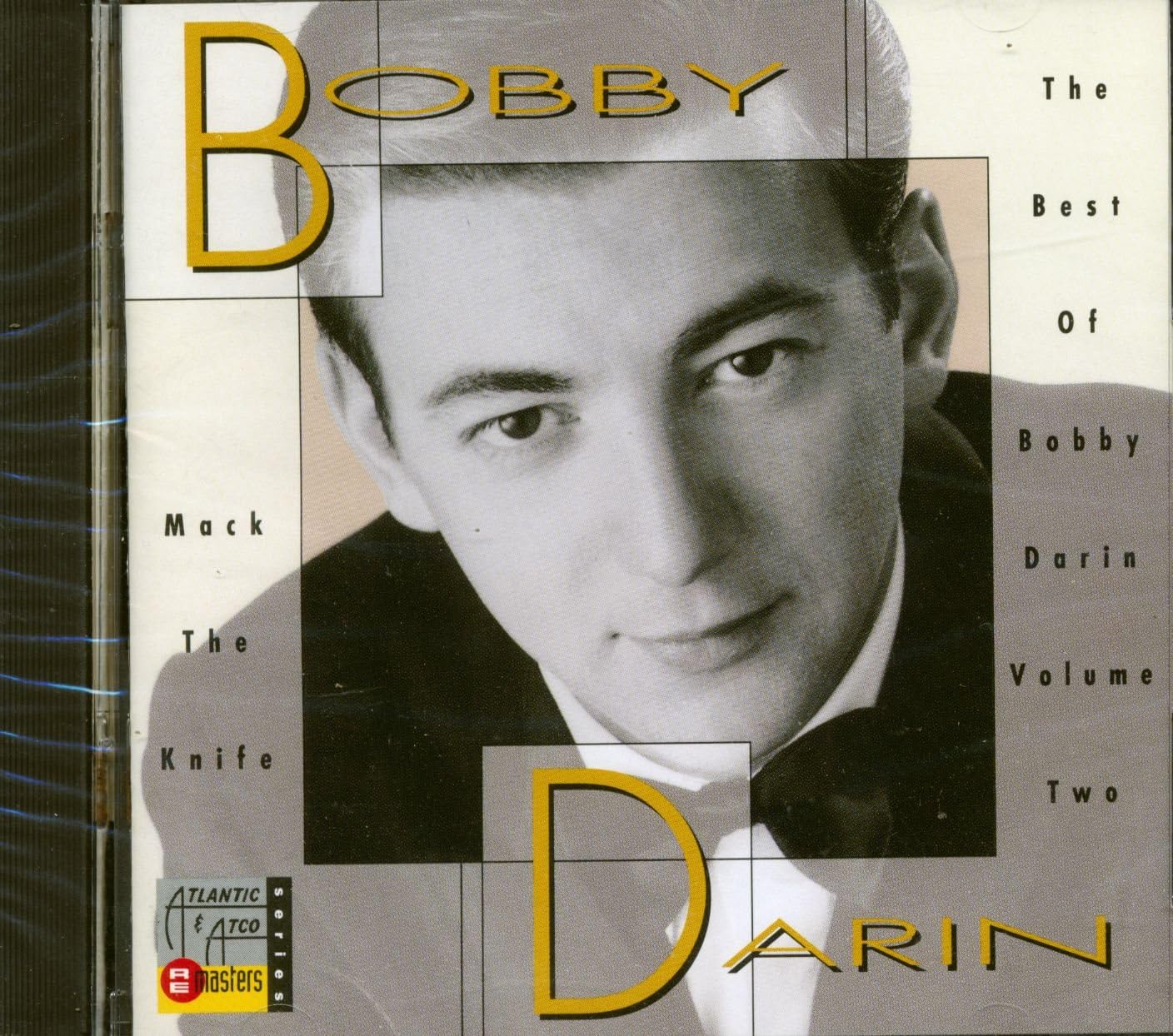
In 1959, Darin released the seminal album That's All, arranged by Richard Wess. The centerpiece of the album was "Mack the Knife," a big-band jazz interpretation of Kurt Weill and Bertolt Brecht’s dark theatrical song from The Threepenny Opera. Darin's version transformed the macabre theatrical piece into a swaggering, brass-heavy swing masterpiece.
- [Soft Woodwinds & Bass] (Intro)
- [Trumpet Modulations] (Mid-Song Build)
- [Full Big Band Climax] (Final Chorus)
"Mack the Knife" spent nine weeks at No. 1 on the Billboard Hot 100, sold millions of records worldwide, and won Grammys for Record of the Year and Best New Artist at the 2nd Annual Grammy Awards in 1960.
Darin followed this success with a series of acclaimed traditional pop and swing releases:
- "Beyond the Sea" (1960): An English adaptation of Charles Trenet’s French song "La Mer," arranged with lush orchestration, dramatic brass swells, and a buoyant swing beat.
- "Artificial Flowers" (1960): A waltz-time theater song rearranged into a hard-swinging big-band track.
- "Clementine" (1960): A traditional folk ballad completely re-imagined with upbeat jazz syncopation and improvisational scat vocal fills.
During this era, Darin competed directly with classic pop crooners like Frank Sinatra, Dean Martin, and Nat King Cole. His swing style stood out for its crisp diction, dramatic brass modulations, dynamic micro-phrasing, and youthfully aggressive vocal energy.
Country & Western and Adult Contemporary (1962–1965)
After establishing himself in big band and standard pop, Bobby Darin shifted focus again following his move to Capitol Records in 1962. Recognizing the growing popularity of Nashville’s crossover recordings, Darin began writing and recording Country & Western and contemporary pop-country tracks.
Rather than simply covering established country hits, Darin composed original material that blended acoustic country instrumentation with modern pop production. His 1962 single "Things" featured acoustic guitar strums, a relaxed two-step rhythm, and country-style vocal inflections. It became a top-five hit on both pop and adult contemporary charts.
Key works from Darin's country and adult contemporary period include:
- "You're the Reason I'm Living" (1963): A country-gospel ballad written by Darin that reached No. 3 on the Billboard Hot 100 and demonstrated his ability to sing soul-searching, emotional country music.
- "18 Yellow Roses" (1963): A story-driven country-pop song utilizing acoustic guitars, muted horns, and narrative songwriting techniques common in Nashville circles.
- You're the Reason I'm Living (Album, 1963): A full-length entry into the Nashville Sound, featuring covers of songs by Hank Williams and Don Gibson alongside Darin's self-penned roots material.
Folk Rock, Protest Songs, and Singer-Songwriter Era (1966–1970)
The mid-to-late 1960s brought radical social transformations in North America, and Darin shifted his musical direction once again. Deeply moved by the civil rights movement, the Vietnam War, and the assassination of his close friend Senator Robert F. Kennedy in 1968, Darin abandoned his tuxedo, nightclub circuit, and polished pop persona.
He adopted a minimalist folk-rock sound, grew a mustache, wore denim on stage, and began performing under the name Bob Darin. He launched an independent record label named Direction Records to release music focused on social critique, personal introspectiveness, and anti-war messages.
Key Milestones of Darin's Folk Transition:
- 1966: Covers Tim Hardin's "If I Were a Carpenter" (Top 10 Folk-Pop Hit)
- 1968: Joins Robert F. Kennedy's Presidential Campaign Tour
- 1969: Launches Direction Records to release politically conscious music
- 1969: Releases "Simple Song of Freedom" & introspective album "Commitment"
Darin's notable contributions to the folk and singer-songwriter movement include:
- "If I Were a Carpenter" (1966): Written by Tim Hardin, Darin’s gentle, folk-rock rendition introduced a softer vocal timbre backed by acoustic guitar, subtle strings, and organic percussion.
- "Simple Song of Freedom" (1969): Written by Tim Hardin and recorded by Darin, this anthem became a signature anti-war track of the late 1960s folk movement.
- Commitment (1969): Released on Direction Records under the pseudonym Bob Darin, this album featured self-penned folk-rock compositions touching on political corruption, social inequality, and environmental concerns.
- Born Walden Robert Cassotto (1969): An experimental, stripped-down singer-songwriter album that shed all big-band conventions in favor of acoustic guitars, harmonica, and reflective lyrics.
R&B, Motown, and Late Career (1970–1973)
In the final stage of his life, Bobby Darin signed with Motown Records. His goal was to merge his lifelong love of rhythm and blues with contemporary 1970s soul, pop-rock, and funk arrangements.
His Motown sessions produced polished soul ballads and contemporary pop compositions that showed his voice adapting smoothly to 1970s studio techniques. Works from this period include his 1972 self-titled Motown album Bobby Darin, which featured covers of Randy Newman songs like "Sail Away," along with soul-infused originals like "Melodie" and "Happy" (the love theme from the film Lady Sings the Blues).
During his final live performances and television appearances on The Bobby Darin Amusement Co. (1972–1973), Darin achieved a unique synthesis of his entire career. He comfortably performed high-energy rock rolls, big-band swing standards, folk ballads, and soul covers in a single concert set until his death following heart surgery in December 1973 at age 37.
Comprehensive Breakdown of Bobby Darin's Musical Eras
The table below outlines the primary genres, signature tracks, key albums, and musical characteristics that defined each major phase of Bobby Darin’s career.
| Era / Years | Primary Genre(s) | Signature Songs | Key Albums | Defining Musical Elements |
|---|---|---|---|---|
| 1956–1959 | Rock & Roll, Teen Pop, Rockabilly | "Splish Splash", "Dream Lover", "Queen of the Hop" | Bobby Darin (1958), That's All (1959) | Driving 12-bar blues rhythms, piano shuffles, youth-marketed lyrics, vibrant vocal delivery. |
| 1959–1962 | Traditional Pop, Big Band, Swing, Jazz Vocals | "Mack the Knife", "Beyond the Sea", "Artificial Flowers" | That's All (1959), This Is Darin (1960), Love Swings (1961) | Full brass orchestrations, swinging tempo modulations, suave phrasing, finger-snapping lounge presentation. |
| 1962–1965 | Country & Western, Pop-Country, Adult Contemporary | "Things", "You're the Reason I'm Living", "18 Yellow Roses" | You're the Reason I'm Living (1963), Golden Folk Hits (1963) | Acoustic guitar strumming, Nashville-style backup vocals, gospel cadences, narrative balladry. |
| 1966–1970 | Folk Rock, Protest Folk, Singer-Songwriter | "If I Were a Carpenter", "Simple Song of Freedom", "Long Line Rider" | If I Were a Carpenter (1966), Commitment (1969), Born Walden Robert Cassotto (1969) | Stripped-down acoustic guitar, harmonica, socially conscious lyrics, understated vocal delivery. |
| 1970–1973 | Soul, R&B, Contemporary Pop | "Happy", "Sail Away", "Melodie" | Bobby Darin (1972), Live at the Desert Inn (1971) | Electric electric piano, funk rhythm sections, gospel-pop backing vocals, modern adult-pop mixing. |
Why Bobby Darin Refused Genre Boundaries
Several underlying factors explain why Bobby Darin constantly changed his musical style:
1. Exceptional Multi-Instrumental Ability
Darin was not merely an interpreter of songs written and arranged by others. He was an accomplished musician who played piano, drums, guitar, and harmonica. His deep understanding of music theory and rhythm allowed him to jump between a hard-driving rock piano beat, an intricate jazz arrangement, and an acoustic folk progression with equal technical fluency.
2. Acute Awareness of Lifespan
Diagnosed with severe cardiac damage stemming from childhood rheumatic fever, Darin was told by doctors early in life that he might not live past the age of 30. This medical reality instilled an intense drive to achieve total artistic and commercial success quickly. He viewed genre exploration not as a gimmick, but as a challenge to conquer every corner of popular music before his time ran out.
3. Business Acumen and Market Intuition
Darin had a sharp eye for music industry trends. When rock and roll faced an uncertain future in the late 1950s, he pivoted to adult swing standards to establish long-term financial security in Las Vegas and television. When folk and protest music captured public interest in the late 1960s, he evolved to reflect contemporary political conversations rather than becoming a nostalgia act.
Frequently Asked Questions About Bobby Darin's Music
What single genre best defines Bobby Darin?
Bobby Darin cannot be accurately defined by a single genre. He is best described as an eclectic Popular Vocalist who recorded major hits across Rock and Roll, Traditional Pop/Swing, Country, Folk Rock, and R&B. If forced to choose the style that brought him the most critical acclaim, his work in Big Band Swing and Traditional Pop remains his most enduring legacy.
Was Bobby Darin a member of the Rat Pack?
No, Bobby Darin was never an official member of the Frank Sinatra-led "Rat Pack" (which included Dean Martin, Sammy Davis Jr., Peter Lawford, and Joey Bishop). However, Darin performed in the same Las Vegas venues, sang similar big-band and swing arrangements, and was frequently compared to Sinatra, with whom he shared a competitive artistic rivalry.
Did Bobby Darin write his own songs?
Yes. Unlike many crooners of his era who relied entirely on outside songwriters, Bobby Darin was a prolific composer. He wrote or co-wrote several of his biggest hits across multiple genres, including "Splish Splash" (Rock & Roll), "Dream Lover" (Teen Pop), "Things" (Country Pop), and "You're the Reason I'm Living" (Country/Gospel).
What Grammy Awards did Bobby Darin win for his genre-crossing hits?
At the 2nd Annual Grammy Awards in 1960, Bobby Darin won two major awards for his transition into big-band swing: Record of the Year for "Mack the Knife" and Best New Artist.
How did Bobby Darin's style change when he recorded for Motown Records?
When Darin signed with Motown Records in 1970, he moved away from traditional big-band orchestrations and acoustic folk. He embraced contemporary early-1970s R&B, soul, and soft rock, incorporating electric piano, funk rhythm sections, and modern pop song selection.
Recommended Listening Path for Exploring Bobby Darin
To fully appreciate Bobby Darin’s versatility across genres, structure your listening chronologically across his key releases:
- Start with the Rock & Roll Fundamentals (1958–1959): Listen to "Splish Splash," "Queen of the Hop," and "Dream Lover" to hear his early vocal energy and pop-rock instincts.
- Move to the Classic Swing Essentials (1959–1960): Play the album That's All in its entirety. Focus on "Mack the Knife," "Beyond the Sea," and "Softly, As in a Morning Sunrise" to evaluate his big-band phrasing.
- Explore the Country & Folk Transition (1962–1969): Listen to "Things," "You're the Reason I'm Living," and his cover of Tim Hardin's "If I Were a Carpenter." Conclude this section with his anti-war single "Simple Song of Freedom."
- Finish with the Motown and Late-Period Soul Sessions (1971–1973): Listen to his self-titled 1972 Motown release Bobby Darin and his final live album Live at the Desert Inn (1971) to hear how he integrated all of these genres into a cohesive live performance.
Image Gallery