Understanding the Distinction: Why an MBA is Not a Master of Science
An MBA is a professional, generalist degree focused on holistic business management and leadership, whereas a Master of Science (MS) is a specialized, technical degree centered on mastering a specific discipline. While both are prestig...
An MBA is a professional, generalist degree focused on holistic business management and leadership, whereas a Master of Science (MS) is a specialized, technical degree centered on mastering a specific discipline. While both are prestigious graduate-level credentials, they serve different career trajectories, utilize distinct pedagogical methods, and target students at different stages of their professional lives.
Contents
The Fundamental Philosophy: Generalist vs. Specialist
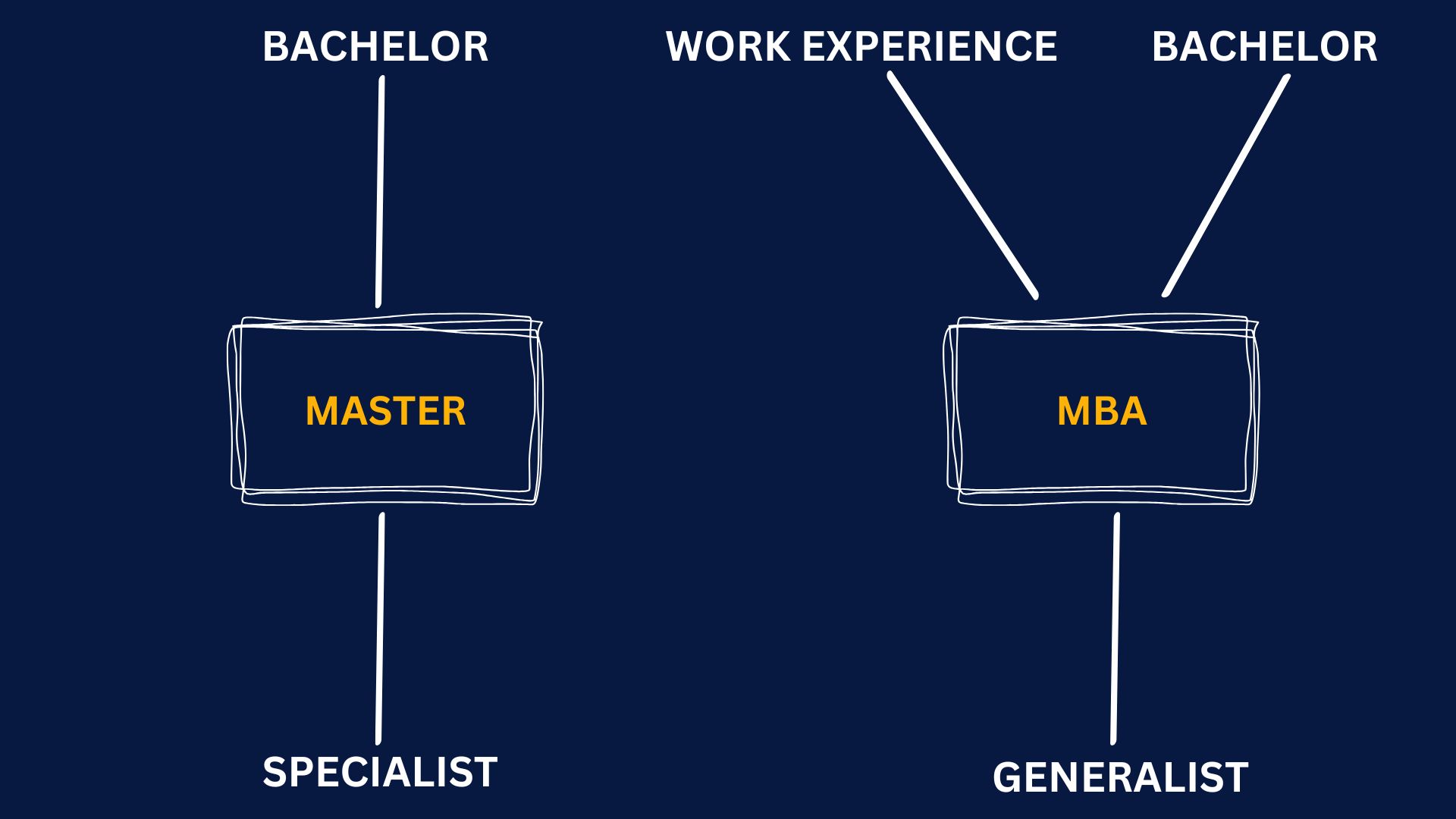
The primary reason an MBA (Master of Business Administration) is not a Master of Science (MS) lies in the philosophical intent of the curriculum. The MBA is designed to create "generalists." Its goal is to provide a broad understanding of how a business functions as a single, cohesive entity. A student in an MBA program spends equal time learning about marketing, finance, operations, human resources, and strategy. The objective is to prepare the individual for executive leadership where they must oversee multiple departments and understand the interplay between them.
Conversely, a Master of Science is designed to create "specialists." Whether the degree is an MS in Finance, an MS in Data Analytics, or an MS in Marketing Research, the curriculum narrows the focus to a specific vertical. An MS student does not spend significant time studying organizational behavior if their degree is in Quantitative Finance; instead, they dive deep into the mathematical models and technical proficiencies required for that specific role. By 2026, the distinction has become even more pronounced as industries demand hyper-specialized technical skills that a broad MBA curriculum simply cannot cover in the same depth.
Pedagogical Differences: Case Studies vs. Technical Mastery
The classroom experience of an MBA differs substantially from that of a Master of Science. These differences reflect the ultimate goal of the degree:
The MBA Approach
MBA programs rely heavily on the Case Study Method, popularized by institutions like Harvard Business School. This method places students in the shoes of a CEO or manager facing a complex, often ambiguous problem. There is rarely a single "correct" mathematical answer. Instead, students must argue their positions, negotiate with peers, and make decisions based on incomplete data. The focus is on soft skills, communication, leadership, and strategic thinking.
The Master of Science Approach
In contrast, an MS program is typically rooted in technical mastery and research. The pedagogy is often more quantitative and lecture-heavy, focusing on the "how-to" of specific tasks. For example, in an MS in Supply Chain Management, a student might spend weeks mastering linear programming or specific ERP software configurations. In an MS program, there is often a "right" way to perform a calculation or a "best" methodology for a scientific experiment. The MS curriculum is designed to produce practitioners who are ready to perform high-level technical work on day one.
The Role of Work Experience and Professional Maturity
One of the most significant practical reasons an MBA is not an MS is the profile of the entering student. As of 2026, the global standard for top-tier MBA programs continues to require significant prior work experience—typically ranging from three to seven years. The MBA classroom thrives on the diversity of professional backgrounds; the learning happens as much through peer networking and shared corporate "war stories" as it does through textbooks.
A Master of Science, however, is frequently an "entry-level" graduate degree. Many students enroll in an MS program immediately following their undergraduate studies to gain a competitive edge in a specific niche. Because the MS focus is on technical skill acquisition rather than leadership development, the lack of professional experience is not a barrier. This makes the MS an ideal choice for those looking to pivot into a technical role or deepen their expertise before entering the workforce, whereas the MBA is a mid-career tool used for "leveling up" into management or switching industries entirely.
Curriculum Structure and Duration
The structural requirements of the degrees also set them apart. Historically, the full-time MBA was a two-year commitment, though one-year intensive programs have become more common in 2026. Because the MBA must cover ten or more functional areas of business, it requires a significant volume of credit hours.
A Master of Science is often shorter and more intensive, usually completed in 10 to 18 months. Because it skips the "broad" subjects, the MS can focus entirely on its core specialty. For example, a student in an MS in Accounting program focuses almost exclusively on tax law, auditing, and financial reporting standards. They are not required to take classes in "International Brand Management" or "Negotiation Tactics," which are staples of the MBA curriculum.
Comparison of MBA and Master of Science (MS) Attributes
| Feature | Master of Business Administration (MBA) | Master of Science (MS) |
|---|---|---|
| Primary Focus | Organizational leadership and strategy | Functional or technical expertise |
| Curriculum Scope | Broad (Generalist) | Narrow (Specialist) |
| Average Work Experience | 3–7 years (Required for top programs) | 0–2 years (Often pre-experience) |
| Pedagogy | Case studies, team projects, networking | Lectures, labs, quantitative research |
| Typical Career Path | Management, Consulting, Entrepreneurship | Subject Matter Expert, Analyst, Researcher |
| Degree Length | 12–24 months | 10–18 months |
| Quantitative Depth | Moderate (Strategic use of data) | High (Technical application of data) |
Networking and Career Outcomes
The "Value Proposition" of an MBA is heavily weighted toward the alumni network. When a student pays for an MBA, they are largely paying for access to a closed ecosystem of professionals and recruiters. The career services for MBA programs are geared toward "campus recruiting" for leadership development programs, management consulting, and investment banking.
The Master of Science value proposition is weighted toward credentialing and skill verification. Employers hire MS graduates because they need a specific problem solved. A company hiring an MS in Cybersecurity isn't looking for someone to manage their HR department; they are looking for someone who can defend their network. While networking is still important in MS programs, the primary "output" is a high-level technical competency that is immediately applicable to a specific job function.
Accreditation and Academic Standards
While both degrees are often housed within a university’s business school, they may be governed by different academic standards. Both are typically accredited by bodies such as the Association to Advance Collegiate Schools of Business (AACSB) or EQUIS. However, an MS degree is often more closely aligned with the academic rigors of a traditional "Master of Science" found in the arts and sciences. This means an MS may require a thesis or a significant research project to graduate, whereas an MBA often concludes with a "capstone" project that is more practical, such as developing a business plan or consulting for a real-world client.
In 2026, we also see the rise of "STEM-designated" MBAs. These are MBA programs that have incorporated enough quantitative coursework to be classified as technical degrees by government standards. While this blurs the line slightly, it does not make the MBA an MS; rather, it acknowledges that modern management requires a higher degree of technical literacy.
ROI and Financial Considerations
The Return on Investment (ROI) calculations for these degrees differ based on the student's timeline. An MBA is often a significant financial investment, with tuition at top institutions reaching high premiums. However, the salary "jump" post-MBA is traditionally very high because the degree facilitates a move into high-paying management or strategy roles.
The MS generally has a lower total cost of tuition due to its shorter duration. The ROI is often seen more quickly because the student enters the specialized workforce earlier. For a young professional in 2026, the MS offers a way to increase earning potential early in their career without the high opportunity cost of leaving the workforce for two full years.
Choosing the Right Path: A Decision Framework
Deciding between an MBA and an MS requires a clear assessment of one's career goals and current professional standing.
- Assess Your Experience: If you have five years of experience and feel stuck in middle management, the MBA is likely the better choice to break into the C-suite. If you are a recent graduate or have limited experience and want to become the "go-to" expert in a field like Business Analytics, the MS is superior.
- Define Your Daily Tasks: Do you want your workday to involve managing people, making high-level strategic decisions, and networking? Choose the MBA. Do you prefer working with complex data, performing deep-dive research, or executing technical tasks? Choose the MS.
- Evaluate Financial Risk: Consider the tuition costs versus the expected salary increase. In 2026, many MS degrees offer a more specialized path with a lower barrier to entry, while the MBA remains the "gold standard" for those targeting executive leadership in Fortune 500 companies.
Frequently Asked Questions
Is an MS in Management (MiM) the same as an MBA?
No. While both cover general management, the Master in Management (MiM) is specifically designed for students with little to no work experience. It is essentially an "entry-level" version of the MBA curriculum, focusing on foundational business concepts rather than the advanced strategic leadership taught in an MBA.
Can I get an MBA if I already have a Master of Science?
Yes, and this is a common path for technical experts. For instance, an engineer with an MS in Mechanical Engineering may later pursue an MBA to transition from a technical role to a director or executive role. The MS provided the technical foundation, while the MBA provides the leadership and business acumen.
Are MS degrees more "scientific" than MBAs?
In an academic sense, yes. Master of Science degrees are generally more rigorous regarding research methodologies and quantitative analysis. MBAs are "professional" degrees, meaning they are designed for the application of knowledge in a business environment rather than the creation of new scientific knowledge.
Does an MBA or an MS pay more in 2026?
Typically, MBA graduates command higher median salaries, but this is largely due to their age and prior work experience. However, MS graduates in high-demand technical fields like Artificial Intelligence or Specialized Finance can often see starting salaries that rival or exceed those of generalist MBAs.
Which degree is better for international students?
In 2026, many international students prefer STEM-designated Master of Science programs because they often allow for extended work authorization (such as the OPT extension in the U.S.). While some MBAs now carry this designation, the MS is traditionally the more direct path to securing technical roles in foreign markets.
Final Recommendation
When choosing between an MBA and a Master of Science, do not view one as "better" than the other. Instead, view them as different tools for different jobs. If your goal is to lead an organization and manage diverse teams, the MBA is your best path. If your goal is to be a recognized expert in a specific technical function, the Master of Science will provide the depth and specialized training you need to excel.
Image Gallery