Comprehensive Guide to Medication for Multiple Sclerosis: Types, Mechanisms, and Treatment Strategies
Medication for multiple sclerosis (MS) focuses on slowing disease progression, reducing relapse rates, managing acute flare-ups, and alleviating specific neurological symptoms. Modern treatment strategies rely heavily on disease-modify...
Medication for multiple sclerosis (MS) focuses on slowing disease progression, reducing relapse rates, managing acute flare-ups, and alleviating specific neurological symptoms. Modern treatment strategies rely heavily on disease-modifying therapies (DMTs), alongside acute corticosteroid regimens and targeted symptom management, tailored to an individual's specific MS phenotype and health profile.
Contents
Understanding Disease-Modifying Therapies (DMTs) in Multiple Sclerosis
Multiple sclerosis is a chronic autoimmune condition of the central nervous system (CNS) in which the immune system mistakenly attacks the protective myelin sheath surrounding nerve fibers. This demyelination impairs signal transmission between the brain and the rest of the body, leading to axonal damage and structural CNS lesions over time.
Disease-modifying therapies (DMTs) represent the foundation of long-term MS management. Unlike symptomatic treatments, which address immediate physical complaints, DMTs act directly on immune pathways to alter the natural course of the disease. Their primary objectives are to reduce the frequency and severity of clinical relapses, minimize the formation of new brain or spinal cord lesions on magnetic resonance imaging (MRI), and delay the accumulation of permanent physical and cognitive disability.
Therapeutic strategies in MS care are generally categorized into two main paradigms:
- Escalation Therapy: Initiating treatment with milder, long-established DMTs with lower risk profiles (such as interferons or glatiramer acetate) and escalating to higher-efficacy therapies if breakthrough disease activity occurs.
- Early High-Efficacy Therapy: Starting treatment immediately with potent disease-modifying agents (such as monoclonal antibodies or S1P receptor modulators) to control inflammatory damage aggressively during the earliest stages of the disease, preserving long-term neurological tissue.
The choice of DMT depends on the patient's MS classification: Relapsing-Remitting MS (RRMS), Active Secondary Progressive MS (SPMS), or Primary Progressive MS (PPMS).
Categories of Disease-Modifying MS Medications
DMTs vary significantly by administration route, underlying mechanism of action, monitoring requirements, and side-effect profiles. They fall into three main administration routes: oral agents, injectable therapies, and monoclonal antibody infusions or subcutaneous injections.
1. Oral Disease-Modifying Therapies
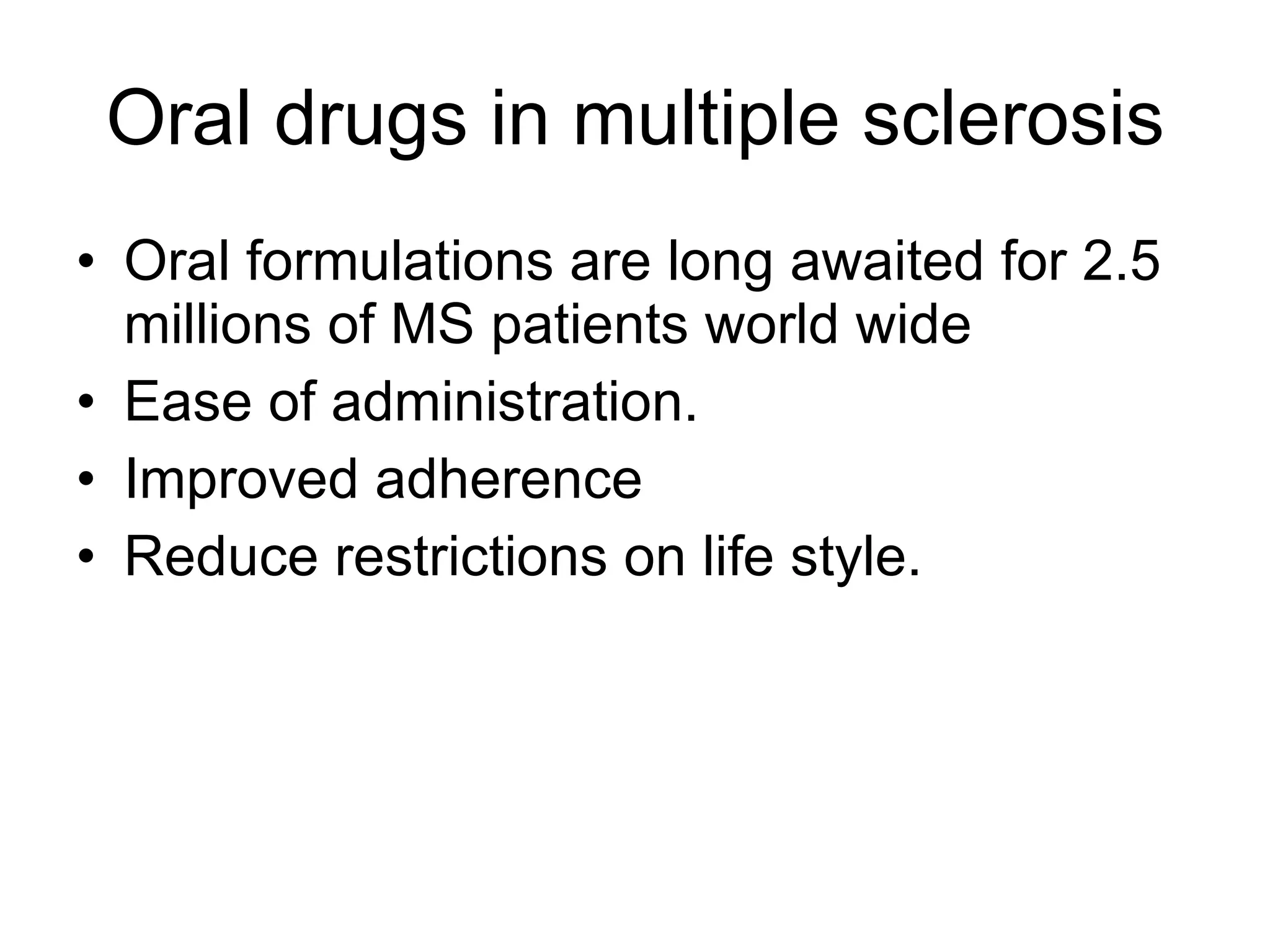
Oral medications offer daily or periodic convenience and work through distinct immunomodulatory and anti-inflammatory mechanisms.
- Sphingosine-1-Phosphate (S1P) Receptor Modulators: Drugs such as fingolimod, siponimod, ozanimod, and ponesimod bind to S1P receptors on lymphocytes. This sequesters lymphocytes inside the lymph nodes, preventing them from crossing the blood-brain barrier into the CNS. Siponimod and ozanimod are specifically indicated for relapsing forms of MS, including active SPMS.
- Fumarates: Dimethyl fumarate, diroximel fumarate, and monomethyl fumarate activate the Nuclear factor erythroid 2-related factor 2 (Nrf2) pathway, which defends cells against oxidative stress and inflammatory damage. Fumarates primarily treat relapsing forms of MS.
- Pyrimidine Synthesis Inhibitors: Teriflunomide inhibits the dihydroorotate dehydrogenase enzyme, limiting the proliferation of rapidly dividing activated T and B lymphocytes without causing broad immunosuppression.
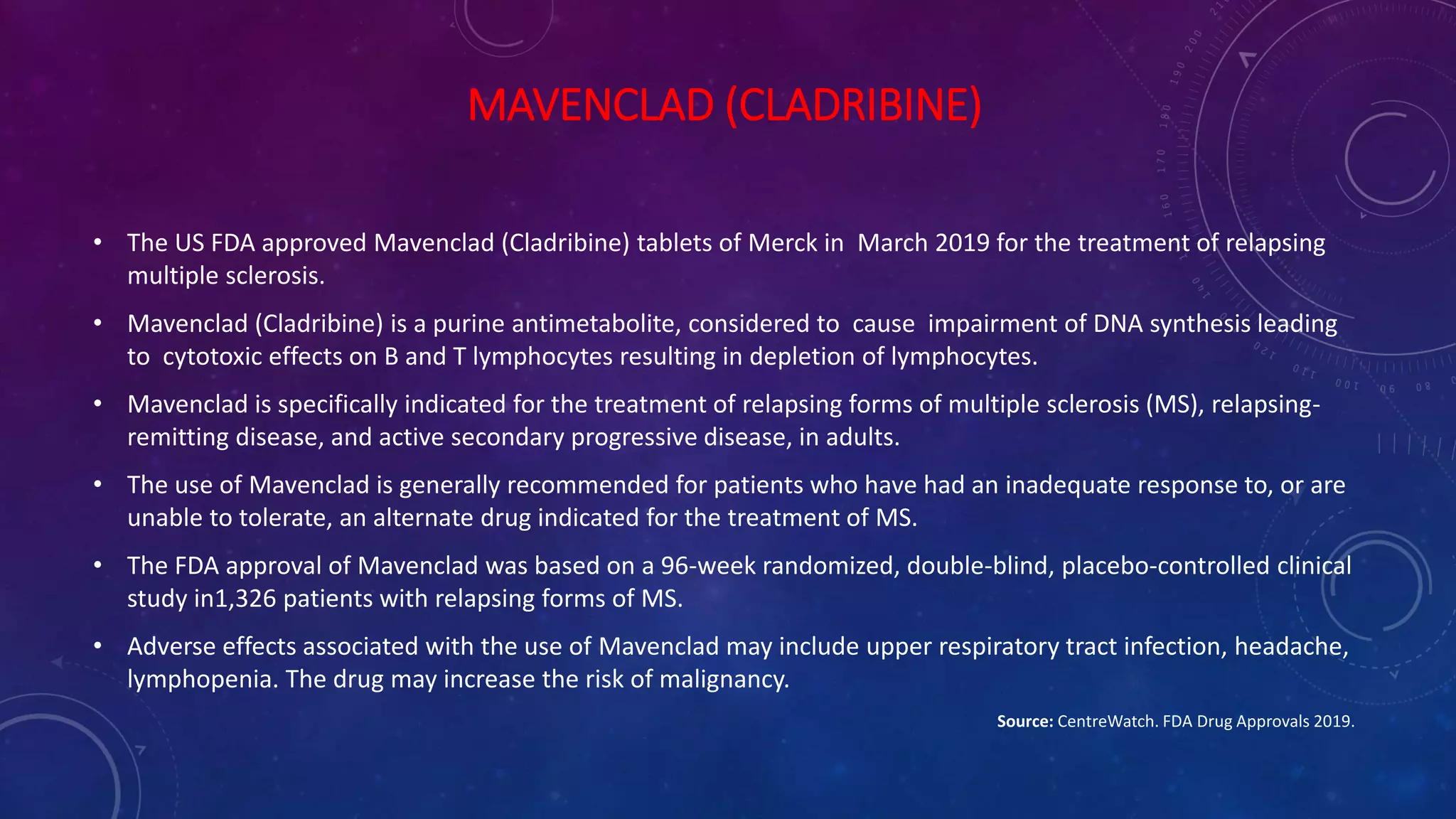
- Purine Nucleoside Analogs: Cladribine is a short-course oral therapy administered in two yearly treatment cycles. It selectively depletes T and B cells, followed by a gradual repopulation of the immune system, providing sustained disease control without continuous dosing.
2. Injectable Disease-Modifying Therapies
Injectable DMTs represent some of the earliest approved treatments for MS. While generally considered to have moderate efficacy compared to newer monoclonal antibodies, they maintain favorable long-term safety profiles.
- Interferon Beta Formulations: Subcutaneous and intramuscular interferon beta-1a and interferon beta-1b modulate pro-inflammatory cytokines and suppress autoreactive T-cell activity. Pegylated interferon beta-1a allows for less frequent dosing (every two weeks).
- Glatiramer Acetate: A synthetic peptide mixture resembling myelin basic protein. Glatiramer acetate acts as an immune decoy, shifting the immune response from pro-inflammatory T-cells to anti-inflammatory suppressor cells. It is non-immunosuppressive and commonly utilized when systemic immunosuppression must be avoided.
3. Monoclonal Antibody Infusions and Subcutaneous Injections
Monoclonal antibodies represent high-efficacy DMTs designed to target specific surface proteins on immune cells involved in MS pathogenesis.
- Anti-CD20 Monoclonal Antibodies: Drugs such as ocrelizumab, ublituximab, and ofatumumab target the CD20 antigen expressed on mature B lymphocytes, leading to selective B-cell depletion. Ocrelizumab and ublituximab are administered via intravenous infusion, while ofatumumab is self-administered monthly via a subcutaneous autoinjector. Ocrelizumab is notable as one of the few medications explicitly approved for Primary Progressive MS (PPMS) in addition to relapsing forms.
- Selective Adhesion Molecule Inhibitors: Natalizumab binds to the alpha-4 integrin subunit on leukocytes, preventing them from adhering to blood vessels and crossing the blood-brain barrier. It exhibits high efficacy in reducing RRMS relapses, though its use requires strict monitoring for Progressive Multifocal Leukoencephalopathy (PML).
- Anti-CD52 Monoclonal Antibodies: Alemtuzumab binds to CD52 on T and B lymphocytes, causing rapid immune cell depletion followed by rebalancing of the immune repertoire. Due to risks of autoimmune side effects, it is typically reserved for patients who have had an inadequate response to two or more DMTs.
Comparison of Disease-Modifying MS Medications
The table below outlines common DMT classes, their administration routes, indications, key benefits, and critical clinical monitoring requirements:
| Medication Class / Representative Drugs | Route & Frequency | Primary MS Indications | Key Clinical Benefits | Primary Risks & Monitoring Requirements |
|---|---|---|---|---|
| Anti-CD20 Antibodies (Ocrelizumab, Ofatumumab, Ublituximab) | IV infusion every 6 months, or monthly subQ | RRMS, Active SPMS, PPMS (Ocrelizumab) | High efficacy in reducing relapses and slowing PPMS progression | Infusion/injection reactions, upper respiratory infections, hepatitis B reactivation; monitor immunoglobulin levels and viral panels. |
| Integrin Inhibitors (Natalizumab) | IV infusion every 4 to 8 weeks | Relapsing forms of MS | Markedly reduces clinical relapses and MRI lesion activity | Risk of Progressive Multifocal Leukoencephalopathy (PML); requires John Cunningham Virus (JCV) antibody monitoring. |
| S1P Receptor Modulators (Fingolimod, Siponimod, Ozanimod, Ponesimod) | Daily oral capsule | RRMS, Active SPMS | High oral efficacy, delays physical disability progression | Bradycardia at treatment initiation, macular edema, elevated liver enzymes, lymphopenia; requires baseline ECG, eye exam, and LFTs. |
| Fumarates (Dimethyl Fumarate, Diroximel Fumarate) | Twice-daily oral capsule | Relapsing forms of MS | Moderate-to-high efficacy; neuroprotective and anti-inflammatory properties | Flushing, gastrointestinal distress, lymphopenia; regular Complete Blood Count (CBC) and liver function tests required. |
| Selective Immunosuppressants (Cladribine) | Short daily oral courses in months 1 & 2 across 2 years | Active Relapsing forms of MS | Short-term dosing with prolonged efficacy; no continuous therapy needed for years 3 and 4 | Lymphopenia, risk of opportunistic infections, malignancy risk; monitored via regular CBC testing. |
| Interferons & Glatiramer Acetate (Interferon beta-1a/1b, Glatiramer Acetate) | Subcutaneous or IM injections (daily to bi-weekly) | Relapsing forms of MS | Long-term safety record; non-immunosuppressive options available | Injection site reactions, flu-like symptoms, elevated liver enzymes, depression (interferons); periodic liver and thyroid function monitoring. |
Managing Acute Relapses and Exacerbations
An MS relapse (also termed an exacerbation or flare-up) is defined as new or worsening neurological symptoms lasting at least 24 hours in the absence of fever, infection, or metabolic imbalance. Relapses stem from focal inflammatory demyelination within the central nervous system.
- Acute Relapse Identified
- Rule Out Pseudo-Exacerbation (Infection / Fever / Heat)
- High-Dose Corticosteroids (IV Methylprednisolone or High-Dose Oral Prednisone)
- Symptom Resolution / Improvement
- Resume Standard DMT Monitoring
- Inadequate Response
- Plasma Exchange (Plasmapheresis / PLEX)
- Symptom Resolution / Improvement
High-Dose Corticosteroids
The primary first-line medical intervention for an acute, clinically significant relapse is pulse high-dose corticosteroid therapy:
- Intravenous Methylprednisolone (IVMP): Typically prescribed at 500 mg to 1,000 mg daily for 3 to 5 days.
- High-Dose Oral Steroids: Equivalent oral doses of methylprednisolone or dexamethasone may be prescribed as an alternative if IV administration is impractical, showing comparable clinical efficacy in randomized clinical trials.
Corticosteroids work by suppressing acute pro-inflammatory cytokines, reducing blood-brain barrier permeability, and resolving edema at the site of active brain or spinal cord lesions. While steroids shorten the duration of a relapse and accelerate functional recovery, they do not alter the long-term extent of disability recovery or overall disease progression.
Plasma Exchange (Plasmapheresis / PLEX)
For severe, disabling relapses—such as sudden optic neuritis, brainstem syndromes, or myelitis—that show inadequate response to high-dose corticosteroids, plasma exchange (PLEX) serves as a second-line rescue therapy. PLEX involves removing blood, filtering out circulating autoantibodies and immune complexes from the plasma, and returning the cellular blood components with a plasma substitute. Treatment usually consists of 5 to 7 exchange sessions performed every other day.
Symptom-Specific Medications in MS Management
While DMTs slow underlying pathology, symptom-specific medications are necessary to address residual neurological deficits and improve daily function.
Fatigue Management
Fatigue is one of the most common and disabling symptoms of MS. Pharmacological management includes:
- Amantadine: An antiviral compound with mild central nervous system stimulant properties that helps reduce MS-related fatigue.
- Modafinil and Armodafinil: Wakefulness-promoting agents used off-label to manage severe daytime fatigue and somnolence.
- Methylphenidate: Central nervous system stimulants prescribed selectively for severe fatigue refractory to other interventions.
Spasticity and Muscle Stiffness
Spasticity arises from upper motor neuron lesions, causing involuntary muscle tightness, spasms, and pain.
- Baclofen: A GABA-B receptor agonist that decreases reflex transmission at the spinal cord level. Available in oral form or via an intrathecal baclofen pump for severe lower-extremity spasticity.
- Tizanidine: An alpha-2 adrenergic agonist that inhibits spinal motor neurons, effective for bedtime administration to manage nocturnal leg spasms.
- Gabapentin and Pregabalin: Adjunctive agents used when spasticity co-occurs with neuropathic pain.
Neuropathic Pain and Dysesthesia
Central neuropathic pain in MS often manifests as burning sensations, Lhermitte’s sign (an electric shock-like sensation down the spine upon neck flexion), or trigeminal neuralgia.
- Anticonvulsants: Carbamazepine and oxcarbazepine are first-line agents for trigeminal neuralgia in MS. Gabapentin and pregabalin help control continuous neuropathic aching or burning pain in the extremities.
- Serotonin-Norepinephrine Reuptake Inhibitors (SNRIs): Duloxetine helps alleviate painful neuropathy while simultaneously addressing co-occurring mood disturbances.
Gait Impairment and Mobility
- Dalfampridine: A selective potassium channel blocker designed to improve walking speed in adult MS patients. By blocking potassium channels in demyelinated axons, dalfampridine enhances action potential conduction along damaged nerves. It carries a contraindication for patients with a history of seizures or moderate-to-severe renal impairment.
Bladder and Bowel Dysfunction
Spinal cord lesions often cause neurogenic bladder dysfunction, leading to urgency, frequency, incontinence, or urinary retention.
- Anticholinergic / Antimuscarinic Agents: Oxybutynin, solifenacin, and tolterodine reduce detrusor muscle overactivity to alleviate urgency and frequency.
- Beta-3 Adrenergic Agonists: Mirabegron relaxes the detrusor muscle during the storage phase without the dry mouth and cognitive side effects associated with anticholinergics.
- Desmopressin: A synthetic vasopressin analog used off-label for nocturnal polyuria to decrease nighttime urination frequency.
Selecting the Right MS Treatment Plan: Safety Factors and Monitoring
Choosing an appropriate disease-modifying therapy involves a comprehensive medical assessment balancing drug efficacy, risk factors, route preferences, and family planning goals.
Pre-Treatment Screening and Baseline Safety
Before initiating high-efficacy DMTs, standardized diagnostic and safety evaluations are performed:
- JC Virus (JCV) Antibody Testing: The John Cunningham virus is a common organism that remains latent in many adults. In immunosuppressed patients—particularly those taking natalizumab—JCV reactivation can lead to Progressive Multifocal Leukoencephalopathy (PML), a rare but potentially fatal brain infection. JCV antibody index testing stratifies risk prior to and during treatment.
- Infectious Disease Screening: Testing for Hepatitis B, Tuberculosis (TB), and Varicella-Zoster Virus (VZV) immunity is mandatory before initiating anti-CD20 therapies or S1P modulators.
- Cardiovascular and Ophthalmological Screening: S1P receptor modulators require baseline electrocardiograms (ECG) due to the risk of transient bradycardia upon initial dosing, alongside optical coherence tomography (OCT) to rule out macular edema.
- Vaccination Scheduling: Live-attenuated vaccines must be administered at least 4 to 6 weeks before starting cell-depleting therapies, while non-live vaccines should be updated prior to immunosuppressive initiation to maximize immune response.
Reproductive and Family Planning Considerations
Many MS medications are contraindicated during pregnancy and breastfeeding due to risks of teratogenicity or fetal harm:
- Teriflunomide: Requires an active elimination procedure using cholestyramine or activated charcoal prior to conception for both female and male patients, as it can persist in plasma for up to two years.
- S1P Modulators & Cladribine: Must be discontinued several months prior to planned conception due to developmental toxicity risks.
- Injectable Therapies and Specific Anti-CD20 Agents: Glatiramer acetate and certain monoclonal antibodies have regulatory profiles allowing for managed continuation during pregnancy under expert neurological oversight when the maternal risk of severe relapse outweighs potential fetal exposure risks.
Frequently Asked Questions
Do disease-modifying medications cure multiple sclerosis?
No, current MS medications do not cure the disease. Disease-modifying therapies are designed to reduce the frequency of relapses, prevent new brain and spinal cord lesions, and slow down long-term physical and cognitive disability progression. Active research into remyelination and neural repair therapies continues, but disease management currently focuses on long-term disease control and symptom relief.
What is the difference between high-efficacy DMTs and platform therapies?
Platform therapies (such as interferon beta preparations and glatiramer acetate) are established treatments with lower immunosuppressive potential and modest efficacy in preventing relapses. High-efficacy DMTs (including monoclonal antibodies like ocrelizumab and natalizumab) exert stronger immunosuppressive or immunomodulatory effects, resulting in significantly greater reductions in relapse rates and MRI lesion activity, though they require more intensive safety monitoring.
How long do patients stay on a disease-modifying therapy?
Patients generally remain on a disease-modifying therapy indefinitely as long as the medication remains effective (showing no clinical or radiological breakthrough disease), is well-tolerated, and presents no unacceptable safety risks. If breakthrough inflammatory activity occurs, or if intolerable side effects arise, a neurologist will switch the patient to a drug in a different therapeutic class.
Can pregnant or breastfeeding women take MS medications?
Most MS medications—particularly oral disease-modifying therapies—are contraindicated during pregnancy due to potential risks to the fetus. However, certain injectable medications like glatiramer acetate or specific anti-CD20 monoclonal antibodies may be evaluated by a specialized neuroimmunologist for continued use during pregnancy if the risk of severe maternal MS reactivation is high. Family planning should always be discussed well before attempting conception.
What happens if an MS relapse occurs while on medication?
If a breakthrough relapse occurs while actively taking a disease-modifying therapy, the acute symptoms are typically treated first with a high-dose course of corticosteroids. After the acute phase resolves, the clinical team will evaluate whether the current DMT has failed to adequately control the disease, often ordering a updated brain and spinal cord MRI to determine if transitioning to a higher-efficacy treatment is warranted.
Next Steps and Clinical Guidance
Managing multiple sclerosis effectively requires a proactive, multidisciplinary approach centered around individual disease activity and patient lifestyle needs.
- Consult a MS Specialist: Work with a neurologist or neuroimmunologist to review clinical history, MRI scans, baseline lab results, and personal goals before selecting or switching a medication.
- Establish Baseline Monitoring: Ensure all required screening steps—including viral panels, JCV index testing, cardiac evaluations, and vaccination updates—are complete before starting high-efficacy disease-modifying therapies.
- Set Up Routine Surveillance: Schedule regular follow-up visits, routine blood work, and serial MRI monitoring (typically every 6 to 12 months) to assess therapeutic efficacy and watch for subclinical disease activity or adverse drug effects.
- Integrate Symptom Management: Combine disease-modifying therapy with targeted symptomatic medications, physical therapy, occupational therapy, and lifestyle strategies (such as regular exercise and heat management) to maximize daily quality of life.
Disclaimer: This guide is intended for educational purposes only and does not constitute formal medical advice. MS diagnosis, medication choice, and treatment monitoring must always be performed under the direct care of a qualified healthcare professional.
Image Gallery