What the Iron Dome Does for Defense: Architecture, Capabilities, and Operational Impact
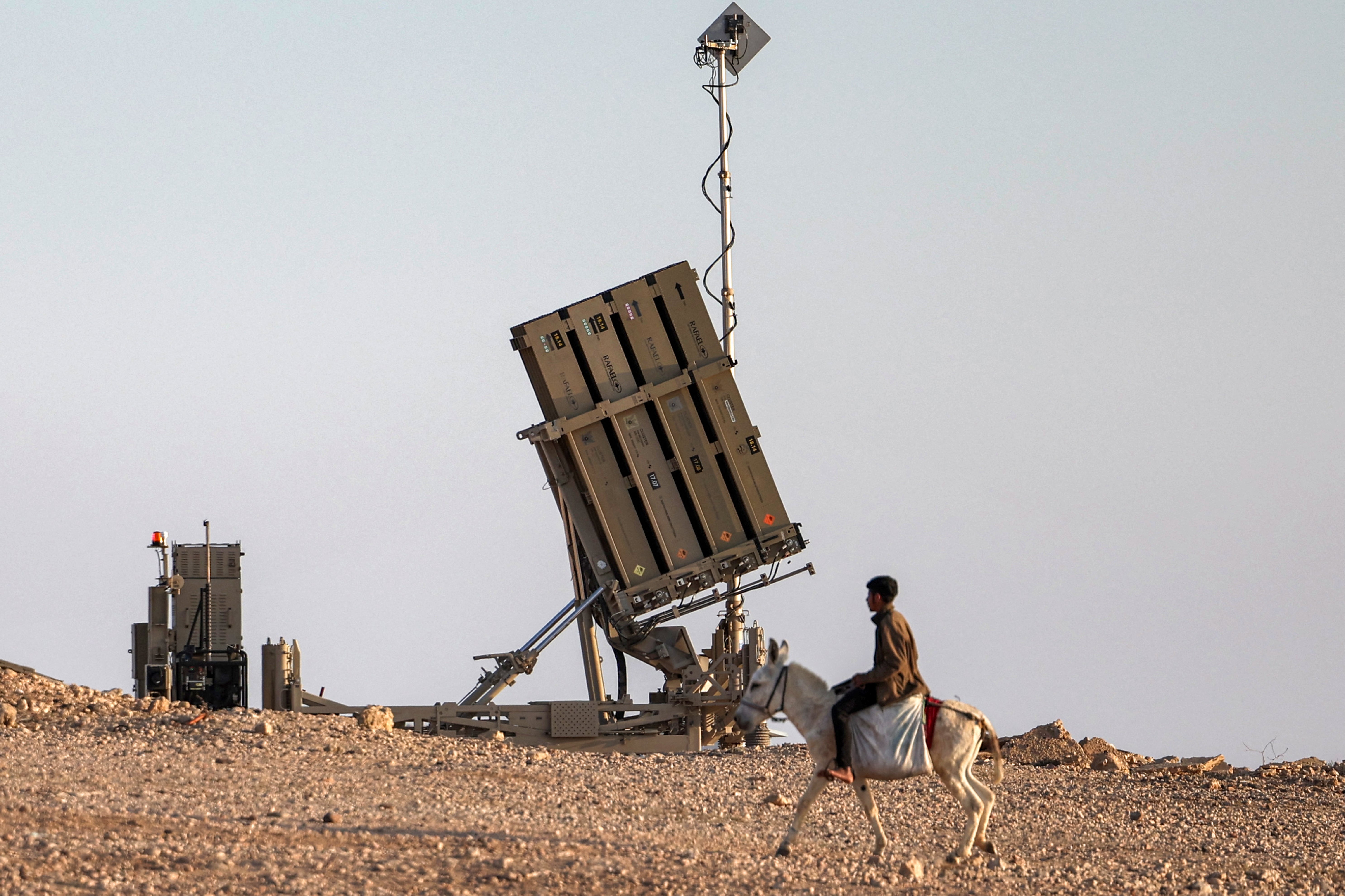
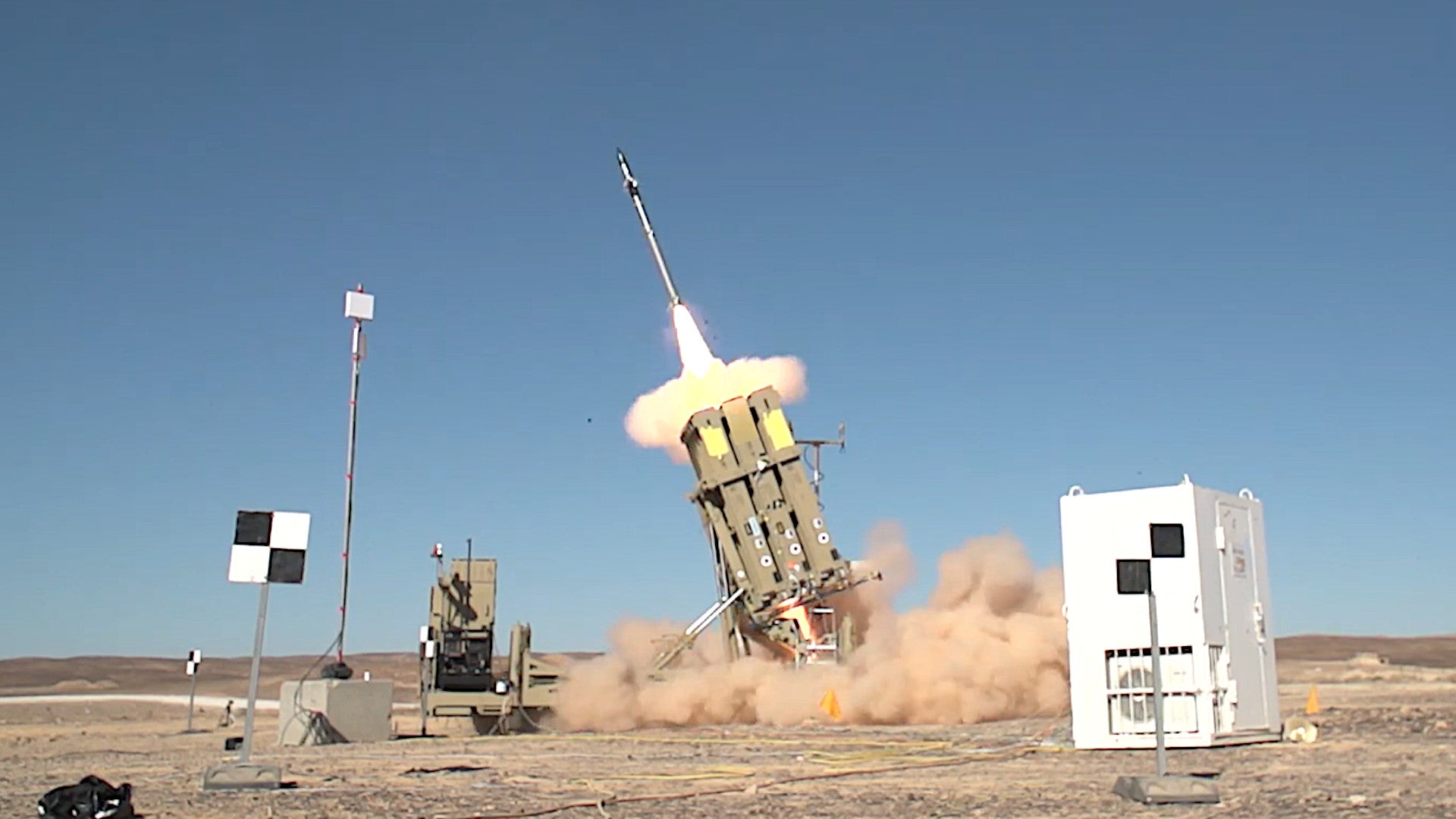
The Iron Dome is a mobile, all-weather counter-rocket, artillery, and mortar (C-RAM) air defense system designed to intercept short-range threats aimed at populated areas. Developed by Rafael Advanced Defense Systems and Israel Aerospa...
The Iron Dome is a mobile, all-weather counter-rocket, artillery, and mortar (C-RAM) air defense system designed to intercept short-range threats aimed at populated areas. Developed by Rafael Advanced Defense Systems and Israel Aerospace Industries, it neutralizes incoming weapons fired from 4 to 70 kilometers away by calculating their trajectory and deploying radar-guided Tamir interceptor missiles.
Contents
Core Capabilities: What Threats Does the Iron Dome Intercept?
The primary operational mandate of the Iron Dome is to defend civilian population centers, critical infrastructure, and military bases against short-range airborne threats. Originally engineered to counter unguided artillery rockets and mortar shells, the system’s software and hardware architectures have undergone successive upgrades to expand its defensive envelope.
Today, the system addresses four primary weapon threat vectors:
- Short-Range Unguided Rockets: The system targets unguided artillery rockets equipped with high-explosive warheads. These threats vary from improvised short-range artillery to standardized military-grade rockets with ranges spanning 4 to 70 kilometers.
- Artillery and Mortar Rounds: Heavy mortar rounds (such as 120mm shells) and standard artillery projectiles present low radar cross-sections and short flight times. The Iron Dome’s quick-reaction targeting engine allows it to track and destroy these shells mid-flight.
- Unmanned Aerial Vehicles (UAVs): Upgraded tracking software enables the system to detect, track, and engage slow-moving, low-altitude attack drones and reconnaissance loitering munitions.
- Precision-Guided Munitions and Cruise Missiles: Recent block updates have expanded the Iron Dome's engagement algorithms to track low-flying cruise missiles and precision-guided weapons operating within its tactical engagement ceiling.
By focusing engagements strictly on projectiles targeting inhabited zones, the Iron Dome acts as an operational shield, reducing structural damage, mitigating casualties, and granting military commanders operational flexibility during conflict.
How the Iron Dome Works: The Three-Component Architecture
The Iron Dome relies on three integrated subsystems connected via high-speed, secure wireless data links. Each component operates semi-autonomously under human supervisory control, moving from threat identification to missile deployment within seconds.
- Enemy Launch
- ELM-2084 3D Radar: Detects threat & tracks trajectory
- Battle Management & Control (BMC): Calculates impact area & orders launch
- Missile Firing Unit (MFU): Fires Tamir interceptor to detonate near target mid-air
1. ELM-2084 Detection and Tracking Radar
Developed by ELTA Systems (a subsidiary of Israel Aerospace Industries), the ELM-2084 is an S-band Active Electronically Scanned Array (AESA) radar. Positioned near defended areas, the radar continuously scans the surrounding airspace. Upon detecting a launch, the radar classifies the projectile, measures its velocity, altitude, and bearing, and tracks its flight path in real time.
2. Battle Management and Weapon Control (BMC) System
Engineered by mPrest Systems, the BMC acts as the central intelligence node of the battery. It processes raw telemetry data from the ELM-2084 radar and executes rapid orbital mechanics algorithms to predict the exact impact location of the incoming weapon.
If the calculated impact point falls into an unpopulated area, an open field, or the sea, the BMC flags the projectile as a non-threat and refrains from firing, preserving valuable interceptor inventory. If the predicted impact point threatens populated areas, critical installations, or defended civilian targets, the system computes target engagement coordinates and commands a launcher to fire.
3. Missile Firing Unit (MFU) and Tamir Interceptors
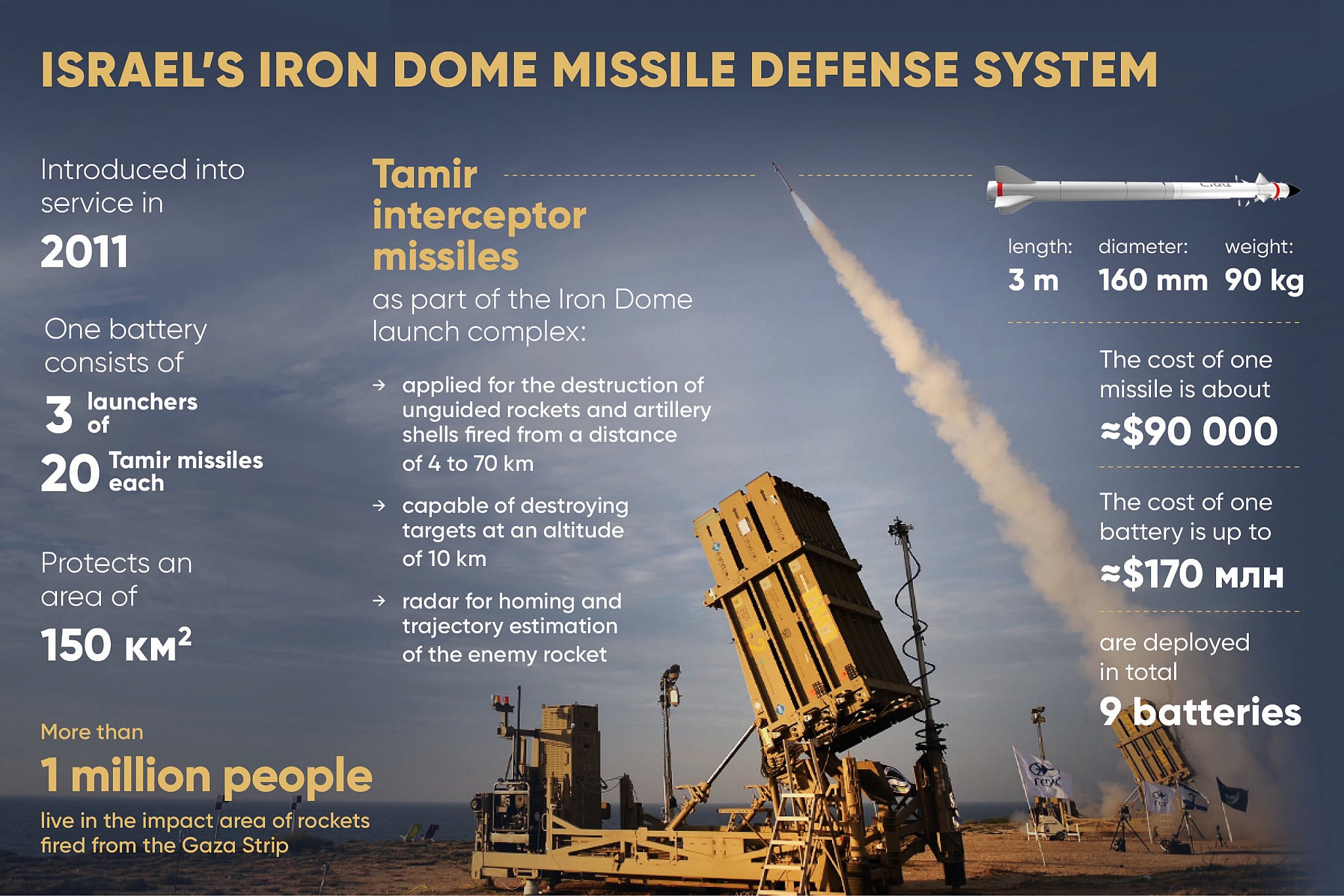
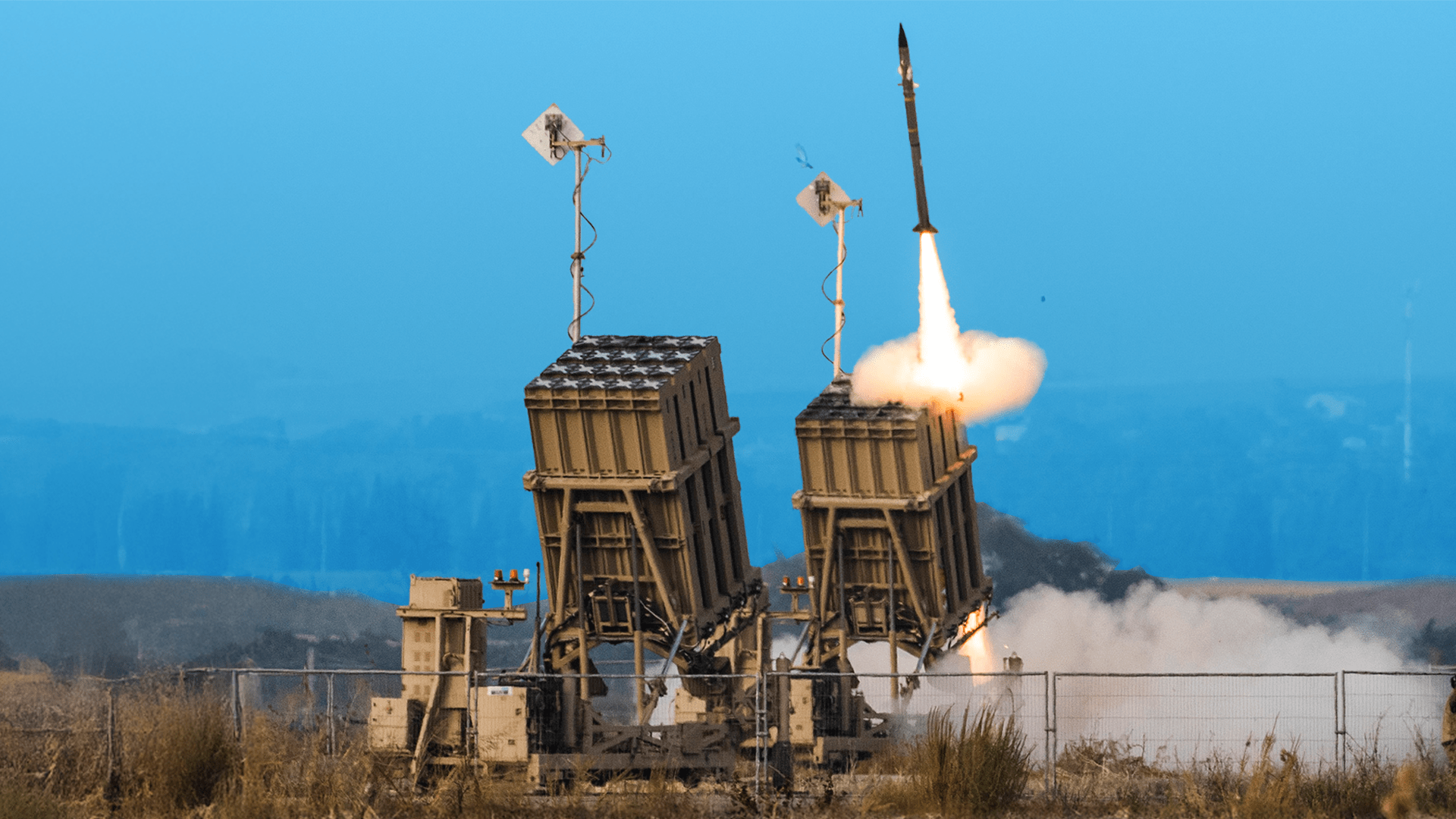
A standard Iron Dome battery contains three to four stationary or mobile launchers, each housing 20 Tamir interceptor missiles. Upon receiving launch instructions from the BMC, the launcher elevates and fires a Tamir missile.
The Tamir is equipped with maneuverable control fins, an electro-optical sensor, and a command-datalink receiver. During initial flight, the missile receives mid-course telemetry updates from the ground radar. As it nears the target, its onboard electro-optical seeker activates to terminal-guide the missile directly toward the incoming projectile. Rather than requiring a direct impact, the Tamir utilizes a proximity fuse that detonates a heavy fragmentation warhead, destroying the target short of its objective.
The Operational Engagement Process: From Detection to Interception
The sequence between initial rocket launch and mid-air interception takes place within a compressed timeframe, typically lasting between 15 and 45 seconds depending on range.
| Time (sec) | Action Step | Operational Detail |
|---|---|---|
| T + 0.0s | Target Detection | Radar detects incoming launch |
| T + 3.0s | Trajectory Calculation | BMC computes flight path & impact point |
| T + 5.0s | Threat Classification | BMC flags threat: Target populated? |
| T + 7.0s | Interceptor Launch | Tamir fires from launcher container |
| T + 15-40s | Terminal Guidance & Kill | Proximity fuse detonates warhead |
- Detection & Acquisition: The S-band radar identifies the launch burst and establishes a track file for the rocket.
- Point-of-Impact Calculation: The BMC uses real-time radar metrics to project the parabolic flight path of the rocket and identifies the predicted hit zone down to a grid square.
- Engagement Decision: If the predicted point of impact poses a threat, the BMC designates the launch parameter and automatically selects an available Tamir missile across the battery network.
- Flight & Mid-Course Correction: The Tamir missile launches vertically, turns rapidly toward the target vector, and receives continuous data updates from the ground radar to compensate for atmospheric wind drift or slight deviations in the target trajectory.
- Terminal Acquisition & Destruction: The missile’s nose seeker acquires the target visually/infrared. Upon approaching within meters of the threat, the proximity fuse triggers the detonation, destroying the incoming warhead high above the ground.
Role in Israel's Multi-Tiered Air Defense Strategy
The Iron Dome does not operate in isolation. It forms the lowest, short-range operational layer of a comprehensive integrated air defense umbrella protecting Israeli airspace. Each layer within this architecture targets specific threat profiles based on altitude, range, and missile velocity.
- ARROW 3 / ARROW 2: Exo-atmospheric & upper endo-atmospheric ballistic defense
- DAVID'S SLING: Medium-to-long range missiles, artillery & cruise missiles
- IRON DOME: Short-range rockets, mortars, artillery & tactical UAVs
- IRON BEAM (Directed Energy Layer): High-power laser defense supplementing close-range C-RAM
- Iron Beam (Directed Energy Layer): A high-power laser defense system designed to intercept very short-range rockets, mortars, and small drones at close quarters. Operating at near-zero cost per shot, it complements the Iron Dome by engaging threats under 4 km to conserve missile stockpiles.
- Iron Dome (Short-Range Layer): Focuses specifically on rockets, mortar shells, cruise missiles, and drones with operating ranges between 4 km and 70 km.
- David's Sling (Medium-to-Long Range Layer): Fills the operational gap between short-range systems and strategic missile shields. It targets medium-range ballistic missiles, long-range heavy rockets, and low-flying cruise missiles using Stunner two-stage interceptor missiles.
- Arrow 2 and Arrow 3 (Upper-Tier Atmospheric & Exo-Atmospheric Layer): Designed to counter regional long-range short-, medium-, and intermediate-range ballistic missiles. Arrow 2 neutralizes targets in the upper atmosphere, while Arrow 3 engages targets in space (exo-atmospheric interception) before they re-enter earth's atmosphere.
Strategic and Economic Considerations
Evaluating the operational performance of the Iron Dome requires assessing both financial costs and strategic returns. Air defense design inherently balances asymmetrical cost equations, where sophisticated defense interceptors are fired against low-cost attack weapons.
| System Component | Estimated Unit / Engagement Cost |
|---|---|
| Short-Range Artillery Rocket | $300 – $1,000 |
| Standard Unguided Rocket | $1,000 – $3,000 |
| Heavy Long-Range Rocket | $5,000 – $15,000 |
| Tamir Interceptor Missile | $40,000 – $50,000 |
| Iron Beam Laser Shot (Targeted) | ~$2 – $5 per beam firing |
The Interceptor-to-Threat Cost Asymmetry
A standard unguided artillery rocket costs anywhere from a few hundred to a few thousand dollars to manufacture. Conversely, a single Tamir interceptor missile costs approximately $40,000 to $50,000. Firing two interceptors per target (a standard operational protocol to ensure high hit probability) incurs roughly $80,000 to $100,000 per engaged rocket.
The Broader Economic Preservation Value
While the raw cost of an interceptor far exceeds the manufacturing cost of an incoming rocket, analysts measure the system's economic efficacy through avoided damages. Intercepting a rocket directed at an urban district prevents structural destruction, disruption to commercial industries, civic infrastructure loss, and bodily injury. Preventing major casualties avoids escalating retaliation spirals and preserves societal stability, which outweighs the monetary cost of the interceptor.
International Co-Production
To maintain long-term production scalability, the United States partnered with Israel for joint funding and manufacturing of the system. Through an agreement between Rafael and RTX (formerly Raytheon Technologies), key components of the Tamir interceptor are manufactured within the United States. Joint ventures establish domestic production sites, such as manufacturing facilities in Camden, Arkansas, ensuring stable supply chains for both domestic defensive stockpiles and export partners.
System Limitations and Tactical Vulnerabilities
Despite demonstrated high operational success rates—historically reported between 85% and 90%+ by defense analysts—the Iron Dome faces operational and physical limitations:
- Saturation Attacks (Salvo Limits): Every air defense radar and battle management computer has a finite processing threshold. Firing massive, simultaneous rocket volleys (hundreds of projectiles within minutes) can strain launcher capacity, deplete immediate missile cells, and allow a fraction of incoming weapons to breach the defense layer.
- Minimum Operational Distance (Dead Zone): Because the Tamir missile requires time to launch, pivot, receive radar telemetry, and accelerate to intercept speed, the system has a minimum engagement floor of roughly 4 kilometers. Rockets launched from extremely short ranges (1–3 km) can impact before an interceptor can successfully engage them.
- High-Velocity Ballistic Targets: The Iron Dome is optimized for low-velocity artillery shells, short-range unguided rockets, and low-altitude drones. It lacks the kinetic energy, altitude ceiling, and warhead parameters necessary to intercept high-altitude ballistic missiles or hypersonic glide weapons.
- Depletion of Stockpiles: High-intensity conflicts deplete interceptor inventories rapidly. Sustaining prolonged defenses requires uninterrupted industrial manufacturing and defense resupply lines.
Comparative Analysis of Integrated Air Defense Layers
The following matrix illustrates how the Iron Dome compares against other air defense platforms deployed within the integrated theater:
| Defense System | Primary Developer | Target Engagement Spectrum | Effective Operational Range | Estimated Interceptor Cost | Primary Target Type |
|---|---|---|---|---|---|
| Iron Beam | Rafael Advanced Defense Systems | Short-range rockets, mortars, small drones | 0 km – 7 km | ~$2 – $5 per shot | Micro-drones, short mortar shells, ultralight rockets |
| Iron Dome | Rafael / Raytheon (RTX) | Short-range unguided rockets, artillery, drones | 4 km – 70 km | $40,000 – $50,000 | Unguided rockets, 120mm mortars, UAVs, cruise missiles |
| David's Sling | Rafael / Raytheon (RTX) | Medium-to-long range artillery, cruise missiles | 40 km – 300 km | ~$1,000,000 | Heavy rockets, tactical ballistic missiles, cruise missiles |
| Arrow 2 / 3 | Israel Aerospace Industries / Boeing | High-altitude ballistic missiles | Up to 2,400 km (Exo-atmospheric) | $2,000,000 – $3,500,000 | Short-, medium-, and intermediate-range ballistic missiles |
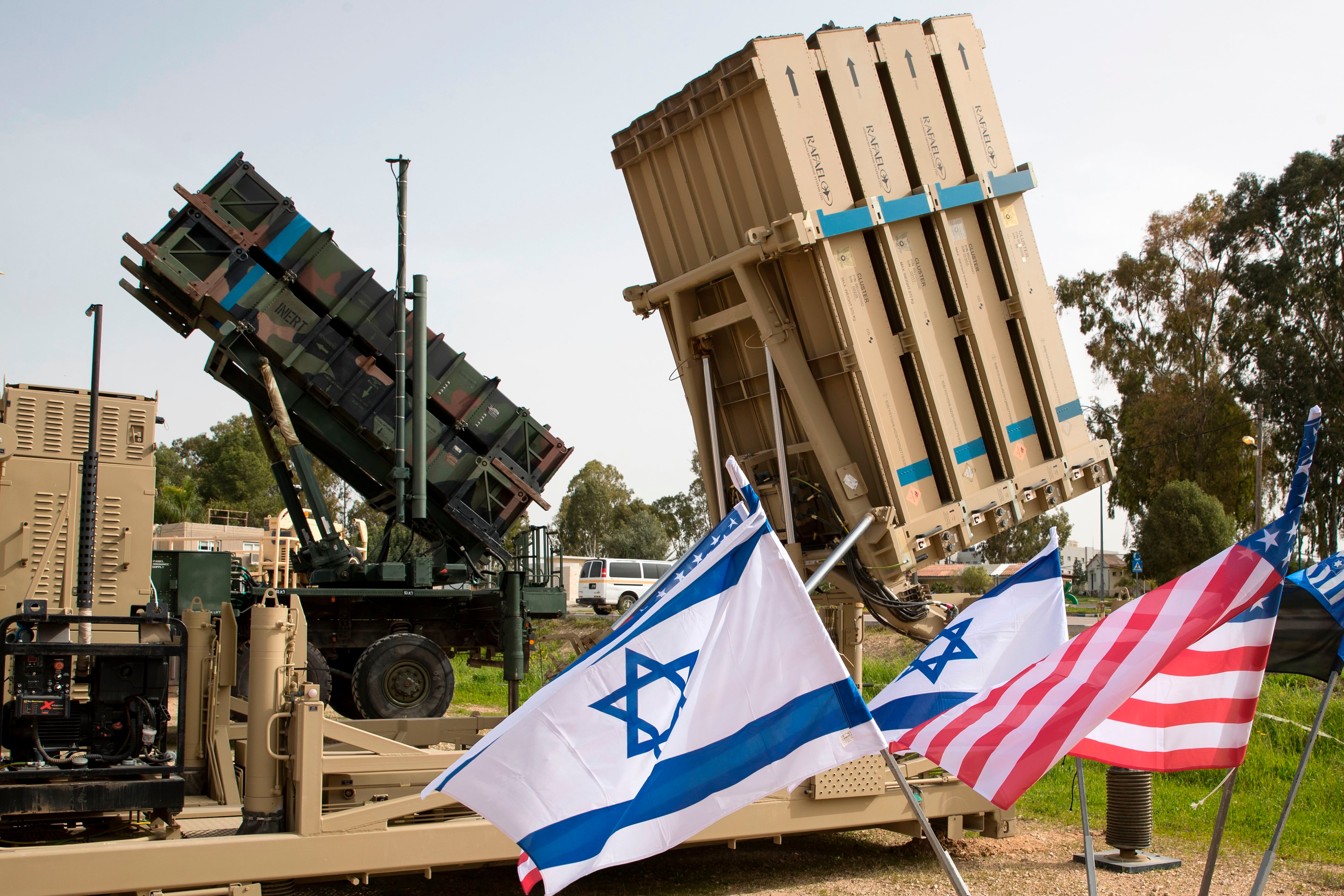
| MIM-104 Patriot | Raytheon / Lockheed Martin | Aircraft, cruise missiles, tactical ballistic missiles | 30 km – 160+ km | $3,000,000 – $4,000,000 | High-performance aircraft, cruise missiles, ballistic threats |
Global Adoption and Naval Applications
The baseline technology developed for land-based Iron Dome batteries has adapted to meet maritime operational requirements and foreign defense acquisitions.
C-Dome (Naval Air Defense)
The C-Dome is the naval adaptation of the Iron Dome system, engineered to protect naval vessels—such as Sa'ar 6-class corvettes—against sea-skimming anti-ship cruise missiles, coastal rockets, and attack drones.
The C-Dome mounts a vertical launch system (VLS) directly under the ship's deck, utilizing the vessel's onboard multi-function radar (such as the ELM-2248 MF-STAR) to detect and target threats without requiring a separate ELM-2084 land vehicle.
- Ship's MF-STAR Radar
- Combat Management System
- Vertical Launch System (VLS)
- Tamir Naval Interceptor
Foreign Export and Evaluation
- United States Military: The U.S. Army acquired two Iron Dome batteries to evaluate as an interim capability for cruise missile defense and Indirect Fire Protection Capability (IFPC) requirements.
- International Defense Partners: Nations across Europe and the Indo-Pacific region have evaluated variants of the ELM-2084 AESA radar unit and Tamir interceptor components for integration into national air defense networks, highlighting the global interest in mobile C-RAM architectures.
Frequently Asked Questions
How high and far can the Iron Dome intercept threats?
The land-based Iron Dome system targets short-range threats fired from ranges of 4 kilometers up to approximately 70 kilometers, with an engagement altitude ceiling tailored for low-to-medium altitude aerial targets, rockets, and mortars.
Why doesn't the Iron Dome intercept every incoming rocket?
The system uses the Battle Management and Control (BMC) unit to prioritize threats. It deliberately ignores rockets whose calculated flight trajectories land in uninhabited open terrain or body of water. This conserves Tamir interceptor missiles for targets that threaten lives or critical facilities.
How much does a single Iron Dome interceptor missile cost?
A single Tamir interceptor missile costs approximately $40,000 to $50,000. Complete system batteries, including radar, command nodes, and launchers, cost tens of millions of dollars to build and deploy.
What is the difference between Iron Dome and Iron Beam?
The Iron Dome uses kinetic Tamir interceptor missiles to physically detonate target threats mid-air. Iron Beam is a complementary directed-energy system that uses a high-power laser to heat and destroy ultra-short-range rockets, mortars, and drones at near-zero per-shot costs.
Can the Iron Dome counter hypersonic or long-range ballistic missiles?
No. The Iron Dome is engineered specifically for short-range unguided rockets, mortars, low-flying drones, and light cruise missiles. High-altitude, long-range ballistic weapons and high-speed maneuvers require upper-tier interception platforms like David's Sling or the Arrow 2 and Arrow 3 systems.
Summary and Practical Next Steps
The Iron Dome fulfills a critical niche in modern point-defense warfare. By combining 3D AESA radar tracking, real-time trajectory computation, and maneuverable proximity-fuse interceptors, the system mitigates ground damage and preserves human life from short-range artillery attacks.
For defense analysts, procurement specialists, and researchers evaluating point-defense infrastructure, key evaluation criteria include:
- Assess Threat Vectors: Determine whether incoming threats consist of short-range unguided projectiles (suitable for C-RAM / Iron Dome) or ballistic/hypersonic threats (requiring medium-to-upper tier systems like Patriot or Arrow).
- Evaluate Inventory Sustainability: Account for target volley volume when sizing battery deployments, ensuring sufficient interceptor stockpiles and co-production logistics support sustained engagement.
- Examine Directed-Energy Integration: Monitor the deployment of complementary directed-energy solutions like Iron Beam, which lower operational costs when integrated alongside kinetic missile batteries.
Image Gallery