Understanding the Engagement Ring Market: Trends, Pricing, and Buying Strategies
The engagement ring market is a multi-billion-dollar global sector driven by changing consumer preferences, technological advances in gemstone synthesis, and evolving retail channels. Navigating this market requires an understanding of...
The engagement ring market is a multi-billion-dollar global sector driven by changing consumer preferences, technological advances in gemstone synthesis, and evolving retail channels. Navigating this market requires an understanding of how diamond pricing operates, how lab-grown alternatives impact value retention, and how grading certifications protect consumer capital during a purchase.
Contents
Overview of the Modern Engagement Ring Market
The global engagement ring market represents one of the most resilient segments of the luxury retail ecosystem. Historically anchored by traditional natural diamond sales and institutional brick-and-mortar jewelry houses, the market has undergone a structural transformation. Changing consumer demographics, inflationary pressures, and technological breakthroughs in gemstone manufacturing have created a multi-tiered marketplace where traditional prestige brands coexist with agile direct-to-consumer (DTC) digital platforms.
Modern engagement ring sales are divided into three primary stone categories: mined (natural) diamonds, laboratory-grown diamonds (LGDs), and alternative gemstones such as moissanite, sapphires, and emeralds. While natural diamonds long held a virtual monopoly on engagement symbolism, lab-grown diamonds have captured significant market share across North America and Europe. This shift is primarily driven by price elasticity, as consumers can purchase significantly larger carat weights for a fraction of the cost of mined stones.
Understanding this market requires analyzing both the supply chain and consumer demand. Supply chains for natural diamonds rely on mining enterprises, rough-stone auctions, global cutting hubs (predominantly in Surat, India), and regional wholesalers before reaching retail counters. In contrast, lab-grown diamond supply chains depend on industrial synthesis facilities utilizing High Pressure High Temperature (HPHT) or Chemical Vapor Deposition (CVD) methods. This technological scalability has created downward price pressure on synthetic gemstones while altering the resale mechanics of the broader jewelry industry.
Key Drivers of Ring Valuation: The 4 Cs and Metal Selection
Pricing in the engagement ring market is governed by standardized gemological criteria and metal commodity spot prices. The foundational framework for evaluating any diamond is the 4 Cs, established by the Gemological Institute of America (GIA): Cut, Color, Clarity, and Carat Weight.
Diamond Valuation Framework:
- The 4 Cs (Gemology)
- Cut (Proportions & Polish)
- Color (D-to-Z Scale)
- Clarity (FL to I3 Rating)
- Carat (Weight & Price Exponential)
- Setting & Metals
- Platinum (Density & Purity)
- 18K / 14K Gold (Yellow/White/Rose)
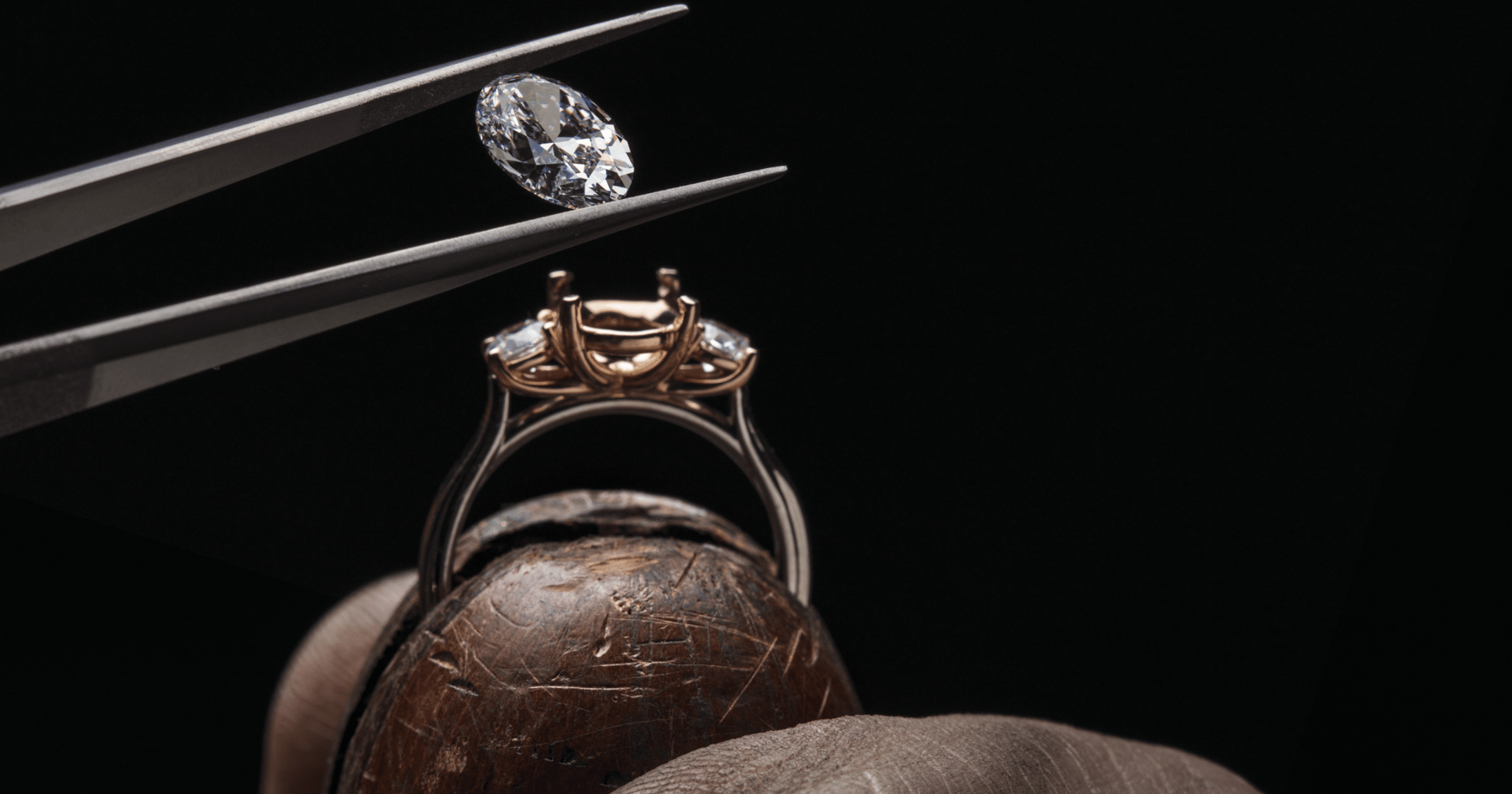
- Fabrication & Setting Craftsmanship
1. Cut
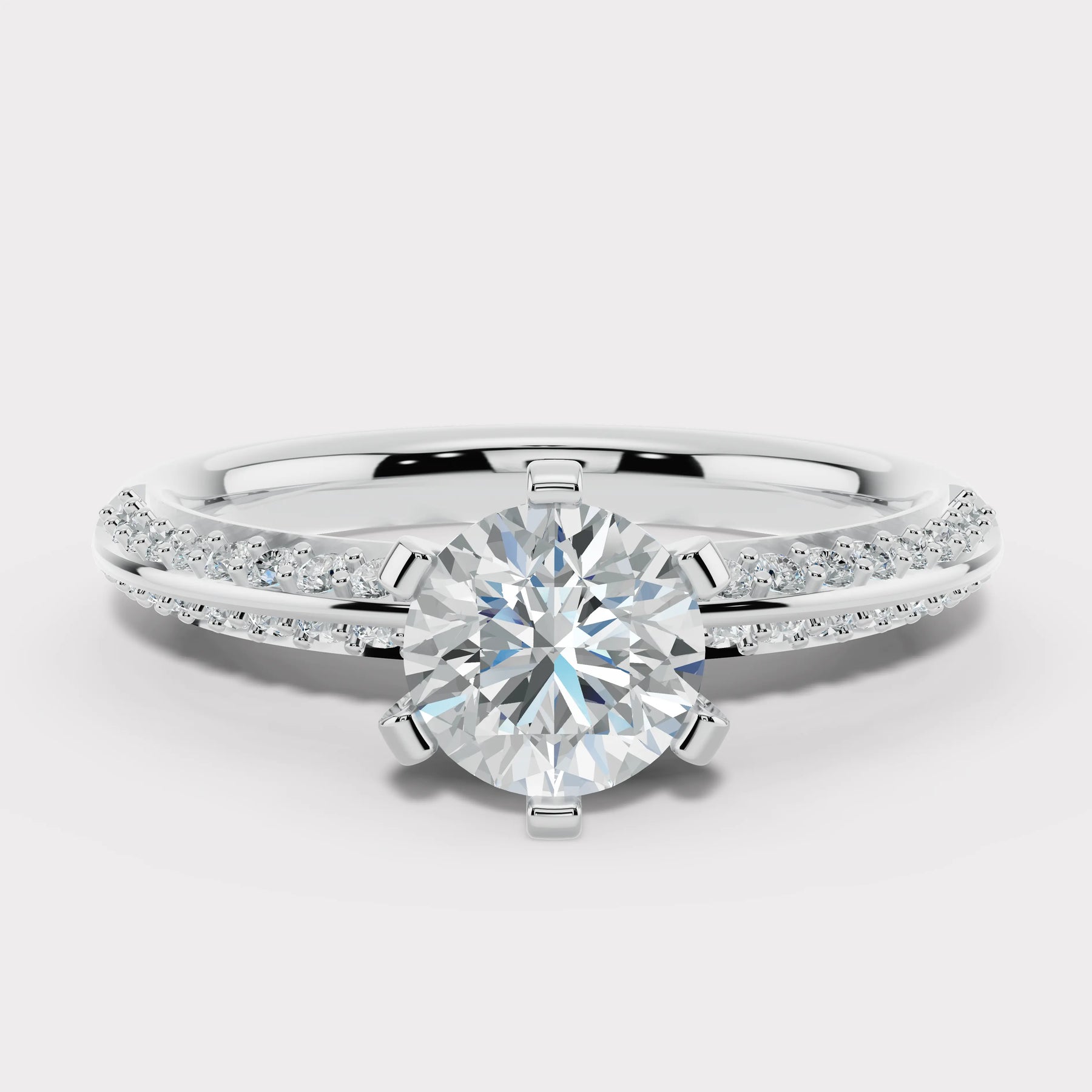
The cut quality determines how effectively a diamond interacts with light to create brightness, fire (spectral colors), and scintillation (sparkle). Cut is considered the most critical factor influencing visual performance. Standardized cut grades range from Excellent to Poor. A stone with high clarity and color will still appear dull if the cut proportions are shallow or deep, causing light to leak through the sides or bottom of the stone.
2. Color
Diamond color is graded on a reverse scale from D (Colorless) to Z (Light Yellow or Brown). Colorless diamonds (D, E, F) command the highest premium due to their rarity in nature. Near-colorless diamonds (G, H, I, J) offer a balance between visual purity and cost-efficiency, as subtle color traces are often invisible to the naked eye once mounted in a precious metal setting.
3. Clarity
Clarity assesses the presence of internal characteristics called inclusions and external blemishes. The scale ranges from Flawless (FL) to Included (I1-I3).
- FL / IF: Flawless / Internally Flawless (extremely rare).
- VVS1 / VVS2: Very, Very Slightly Included (inclusions difficult for a skilled grader to see under 10x magnification).
- VS1 / VS2: Very Slightly Included (inclusions minor and invisible to the unaided eye).
- SI1 / SI2: Slightly Included (inclusions noticeable under 10x magnification; may or may not be eye-clean).
4. Carat Weight
Carat measures physical weight, where one carat equals 0.200 grams. Diamond pricing does not scale linearly with carat weight; it increases exponentially at key threshold markers (e.g., 0.50 ct, 1.00 ct, 1.50 ct, 2.00 ct) due to the relative scarcity of larger rough crystals in nature.
Precious Metal Dynamics
The setting accounts for a notable portion of total ring cost and impacts long-term maintenance. Platinum is a dense, hypoallergenic metal that resists wear without losing volume over time, though it commands a premium due to manufacturing difficulty and metal purity (typically 95% pure). Gold settings (available in 14K and 18K across yellow, white, and rose variations) blend pure gold with alloys like copper, silver, or nickel to increase durability. White gold requires periodic rhodium plating to maintain its bright silver appearance.
Natural Diamonds vs. Lab-Grown Diamonds: Market Mechanics
The distinction between natural and lab-grown diamonds represents one of the most critical structural shifts in the jewelry industry. Chemically, physically, and optically, lab-grown diamonds are identical to natural diamonds. Both consist of pure carbon crystallized in an isometric cubic system. However, their economic profiles and long-term value retention diverge substantially.
| Feature | Natural Diamonds | Lab-Grown Diamonds (LGD) |
|---|---|---|
| Formation | Geological (Billions of years) | Industrial (Weeks/Months) |
| Production Cap | Finite / Decreasing Yield | Scalable / Tech-Driven |
| Wholesale Trend | Stable to Cyclical | Deflationary |
| Secondary Resale | 20% - 60% of Original Retail | Minimal to Negligible |
Because lab-grown diamonds are manufactured in controlled factory environments, their production supply is limited only by energy costs, equipment bandwidth, and technology efficiency. As synthesis techniques have improved, wholesale costs for LGDs have declined dramatically. Consequently, while an LGD provides a significantly larger initial visual presentation per dollar spent, it carries virtually no long-term asset value or secondary market liquidity.
Natural diamonds, while subject to market fluctuations and retail markups, retain a portion of their underlying value due to finite geological supply. However, engagement rings should generally be viewed as discretionary consumer purchases rather than liquid financial investments, given the substantial margin gap between retail pricing and wholesale buyback offers.
Comparative Gemstone and Metal Overview
To evaluate options across the engagement ring market, buyers can compare the physical and economic properties of popular stone choices:
| Gemstone / Material | Mohs Hardness Scale | Relative Cost (1.0 Carat Equivalent) | Primary Origin | Primary Retained Value Potential |
|---|---|---|---|---|
| Natural Diamond | 10.0 | High to Very High ($4,000 – $10,000+) | Mined (Mantle origin) | Moderate (20% – 60% of retail) |
| Lab-Grown Diamond | 10.0 | Low ($400 – $1,200) | Manufactured (HPHT / CVD) | Minimal / Low |
| Moissanite | 9.25 | Very Low ($200 – $500) | Manufactured (Silicon Carbide) | Negligible |
| Natural Sapphire | 9.0 | Moderate to High ($1,000 – $5,000+) | Mined (Metamorphic/Igneous) | Moderate |
| Natural Emerald | 7.5 – 8.0 | Moderate to Very High ($1,500 – $6,000+) | Mined (Hydrothermal veins) | Low to Moderate |
Note: Price ranges represent typical retail spectrums for eye-clean, well-cut center stones and vary widely based on individual color, clarity, and treatment factors.
Retail Channels: Digital Platforms vs. Traditional Jewelers
Consumers purchase engagement rings through four main retail channels, each operating with distinct markup models and customer service standards:
Consumer Purchasing Pathways:
- Direct-to-Consumer (DTC) E-Commerce (Lower margins, extensive online inventory)
- Independent Boutique Jewelers (Custom craftsmanship, personalized service)
- National Retail Jewelry Chains (Convenience, standardized finance programs)
- Heritage Luxury Houses (High brand premium, exclusive design aesthetics)
- Direct-to-Consumer (DTC) E-Commerce: Online retailers operate with lower physical overhead, allowing them to offer diamonds at lower markups above wholesale costs. These platforms typically feature virtual inventories connected directly to international cutting networks, providing access to tens of thousands of loose stones.
- Independent Local Jewelers: Independent boutiques provide bespoke design services, direct gemologist consultation, and hands-on setting work. While their retail prices reflect the overhead of maintaining physical premises, they offer local accountability, physical examination of stones, and ongoing maintenance.
- National Chain Retailers: Large chain jewelers emphasize accessible financing, widely available physical locations, and standardized warranty programs. However, their inventories often lean toward pre-set rings with average cut qualities and higher retail markups to support extensive retail real estate footprints.
- Heritage Luxury Houses: Historic luxury brands command premium pricing that extends far beyond the intrinsic market value of the gold and gemstones. Customers purchasing from these legacy houses pay for brand heritage, specialized design signatures, and proprietary ring mountings.
Certification, Ethics, and Provenance
Verification of a gemstone's authenticity and characteristics requires independent third-party grading. The engagement ring market relies on reputable gemological laboratories to maintain standardization and prevent fraud.
Independent Grading Laboratories
A diamond report issued by an independent laboratory provides objective verification of the stone's 4 Cs.
- Gemological Institute of America (GIA): The industry standard for natural diamond grading, known for strict, consistent criteria across cut, color, and clarity.
- International Gemological Institute (IGI): A major grading institute that evaluates both natural and lab-grown diamonds, offering detailed analysis of synthetic origin and treatment methods.
- American Gem Society (AGS): Historically recognized for scientific cut-grade analysis (now integrated with GIA frameworks).
Uncertified diamonds or rings accompanied solely by "in-house" store appraisals carry risk, as retail appraisals often inflate color/clarity grades and estimated replacement values for insurance purposes.
Certification Verification Flow:
- Loose Diamond
- Independent Lab (GIA/IGI)
- Verification Options:
- Laser Inscription (Matches Report Number)
- Grading Report (Confirms 4 Cs & Origin)
- Consumer Verification & Sale
Ethical Sourcing and Provenance
Modern buyers prioritize conflict-free supply chains and sustainable practices. The Kimberley Process Certification Scheme (KPCS) was established in 2003 to prevent "conflict diamonds" from entering the mainstream rough diamond trade. While the Kimberley Process monitors cross-border shipments of rough stones, critics point out its narrow focus on rebel violence rather than broader labor practices or environmental impacts.
To address these limitations, modern supply chains increasingly utilize blockchain-based tracking systems (such as the Tracr platform) and certified origin initiatives (such as CanadaMark diamonds) to provide audit trails from the mine to the final consumer.
Step-by-Step Purchasing Framework
To maximize value and avoid common purchasing errors, consumers should follow a structured evaluation methodology when navigating the engagement ring market.
- Step 1: Determine Total Budget & Metal Base
- Step 2: Select Gemstone Category (Natural vs. Lab vs. Alternative)
- Step 3: Select Cut Shape & Determine Target Carat Weight
- Step 4: Optimize Color & Clarity Balance (Target "Eye-Clean")
- Step 5: Verify Independent Grading Certificate (GIA or IGI)
- Step 6: Secure Third-Party Appraisal & Specialized Ring Insurance
Step 1: Set a Strict Financial Parameter
Determine an absolute spending limit before starting the search. Ignore historical marketing rules, such as spending "three months' salary," which were created by diamond cartels to drive purchase volumes. Frame the budget around personal cash flow and financial priorities.
Step 2: Choose the Gemstone Category
Decide whether the priority is natural geological origin, maximum visual size per dollar (lab-grown), or non-traditional aesthetics (colored sapphires or moissanite). This single decision dictates which retail platforms and grading standards apply.
Step 3: Prioritize Cut Quality Over Carat Size
Select the maximum cut grade available (e.g., "Excellent" on GIA reports for round brilliants). A slightly smaller stone with an exceptional cut will reflect more light and visually outshine a larger stone with poor proportions and dull optical response.
Step 4: Identify the "Eye-Clean" Threshold for Clarity and Color
Avoid paying premiums for Flawless (FL) or VVS clarity grades unless absolute gemological perfection is a personal goal. In most diamond shapes, a VS2 or SI1 clarity grade is completely "eye-clean"—meaning inclusions cannot be identified without magnification. Similarly, G, H, or I color grades appear colorless to non-expert observers when set in metal, saving substantial capital compared to D or E grades.
Step 5: Verify Lab Documentation and Laser Inscription
Ensure the center stone is accompanied by a digital or physical report from the GIA or IGI. Verify that the diamond’s girdle features a micro-laser inscription corresponding exactly to the report number listed on the document.
Step 6: Finalize Appraisal and Secure Dedicated Insurance
Upon receiving the finished ring, obtain an independent appraisal for replacement value. Add a dedicated jewelry rider or policy through a specialized insurer (such as Jewelers Mutual) or a homeowners/renters insurance policy. Standard homeowners insurance policies usually cap jewelry loss coverage at low amounts ($1,000–$1,500) unless specifically scheduled.
Frequently Asked Questions
What is the average cost of an engagement ring?
The average spending on an engagement ring in North America typically ranges between $5,000 and $7,000 for natural diamond rings. However, the median spending is often lower ($3,000 to $4,000), reflecting the rapid adoption of lab-grown diamonds, which permit purchases under $2,000 for equivalent or larger carat sizes.
Do lab-grown diamonds look identical to natural diamonds under a microscope?
Standard optical microscopes cannot reliably distinguish a high-quality lab-grown diamond from a natural diamond because their physical crystal structures are identical. Specialized laboratory equipment is required to detect subtle growth patterns, trace elements (such as residual boron or nitrogen configurations), and photoluminescence spectra unique to CVD or HPHT processes.
Should I prioritize diamond clarity or color when budgeting?
For most brilliant cuts (such as Round, Oval, or Cushion), cut should be prioritized first, followed by color, and then clarity. As long as a diamond is "eye-clean" (typically VS2 or SI1), higher clarity grades offer no visible enhancement to the unaided eye. Dropping from D color to G or H color yields cost savings with minimal visible impact.
How does white gold differ from platinum over time?
Platinum is naturally white, denser, and does not change color over time; when scratched, the metal moves rather than flaking off, developing a subtle patina over years of wear. White gold is an alloy of yellow gold mixed with white metals and is plated with rhodium to achieve a bright mirror finish. Over 12 to 24 months of wear, rhodium plating wears off, revealing the warmer yellowish core beneath, requiring re-plating to restore its original luster.
Why do diamonds lose value immediately after purchase?
Engagement rings incur retail markups that cover manufacturing, design, marketing, store operations, and sales commissions. When a consumer attempts to resell a ring, secondary buyers (wholesalers or jewelers) typically offer prices based on the raw wholesale market value of the melted metal and loose stone, subtracting the initial retail markup and expected re-cutting or re-selling costs.
Strategic Guidance and Next Actions
Navigating the engagement ring market successfully requires balancing emotional significance with clear financial evaluation. To optimize your purchase:
- Establish priorities early: Determine whether mined provenance, visual size, or custom setting design matters most to you and your partner.
- Insist on independent grading: Only purchase loose center stones that come certified by established third-party laboratories like the GIA or IGI.
- Compare retail platforms: Review stone pricing across both online DTC inventories and local independent jewelers to establish an accurate wholesale-to-retail baseline before committing.
- Protect the asset: Secure dedicated scheduled jewelry insurance immediately upon taking possession of the ring to cover loss, theft, and mysterious disappearance.
Image Gallery