Emergency Mold Remediation Service: Professional Guidelines, Timelines, and Costs
An emergency mold remediation service provides rapid containment, moisture control, and professional decontamination when water damage triggers widespread fungal growth. Specialized technicians stabilize indoor environments using negat...
An emergency mold remediation service provides rapid containment, moisture control, and professional decontamination when water damage triggers widespread fungal growth. Specialized technicians stabilize indoor environments using negative air pressure, HEPA filtration, and antimicrobial treatments to stop spore proliferation, protect structural integrity, and eliminate health risks associated with toxic mold exposure.
Contents
What Qualifies as a Mold Remediation Emergency?
Not all fungal growth requires immediate 24/7 emergency dispatch, but certain environmental conditions demand rapid intervention within 24 to 48 hours to prevent severe structural decay and acute health hazards. Mold spores exist naturally in indoor and outdoor air, but they require elevated moisture levels—typically relative humidity above 60% or direct liquid water contact—to germinate and form active colonies.
- Moisture Source (Water Leak / Burst Pipe)
- Spore Germination & Mycotoxin Production (24–48 Hours)
- Structural Porous Absorption & Spore Spreading
- Immediate Emergency Containment Needed
An emergency remediation response is necessary under the following specific circumstances:
- Sudden Sewage Backups or Category 3 (Black) Water Intrusion: Water contaminated with raw sewage, chemical agents, or floodwaters carries high concentrations of pathogenic bacteria and mold spores. Immediate extraction and sanitization are required to prevent deep structural saturation.
- Rapid Growth Following Plumbing Disasters: When a high-pressure pipe bursts or an appliance fails, water rapidly saturates drywall, subflooring, and insulation. Mold colonies can initiate growth within 24 to 48 hours under ambient temperatures.
- Contamination Exceeding 10 Square Feet: According to the U.S. Environmental Protection Agency (EPA), mold contamination covering an area larger than 10 square feet (roughly a 3x3 foot patch) requires professional remediation protocols rather than standard household cleaning.
- Presence of Toxic Fungal Species: Strains such as Stachybotrys chartarum (commonly known as toxic black mold) produce lipid-soluble mycotoxins that easily air-diffuse when disturbed. Professional containment is critical to prevent cross-contamination to uncontaminated living spaces.
- High-Risk Occupants Present: Buildings housing infants, elderly residents, or individuals with severe asthma, chronic respiratory conditions, or compromised immune systems require immediate containment to avert life-threatening exposures.
Delaying action allows hyphae—the root structures of fungi—to penetrate deeply into porous building materials like gypsum board, wood framing, and subflooring. Once fungal hyphae degrade structural cellulose, structural materials often require complete tear-out rather than simple surface restoration, substantially increasing overall project expenses.
The Step-by-Step Emergency Mold Remediation Process
Professional mold remediation follows strict industry guidelines established by the Institute of Inspection, Cleaning and Restoration Certification (IICRC), primarily outlined in the ANSI/IICRC S520 Standard for Professional Mold Remediation. Certified technicians follow a structured, multi-stage protocol to stabilize the building and remove fungal contamination.
1. Emergency Assessment and Moisture Mapping
Upon arrival, certified technicians conduct an immediate inspection to identify the water source, map moisture distribution, and evaluate the extent of contamination. Specialized non-invasive instruments are deployed, including thermal imaging cameras to locate hidden dampness behind walls, alongside pinless and pin-type moisture meters to calculate the exact percentage of moisture content within concrete, wood, and drywall. Air and surface samples may be taken to document baseline spore levels.
2. Engineering Controls and Containment
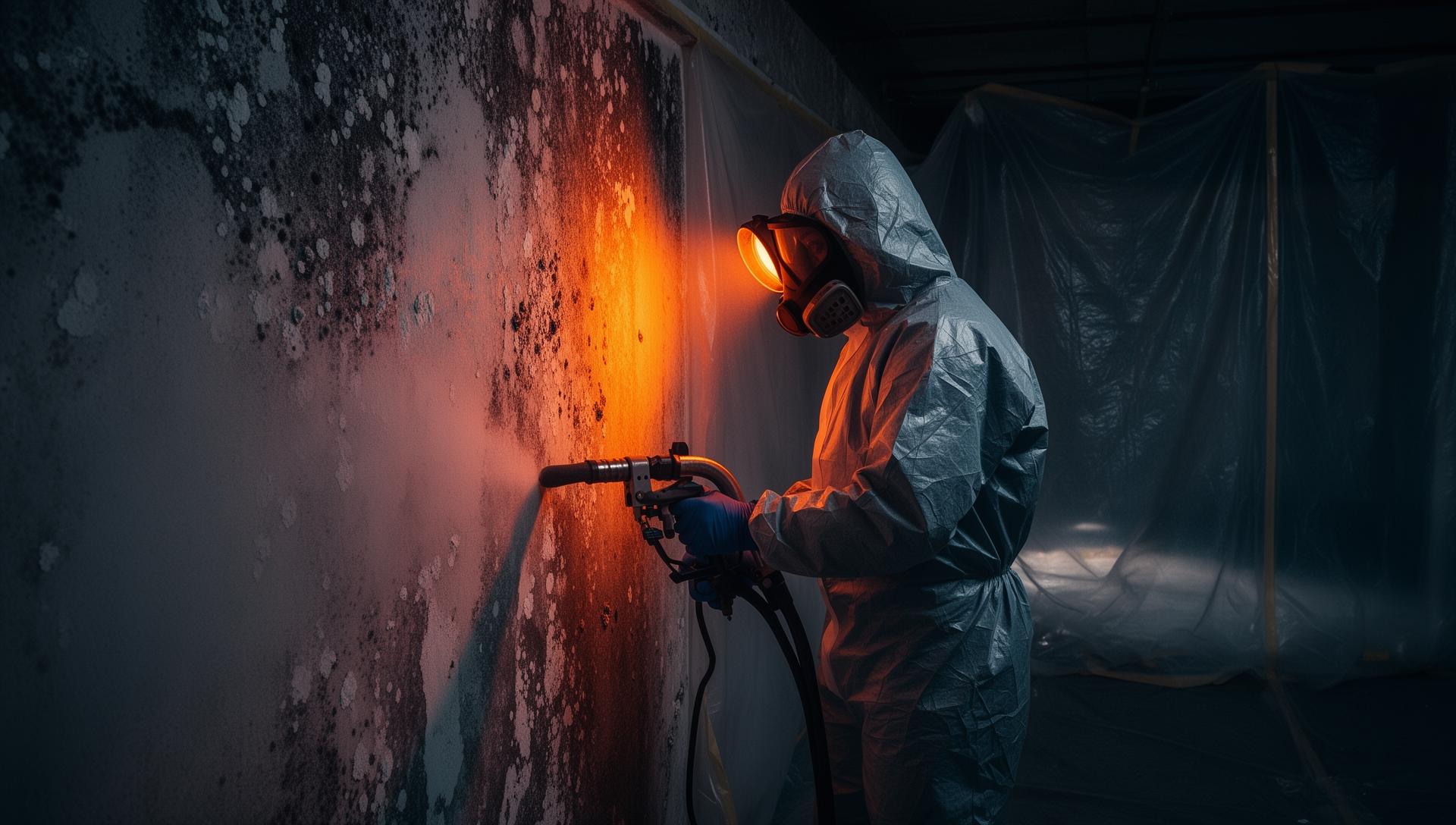
To prevent airborne spores from migrating to uninfected regions of the property, technicians establish physical containment barriers using heavy-duty 6-mil polyethylene sheeting. Critical barriers are sealed over HVAC supply and return vents, doorways, and electrical conduits.
Simultaneously, negative air machines equipped with High-Efficiency Particulate Air (HEPA) filters are installed. By exhausting air outdoors through sealed ducting, these units create continuous negative air pressure inside the containment zone. This pressure differential ensures that whenever technicians enter or exit through sealed decompression airlocks, air flows inward rather than allowing spores to escape into clean parts of the building.
3. Air Filtration and Spore Suppression
Continuous air scrubbing begins immediately upon establishing containment. Industrial HEPA air scrubbers process the air volume multiple times per hour, capturing 99.97% of airborne particles down to 0.3 microns in size. This step reduces the risk of inhalation during heavy demolition and prevents floating spores from settling on previously clean surfaces.
4. Removal of Contaminated Porous Materials
Building materials are categorized based on their porosity and cleanability:
- Porous Materials (Non-salvageable): Drywall, fiberglass insulation, acoustic ceiling tiles, and carpet padding that have absorbed moisture and mold hyphae must be physically removed, double-bagged in 6-mil plastic bags, misted to prevent spore discharge, and safely discarded.
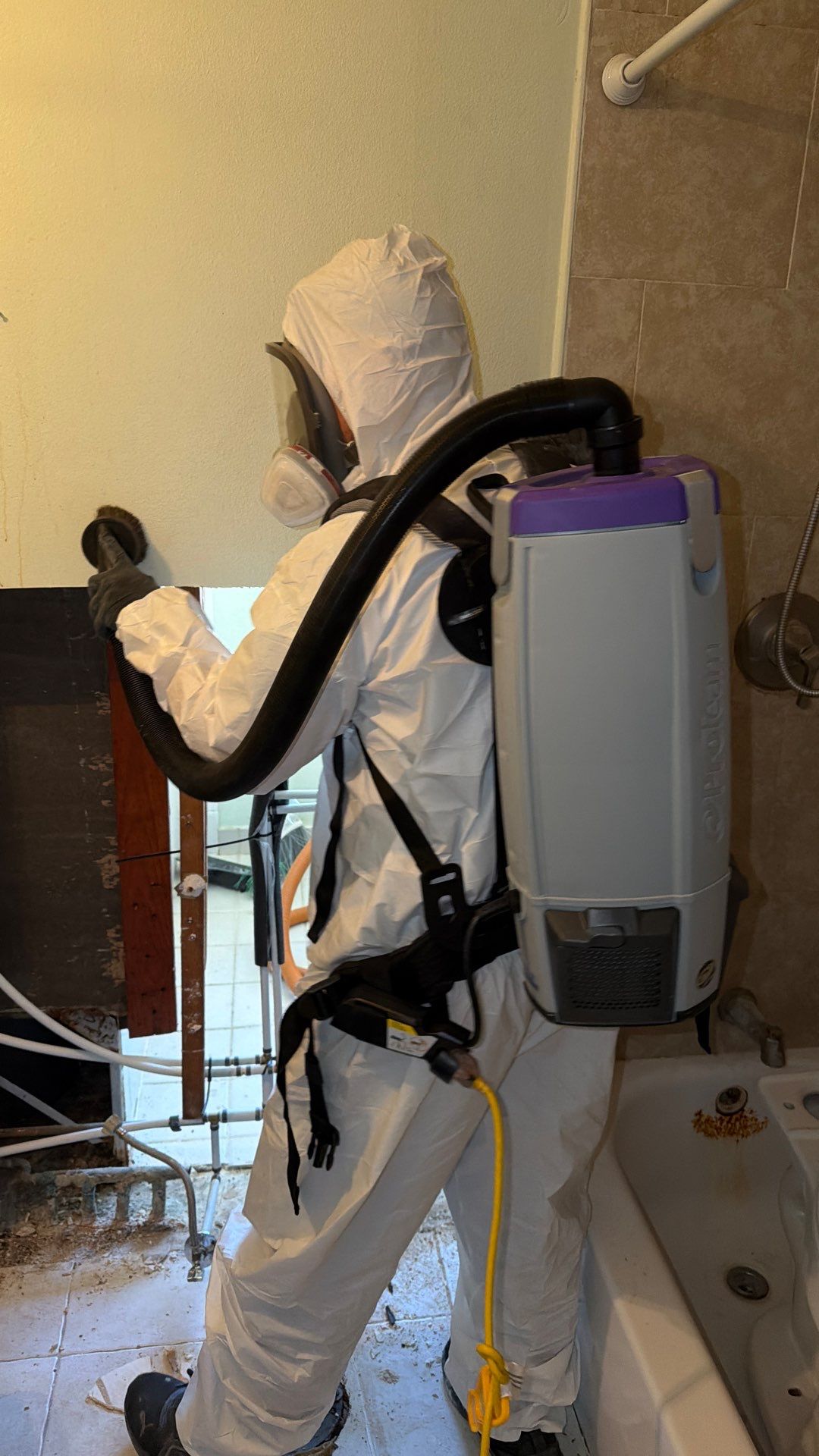
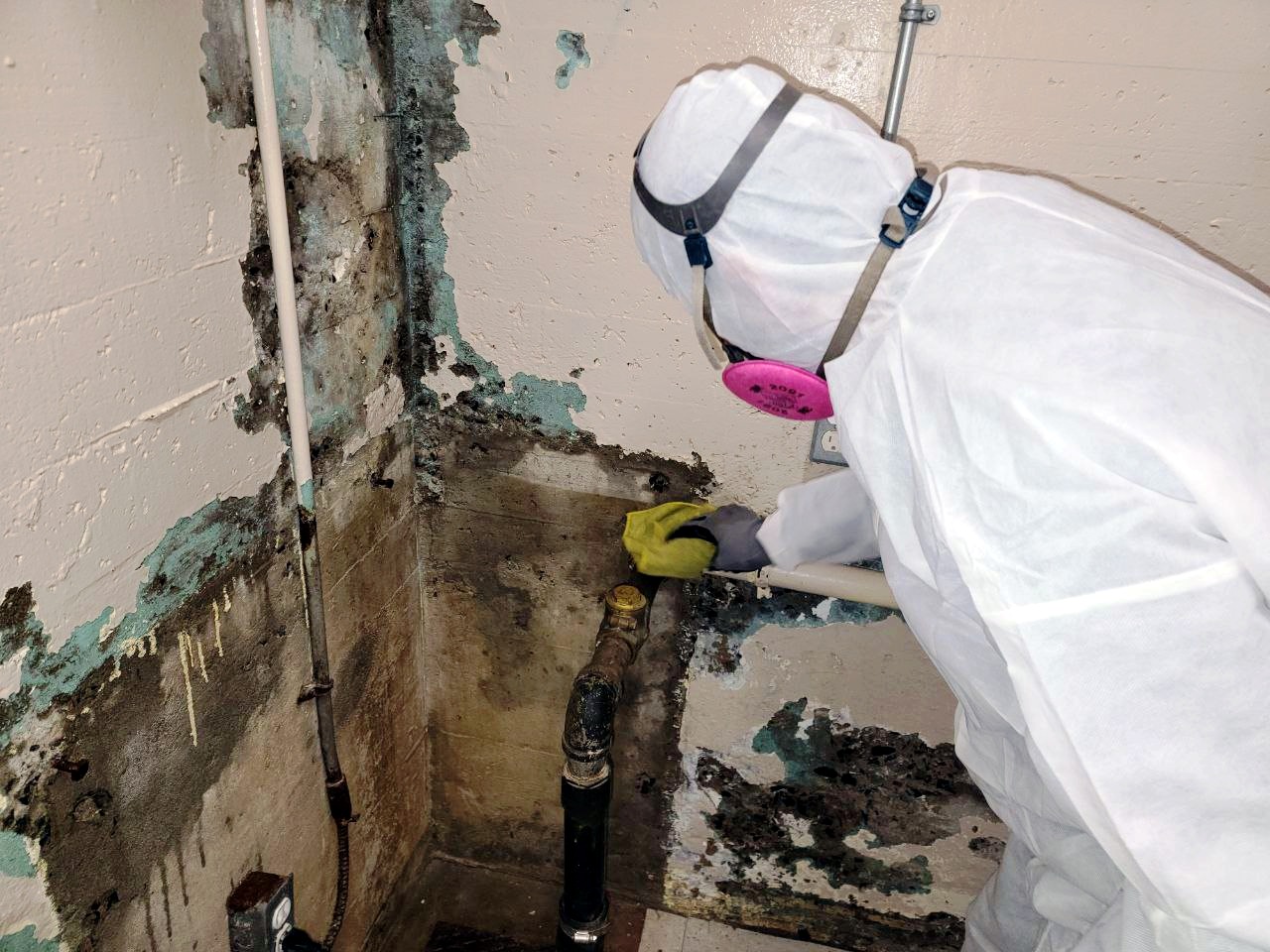
- Semi-Porous Materials (Salvageable with effort): Structural framing timbers, plywood subflooring, and concrete can often be saved. Technicians use HEPA-vacuuming, wire-brushing, media blasting (such as dry-ice blasting), and specialized sanding to strip away fungal growth.
- Non-Porous Materials (Fully cleanable): Hard plastics, glass, metals, and solid surfaces are decontaminated using EPA-registered antimicrobial detergents and disinfectants.
5. HEPA Vacuuming and Antimicrobial Application
After physical debris is removed, all remaining structural surfaces within containment undergo meticulous HEPA vacuuming. Technicians then apply EPA-registered antimicrobials, fungicides, or biocide treatments to kill residual microscopic spores and inhibit future fungal growth. In specific applications, encapsulants or specialized sealants are painted onto exposed structural timbers to lock down trace particles and form a moisture-resistant barrier.
6. Structural Drying and Dehumidification
Removing visible mold is ineffective if high moisture levels persist. Industrial refrigerant or desiccant dehumidifiers work alongside high-velocity air movers to extract trapped moisture from subfloors, wall cavities, and concrete foundations. Technicians continuously monitor relative humidity, aiming to drop indoor levels below 50% relative humidity and restore wood moisture content (MC) to baseline standard levels (typically below 12-15%).
7. Post-Remediation Verification (PRV) and Clearance Testing
Before containment barriers are dismantled, an independent third-party Certified Industrial Hygienist (CIH) or mold inspector performs a visual inspection and collects air and surface clearance samples. The project achieves official clearance when analytical lab results confirm that indoor airborne spore concentrations inside the containment zone are comparable to or lower than outdoor background control samples, with no elevated presence of indicator species such as Stachybotrys or Chaetomium.
Costs Breakdown for Emergency Mold Remediation Services
Emergency mold remediation costs vary based on the square footage of the affected space, accessibility, local labor rates, and the severity of moisture intrusion. Emergency calls typically incur an immediate dispatch or call-out fee to cover 24/7 mobilization, rapid containment setup, and initial equipment deployment.
| Remediation Phase / Service Component | Average Cost Range (USD) | Primary Cost Drivers |
|---|---|---|
| Emergency Dispatch & Assessment Fee | $300 – $700 | 24/7 immediate mobilization, initial moisture mapping, containment setup |
| Small-Scale Containment & Removal (< 100 sq ft) | $1,200 – $3,000 | Confined bathroom or closet leaks, drywall removal, local HEPA filtration |
| Medium-Scale Remediation (100 – 500 sq ft) | $3,000 – $7,500 | Whole basement, multiple rooms, HVAC duct cleaning, subfloor treatment |
| Large-Scale / Whole-House Contamination (> 500 sq ft) | $7,500 – $20,000+ | Widespread Category 3 water contamination, extensive structural tear-out |
| HVAC System Decontamination & Duct Cleaning | $500 – $2,000 | Air handler cleaning, ductwork fogging, specialized antimicrobial application |
| Independent Clearance Testing (Third-Party) | $400 – $900 | Air sampling cassettes, surface swabs, independent laboratory analysis |
Key Cost Factors to Consider
- Water Category: Pure water leaks (Category 1) cost significantly less to mitigate than sewage backups (Category 3), which require biohazard handling protocols and extensive disposal fees.
- Structural Reconstruction: Standard mold remediation quotes cover containment, extraction, cleaning, and drying. Re-drywalling, painting, replacing flooring, and structural carpentry are typically billed under separate reconstruction estimates.
- Insurance Coverage Limitations: Most standard homeowner insurance policies cover mold remediation only if the underlying cause was a sudden, accidental covered peril (such as a burst pipe). Gradual leaks, deferred maintenance, or exterior floodwaters generally require specialized flood endorsements or are excluded entirely.
Health Hazards and Safety Protocols During Remediation
Mold exposure causes varying degrees of health complications depending on spore concentrations, exposure duration, species type, and personal susceptibility. The Centers for Disease Control and Prevention (CDC) emphasizes that exposure to damp environments and fungal growth presents clear respiratory risks.
- Microscopic Mold Spores & Mycotoxins
- Inhalation / Skin Contact
- Sensitized Individuals
- Asthma Attacks
- Allergic Rhinitis
- Severe Pulmonary Symptoms
- Healthy Individuals
- Eye & Throat Irritation
- Persistent Coughing
- Chronic Headache / Fatigue
- Sensitized Individuals
Common Health Symptoms
- Allergic Reactions: Persistent sneezing, nasal congestion, eye irritation, watery eyes, and skin rashes.
- Respiratory Distress: Wheezing, shortness of breath, and severe asthma attacks in sensitive or sensitized individuals.
- Mycotoxicoses: Prolonged exposure to species producing secondary metabolites (mycotoxins) can induce neurological distress, severe headaches, chronic fatigue, and upper respiratory tract inflammation.
Personal Protective Equipment (PPE) Requirements
To mitigate inhalation and dermal contact risks, occupational safety standards governed by the Occupational Safety and Health Administration (OSHA) mandate that remediation technicians wear robust PPE within containment zones:
- Respiratory Protection: Full-face or half-mask elastomeric respirators equipped with P100 or HEPA cartridges (N-95 masks are acceptable only for minimal, localized cleaning).
- Protective Clothing: Disposable, high-density polyethylene suits (such as Tyvek) featuring integrated hoods and boot covers to prevent spores from transferring to outer clothing.
- Eye and Hand Protection: Indirectly vented safety goggles to shield against chemicals and airborne spores, paired with heavy-duty nitrile or butyl rubber gloves.
How to Select a Qualified Emergency Mold Remediation Service
In an emergency, property owners must quickly distinguish qualified restoration professionals from inexperienced contractors. Improper remediation can disperse millions of microscopic spores throughout an HVAC system, worsening cross-contamination.
- Verify Licensing & IICRC Certification (S520)
- Ensure Strict Containment Protocols (Negative Air Pressure)
- Confirm Third-Party Clearance Testing Policy
- Require Written Itemized Estimates & Moisture Logs
Essential Evaluation Criteria
- Industry Certifications: Verify that the firm and its technicians hold active certifications from recognized credentials bodies, such as the IICRC (specifically the Master Water Restorer or Applied Microbial Remediation Technician - AMRT designations) or the American Council for Accredited Certification (ACAC).
- Strict Separation of Testing and Remediation: To prevent conflicts of interest, reputable remediation contractors do not perform their own final clearance testing. They should recommend or insist upon using an independent, third-party indoor environmental professional (IEP) or Certified Industrial Hygienist (CIH).
- 24/7 Rapid Response Capabilities: Real emergency services maintain dedicated emergency dispatch centers capable of placing containment equipment on-site within 2 to 4 hours of an initial call.
- Comprehensive Insurance: Ensure the company carries commercial general liability, worker's compensation, and specific Pollution Legal Liability (PLL) insurance. Standard contractor policies often explicitly exclude mold and biological contamination claims.
- Documentation Practices: A professional service provides thorough documentation, including daily moisture logs, psychrometric readings, photo evidence, containment setup diagrams, and waste disposal manifests.
Frequently Asked Questions
Can I clean up emergency mold myself using bleach?
No, bleach is not recommended for emergency or large-scale mold remediation. Chlorine bleach stays on the surface of porous materials like drywall and wood, while its high water content penetrates deeper into the substrate, potentially feeding fungal hyphae beneath the surface. Bleach also fails to capture airborne spores or address underlying structural moisture.
How quickly can mold begin growing after a water leak?
Under ideal indoor conditions—temperatures between 60°F and 80°F with relative humidity above 60%—mold spores can germinate and initiate visible colony growth in as little as 24 to 48 hours following initial water exposure.
How long does an emergency mold remediation project take?
Most residential emergency mold remediation projects take between 3 and 7 days. Day 1 focuses on containment, extraction, and establishing negative air pressure. Days 2 through 5 involve structural tear-out, HEPA cleaning, antimicrobial application, and continuous drying. Days 6 and 7 are reserved for post-remediation clearance testing and drying verification.
Will my property insurance pay for emergency mold remediation services?
Property insurance typically covers mold remediation if the damage directly results from a sudden and accidental covered peril, such as a burst water heater or broken supply line. Insurance generally denies claims caused by long-term leaks, neglected maintenance, or external flood damage unless you carry a dedicated flood insurance policy.
Is it safe to remain in the house during emergency mold remediation?
It depends on the location and extent of the contamination, as well as the health status of the occupants. Small containment projects in sealed basements or isolated rooms with negative air pressure may allow occupants to stay. However, widespread contamination, HVAC system involvement, or the presence of high-risk individuals (such as infants or asthmatics) warrants temporary relocation until final clearance testing passes.
Actionable Next Steps to Take Right Now
If you suspect or discover an active mold emergency in your property, follow this immediate action protocol:
- Stop the Water Source: Locate and close the main water shut-off valve immediately if an active plumbing leak is occurring.
- Isolate the Contaminated Zone: Turn off the central HVAC system to prevent heating and cooling fans from circulating spores throughout the building. Close all interior doors leading to affected areas.
- Avoid Disturbing Visible Mold: Do not run household fans directly across visible mold patches, scrape dry growth, or vacuum with standard non-HEPA home vacuums, as this releases millions of spores into the air.
- Contact a Certified Emergency Remediation Service: Select an IICRC-certified restoration contractor capable of emergency 24/7 deployment, negative pressure setup, and structural drying.
- Notify Your Insurance Carrier: Document visible water accumulation and growth with photos and videos before cleanup begins, and request a claim reference number for emergency mitigation services.
Image Gallery