What Is a Realistic Solar Panel Installation Budget in 2026?
A realistic solar panel installation budget in 2026 typically ranges between $16,000 and $32,000 for a standard residential system (6kW to 10kW) before applying federal tax credits. After the 30% Investment Tax Credit (ITC), most homeo...
A realistic solar panel installation budget in 2026 typically ranges between $16,000 and $32,000 for a standard residential system (6kW to 10kW) before applying federal tax credits. After the 30% Investment Tax Credit (ITC), most homeowners can expect a net investment of $11,200 to $22,400, depending on hardware quality and regional labor rates.
Contents
As we navigate the energy landscape of 2026, solar technology has transitioned from a luxury upgrade to a foundational home utility. While the core technology has matured, the "realistic" budget for a homeowner is no longer a single number. It is a moving target influenced by system efficiency, local permitting "soft costs," and the increasing necessity of integrated battery storage. To build an accurate budget, you must look beyond the sticker price of the panels and account for the total ecosystem required to power a modern home.
Understanding the "Price Per Watt" Metric
The most reliable way to benchmark a solar budget is the price per watt (PPW). In 2026, the national average for a fully installed residential system oscillates between $2.50 and $3.30 per watt.
This metric is inclusive of all components: the photovoltaic (PV) modules, the inverters (which convert DC power to AC), the racking system, and the professional labor required for installation. When you receive a quote, dividing the total gross cost by the system’s total wattage (e.g., $24,000 / 8,000 watts = $3.00 PPW) allows you to compare installers of different sizes on an even playing field.
Why Price per Watt Varies
If your quote is significantly higher than the $3.30 ceiling, it usually indicates one of three things:
- Premium Hardware: You are likely looking at high-efficiency N-type or TOPCon modules with longer performance warranties (25–40 years).
- Structural Complexity: Your roof may have multiple facets, steep pitches, or require a "main breaker panel" (MBP) upgrade to handle the new electrical load.
- Soft Costs: In certain jurisdictions, the cost of permitting, interconnection fees, and local inspections can add several thousand dollars to the project total.
Major Components of a 2026 Solar Budget
To understand where your money goes, it is helpful to break the budget down into its functional parts. A solar installation is not a commodity purchase; it is a specialized construction project.
1. Solar Modules (The Panels)
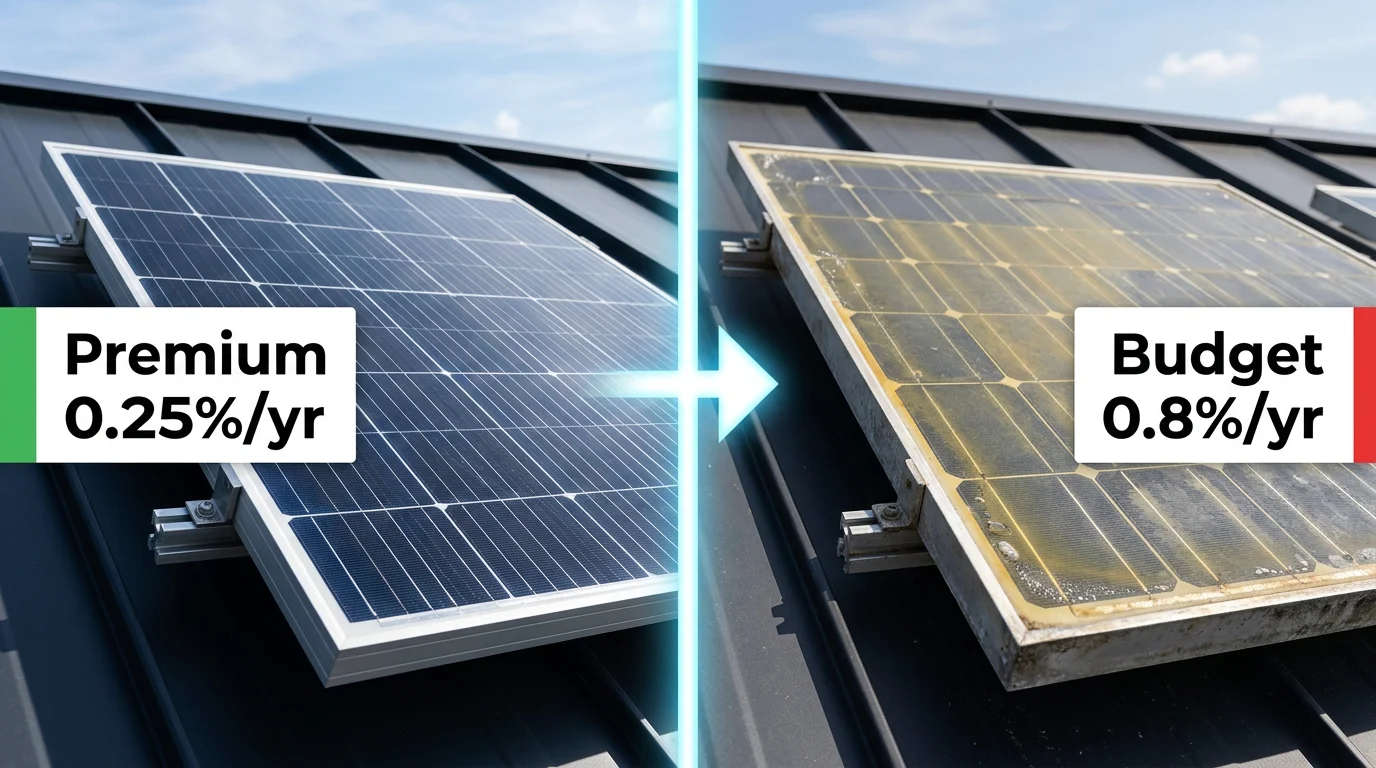
Panels account for roughly 25% to 30% of the total budget. By 2026, the market has largely standardized on high-efficiency monocrystalline panels. However, a "realistic" budget should account for the difference between Tier 1 manufacturers and premium "all-black" aesthetic panels. Premium modules offer better degradation rates, meaning they produce more power in year 25 than budget-tier alternatives.
2. Inverter Technology
Inverters are the "brains" of the system and represent about 10% to 15% of your costs. You will generally choose between two primary architectures:
- String Inverters with Optimizers: Often the more budget-friendly option, where a single central box handles the conversion.
- Microinverters: Smaller units installed behind every individual panel. These are more expensive but offer better performance on roofs with partial shading and allow for easier system expansion later.
3. The "Soft Costs" (The Hidden Majority)
A common misconception is that the equipment is the most expensive part. According to data from the National Renewable Energy Laboratory (NREL), soft costs—including customer acquisition, permitting, installation labor, and profit margins—frequently account for 60% or more of the total system price. In 2026, streamlining these costs remains a primary challenge for the industry, making local installers with established relationships at city hall often more cost-effective than national chains.
The 2026 Battery Factor: Is Storage Essential?
In 2026, a realistic budget must address energy storage. With many utility companies moving toward "Net Billing" (similar to California’s NEM 3.0), the financial value of sending excess solar power back to the grid has decreased. To maximize ROI, homeowners now focus on "self-consumption"—storing solar energy during the day to use at night.
Adding a 10kWh to 13.5kWh Lithium Iron Phosphate (LFP) battery typically adds $10,000 to $15,000 to the gross project cost. While this nearly doubles the initial investment for smaller systems, it provides essential backup during grid outages and protects the homeowner against rising peak-hour utility rates.
Estimated Budget Ranges by System Size (2026)
The following table provides a realistic breakdown of costs based on current 2026 market averages.
| System Size (kW) | Estimated Gross Cost | 30% Federal Tax Credit | Estimated Net Cost | Best Suited For |
|---|---|---|---|---|
| 6 kW | $16,800 – $19,200 | ($5,040 – $5,760) | $11,760 – $13,440 | Small homes / Low AC usage |
| 8 kW | $21,600 – $24,800 | ($6,480 – $7,440) | $15,120 – $17,360 | Average 3-bedroom home |
| 10 kW | $26,000 – $31,000 | ($7,800 – $9,300) | $18,200 – $21,700 | Homes with EVs or pool pumps |
| 12 kW | $31,200 – $37,200 | ($9,360 – $11,160) | $21,840 – $26,040 | Large families / High energy needs |
| Add-on: Battery | +$11,000 – $15,000 | -30% (Included) | +$7,700 – $10,500 | Resilience and self-sufficiency |
Note: Prices reflect national averages. Geographic location, roof type (e.g., tile vs. asphalt shingle), and specific brand choices will shift these numbers.
Federal and State Incentives: The Budget Offset
The single most significant factor in a 2026 budget is the Federal Investment Tax Credit (ITC). Under the extended provisions of the Inflation Reduction Act, homeowners can claim a credit worth 30% of the total system cost (including labor and batteries) against their federal income tax liability.
It is vital to understand that this is a tax credit, not a rebate. You must have sufficient tax liability to utilize the credit. If you cannot use the full 30% in the first year, it can generally be "rolled over" to subsequent tax years. Additionally, some states offer Performance-Based Incentives (PBIs) or Solar Renewable Energy Certificates (SRECs), which can provide ongoing income to help pay down the system over time.
Financing vs. Cash: Impact on the Long-Term Budget
How you pay for the system significantly alters the "realistic" cost.
- Cash Purchase: Offers the fastest Return on Investment (ROI) and the lowest total cost of ownership.
- Solar Loans: Many 2026 solar loans feature "dealer fees" or "origination fees" that can add 10% to 25% to the gross price of the system to keep the interest rate artificially low. Always ask for the "cash price" to see the true cost of the financing.
- Leases and PPAs: These options have zero upfront cost, but you do not own the system and cannot claim the 30% tax credit. Over 25 years, a lease is almost always the most expensive way to go solar.
Common Budget "Gotchas" and Hidden Costs
When planning your budget, set aside a contingency fund of roughly $2,000 to $3,000 for unforeseen site conditions.
- Main Panel Upgrade (MPU): If your home’s electrical panel is older or rated for less than 200 amps, you may need an upgrade to meet code for a solar interconnection. This typically costs between $1,500 and $3,500.
- Roof Repair: Solar panels last 25+ years. If your roof has fewer than 10 years of life remaining, a realistic budget must include the cost of a partial or full roof replacement before the panels go on.
- Tree Trimming: To hit the production targets promised in your quote, you may need to invest in professional arborists to clear shading obstructions.
- Critter Guards: In many regions, squirrels or pigeons nesting under panels can damage wiring. Installing "critter guards" (wire mesh around the array) is a small but necessary expense of $500–$1,000.
Frequently Asked Questions
What is the average ROI for a solar budget in 2026?
Most homeowners see a full return on investment within 6 to 9 years. This timeline depends heavily on local utility rates; the higher your electricity bill, the faster the system pays for itself.
Does a solar installation budget increase home value?
Yes. Studies by organizations like Zillow and the Lawrence Berkeley National Laboratory have historically shown that solar-equipped homes sell for a premium (often 4% or more) compared to non-solar homes. In many states, this increase in home value is also exempt from property tax assessments.
Is it cheaper to DIY a solar installation?
While a DIY approach can reduce the budget by 40% or more, it is generally not recommended for most homeowners. You lose the labor warranty, and many jurisdictions require a licensed electrician to sign off on the interconnection. Furthermore, mistakes in racking or flashing can lead to roof leaks that are far more expensive than the initial savings.
Should I wait for "better" technology to lower my budget?
Waiting rarely pays off in solar. While efficiency improves slightly each year, the "opportunity cost" of continuing to pay a monthly utility bill usually far outweighs the marginal savings of future hardware. Additionally, the 30% federal tax credit is a guaranteed incentive available now.
Final Recommendation: How to Start
To establish your specific realistic budget, start by aggregating your last 12 months of utility bills. This will determine your annual kilowatt-hour (kWh) usage, which is the foundation of your system sizing.
Seek at least three quotes from reputable local installers rather than relying solely on online estimates. Ensure each quote provides a clear "Price Per Watt" and specifies the brand of panels and inverters. By comparing these detailed bids against the 2026 averages of $2.50–$3.30 per watt, you can confidently move forward with an investment that secures your energy independence without overpaying for the technology.
Image Gallery