Will Amber Glenn Go to the Olympics? Analyzing Her 2026 Milano-Cortina Prospects
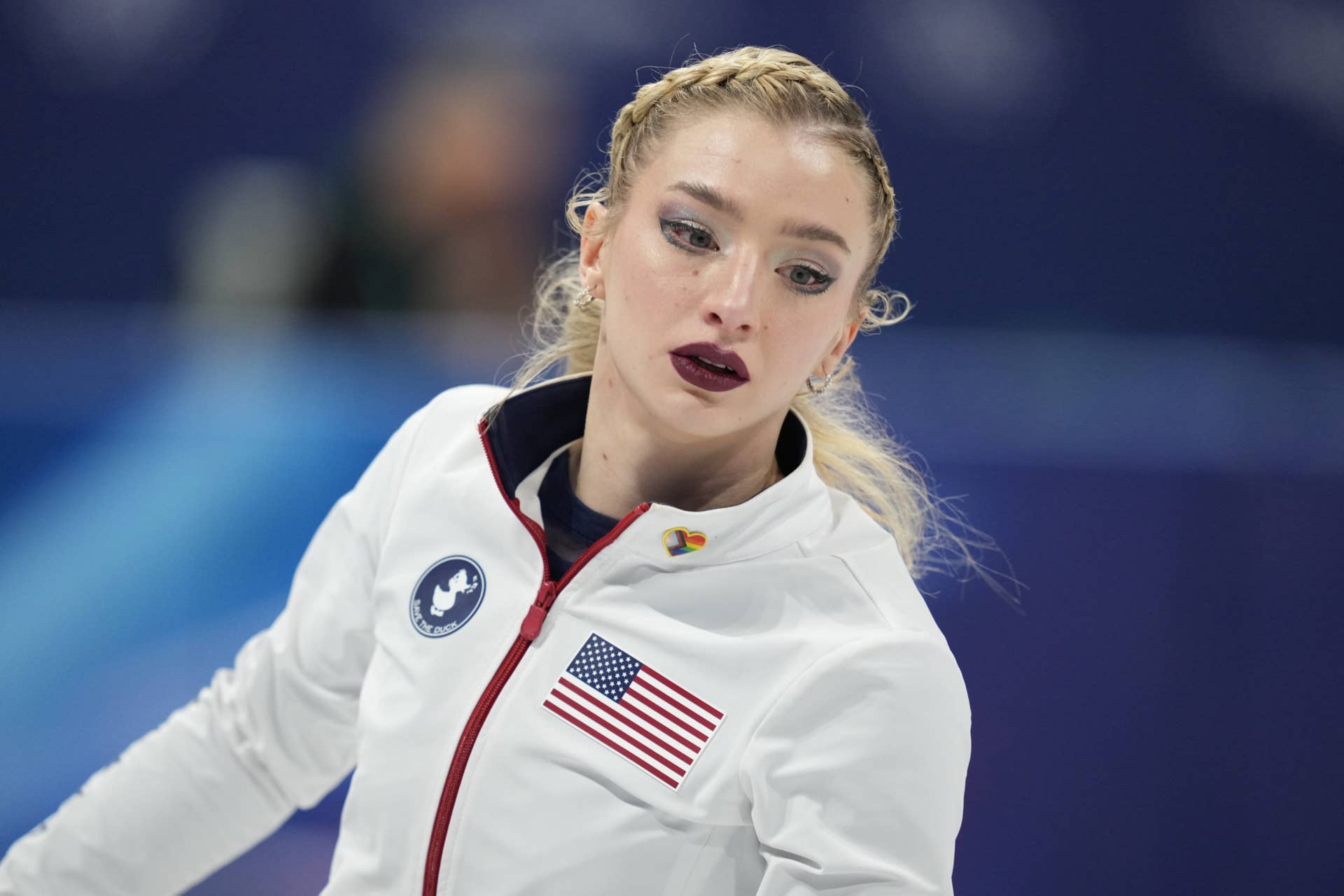
As the 2026 Milano-Cortina Winter Games approach, Amber Glenn’s Olympic spot remains a subject of intense debate. While she is a premier U.S. talent with a powerful triple axel, her selection is not guaranteed. Her path depends on main...
As the 2026 Milano-Cortina Winter Games approach, Amber Glenn’s Olympic spot remains a subject of intense debate. While she is a premier U.S. talent with a powerful triple axel, her selection is not guaranteed. Her path depends on maintaining technical consistency and satisfying the U.S. Figure Skating "Body of Work" criteria against a surging field of younger competitors.
Contents
The question of whether Amber Glenn will represent the United States at the 2026 Winter Olympics is one of the most polarizing topics in figure skating today. In the early weeks of 2026, the skating community is divided. On one hand, Glenn represents the technical ceiling of American women’s skating; on the other, her career has been defined by a "boom-or-bust" trajectory that makes her a high-stakes gamble for the Olympic Selection Committee. To understand why her participation is viewed by some as "unlikely" despite her talent, one must look at the rigid selection protocols, the evolution of her technical arsenal, and the deep pool of American talent vying for only three available spots.
The U.S. Figure Skating Selection Criteria: Beyond the National Podium
A common misconception in figure skating is that the top three finishers at the U.S. National Championships automatically qualify for the Olympic team. While the National Championships (held in January 2026) carry significant weight, U.S. Figure Skating (USFS) utilizes a multi-tiered "Body of Work" evaluation. This system is designed to send the skaters most likely to medal or secure high placements in international competition, rather than simply those who had one good weekend domestically.
The selection committee categorizes events into three tiers:
- Tier 1: The 2025 World Championships and the 2025–26 Grand Prix Final.
- Tier 2: The 2025 Four Continents Championships and the 2025–26 Grand Prix Series events.
- Tier 3: The 2026 U.S. National Championships and previous Challenger Series events.
For Amber Glenn, this system has historically been both a blessing and a curse. While her raw scoring potential is higher than almost any other U.S. woman, her Tier 1 and Tier 2 performances have occasionally lacked the consistency of her peers. If Glenn performs poorly in the 2025–26 Grand Prix season, even a silver medal at the 2026 Nationals might not be enough to secure her a spot if a competitor like Isabeau Levito or Sarah Everhardt has a more stable international record.
The Triple Axel: A Double-Edged Sword
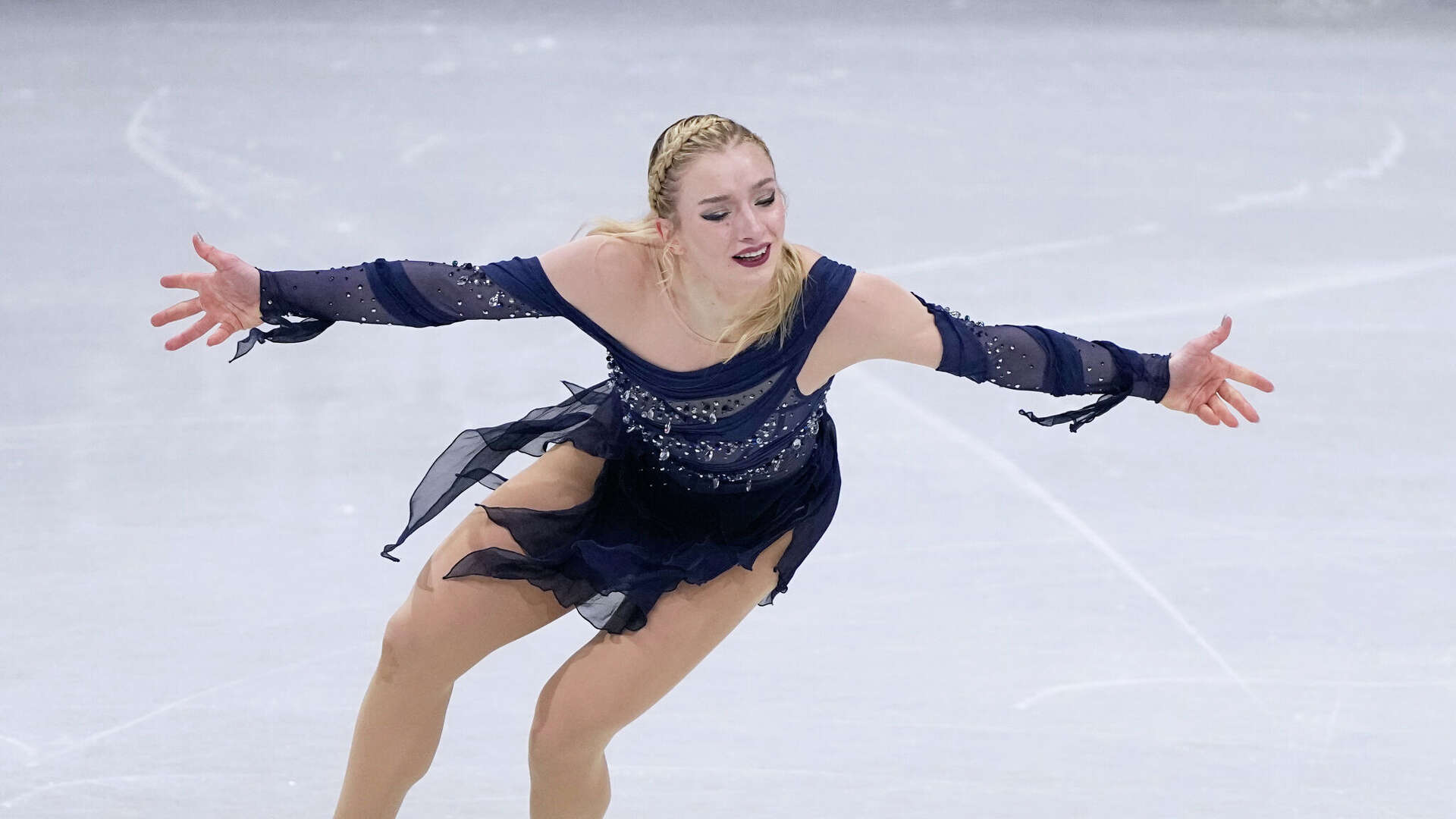
Amber Glenn’s primary argument for Olympic inclusion is the Triple Axel (3A). As one of the few American women to successfully land the jump in international competition, she possesses a technical weapon that can bridge the gap between U.S. skaters and the global elite. The 3A has a base value of 8.00, significantly higher than the 3.30 value of a Double Axel.
However, the "unlikely" narrative often stems from the risk-to-reward ratio of this specific jump. In previous seasons, Glenn has struggled to cleanly execute the Triple Axel alongside a mistake-free long program. Figure skating judging under the IJS (International Judging System) heavily penalizes "popped" jumps or falls, which can lead to massive deductions in the Grade of Execution (GOE) and the loss of the jump’s base value.
If Glenn misses the Axel, her Program Components Score (PCS)—the marks for artistry, skating skills, and composition—often suffers as the "performance" aspect of the program is interrupted. Critics argue that a "clean" skater without a Triple Axel might outscore a "messy" Glenn with a fallen Triple Axel, making her a risky choice for a committee focused on reliable point totals for the Team Event.
Comparative Analysis: U.S. Women’s Contenders for 2026
To determine the likelihood of Glenn’s Olympic debut, we must compare her against the current landscape of U.S. women’s figure skating. As of the 2025-2026 season, the competition for the three Olympic spots is fierce.
| Skater | Primary Strength | Technical Highlight | Consistency Rating |
|---|---|---|---|
| Amber Glenn | Power & Triple Axel | 3A (Triple Axel) | Moderate/Variable |
| Isabeau Levito | Artistry & PCS | High-level 3-3 combinations | High |
| Alysa Liu | International Experience | Triple-Triple stability | Moderate/High |
| Sarah Everhardt | Technical Precision | Reliable Lutz/Flip | High |
| Elyce Lin-Gracey | Skating Skills | Clean execution | Moderate |
In this lineup, Glenn is the "wildcard." While Levito and Everhardt have built reputations for "skating clean," Glenn is the only one who can realistically challenge for a top-five finish at the Olympics if she hits her maximum difficulty. The committee must decide if they value the high ceiling of Glenn’s Triple Axel over the high floor of a more consistent, albeit lower-difficulty, skater.
The Mental Game and Veteran Status
At 26 years old in 2026, Amber Glenn is a veteran in a sport that has long been dominated by teenagers. Her longevity is a testament to her physical resilience and her evolution as an athlete. In recent years, Glenn has been vocal about her work with sports psychologists to overcome the "nerves" that previously hindered her free skate performances.
This maturity is a factor that the U.S. Figure Skating selection committee considers. A veteran who has navigated the pressure of the Grand Prix circuit and multiple National Championships is often viewed as more "battle-hardened" than a junior-level skater making a sudden surge. However, the physical toll of training a Triple Axel in one’s mid-20s is substantial. Any hint of injury in the lead-up to the 2026 Milano-Cortina games would immediately make her selection "unlikely," as the committee prioritizes athletes who can survive the grueling three-week Olympic window.
Analyzing the "Unlikely" Argument
Why do some analysts suggest that Glenn going to the Olympics is unlikely? The skepticism usually boils down to three factors:
- The Rise of the "New Guard": Skaters like Sarah Everhardt have shown remarkable consistency under the new age-minimum rules (now 17 for senior international competition). These skaters often post higher "clean" scores than Glenn does when she makes a single error.
- Historical International Placements: While Glenn has won domestic titles, her placements at the World Championships have not always mirrored her U.S. success. The selection committee looks for skaters who "transfer" their domestic scores to the international stage.
- The Numbers Game: With only three spots and at least five women capable of scoring over 200 points total, the margin for error is non-existent. Glenn’s history of "popping" triples into doubles during the second half of her program is a technical flaw that the committee may find too risky to ignore.
Despite these hurdles, calling her inclusion "unlikely" may be premature. Glenn’s 2024 and 2025 performances proved she can win under pressure. If she arrives at the 2026 Nationals with a landed Triple Axel in both the short and long programs, it becomes nearly impossible for the committee to leave her off the team.
Technical Depth: The Impact of the Age Limit Increase
The International Skating Union (ISU) recently raised the senior age limit to 17. This shift has fundamentally changed the 2026 Olympic landscape. In previous cycles, 15-year-old "prodigies" with quad jumps would often displace veterans like Glenn. In 2026, the playing field is more level.
Glenn’s maturity and physical strength are now assets. The sport currently rewards power and edge quality—areas where Glenn excels—more than it did during the "quad revolution" era. This change in the judging climate actually increases her likelihood of making the team, as she is no longer competing against prepubescent athletes with unsustainable technical elements.
FAQ: Amber Glenn and the 2026 Olympic Cycle
Does winning the 2026 U.S. Nationals guarantee Amber Glenn a spot?
No. While the champion is almost always selected, the USFS reserves the right to choose the team based on the "Body of Work" from the entire season. If the champion has no successful international results that year, their spot could theoretically be at risk, though this is rare.
What is Amber Glenn’s highest international score?
Historically, Glenn has pushed toward the 210-215 point range when landing her Triple Axel. To be a lock for the 2026 Olympics, she likely needs to demonstrate an ability to consistently score above 205 in international Challenger or Grand Prix events.
How many spots does the U.S. have for women’s singles in 2026?
The U.S. earned three spots for the Milano-Cortina Olympics based on the results of the 2025 World Figure Skating Championships. This is the maximum number of entries allowed per country.
Is Amber Glenn currently injured?
As of the start of the 2026 season, Glenn has not reported any major injuries that would preclude her from competition. However, her training load is closely monitored due to the high impact of her Triple Axel.
How does the Triple Axel affect her scoring?
The Triple Axel is worth 8.00 points. If she lands it cleanly with a +2 GOE, she earns 9.60 points for a single element. If she falls, she receives 4.00 points (half base value) minus a 1.00 fall deduction, resulting in only 3.00 points. This 6.6-point swing is often the difference between first and fifth place.
Final Assessment: The Path to Milano-Cortina
While some suggest it is "unlikely" for Amber Glenn to reach the 2026 Olympics, it is more accurate to describe her situation as highly contingent. She is the master of her own destiny. If she minimizes technical errors in her free skate and utilizes the Triple Axel as a strategic tool rather than a psychological burden, she is a favorite for the team.
The skeptics base their "unlikely" forecast on her historical inconsistency, but the 2026 version of Amber Glenn is a more seasoned, mentally resilient athlete. For Glenn, the road to Italy runs through a clean 2025-26 Grand Prix season. If she can secure a podium finish at her Grand Prix assignments, the "unlikely" narrative will quickly shift to her being a podium threat for the Olympic Team Event.
Image Gallery